Bessent has been accused of artificially boosting bond prices through methods such as repurchasing government bonds and adjusting debt structures, triggering significant passive short covering by CTA trend funds (currently with short positions close to historical extremes), forcing the 10-year yield down to 4.3% to gain political leverage for the Trump administration. Goldman Sachs estimates that if bond prices rise by two standard deviations, the size of the short covering will set a historical record.
Written by: Dong Jing, Wall Street Watch
A series of interventions in the bond market by U.S. Treasury Secretary Bessent has been said to lower government bond yields while potentially using the nearly historical extremes of the CTA short positions to artificially trigger a large-scale short squeeze, keeping the 10-year yield near 4.3% before the midterm elections, providing political breathing room for the Trump administration.
On August 25, Fox Business reporter Charlie Gasparino posted on social platform X, citing informed Wall Street executives who revealed that Bessent's goal is to "make the bond shorts feel intimidated," using methods such as government bond repurchases, issuing more short-term bonds, even canceling 20-year bonds and other ultra-long-term varieties, aiming to push the 10-year yield from its current level to 5%, before quickly reversing by using short covering to bring it down again.
Analysis suggests that the market impact of this logic cannot be underestimated: Goldman Sachs' latest futures trading desk data shows that the current short positions held by CTA trend strategy funds are near multi-year highs, and if prices rise by two standard deviations, the scale of short covering would set a historical high record.
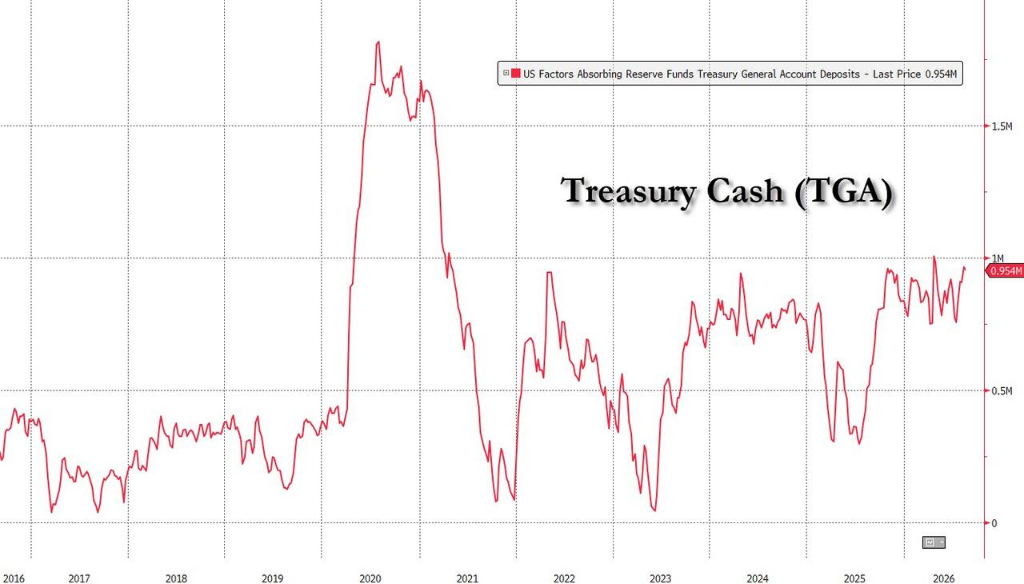
Bessent's interventions have so far had limited success. U.S. Treasury yields continued to rise on Monday morning, until the Treasury Department revealed to CNBC that it would use up to $954 billion in funds from the Treasury General Account (TGA) as support, which barely pushed yields down slightly.
Government bond repurchase "bluff," yields failed to come under pressure
Discussions around Bessent's "government bond repurchase card" have long been rampant. Critics point out that the scale of this repurchase is minuscule compared to the massive deficit, total debt, and persistently high inflation, fundamentally powerless to alter the yield trend.
Facts confirm this judgment. Entering this week, yields continued to rise closely following oil price increases. The Treasury then hinted to the media, claiming it would provide support with TGA account funds, which only led to a slight decline in yields, but the effect remained limited.
Bessent's intervention has also sparked friction internally. Reports indicate that the Treasury's operations have left Federal Reserve Chairman Waller deeply unhappy, significantly cooling his willingness to reduce the Federal Reserve's balance sheet — market observers believe this act essentially binds the Treasury and Federal Reserve's balance sheets to some extent.
Bessent's core logic: buy time, not reverse the trend
However, if Bessent's actions are reframed from "lowering yields" to "buying time," the inherent logic of his strategy becomes clear.
Bessent himself comes from a trading background and is well-versed in tactical and strategic trading. Given the bleak prospects for a significant reduction in the deficit by Congress, any attempts to fundamentally reverse the yield trend would be futile. However, if the objective is simply to maintain surface stability in the market before the midterm elections, the strategic choices would be vastly different.
Fox Business reporter Charlie Gasparino quotes Wall Street executives directly familiar with Bessent's thinking, stating that Bessent is willing to "spare no effort" to pressure bond shorts, employing methods that include repurchases, adjusting debt issuance structures, and even canceling certain long-term varieties.
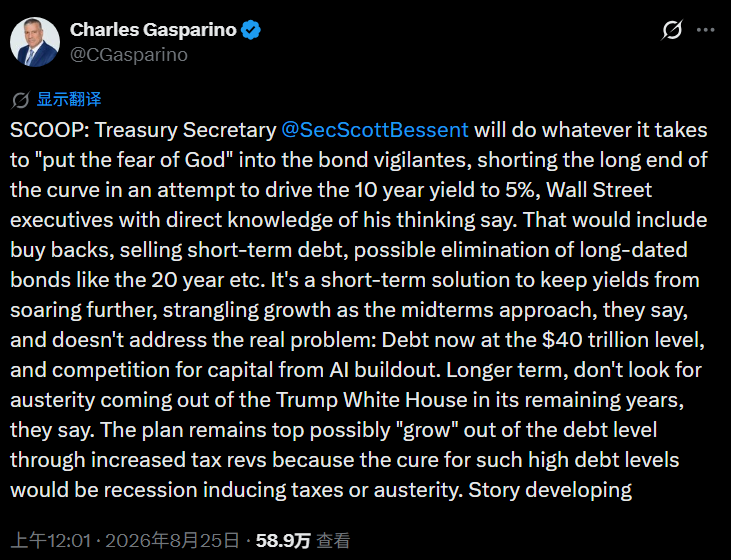
Analysis suggests that this statement implies Bessent's current focus is not on solving the structural problems of rising yields but rather on precisely targeting the market's technical weaknesses with pressures.
CTA short positions at record levels, short squeeze conditions have matured
The key to the establishment of Bessent's short squeeze logic lies in the current positioning structure of the bond market.
Goldman Sachs' latest weekly report indicates that CTA and trend-following strategy funds currently hold a substantial short position in the global bond market, measured at approximately $155 million in DV01 (the profit and loss corresponding to a 1 basis point change in interest rates), near multi-year lows (i.e., short positions are at multi-year highs), and trend signals across major markets have generally remained negative for quite some time.
Goldman further calculates that in the current baseline scenario, if the bond market continues to decline, the additional short selling space for CTAs is already limited; however, once prices rebound, it could trigger significant short covering — if prices increase by two standard deviations within a month, the combined amount of covering and re-buying could reach $150 million in DV01. More critically, under the current scenario, the short covering scale corresponding to a two standard deviation increase would set a historical high record.
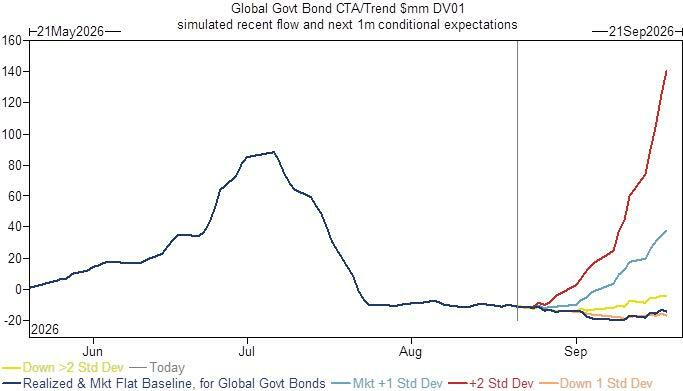
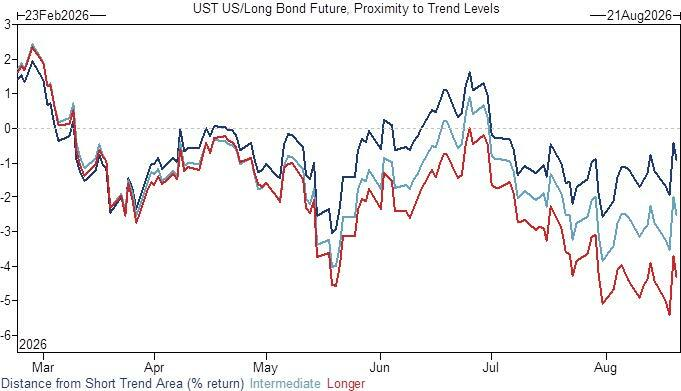
Since the beginning of the year, CTA short positions in the bond market have continued to accumulate, nearing historical extremes, meaning that once prices trigger the signal reversal, the short covering will exhibit self-reinforcing and progressively amplifying characteristics.
Pre-election window: 4.3% is the target, midterm elections are the endpoint
In summary, Bessent's tactical intention has become relatively clear: trigger rising bond prices through a series of intervention methods, thereby igniting passive short covering by CTA shorts, forming a positive feedback loop between rising prices and short covering, ultimately pushing the 10-year yield down to around 4.3% from its current level.
This political timetable for achieving this goal is also clear. There are about two months left until the midterm elections; if yields can decline to a key range before then, it will not only drive down mortgage rates but also provide the Trump administration with a narrative of achievements to present — successfully achieving lower rates even in the context of rising oil prices and heightened geopolitical tensions.
Of course, just as the patterns shown by oil prices and the Iran ceasefire agreement suggest, once the midterm elections conclude, market realities will inevitably re-establish themselves. At that time, structural upward pressure on yields and the gravitational effects on stock market valuations may return with greater intensity. But prior to this, investors need to be highly vigilant regarding the escalating short squeeze operations in U.S. Treasuries — according to last week's market signals, this process may intensively unfold in the coming days.
免责声明:本文章仅代表作者个人观点,不代表本平台的立场和观点。本文章仅供信息分享,不构成对任何人的任何投资建议。用户与作者之间的任何争议,与本平台无关。如网页中刊载的文章或图片涉及侵权,请提供相关的权利证明和身份证明发送邮件到support@aicoin.com,本平台相关工作人员将会进行核查。


