

Author: Wan Zhou, Wall Street See News
The expectations for an extremely strong El Niño in 2026 continue to heat up. Weather disturbances have begun to affect major agricultural production areas such as Southeast Asia and India, but historical experience shows that a strong El Niño does not necessarily lead to a comprehensive reduction in staple grain production.
What is truly noteworthy is that the fertilizer market has started before grain prices: Urea is supported by exports and high prices overseas, phosphate is constrained by resources, sulfur, and shipping, and potassium supply is tightening.
If weather impacts further push up grain prices and planting profits in 2027, will the current supply-driven fertilizer market enter a second phase of supply-demand resonance?
What has happened? - El Niño is still strengthening, but the fertilizer market has already run ahead
1. An extremely strong El Niño is approaching, but agricultural impacts are first reflected as "structural production reductions"
The El Niño of 2026 has already transitioned from meteorological predictions to a phase of real impact. Since June, sea temperatures in the equatorial central and eastern Pacific have continued to rise, and market expectations for a transition from strong to extremely strong El Niño in the fourth quarter have markedly increased, with the strong impact window likely falling in the autumn and winter of 2026 and extending into early 2027.
Unusual weather has already emerged, including a weak Indian monsoon, insufficient rainfall in parts of Southeast Asia, high temperatures in Europe, and heavy rains in southern China, indicating that climate risks are gradually being transmitted from sea temperature indicators to crop production.
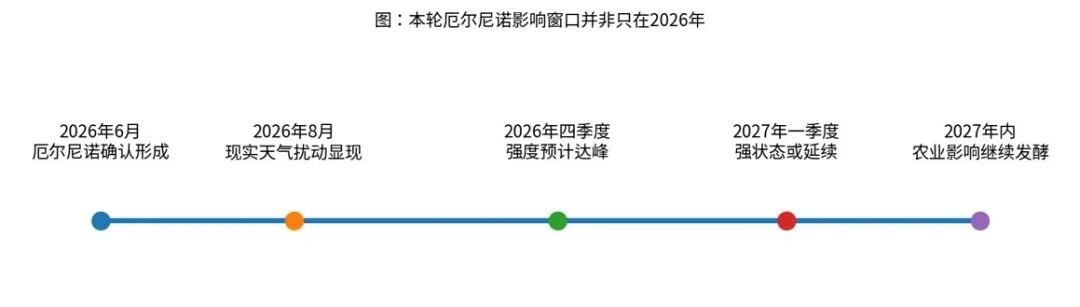
However, there are still three buffers between "extremely strong El Niño" and a "global grain shortage": crop distribution, inventory, and policy.
Historical statistics show that highly concentrated varieties such as natural rubber, palm oil, and cocoa, which are sensitive to moisture conditions, are more likely to experience sustained supply shocks; globalization of crops like soybeans and corn allows for cross-regional substitution, and certain regions in South America may even increase production due to improved rainfall. China's corn and wheat self-sufficiency rates are relatively high, and prices are also affected by policies, inventory, and domestic supply-demand adjustments.
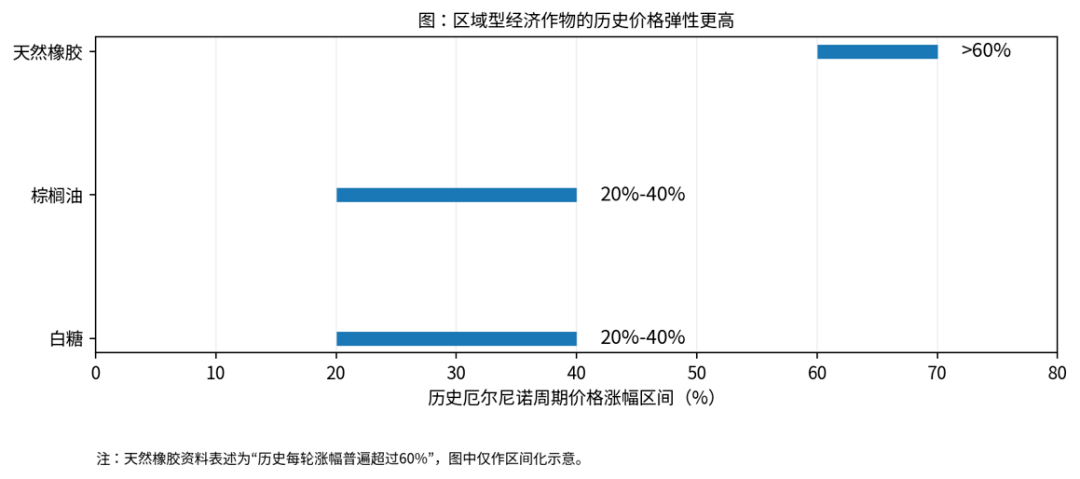
Therefore, currently it is more akin to a round of structural agricultural inflation: weather-sensitive varieties are the first to gain risk premiums, and staple grains still need to wait for actual yield, inventory, and trade data confirmation.
This distinction is crucial because it means the current fertilizer market cannot simply be explained by "El Niño - soaring grain prices - rising fertilizers."
2. Grain prices have not risen comprehensively, while fertilizers have entered their own cycle
Urea most reflects this misalignment.
In the first half of 2026, apparent demand for urea grew by about 7.2%, with growth rates reaching 7.8% from January to April; considering hidden inventory and other factors, the actual growth rate may have reached 8-10%. During the spring plowing phase, company inventories dropped to approximately 570,000 tons by mid-May, and the price advantage of urea relative to phosphate and potassium combined with improved grain price expectations strengthened the enthusiasm for grassroots fertilization.
Entering the second half of the year, the fundamentals began to reverse. Agricultural demand entered a seasonal low, the production of high-nitrogen compound fertilizers had already been noticeably pre-empted, and industrial demand also struggled to form new elasticity; at the same time, approximately 5.11 million tons/year of urea production capacity is still expected to come online in the second half of the year, with total production capacity expected to increase by about 6.45 million tons/year and total production expected to be around 78.1 million tons, a year-on-year increase of 7.86%.
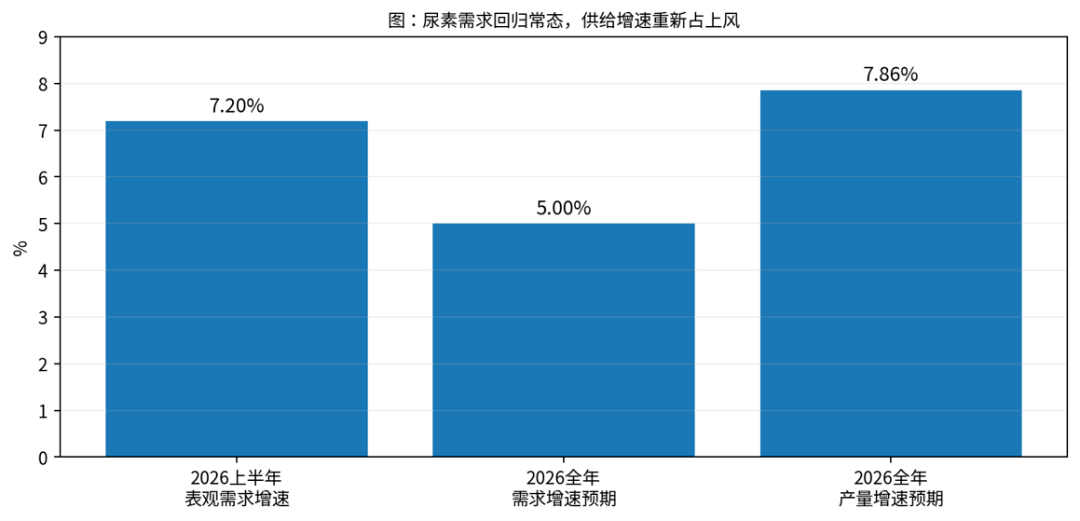
Therefore, the core contradiction of urea has now shifted from domestic agricultural demand to whether exports can digest the new supply. By the end of July, domestic urea production was about 215,600 tons per day, and company inventories rose to nearly 76% of a three-year high; during the same period, small granular urea prices in the Persian Gulf were around $445/ton, equivalent to about 3,021 yuan/ton, while the domestic average price was about 1,747 yuan/ton, with a theoretical price difference exceeding 1,200 yuan/ton - a significant theoretically escape for exports.
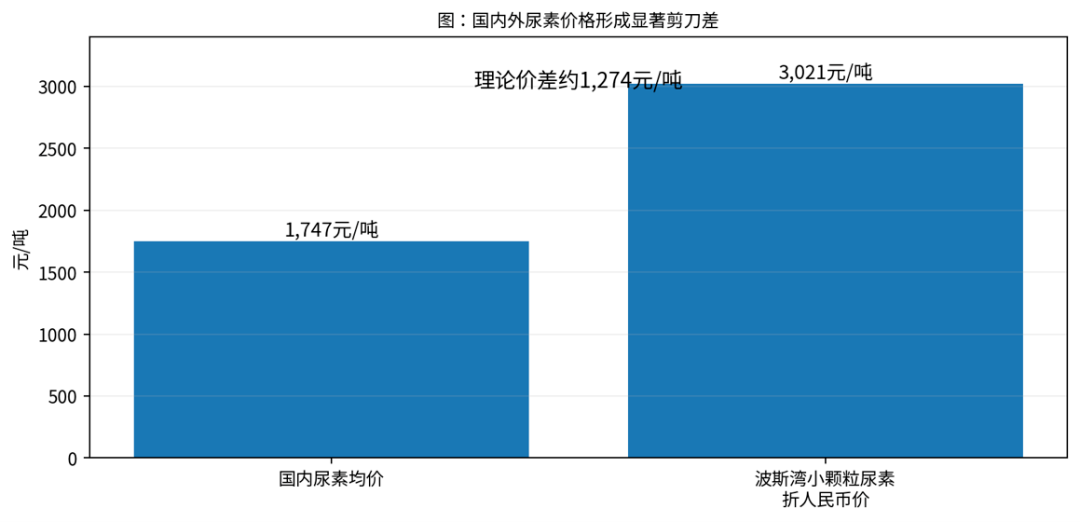
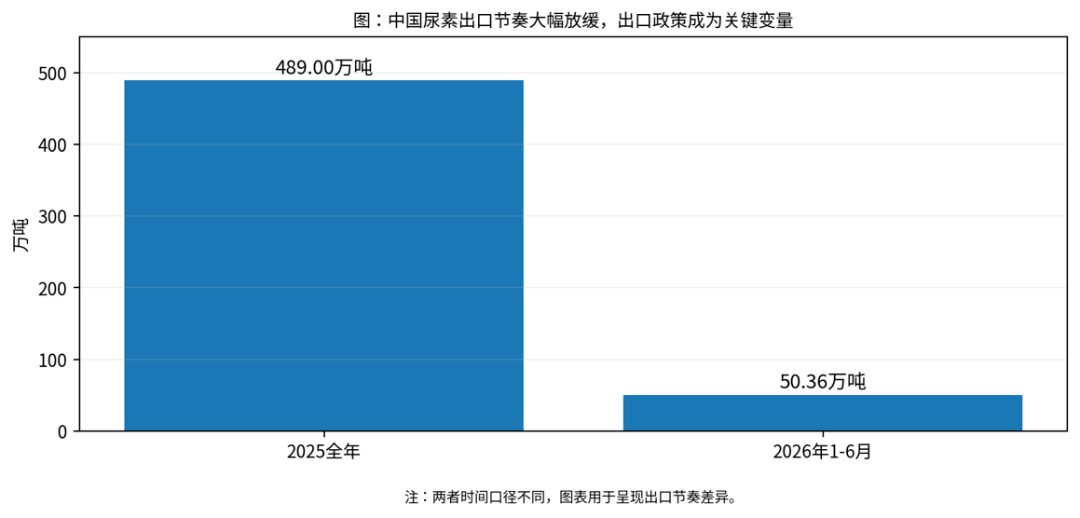
The issue lies in the fact that price differences do not equate to profits being realized. In 2025, China exported 4.89 million tons of urea, while from January to June 2026, only 503,600 tons were exported. Export quotas, guiding prices, Indian bidding volumes, and the actual capacity of overseas markets to absorb shipments determine whether the urea market is a short-term pulse or a sustained recovery.
Why is this important? - Fertilizers are shifting from supply logic to being driven by "resources, trade, and weather"
1. Phosphate has entered a rare "supply-led" cycle
Compared to urea, the mid-term logic of phosphate is more solid.
Currently, tension in overseas phosphate has surpassed mere cost-driven factors. Companies such as Vietnam's Vinachem and Lithuania's Lifosa are planning to reduce phosphate production due to sulfur shortages; shipping risks in the Red Sea and Middle East have further reduced effective supply, and if diammonium phosphate shipped from Saudi Arabia to India has to detour via Africa, freight is about $50/ton higher than the traditional route.
Even if the Strait of Hormuz resumes navigation, shortages of raw materials leading to production cutbacks cannot be immediately repaired, and the market is beginning to shift from "cost pricing" to "supply pricing."
China is also in a key position within the global phosphate supply system. In the first half of 2026, China’s exports of monoammonium phosphate and diammonium phosphate were only 112,600 tons and 73,900 tons respectively, down 56.2% and 87.7% year-on-year; heavy calcium exports were 291,400 tons, only down 3.1% year-on-year.
Export shrinkage is mainly related to domestic supply guarantee policies. With the spring plowing ending and winter storage yet to begin, domestic demand is at a seasonal low point, and changes at the margin in export policies have begun to become the most direct profit catalysts.
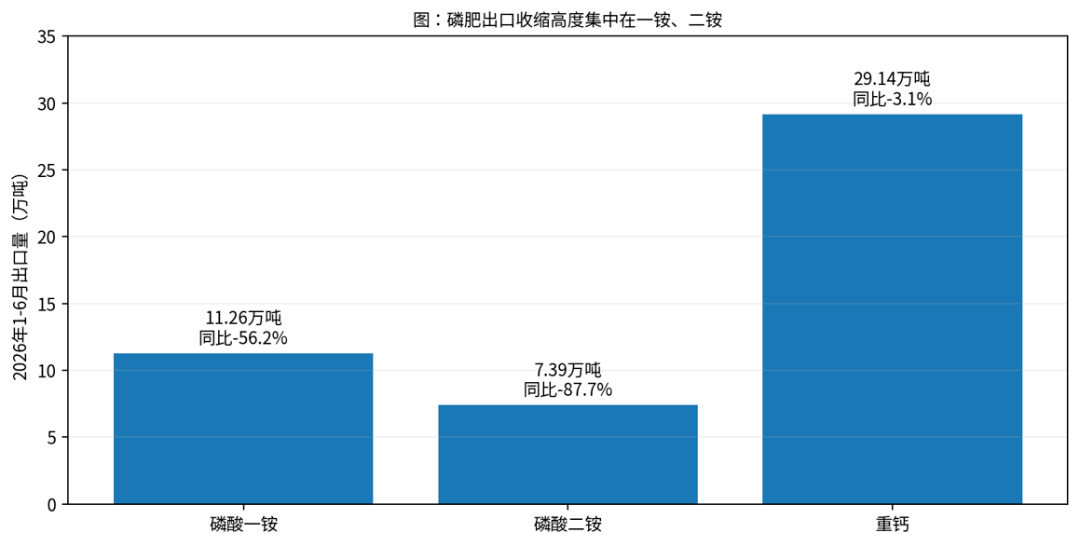
There exists a logic of price differences that is easily underestimated: overseas shortages, China has production capacity, but exports are constrained. Once small varieties with low sensitivity to supply guarantees, such as heavy calcium, first gain export flexibility, companies that integrate phosphate mining resources, sulfuric acid assurance capacities, and overseas channels may see their profit elasticity significantly higher than ordinary production enterprises. Therefore, phosphate also possesses dual attributes of both resource and agricultural products.
2. Potassium is closer to typical resource cycles, where weak and strong can coexist
The supply constraints of potassium are more straightforward.
Maintenance at Russia's Ural potassium facility is expected to reduce production of granular potassium chloride by 300,000 to 400,000 tons in the third quarter, while the Belarusian potassium company anticipates a year-on-year decrease in output of 500,000 tons in the second half of the year, making a total disruption close to 800,000 to 900,000 tons. The global distribution of potassium resources is highly concentrated, and the long development cycle of new mines means changes in grade and maintenance cycles at existing mines will directly impact global marginal supply.
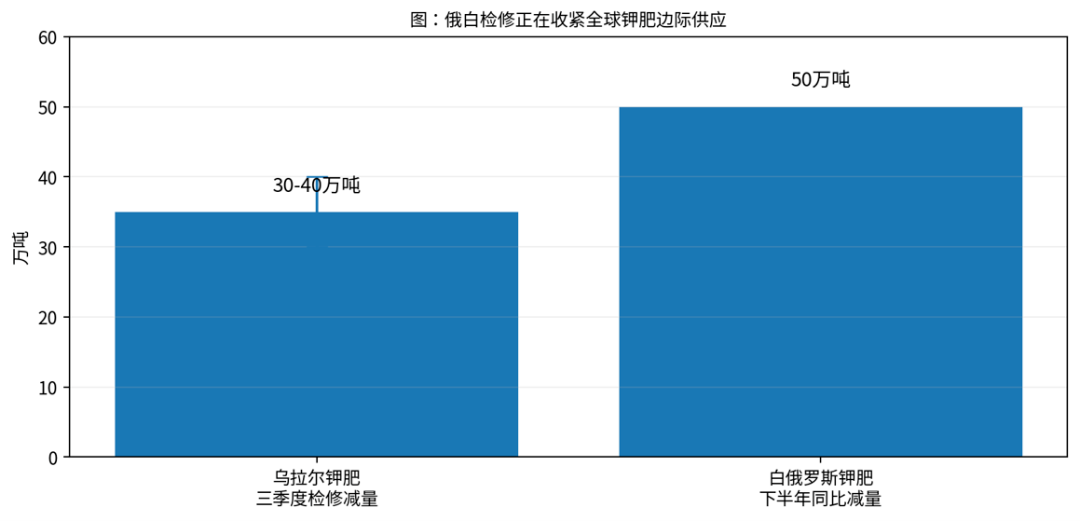
At the same time, in July, the domestic potassium chloride market remained "strong supply and weak demand", with difficulties in trading high-priced goods, prompting sellers to actively discount to reduce inventory.
The short-term weakness in the spot market does not conflict with the mid-term international supply contraction: the former reflects off-seasons and inventory while the latter determines the mid-term price central for resources. If El Niño further drives up prices of high-value crops such as palm oil, sugar, etc., the demand elasticity for potassium may be even more direct than that of staple grains.
3. What El Niño truly changes is the tail probability of demand in 2027
El Niño has limited direct contributions to the current fertilizer market but may significantly alter the demand distribution in 2027.
Fertilizer demand is related to sowing areas, yield targets, and planting profitability. After agricultural product prices rise, the potential increase in yield gained from each additional unit of fertilizer rises; extreme weather may also strengthen the input demands for "maintaining yields". Weather shocks may thus transmit along the path of "agricultural product prices - planting profits - fertilizer willingness - channel restocking" to the agricultural input end.
It is even more concerning the feedback loop: rising fertilizer and energy costs elevate planting expenses, and if farmers reduce fertilization, this may further suppress yields; as grain prices rise as a result, fertilization demand may once again be restored.
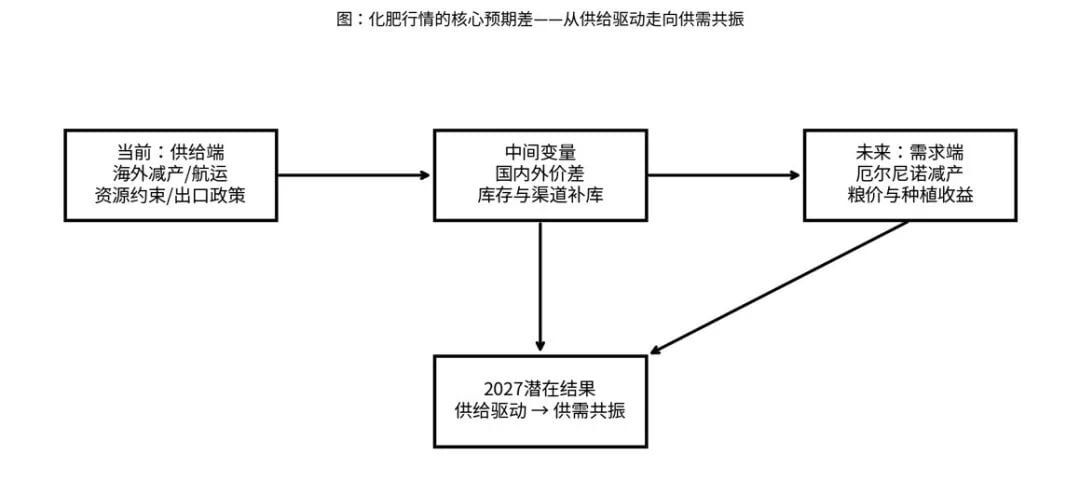
What could genuinely push the market into the second phase is the continuous occurrence of extreme weather, declining grain inventories, high energy costs, and tight fertilizer supply simultaneously appearing. At that point, the current supply-side market would have the chance to evolve into a real supply-demand resonance.
What to watch next? - Food security elevates strategic attributes, phosphate and potassium resources and export elasticity determine profit slope
If the current fertilizer market is merely understood as driven by El Niño, it is easy to overestimate the explanatory power of weather on short-term fertilizer prices. More noteworthy is the mid-term change, as food security is redefining the industrial attributes of fertilizers.
For policies, fertilizers are both a cost item for agricultural products and an essential agricultural input for stabilizing yields; therefore, the policy goal has never been to pursue high fertilizer prices, but to ensure that key resources are controllable, domestic supply is stable, and to dynamically adjust between domestic supply and overseas exports.
The first half of 2026 has already reflected this policy ordering, with a significant contraction in phosphate exports and constraints on urea export rhythm.
Thus, the future investment logic in fertilizers can be divided into three layers: food security dictates the industry strategic position and policy baseline, the global resource and supply framework determines the profit center, while El Niño and agricultural product price increases determine the upward elasticity of the cycle.
Different fertilizer types occupy different positions; phosphate and potassium have more prominent resource security attributes, while urea is more reliant on domestic capacity cycles and export adjustments.
1. Phosphate: Extending from cyclical products to strategic resources, export elasticity may become a recent catalyst
Currently, among the three major single fertilizers, the mid-term logic for phosphate remains the most complete, and under the framework of food security, its resource value is of greater importance than merely rising fertilizer prices.
The upstream phosphate mining development cycle is long, and new mine rights, safety, environmental protection, and resource control are heavily constrained; overseas phosphate is also affected by sulfur shortages, production cuts, and shipping disturbances from the Middle East. Meanwhile, in the first half of 2026, China's exports of monoammonium phosphate and diammonium phosphate were only 112,600 tons and 73,900 tons respectively, down 56.2% and 87.7%, with domestic supply guarantees obviously prioritized over exports.
Food security thus creates a special "double constraint": on one hand, domestic needs to maintain sufficient phosphate supply and reasonable pricing, making complete market-based exports challenging; on the other hand, China is a significant global phosphate supplier, and should overseas shortages persist, the domestic-international price gap will continuously accumulate, with marginal policy relaxations potentially releasing significant profit elasticity.
With the spring plowing phase ending and winter storage not yet started, domestic phosphate demand is at a seasonal low, and supply pressure has significantly eased since spring. Compared to core guaranteed varieties like monoammonium and diammonium, smaller varieties like heavy calcium, which have a lower proportion of domestic consumption, are likely to first reflect export elasticity due to relatively lower policy sensitivities.
In the longer term, the value of phosphate enterprises can no longer just be measured as "phosphate price × sales volume". Enterprises that possess phosphate mining resources, sulfuric acid and ammonia synthesis capabilities, phosphate production capacity, and the ability to extend into new materials, while connecting food security, resource security, and new material demand, are more likely to achieve profit stability exceeding that of ordinary cyclical products.
2. Potassium: One of the most straightforward resource products in food security logic
The food security attribute of potassium is even more direct than that of phosphate.
China can achieve full self-sufficiency in urea, and phosphate has a strong resource basis, but potassium salt resources are highly concentrated globally, the new mine development cycles are long, and domestic resources are limited. Therefore, potassium is both an agricultural necessity and has clear resource security attributes. For China, enhancing domestic potassium resource assurance and expanding overseas potassium resource rights is itself part of the food security system.
Recently, new marginal changes have appeared on the supply side. Maintenance at Russia’s Ural potassium facility is expected to reduce granular potassium chloride output by 300,000 to 400,000 tons in the third quarter, and the Belarusian potassium company anticipates a reduction in output of 500,000 tons year-on-year in the second half of the year, making for a total disruption close to 800,000 to 900,000 tons. The high concentration of global potassium supply means this level of production reduction has a strong impact on marginal prices.
In the short term, there remains a seasonal inventory pressure in the domestic market, with high-priced goods trading weakly, but this does not contradict mid-term resource logic. The price bottom of potassium is more determined by the concentration of global supply and resource scarcity, while agricultural product prosperity dictates the upper space.
If El Niño further drives up the prices of high-value crops such as palm oil, sugar, rubber, and even some grains, after improvements in planting profits of high-value crops, farmers' willingness and ability to pay for and use potassium may increase in tandem.
Thus, potassium can be understood as an asset providing "long-term logic for food security, resource constraints offering price floors, and agricultural prosperity providing upside options."
Resource volume, low costs, and the ability to realize new production capacity are core indicators.
3. Urea: Supply guarantee attributes trump resource scarcity, short-term odds depend on export realization
Urea is also an important basic material for food security, but its investment logic differs significantly from that of phosphate and potassium; China’s coal chemical system gives urea a strong autonomous guarantee capacity, thus its strategic value is more expressed through stabilizing domestic supply and regulating global markets rather than resource scarcity.
In the first half of 2026, urea demand performed strongly, with apparent demand growing by approximately 7.2%, with a growth rate of 7.8% from January to April, and considering hidden inventory, the actual growth rate may reach 8-10%; however, this includes factors such as advanced spring plowing demand, the price advantage of urea relative to phosphate and potassium, melamine exports, and some indirect exports.
The second half faces opposite pressures. East Trust Futures expects the annual demand growth rate for urea to fall to about 5%, below the 7.86% forecast for year-on-year growth in total output.
Therefore, the key current variable for urea remains exports. International prices are significantly higher than domestic, India maintains strong import demand; if export quotas and actual flow increase, this can effectively alleviate domestic surplus and allow Chinese companies on the left side of the global cost curve to share in the overseas high prices.
However, food security means that export policies must always find a balance between company profits, international markets, and domestic supply guarantees; the export space will not simply equate to theoretical price differences.
This also determines that urea is more suitable as a highly elastic variety rather than the most stable mid-term allocation direction among the three main fertilizers.
Conclusion
In summary, food security may become the more durable mid-term trading mainline for the fertilizer industry over the coming years than El Niño.
It strengthens the strategic attributes of upstream resources such as phosphate and potassium salts, and makes domestic supply, export policies, and industrial chain integration important variables affecting corporate profitability.
In 2026, the industry first trades around resource constraints, geopolitical conflicts, overseas supply, and domestic-international price differences; what El Niño determines is whether the demand side can take over in 2027.
If agricultural product prices further reflect weather-induced production risks in the coming six months, the fertilizer industry may experience a second round of logical shifts: phosphate may shift from "resources + exports" to tight supply-demand balance, potassium may enter a resonance with agricultural prosperity from a resource cycle, while urea will need to observe whether demand improvements can offset new production capacity.
At that time, food security could provide a base for valuation, resource constraints could determine profit centers, and El Niño and grain prices could determine upward elasticity, possibly becoming a more complete framework for understanding this round of agricultural chemical cycles.
免责声明:本文章仅代表作者个人观点,不代表本平台的立场和观点。本文章仅供信息分享,不构成对任何人的任何投资建议。用户与作者之间的任何争议,与本平台无关。如网页中刊载的文章或图片涉及侵权,请提供相关的权利证明和身份证明发送邮件到support@aicoin.com,本平台相关工作人员将会进行核查。


