
Billions Wasted.
Author/Chen Jia
Reported by/Investment Circle PEdaily
It's lamentable.
In early August, European bicycle leader Accell Group announced it would begin bankruptcy proceedings.
The name may sound unfamiliar, but its brands almost hold up half of the European bicycle market. At its peak, it owned well-known brands such as Batavus, Sparta, Koga, Lapierre, Haibike, Ghost, and Raleigh, having once topped the European E-bike market.
This is also a rare failed investment by KKR.
Looking back to 2022, KKR led a consortium in acquiring Accell for approximately 1.56 billion euros, with equity contributions exceeding 1.1 billion euros. In February this year, KKR handed control of the company to creditors, and the initial equity investment essentially went to zero. Including further capital injections, this project totaled over 10 billion yuan in investment.
Popular during the Pandemic
KKR Bought a Bicycle

Why did KKR take interest in a bicycle?
Let's go back to after 2020, when the pandemic swept the globe, limiting public transportation and causing an explosion in outdoor sports demand, with bicycles, especially electric bicycles, experiencing unprecedented prosperity. Green travel, urban transportation, personal health, almost every word hit the hottest long-term investment themes of the time.
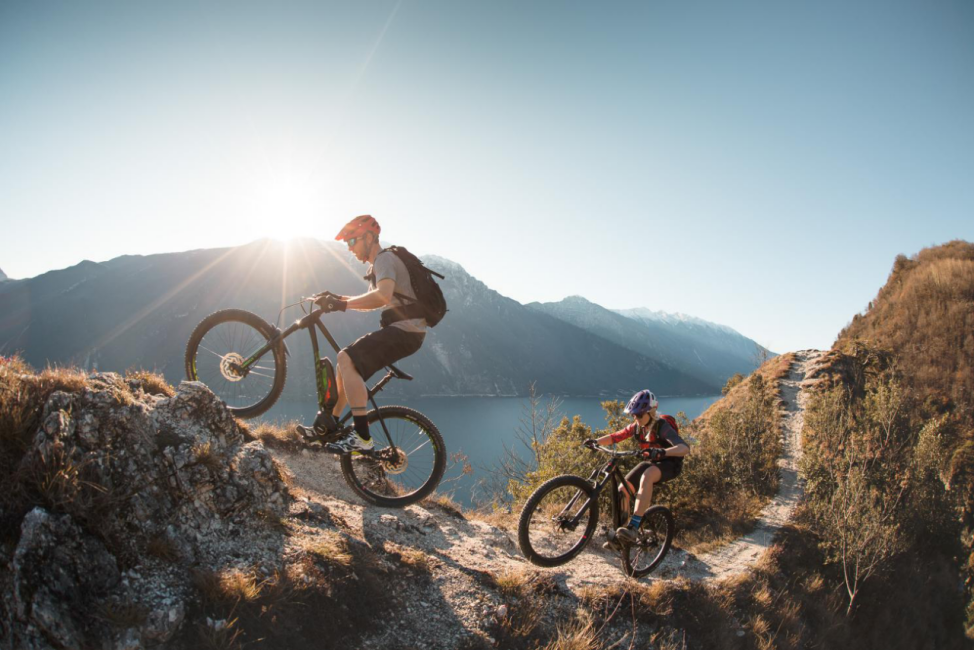
Accell became one of the most dazzling companies in this wave. In 2021, Accell achieved revenue of 1.377 billion euros, and its earnings before interest and taxes reached 110 million euros, a year-on-year increase of 47.3%. Electric bicycles, cargo bicycles, and components collectively painted an enticing growth picture.
KKR joined in.
In January 2022, KKR, in collaboration with Dutch investment firm Teslin, made a cash offer to acquire Accell at 58 euros per share, valuing the deal at around 1.56 billion euros. This price represented a 26% premium over the closing price before the announcement and was about 21% higher than Accell's historical high closing price of 48 euros.
KKR shared its logic for the investment: climate change, urban mobility, and personal health will drive bicycles, particularly electric bicycles, to play an increasingly important role in global transportation systems. After going private, Accell could free itself from the short-term performance pressures of public markets, speeding up brand building, supply chain transformation, international expansion, and mergers and acquisitions.
Everything seemed to make sense.
This deal didn't even qualify as the most aggressive leveraged buyout. According to the disclosure at that time, KKR's fund provided 1.15 billion euros in equity financing, along with 700 million euros in debt financing, with debt accounting for less than 38% of the funds required for the transaction; the parties also agreed that the net leverage ratio would not exceed five times. The acquisition announcement described it as a "prudent capital structure."
But hidden dangers, obscured by a wave of prosperity, had already piled up in warehouses.
By the end of 2021, Accell's inventory surged while free cash flow turned negative at 127 million euros, with net debt rising from about 50 million euros to 187 million euros. The better the bicycles sold, the more cash the company lacked.
At that time, global supply chain disruptions led companies to worry about securing parts, prompting them to continuously place early orders and stockpile inventory. As long as demand continued to rise, this approach could be sustained. However, no one anticipated that the parts and bicycles in the warehouse would rapidly turn into a cash flow black hole.
Behind the Bankruptcy
Billions Went Down the Drain

Risk at its peak rarely presents itself as bad news. It more often disguises itself in the garb of growth, quietly lying in financial statements and warehouses, waiting for everyone to believe that prosperity will continue, while the cycle had quietly turned.
After the pandemic ended, Europeans returned to offices and public transportation, and the bicycle consumer craze quickly faded.
Consequently, bicycle manufacturers and dealers, who had frantically expanded production and repeatedly placed orders, found their warehouses filled with unsold goods. The entire industry faced overstock, and in order to recover funds, they could only offer discounts. The lower the prices fell, the thinner the profits became; the thinner the profits, the harder it was to repay the debts.
In 2023, Accell's revenue dropped by about 10% to 1.294 billion euros, with a net loss for the year reaching 390 million euros.
Inventory issues, restructuring, and recalls erupted almost simultaneously.
During this time, the Babboe incident struck Accell a heavy blow. In February 2024, the Dutch Food and Consumer Product Safety Authority found that some Babboe cargo bicycles posed a risk of frame breakage, potentially causing serious injury to users and children inside, leading to an immediate halt in sales of all cargo bicycles and the recall of multiple models.
With inventory unsellable and crucial brands facing sales stoppages and recalls, Accell's cash flow continued to bleed.
Meanwhile, high interest rates increased the cost of debt. By 2024, Accell's debt had reached about 1.4 billion euros.
KKR had no choice but to involve creditors for a restructuring: reducing approximately 600 million euros in debt, bringing the operating group's debt down to about 800 million euros, adding around 235 million euros in liquidity, and extending maturity to 2030. At that time, KKR still maintained control.
Looking back now, this restructuring only bought a year of time. In February 2026, Accell was forced to restructure again. KKR handed control of the company to super-priority lenders and provided further funding and debt reductions for the company. Thus, KKR ended its control over Accell.
KKR expects to lose its entire initial equity investment of about 1.1 billion euros, along with hundreds of millions of additional funds provided later to stabilize Accell. In terms of RMB, KKR's billion-dollar investment might be entirely wasted.
Insights
Buying is just the first step

The investment circle is no stranger to KKR.
Founded in 1976, this pioneer of leveraged buyouts made headlines in the 1980s when it acquired tobacco and food giant RJR Nabisco for over 30 billion dollars, writing one of the most famous acquisition cases in financial history.
The basic logic of leveraged buyouts is not complex: investment firms use a small amount of equity combined with a large amount of debt to acquire companies, and then use the cash flow from the acquired company to repay the debt. As long as operations improve and profits grow, shareholder returns will be magnified.
But the reverse is also true. Once a company's revenue declines and profits vanish, debt will not decrease accordingly, and interest must still be paid. At this point, leverage ceases to be a tool for enhancing returns and becomes a heavy burden crushing cash flow.
Therefore, what truly determines the success or failure of a merger and acquisition is never the day of the acquisition itself, but the following years after the acquisition.
KKR founder Henry Kravis has a classic saying: "Our work really starts the day we buy the company."
This is also a crucial reason why modern private equity increasingly emphasizes "Operational Value Creation." Nowadays, almost all large private equity firms have established dedicated operating teams, hoping to gradually shift financial investment to operational investment.
As leading figure in the Chinese M&A circle Yu Liping, who has handled classic mergers such as Geely's acquisition of Volvo Cars, once said in discussions with the investment community, post-merger integration is far more important than the acquisition itself. Whether a project is successful is not just defined by the completion of the transaction, but also requires looking three years ahead to see whether the initial strategic and integration plans established at the time of acquisition can be realized, thereby improving data and performance for the target company. This is the true meaning of success.
This reasoning is understood by everyone, but truly implementing it is not easy. Even KKR, which is well-versed in this approach, cannot avoid all risks. In 2023, KKR's investment of about 9.9 billion dollars to acquire US healthcare provider Envision Healthcare filed for bankruptcy; in 2025, its main integrated auto parts giant Marelli entered bankruptcy proceedings again.
Of course, one or two failures cannot erase KKR's achievements over the past half-century. Just this year, KKR achieved several times, even tenfold returns through multiple projects.
Currently, the entire private equity industry is undergoing a repricing.
In the era of low interest rates, private equity returns benefited largely from cheap debt and valuation multiple expansions. According to McKinsey, these two factors contributed 59% to Buyout investment returns between 2010 and 2022. Now, the era of cheap capital and easy valuation increases is gone, and operational improvement is shifting from a "bonus point" in investment firm promotional materials to the core capability determining returns.
Leveraged buyouts have not become ineffective; rather, the era relying on low-cost capital, rising valuations, and time dividends for easy profits is fading.
Capital can buy a company, but it cannot buy a company's future. Transactions can be completed in a single day, while a company's true value can only be cultivated over a long period through careful management.
免责声明:本文章仅代表作者个人观点,不代表本平台的立场和观点。本文章仅供信息分享,不构成对任何人的任何投资建议。用户与作者之间的任何争议,与本平台无关。如网页中刊载的文章或图片涉及侵权,请提供相关的权利证明和身份证明发送邮件到support@aicoin.com,本平台相关工作人员将会进行核查。


