Author: Hayden Adams, Founder of Uniswap
Translated by: Jiahua, ChainCatcher
I have been working on the cutting edge of DeFi for 9 years. It is a fascinating field with near-infinite potential and depth, capable of transforming capital markets.
I have always believed that AMM has great potential, but for the past decade, one question has puzzled me: Can this new market structure truly become the core engine of all financial markets?
After years of evolution and growth, a path toward AMM dominating broader financial markets is becoming increasingly clear. To explain this, it is best to start from 1976.
Tokenization changed who does market-making
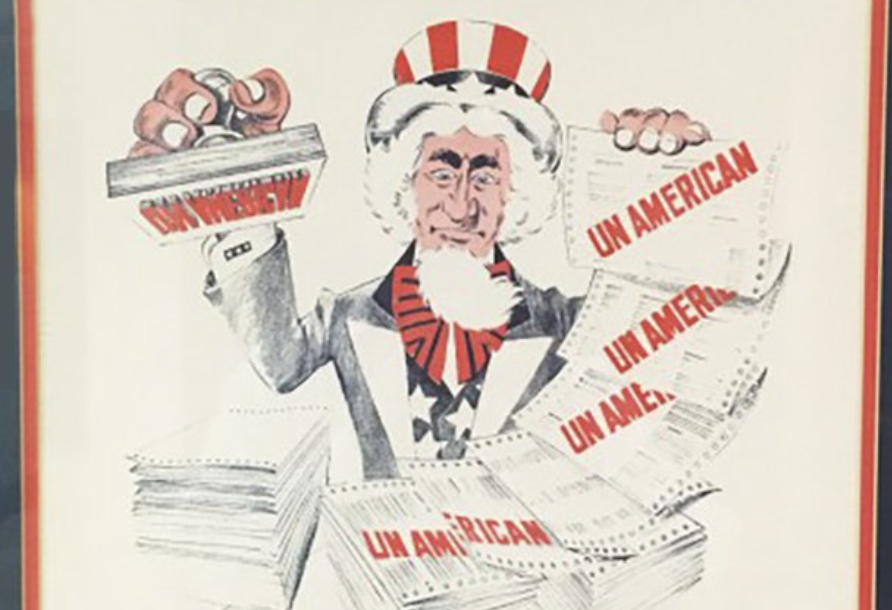
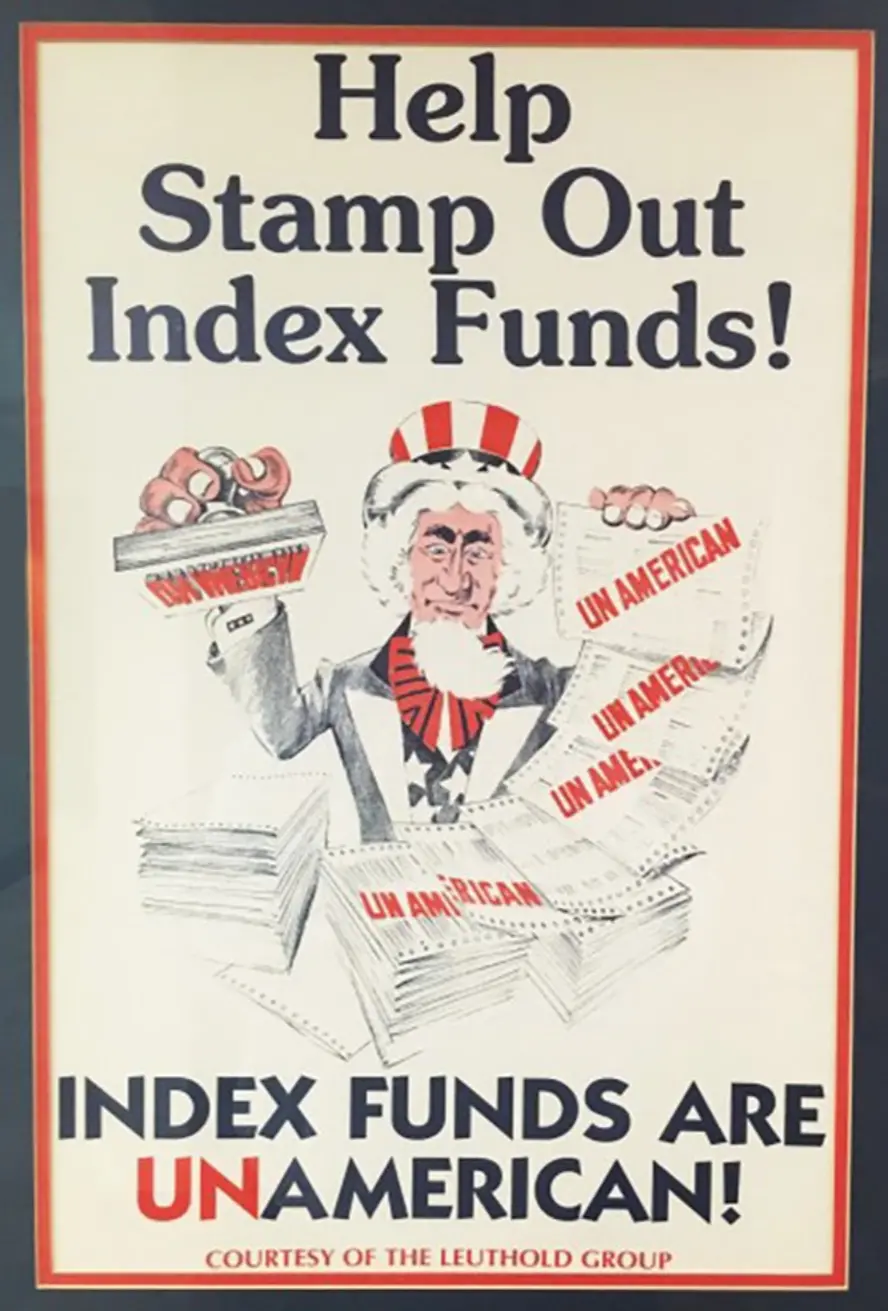
The index fund celebrated its 50th anniversary this month. When Jack Bogle launched the index fund in 1976, he hoped to raise $150 million but ended up raising only $11.3 million. Competitors referred to it as "Bogle's foolish move," even making posters accusing index funds of being "un-American."
They believed a fund that made no investment decisions could never outperform highly paid professionals responsible for making investment decisions. Today, most assets in American funds have entered passive investment vehicles.
Recently, I have been thinking about this because the stage of tokenization that was once considered "fanciful" is also coming to an end. The SEC has already approved Nasdaq and NYSE trading tokenized stocks. The DTCC, which handles the settlement of almost all U.S. securities, conducted a real-world test of tokenized trading in July. Almost all these changes have been described in the same way: Tokenization is an infrastructure upgrade.
The same market, just faster, cheaper, and operational around the clock. These statements are all correct, but I believe the term "infrastructure upgrade" obscures a bigger story. Tokenization makes markets programmable, changing which markets can exist, who does market-making in those markets, and what assets can be traded directly within those markets.
In 2018, I created Uniswap, an automated market-making protocol. Anyone can deposit two assets into a shared liquidity pool and earn fees from each transaction; as users buy and sell, prices automatically adjust along a curve. Uniswap has been operating autonomously since day one, with a total trading volume exceeding $46 trillion and driving the market share of decentralized exchanges' spot trading from less than 1% of centralized exchanges to over 20%.
As AMMs like Uniswap continue to evolve, their liquidity gradually forms a pattern that most financial market participants have yet to notice: correlated trading pairs.
Which markets did AMM win first
To win larger markets, you first have to win a portion of the market. AMMs first found product-market fit in long-tail markets because most of these assets cannot attract the attention of professional market makers. On Uniswap, anyone can create a market with a single transaction, and asset issuers and early supporters can become the initial liquidity providers.
Next came stablecoin trading pairs. For trading pairs like USDC/USDT, an excellent passive strategy is already close to optimal, while lower capital costs are sufficient to bridge the efficiency gap. This is also why professional trading firms today hardly provide market-making for these stablecoin exchange markets: they are being crowded out by passive AMMs with lower costs and lower return requirements.
Scale barriers of traditional market makers
Traditional financial markets essentially belong to market-making firms. They consolidate capital, trading strategies, execution technology, settlement, and distribution into a single vertically integrated business. There are good reasons for this architecture: assets exist in independent systems, settlement is slow, and every step must be completed by someone, so it is most natural for a single company to be responsible for all functions.
As long as the scale is large enough, all these fixed costs can ultimately be diluted. Citadel Securities handles about 25% of U.S. stock trading volume, generating a record $12.2 billion in net trading revenue last year using about $21 billion in trading capital.
Most people see these numbers as proof of the effective operation of this system. What I see, however, is a market landscape that has already been firmly occupied.
Blockchain is dismantling the traditional market-making system
Blockchain allows for competition at every layer, thus dismantling the once-bundled system. Execution is performed by code, custody and settlement become shared services accessible to anyone, and tasks that once required proprietary infrastructure are now accomplished through open-source software.
For AMMs, capital is the most scarce input; the advantage belongs to those who can hold asset inventories at the lowest cost. A trading firm needs to achieve a high return to cover its own costs, so a liquidity provider willing to accept lower returns can compete at lower costs.
Most market makers hedge almost all price risks, and hedging itself has costs, so an investor who already holds these assets can take on this price exposure for free. The capital cost for asset issuers may even be negative because issuers typically pay professional market makers to provide liquidity for new assets.
In simple terms, DeFi and AMMs have lowered the barriers to entry for market-making, allowing more new participants to enter this market. Their advantages may come from many places, such as lower capital costs, a willingness to hold asset exposures that professional firms usually hedge against, or even because they themselves are asset issuers.
But it all ultimately depends on one question: Do the performance of automated strategies make these advantages truly effective?
Correlated trading pairs
Recently, I had a call with one of the world's largest financial institutions. They asked me what the most common primary paired assets in DeFi are. I explained that Ethereum ecosystem assets tend to trade with ETH, Solana ecosystem assets generally trade with SOL, stablecoins trade with each other, and transactions between these clusters of liquidity are connected through a small number of highly liquid trading pairs.
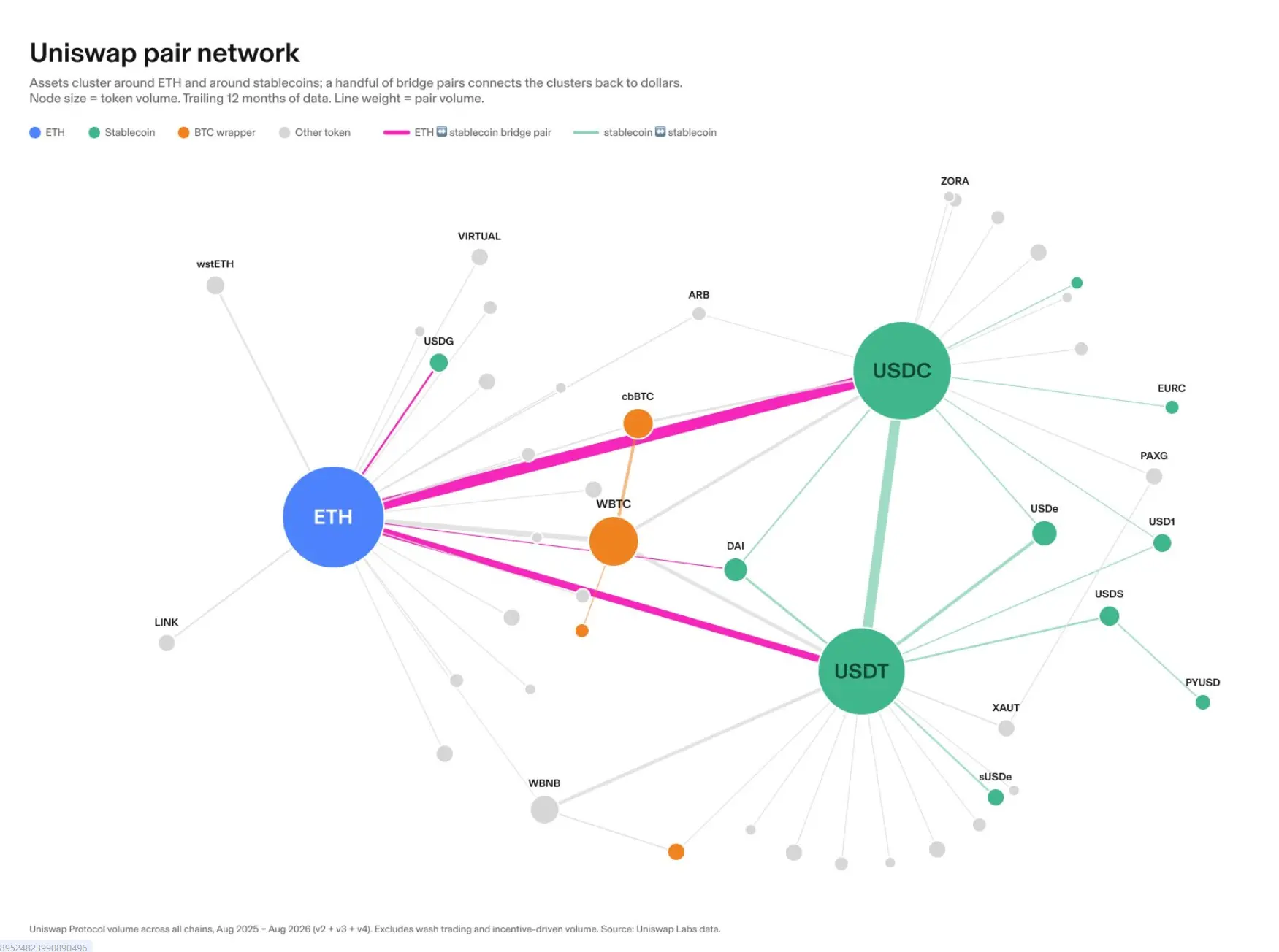
No one has specifically designed this structure. It has formed naturally, one reason being that when the two assets held by a liquidity provider move in tandem, they tend to perform better. The correlation between assets means that the holding risk for liquidity providers is lower, resulting in deeper liquidity. As more and more assets are tokenized, the largest financial markets globally will also reorganize in the same way.
Today, this isn’t possible because traditional financial markets require, for practical reasons, that almost all transactions must be settled in U.S. dollars. Different assets exist in mutually exclusive systems, with fiat currency infrastructures like SWIFT and Fedwire acting as glue to stick them together. But blockchain serves as a more flexible and programmable connective layer. Once assets are tokenized, they share the same settlement layer, allowing any asset to trade directly with any other asset.
NVDA/USD can become NVDA/SPY, and then use SPY/USD as a bridge back to dollars. Shares of oil companies can trade with oil ETFs or tokenized crude oil, and private credit can trade with tokenized U.S. Treasury funds. Tokenization can also create markets across different asset classes, which is extremely difficult and even impossible to achieve in traditional financial infrastructure.
Delta neutrality is a form of inefficiency
Traditional market-making firms generally aim to maintain "Delta neutrality." In traders' terms, it means pricing in dollars and minimizing any non-dollar risk. When making markets for high volatility assets, they spend money to reduce their non-dollar risk, which is hedging, usually completed through options. This is one of the higher cost components of traditional market-making.
Creating correlated trading pairs composed of lower volatility assets and then connecting them with a small number of higher volatility "bridge trading pairs" can release a lot of efficiency. But the most important point is that if the market makers are willing to hold these underlying assets, then making markets becomes cheaper and more efficient.
The higher the correlation among a set of assets, the smaller the efficiency gap between today’s passive AMM strategies and cutting-edge active strategies, making it easier to compete with the latter at lower holding costs.
Specifically, if someone holds NVIDIA for the long term, they are likely also holding SPY for the long term. Therefore, compared to NVIDIA/USD, the efficiency gap between passive AMM and active strategies in the trading pair NVIDIA/SPY is much smaller.
How correlated trading pairs connect the entire market
If stocks mainly trade with SPY, then all transactions starting or ending in dollars will go through the same trading pair: SPY/USD. These bridge trading pairs still require highly specialized market-making capabilities, but their numbers will be reduced significantly, and they will carry a large enough trading flow to justify professional institutions investing resources.
DeFi has already proven this structure. ETH/USDC is currently one of the deepest markets on-chain because trades between different liquidity clusters are routed through it. Passive liquidity providers supply liquidity for correlated trading pairs while active liquidity providers compete on bridge trading pairs.
Investors can still use dollars to buy and sell all assets because routing between different pools is completed automatically. Meanwhile, liquidity will concentrate in the lowest-risk places rather than remaining in the positions where traditional infrastructure requires it to exist. This will drive the deepest markets to gradually shift towards correlated trading pairs, which is precisely where AMMs already have the greatest advantage.
Tokenized stocks have begun trading this way
The initial correlated liquidity on-chain came from crypto-native assets. But today, the first correlated markets for tokenized stocks have emerged: currently, 10 tokenized stocks directly trade with SPY through Uniswap pools on Robinhood Chain.
In the first 12 days after their launch, these pools completed $33 million in trading volume, with over 11,000 users participating in trading, a significant portion of which occurred during U.S. stock market hours. Some trades even exchanged one stock directly for another without going through dollars.
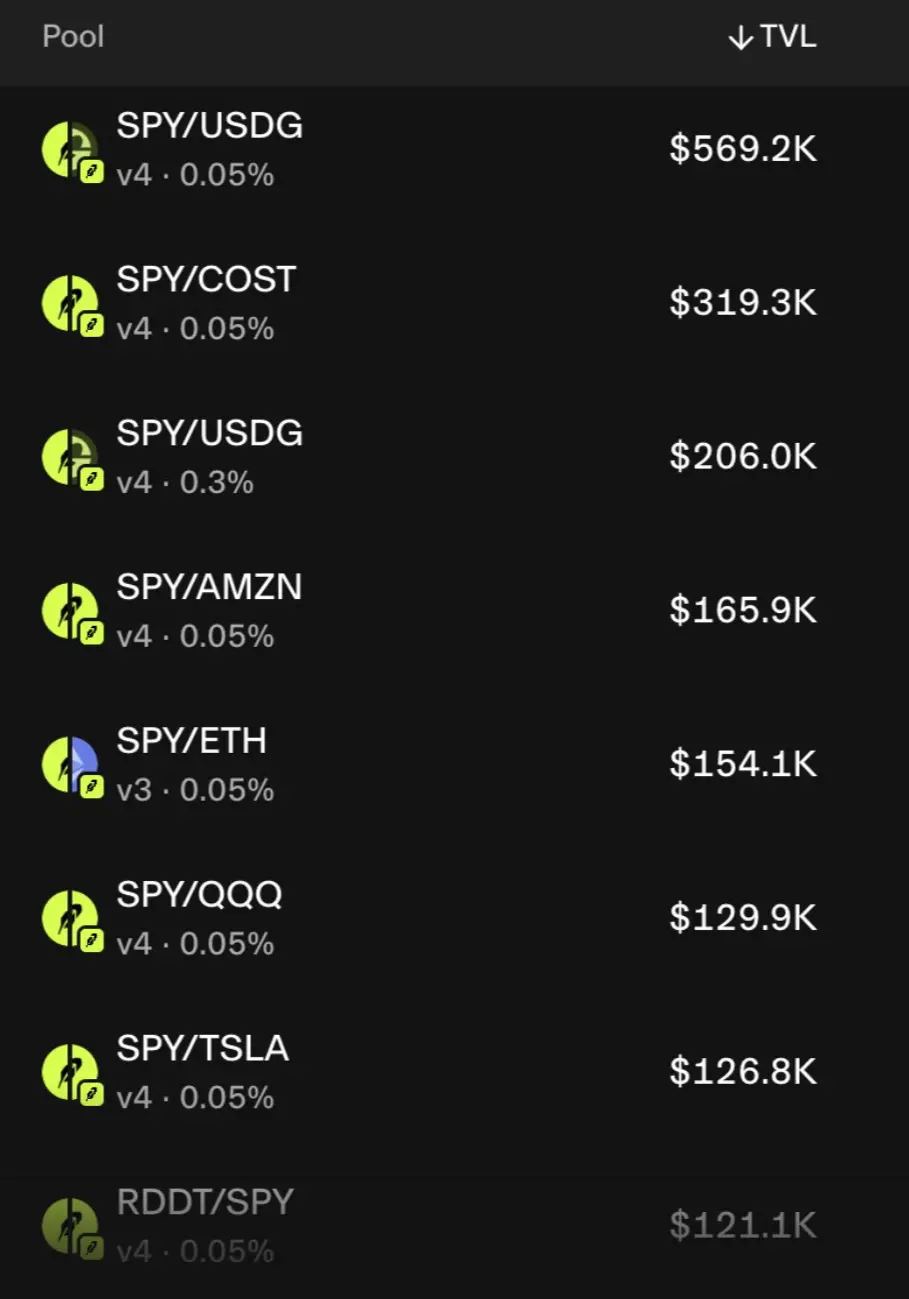
It is worth mentioning that we are even starting to see meme coins and so-called "related" stocks forming trading pairs: Elon-related meme coins paired with Tesla stocks, hotdog meme coins paired with Costco stocks. It is hard to say how correlated they are in price, but I believe that "vibe" may also be a form of correlation.
AMM may ultimately prevail
Correlated trading pairs are only part of the puzzle, another part is the design and customizable capabilities of AMMs.
Uniswap v4 Hooks allow for complete market customization and significantly enhance liquidity providers' earnings. For example, the DualPool Hook we recently launched enables unused funds in passive AMMs to earn lending yields.
Although Uniswap has completed about $46 trillion in trading volume, I believe AMMs are still in a very early stage, and there are many ways to further boost their competitiveness. Internally within Labs, as well as with our partners and across the ecosystem, there are explorations into more methods to enhance LP yields. More progress will come in the future.
In 1976, the reasons for opposing index funds were that a fund making no decisions could never outperform those professional investors who were paid to make decisions.
Fifty years later, a "non-decision-making" fund has beaten about 90% of professional investors. More importantly, index funds made investing more accessible and improved the lives of ordinary people.
I believe passive liquidity will also prevail along a similar path, and the impact will be even greater as it dramatically lowers the barriers to creating and participating in markets.
免责声明:本文章仅代表作者个人观点,不代表本平台的立场和观点。本文章仅供信息分享,不构成对任何人的任何投资建议。用户与作者之间的任何争议,与本平台无关。如网页中刊载的文章或图片涉及侵权,请提供相关的权利证明和身份证明发送邮件到support@aicoin.com,本平台相关工作人员将会进行核查。


