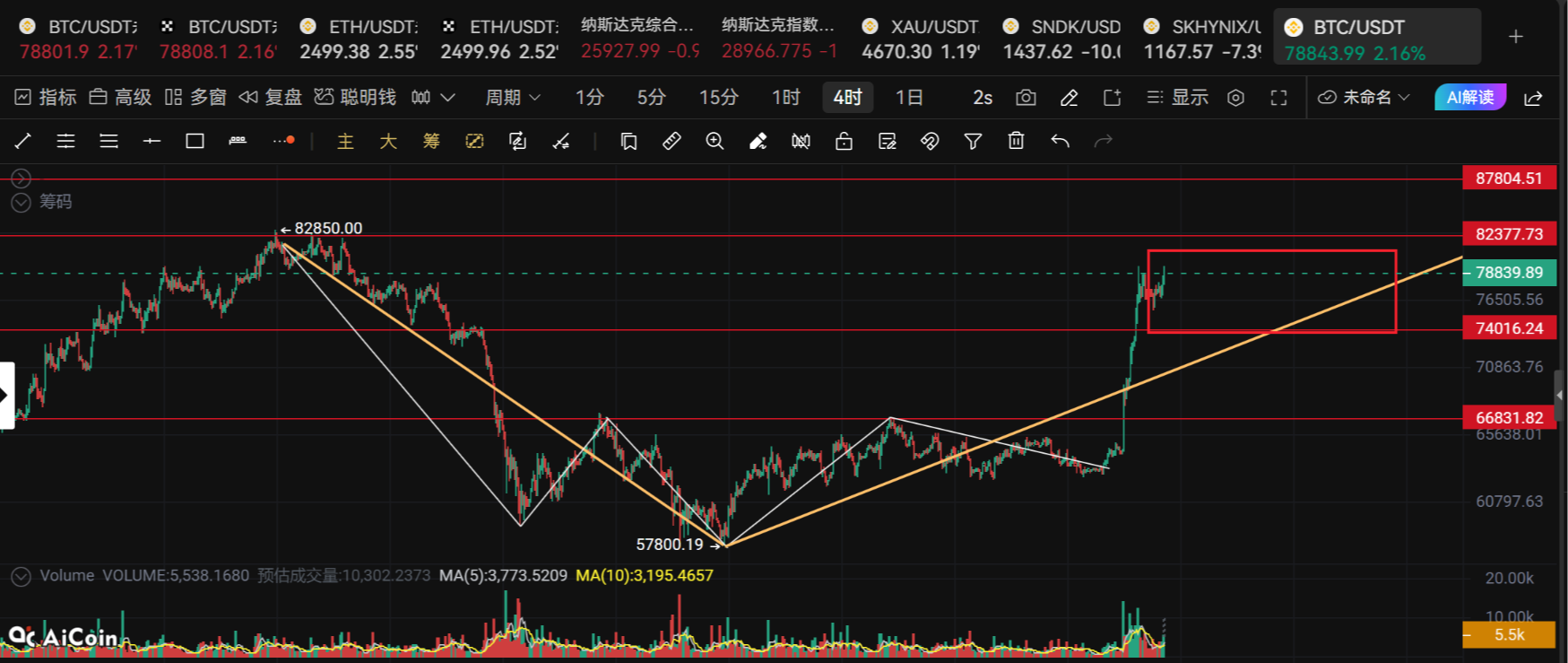
The cryptocurrency market has thousands of coins listed, and manually analyzing the candlestick charts, checking the rankings, and comparing trading volume and positions is both time-consuming and likely to miss genuine opportunities driven by capital. AiCoin's "Conditional Coin Selection" feature is precisely about productizing this selection logic: using multidimensional real-time data to help you quickly identify targets that align with your strategy.

The operation path is very simple: Home → Conditional Coin Selection → Filter.
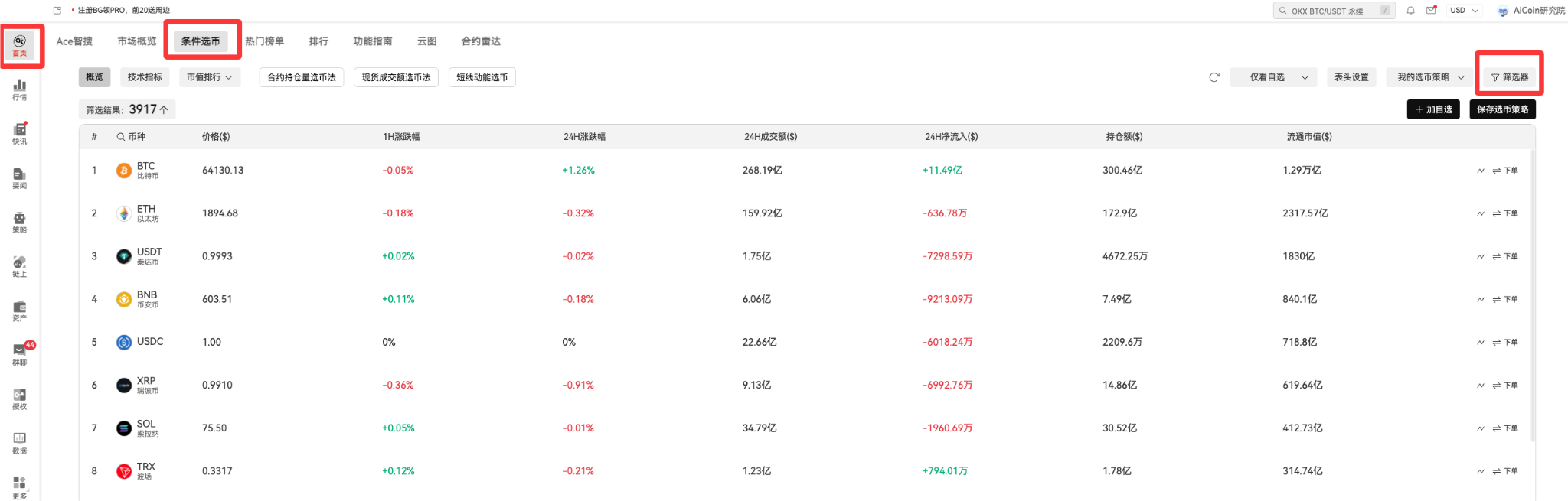
Next, we will directly present practical strategies, specific examples, and subsequent operational suggestions to help you get started immediately.
1. Core Strategy: Volume and Price Combination (Capturing Real Volume Breakouts)
One of the most reliable underlying logics is that "price breakouts must have volume verification." If the price effectively breaks through key resistance while volume significantly increases, it indicates real capital movement, greatly reducing the likelihood of false breakouts. Example of practical conditions (capturing short-term strength):
- Price: 1H price change ≥ 1.5% (capturing short-term price strength)
- Volume: 24H volume change ≥ 30%, and 24H trading volume ≥ 10 million
- Risk Filtering: Market cap ≥ 50 million USD (avoiding ultra-small market cap coins with extremely poor liquidity that can greatly slip or even get delisted)
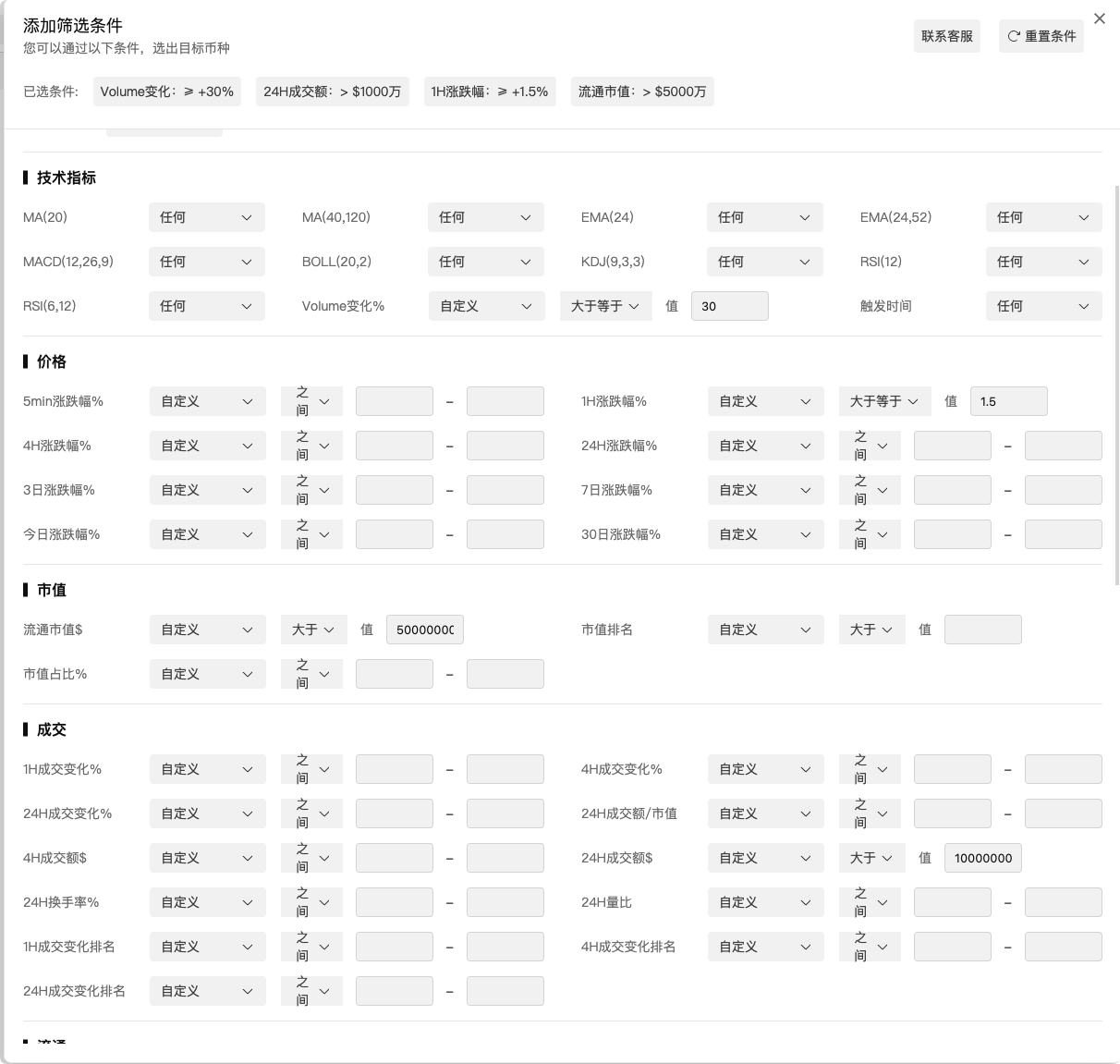
After filtering, immediately open the candlestick chart to confirm whether the breakout is valid and if there is significant resistance, then decide whether to enter the market. Add interesting coins to your watchlist or directly save this screening strategy for easy review and tracking later. This combination effectively filters out "only price movement, without capital support" false breakouts, increasing the success rate of trend trading.
2. Advanced Practical Strategy Ideas
1. Position Change Coin Selection Method (Capturing Contract Fund Movements)
Closely monitor coins with prominent position changes while adding market cap or ranking restrictions to filter out low liquidity coins. Example: When the overall market is weak, if a coin has a 24H declining price but ranks high in position change, it indicates that short contracts are increasing. This can serve as a signal to short in the prevailing trend or as a reference for positioning before a rebound. Use candlestick patterns to determine if it will continue to fall or is brewing a rebound.
2. Short-term Hotspot Capture Method (Exploiting Intraday Volatility)
Directly filter coins with significant price or volume fluctuations over the short term. Example: Set conditions for large price changes over 5 minutes/1 hour + significant volume change to quickly identify the day’s hotspots. Overlay indicators like RSI to filter overbought or oversold conditions, suitable for intraday traders to capture short-term opportunities.
3. Oversold Rebound Screening Method (Low-cost Bottom Fishing)
Select coins that have experienced large declines but still have reasonable liquidity. Example: Set conditions for significant declines over a certain period + market cap thresholds + (optional) volume change conditions. During market corrections, these assets that have been irrationally sold off tend to have more considerable potential returns once they rebound. Conditions can be relaxed, focusing mainly on liquidity.
4. Contract Trend Recognition Method (Multi-Timeframe Resonance)
Combine price changes and position changes across different timeframes to judge short-term direction. Example of a short-term bullish signal: Both 4H and 1H show increases, while 1H position changes increase → indicates a short-term upward trend. Also analyze candlestick patterns to determine whether the price is on the rise or approaching a peak, guiding the decision to chase or wait for a pullback.
3. Simulated Practice: How Xiao Li Seized Opportunities Using Real Selection Results
To give everyone a better sense of immersion, we will use a real screenshot of the "Conditional Coin Selection" interface to simulate the trading process of a trader named Xiao Li. Character setting: Xiao Li, a full-time trader for two years, prefers short to medium-term trades, likes to find targets where "volume has noticeably increased but the price increase is still small," believing this often indicates capital is quietly positioning. Scenario: On a certain trading day, Xiao Li opens AiCoin's "Conditional Coin Selection," switches to "Spot Trading Volume Selection Method," and sets the following filtering conditions:
- 1H volume change ranking: top 10
- 4H volume change ranking: top 10
- 24H volume change ranking: top 10
- 24H price change ≤ +10%
(Goal: Lock in coins that have active trading recently but have not significantly increased in price, avoiding chasing highs.) Filtering result (real data): A total of 6 targets appeared.
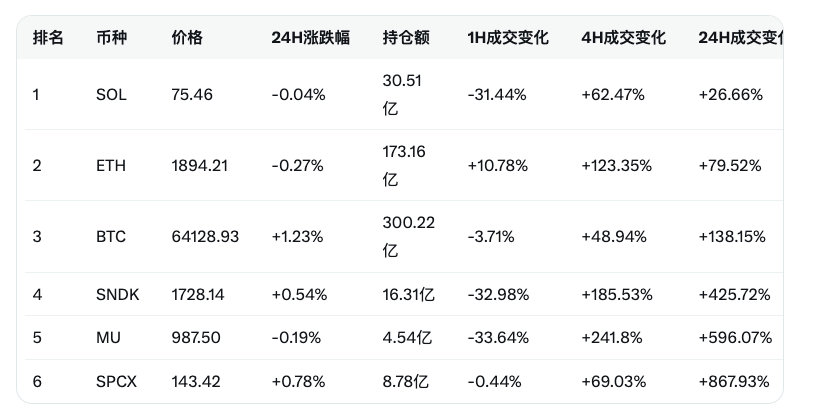
Xiao Li's analysis and decision-making:
1. First, exclude coins with a substantial negative 1H volume change (such as SOL, SNDK, MU), as short-term momentum has temporarily receded.
2. Focus on ETH: The price has slightly dropped by -0.27%, but the 1H volume change was +10.78%, 4H surged by +123.35%, and 24H volume change was +79.52%, with a decent turnover rate. This indicates continuous capital inflow, yet the price has not kept up, representing a clear "volume precedes price" signal.
3. Then look at BTC: The 24H volume change reached +138.15%, while the price only increased by 1.23%, also fitting the "increased volume but manageable price rise" situation.
4. SPCX's 24H volume change exaggeratedly reached +867.93%, but Xiao Li felt the volatility might be too high and decided to observe first.
Xiao Li immediately added ETH and BTC to his watchlist and clicked "Save Coin Selection Strategy," naming it "Volume Surge · Manageable Price Increase." He then opened ETH's candlestick chart to confirm support and resistance levels and set up price alerts.
He plans: If the 1H or 4H continues to see increased volume and the price starts to break upwards, he will enter with a light position; if the price continues to decline after volume increases, he will remain observant.
Xiao Li said during his review: “I used to scan the hot list with my eyes and often reacted only when I saw the coins had already increased significantly. Now, using conditional coin selection, I can directly filter out targets that are ‘active in trading but have not yet surged,’ which is much more efficient and reassuring.”
This real case demonstrates: Conditional coin selection does not make decisions for you, but it quickly presents you with logical targets; the remaining time can be used for more precise candlestick confirmations and position management.
4. Tips to Truly Utilize the Feature
- Only view your watchlist: Quickly filter within the coins you already follow, focusing on your observation pool.
- One-click add to watchlist + save coin selection strategy: Filter results can be directly added to the watchlist, and the strategy can be saved for one-click access next time, significantly improving review efficiency.
- Customize headers and lists: Short-term traders focus on 5-minute/1-hour price changes and volume changes; value investors focus on market cap and market cap ratios; technical analysts include MACD, KDJ, etc. Concentrating key data on one screen eliminates the need to switch pages repeatedly.
- Combine on-chain and fund data (advanced): Pay attention to large transfers in/out of exchanges and turnover rates to anticipate potential pump or dump events. For instance, if large holders transfer significant amounts to an exchange without noticeable price movement, it requires extra vigilance.
The market is changing quickly, and conditional coin selection relies on real-time data. It is recommended to flexibly adjust conditions based on current hotspots and market phases instead of using one set of parameters indefinitely.
Conclusion
The core value of "Conditional Coin Selection" is: Transforming subjective experience into reusable screening rules, using data and multidimensional verification to reduce the probability of following the crowd blindly.
From the most basic volume and price combination to position changes, short-term hotspots, oversold rebounds, and multi-timeframe resonance, you can quickly build your exclusive strategy based on your trading style. Once you start using it, you will realize: it’s no longer about "searching for coins in the whole market," but about "letting coins that meet the criteria actively appear in front of you."
Like Xiao Li, start by trying the volume and price combination conditions above, filter out several targets, validate them with candlestick charts, add them to your watchlist, and save the strategy. Once the habit is formed, gradually layer in position changes, multi-timeframes, and customized headers, and efficiency will significantly improve. The crypto market is always full of opportunities; what’s lacking is precise and repeatable selection methods.
Open AiCoin, try "Conditional Coin Selection," and from the next filtering session onwards, make your decisions more structured.
免责声明:本文章仅代表作者个人观点,不代表本平台的立场和观点。本文章仅供信息分享,不构成对任何人的任何投资建议。用户与作者之间的任何争议,与本平台无关。如网页中刊载的文章或图片涉及侵权,请提供相关的权利证明和身份证明发送邮件到support@aicoin.com,本平台相关工作人员将会进行核查。