BNB Chain Meme Coins Are Changing: Which of These 5 Projects Are Just Hype?
Meme coins have never lacked hot topics.
A meme, a tweet, a community, or even a joke can quickly bring a token into the market spotlight.
But therein lies the problem—when more and more projects flood in, who truly deserves attention?
BNB Chain is becoming an increasingly active battlefield in the meme coin ecosystem.
Low transaction costs, faster transaction confirmation speeds, and a vast user base are attracting numerous new projects into this ecosystem.
However, categorizing all meme coins as "pure hype" is clearly inaccurate.
Some projects are attempting to establish products and ecosystems, some still rely primarily on community excitement, while others' values are almost entirely dependent on market sentiment.
So, what has happened in the BNB Chain meme coin market in 2026?
Let’s Start with the Conclusion: Meme Coins Are Evolving from "A Joke" to Several Different Play Styles
Currently, meme projects in the BNB Chain ecosystem can be broadly categorized into three types.
The first type consists of projects that have begun to develop products and ecosystems.
The second type has a strong brand and community foundation, while continuously adding real functions.
The third type still centers on community, communication, and market sentiment.
There are no absolute good or bad models among these three types.
But they face entirely different risks.
Several representative projects currently worth watching include MemeCore, Floki, BuildOn, Cheems, and Smilek to the Bank.
In terms of market capitalization, ecosystem, community, and project positioning, they aptly represent different directions in the BNB Chain meme coin market.
Why Are More and More Meme Coins Choosing BNB Chain?
The reason is actually not complicated.
What do meme coins need the most?
A high volume of transactions, an active community, and a sufficiently low barrier to entry.
And BNB Chain happens to provide these conditions.
Lower transaction costs mean users bear relatively low costs for small transactions.
Moreover, the BNB ecosystem itself has a vast user base.
For a newly emerged meme project, this means it does not have to start from scratch in seeking out the entire market.
As long as a project can gain enough social traction, it has the chance to quickly create trading enthusiasm.
But there is a hidden problem here:
The lower the barrier, the more projects come in.
Good projects will enter, but purely opportunistic ones will do so as well.
Thus, BNB Chain's advantages do not mean every BNB meme coin has value.
The real difficulty lies in distinguishing between different types of projects among the vast number.
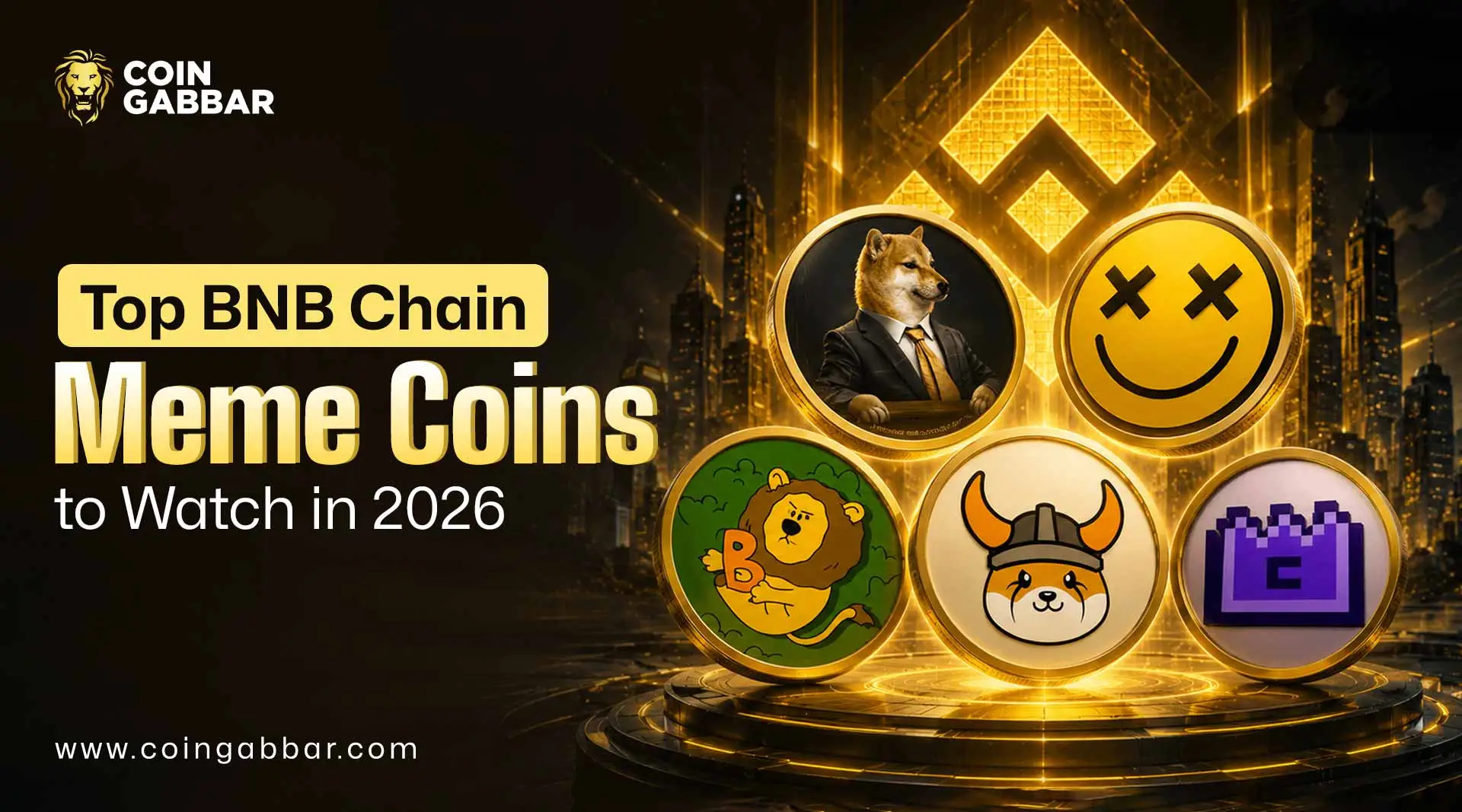
Currently Worth Noting: 5 BNB Chain Meme Projects
Based on current market data, MemeCore, Floki, BuildOn, Cheems, and Smilek to the Bank are several representative projects.
Prices and market capitalization will fluctuate with market changes, hence the data below should only serve as a reference for the current stage.
Project | Token | Reference Market Cap | Project Characteristics |
|---|---|---|---|
MemeCore | M | About $1.479 billion | Layer 1 + Meme Ecosystem |
Floki | FLOKI | About $197 million | Multi-product Ecosystem |
BuildOn | B | About $150 million | BSC Ecosystem and Community Narrative |
Cheems | CHEEMS | About $102 million | Community + IP Culture |
Smilek to the Bank | SMILEK | About $87.39 million | Community-focused Meme Project |
What matters is not who has the lowest price.
But rather:
What are these projects actually doing?
MemeCore: What Makes It Different from Regular Meme Coins?
The most unique aspect of MemeCore is that it has not stopped at the level of "issuing a meme token."
It is attempting to establish its own Layer 1 network and build an ecosystem around Meme 2.0.
In other words:
It wants to do more than just create a meme coin.
It aims for a blockchain ecosystem established around meme culture.
The project utilizes a so-called "Proof-of-Meme" mechanism and designs a reward system centered on creators, the community, and ecosystem participants.
Simultaneously, the M token also involves validator staking, ecosystem incentives, and token issuance functionalities.
This leads to an interesting change.
Past meme coins often followed this pattern:
First, there was a meme, then a search for value.
MemeCore is attempting to take a different path:
First, establish an ecosystem, then let meme culture become part of that ecosystem.
Of course, this does not guarantee success.
The Layer 1 space itself is highly competitive.
For MemeCore, the real challenge is not whether it can gain attention, but whether it can transform short-term meme enthusiasm into long-term network activity.
Floki: From a Meme to a Full Suite of Products
If MemeCore represents "meme + infrastructure," then Floki exemplifies another developmental path.
Floki initially started as a typical internet meme.
But as its ecosystem has expanded, it has begun to incorporate more products.
For instance, Valhalla game, FlokiFi, staking platforms, and related educational products.
FLOKI operates across both Ethereum and BNB Chain ecosystems.
This means it is no longer reliant solely on a single meme narrative.
However, this brings up a new issue:
Having more products does not automatically ensure success.
For Floki, what is truly important moving forward is not how many more products can be launched, but whether those products can create sustained users and real demand.
Meme culture can bring in the first batch of users.
But retaining those users ultimately depends on the product.
BuildOn: The Narrative Behind It Is What Matters
BuildOn's positioning is quite different.
It aims to portray itself as a "builder" role in the BNB Chain ecosystem while connecting with World Liberty Financial and its USD1 ecosystem narrative.
This has garnered BuildOn a different level of attention than ordinary meme coins.
Market judgments on meme projects often consider more than just the token itself.
They also look at:
Does it have a strong ecosystem narrative behind it?
Are there well-known projects involved?
Is there a story of continuous development?
BuildOn's advantage lies here.
But the problem is apparent too.
If a project's market attention heavily relies on external narratives, can it maintain its appeal once the market hot topics change?
This may be what BuildOn needs to prove in the near future.
Cheems: A Lack of Complex Products Might Be a Strategy
Cheems' logic is entirely different.
The core IP behind it is the Cheems dog image, already widely recognized on the internet.
The project builds a community ecosystem around Cheems and emphasizes community activities and charity aspects.
It does not attempt to establish Layer 1 like MemeCore.
Nor does it continually expand complex products like Floki.
Its core assets actually are:
IP + Community.
This is also the most primitive value source for meme coins.
A truly viral IP can naturally draw attention to the project.
However, the issues are equally apparent.
If community activity declines in the future, such types of projects often lack enough robust fundamentals to support long-term enthusiasm.
Thus, what Cheems truly needs to observe is not how many people are discussing it today.
But rather, how many people will still want to discuss it six months from now.
Smilek to the Bank: The Purest Form of Meme Play
Compared to the previous projects, the logic of Smilek to the Bank may be the simplest.
It is a community-based meme project that ironically refers to traditional banking systems.
The project mainly relies on BEP-20 tokens, community interactions, and online dissemination.
It does not have particularly complex infrastructure.
Nor does it aim to establish a vast product matrix.
This means its pros and cons are very evident.
The advantage is:
It’s simple.
A single meme can be enough to generate significant attention.
The downside is:
Once the market stops paying attention to that meme, it becomes difficult for the project to maintain enthusiasm based on other factors.
Therefore, the risks for these types of tokens are often higher than for projects with actual products and ecosystems.
So, What Determines the Price of Meme Coins?
Many people see a meme coin priced with several zeros and develop an illusion:
"So cheap, is there significant upward potential?"
In reality, this is a very misleading judgment.
A low token price does not imply a low valuation.
What should really matter is:
Circulating supply, market capitalization, liquidity, and how much the market is willing to value the project.
For instance:
If a project has 1 trillion tokens, even with a price as low as $0.00001, its overall valuation can still be very high.
Therefore, when judging a meme coin, one cannot solely focus on price.
It should be more about:
How many tokens does it have?
What is the market cap?
How many transactions occur daily?
Is the community active?
Who holds the tokens?
Does the project have real products?
These questions are far more important than "what is the current price."
The True Engine of Meme Coins Is Not Technology
This is the most crucial aspect to understand about the entire BNB Chain meme coin market.
Many meme coins do not involve complex technologies.
Yet they can still rise rapidly.
Why?
Because the core competitiveness of meme coins is not technology.
It is attention.
A project can rapidly gain market attention if it can create a strong community consensus.
Social media dissemination, KOL discussions, increased trading volume shout out to more users joining.
Ultimately forming a cycle:
More attention
↓
More trading
↓
More discussions
↓
More users joining
↓
Increased attention
The problem is, this cycle can reverse as well.
Once enthusiasm wanes:
Discussions decrease
↓
Trading declines
↓
Liquidity drops
↓
More people exit
↓
Market attention further declines
This is why meme coins frequently experience extreme surges and drops.
Is BNB Itself a BEP-20 Token?
There is also a commonly misunderstood issue here.
BNB is not simply a "BEP-20 token."
BNB is the native asset in the BNB Chain ecosystem.
While BEP-20 is a token standard.
It can be simply understood as:
BNB is more like the "native fuel" of this network.
Other projects can operate their tokens according to the BEP-20 standard.
Thus, projects like Floki, Cheems, and Smilek to the Bank can use the BEP-20 standard.
However, the positioning of BNB itself is not equivalent to that of ordinary BEP-20 project tokens.
What to Truly Be Wary Of Is Not Price Volatility
When many people discuss the risks of meme coins, their first reaction is:
"It’s too volatile."
But this is merely the most superficial risk.
What truly warrants caution is liquidity.
A project may appear to have a high market cap, but that does not mean you can trade at your ideal price at any time.
Especially for some smaller meme coins.
When the market suddenly shifts, liquidity can drop rapidly.
Moreover, it is necessary to monitor:
The valuation illusion caused by excessive token supply
Whale holdings being overly concentrated
Token unlock by the project side
Contract risks
Counterfeit tokens
Rapid decline in community activity
Over-reliance on a single KOL or social media
The project's actual product might not sustain development
These factors are often more important than how much a project has increased in a day.
So, Is There Still Opportunity in BNB Chain Meme Coins?
Yes.
But the opportunities are no longer the same as before.
In the past, a meme coin might only need a sufficiently funny name to gain market attention.
Now, as the ecosystem matures, the market is gradually differentiating.
Projects with products will be distinguished from pure community projects.
Projects with real ecosystems will differ from purely hype-based projects.
Projects with strong IP will stand out from those without brand recognition.
This means:
The future BNB Chain meme coin market will likely no longer be about "all projects rising together."
Instead, it will show increasingly evident differentiation.
The projects that can truly stay are those that need to prove one thing:
When the market is no longer frenzy, will anyone still want to remain?
Finally: Don't Just Ask "Which Meme Coin Will Rise"
If you only focus on the price, there will always be a next hotter meme coin on BNB Chain.
Today it is this one.
Tomorrow it might be another.
But if you extend the time frame, you will discover a more important question:
Where does a project's value truly come from?
MemeCore attempts to transition from meme culture to infrastructure.
Floki strives to evolve from meme IP into a multi-product ecosystem.
BuildOn seeks its position through ecosystem and narrative.
Cheems relies on IP and community for vitality.
Smilek to the Bank purely depends on meme dissemination.
What they represent is not just five simple tokens.
But five different survival strategies for meme coins.
Therefore, rather than searching for "the next skyrocketing meme coin" every day, it is better to learn how to judge what a project truly relies on for survival.
Because what deserves attention has never been how hot it is today.
But rather:
What is left when no one is discussing it anymore?
Daily sharing of real-time trading strategies, free position diagnostics, thoughts on resolving losses, and practical market insights. Scan the code to follow the official account“Bitcoin Watermelon”,Join the community for strategies!

This content is for market information and project research purposes only and does not constitute any investment advice. Meme coins are highly volatile and carry project risks; relevant prices, market values, and rankings will continue to change.
免责声明:本文章仅代表作者个人观点,不代表本平台的立场和观点。本文章仅供信息分享,不构成对任何人的任何投资建议。用户与作者之间的任何争议,与本平台无关。如网页中刊载的文章或图片涉及侵权,请提供相关的权利证明和身份证明发送邮件到support@aicoin.com,本平台相关工作人员将会进行核查。