As of August 5, 2026, the total market value of cryptocurrencies globally is approximately $2.19 trillion, with Bitcoin price oscillating around $64,000. The market overall lacks large-scale incremental funds, and the investor sentiment index (Fear and Greed Index) has long been operating at a relatively low level of about 38. On the surface, the market is not completely silent—recently, there have still been some localized hot spots: Pump.fun (PUMP) rose by 10% to $14 due to its repurchase and burn mechanism along with platform revenue performance; Zcash (ZEC) experienced approximately a 6% increase driven by institutional mining firm Fortitude Mining (supported by Barry Silbert/DCG) expanding production; tokens related to perpetual contracts such as Hyperliquid (HYPE) have also maintained a certain level of activity; Bitcoin spot ETFs recorded a net inflow of approximately $170 million to $210 million on August 4.
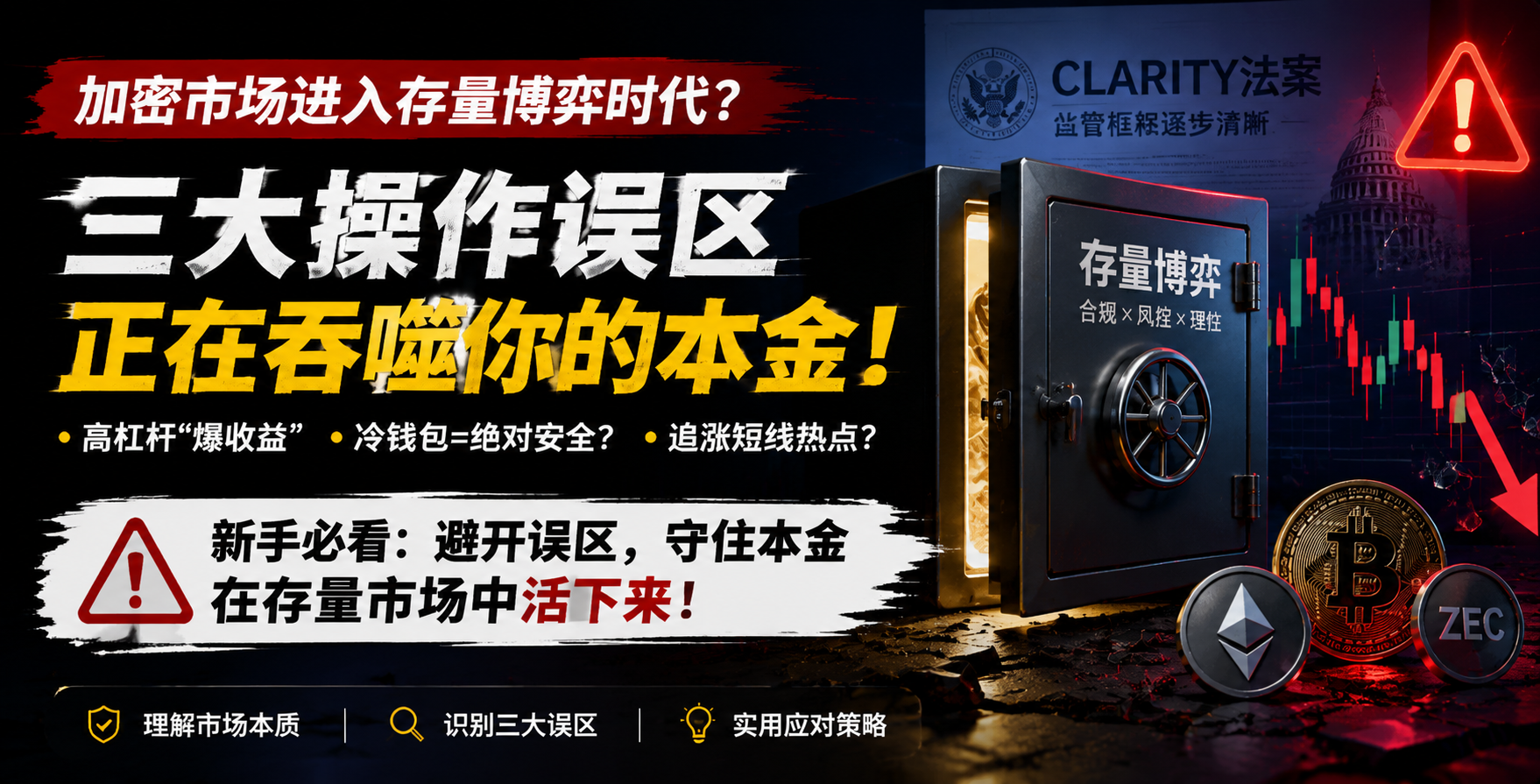
However, these localized performances have not changed the core characteristics of the market: capital is still primarily engaged in supply games, lacking external fresh blood to drive a comprehensive trend. For many newcomers, this "localized hot spots while the overall market remains stagnant" environment can be the most confusing—it will neither immediately lead to panic selling nor easily allow one to maintain principal while chasing short-term volatility. This article will systematically break down the current market situation, three common misconceptions, and provide insights into the potential impacts of the American CLARITY Act to help newcomers establish a more complete cognitive framework.
1. Market Status: Local Hot Spots Cannot Hide the Nature of Supply Games
Currently, the cryptocurrency market exhibits typical characteristics of "differentiation + rotation." Bitcoin, as an anchor asset, is repeatedly consolidating in the $62,000 to $65,000 range; although ETF funds have provided temporary support, it has not broken the mid-term oscillation pattern. Ethereum's performance is relatively lagging, while BNB is relatively strong, once nearing $600. Within the Solana ecosystem, platforms like Pump.fun have attracted short-term capital attention due to actual income and token repurchase mechanisms, becoming one of the top gainers recently. Meanwhile, privacy coin Zcash has gained attention due to the expansion of institutional-grade mining infrastructure (new facilities coming online, large-scale mining equipment purchases, expectations of lower costs), leading to a noticeable price rebound. Tokens related to decentralized perpetual contracts like Hyperliquid have also maintained a certain level of trading heat.
The existence of these localized hot spots can easily give newcomers the illusion that "the market has already started." However, a deeper observation will reveal:
- Most hot spots last for a short time, and capital can easily fall back after rapid rotation.
- The overall trading activity in the market is still weak, lacking new narratives that can continuously attract external incremental funds.
- Geopolitical factors (such as easing tensions related to the Middle East, declining oil prices) provide certain support to risk asset sentiment, but have not yet translated into substantial capital inflows into the cryptocurrency market.
- The Fear and Greed Index has been in a low range for a long time, reflecting overall market sentiment as cautious rather than fully optimistic.
In other words, the current market resembles a still pond occasionally stirred by ripples. The ripples can bring short-term trading opportunities, but without understanding the underlying nature of the supply game, one can easily pay the price when chasing them. For newcomers, learning to distinguish between "localized hot spots" and "systematic increments" is the first step to avoid pitfalls.
2. Three Major Operational Misconceptions in a Stagnant Environment (Detailed with Current Hot Spots)
Misconception 1: Trying to 'make profits' through high-frequency trading or high leverage in low volatility and localized hot spots
When the market remains in narrow consolidation for a long time, while occasional local increases like PUMP and ZEC happen, some investors may feel "there is action to be taken," thus increasing trading frequency or using higher leverage in an attempt to gain profits from minor fluctuations or short-term hot spots. This approach may have some space in a genuine trend market, but it often carries high costs during a supply game phase.
Detailed case: From July to early August 2026, Bitcoin primarily oscillated between $62,000 and $65,000. During this period, targets like Pump.fun saw obvious increases, attracting a considerable influx of short-term capital. Meanwhile, many traders frequently opened long and short positions during the narrow oscillation of mainstream coins and added leverage. The result was a continuous accumulation of both bilateral transaction fees and perpetual contract funding rates. Some traders reported that, despite the price showing little significant unilateral volatility, their account principal dropped by 20% to 40%. The reason is straightforward: each opening and closing of positions incurs costs, while the market has not provided sufficient trend space to cover these costs. In a supply market, trading costs are essentially an "invisible tax." Even when chasing hot spots, if entering and exiting frequently with high leverage, one might ultimately be consumed by costs and volatility.
Advice for newcomers: When there is no clear trend, reducing the number of trades is itself a strategy. When seeing localized hot spots, first evaluate their sustainability and your own risk tolerance, rather than immediately "jumping in to join the fun." Treating "not trading" as an active choice is more valuable than passively waiting or acting blindly.
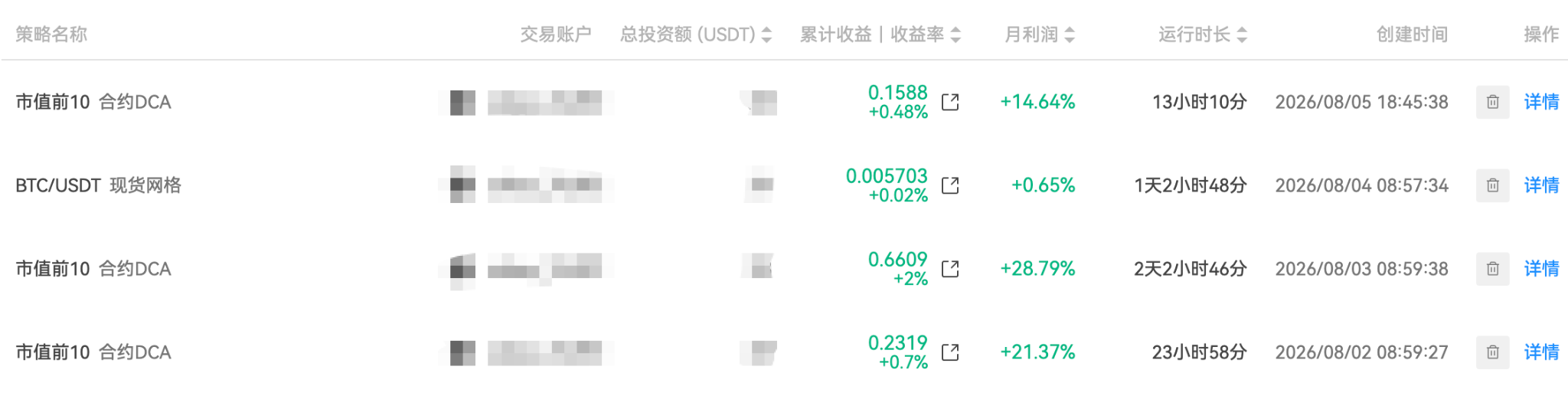
In line with the current market situation, this is a pain point for everyone. The bear market this year has caused some exchanges to struggle to the point of ceasing operations. I am using small funds and short time frames over at AiCoin Strategy Square to at least earn some pocket money daily.
Misconception 2: Relaxing security measures after transferring assets to cold wallets
“Putting coins in a cold wallet makes them safe” is a common perception among many newcomers. Cold wallets can significantly reduce the risk of online theft, but they are not absolutely safe, especially during periods of market calmness or when localized hot spots attract attention.
Detailed case: In early August 2026, the hardware wallet Coldcard revealed a serious vulnerability, affecting approximately $130 million. The vulnerability involved issues at the firmware level, exposing users' assets to theft risks, forcing many to urgently transfer funds. More notably, when the market is stagnant or localized hot spots arise, attackers tend to be more active—they may use false update prompts, phishing signature requests, malicious seed backups, or even lure users into authorizing by claiming to be related to "a hot project airdrop/update." Those who "think they're safe just by going idle" become prime targets. Storing assets statically does not mean that security awareness can also be "on idle."
Advice for newcomers: Cold wallets are essential tools, but security is a dynamic process. Regularly check device status, verify software and firmware sources, use multi-signature strategies, conduct small test transfers, and remain vigilant about any abnormal alerts. Particularly when the market sees hot spots and information noise increases, be especially cautious with any "emergency operations" or "limited-time benefits" that lure users.
Misconception 3: Blindly chasing short-term hot spots in the absence of incremental funds
When the overall market lacks new funds, some low-cap or themed tokens may still experience short-term surges. Newcomers can easily be stimulated by news like "&XX token increased by several tens of percent in 24 hours," following market voices or KOLs to chase high prices.
Detailed case: Recently, aside from relatively logically supported targets like Pump.fun and Zcash, small-cap tokens like Cysic and Cash Cat surged by 50% to 90% in a short time, only to quickly fall back. Many investors who followed community or KOL recommendations ended up being liquidity providers for short-term sell-offs. Similar situations have repeatedly occurred in supply markets: rallies tend to be brief, lacking sustained buying support, and once early holders take profits, prices will quickly drop. The market structure of 2026 has changed—institutional funds remain observant overall, retail sentiment is disconnected from real incremental funds, making it significantly more challenging to rely solely on short-term hot spots for excess returns. Even for targets like PUMP with buyback mechanisms, their increases stem more from the platform’s own income and token economic design rather than the entire market entering a bull phase.
Advice for newcomers: In environments lacking external incremental funds, most rapidly rising "hot spots" have limited sustainability. Before chasing high prices, ask yourself two questions: What is the core logic behind this target’s increase? If the logic fails or funds withdraw quickly, what is my exit plan? Treat "hot spots" as information that needs verification, rather than direct action signals.
3. CLARITY Act: Important Background Knowledge for Newcomers
One important background factor for the current market's stagnation and localized rotation is the unclear regulatory expectations. The United States is advancing the "Digital Asset Market Clarity Act" (referred to as CLARITY Act), which is a critical variable.
The core objective of this act is to address the long-standing qualitative question of "Are crypto assets securities or commodities?" by clarifying the regulatory responsibilities of the U.S. Securities and Exchange Commission (SEC) and the Commodity Futures Trading Commission (CFTC), while also providing a clearer compliance framework for digital asset exchanges, intermediary institutions, and stablecoins. The act passed in the House of Representatives in 2025 and is currently moving through the Senate. As of early August 2026, relevant senators are still working to achieve further progress before the August recess (around August 7-8).
Potential impacts on the market:
- If the act proceeds smoothly and is ultimately enacted, it will significantly reduce compliance uncertainties for institutions, potentially bringing more stable long-term capital inflows to the market, thus changing the current dynamic of supply games.
- Conversely, if it continues to be delayed, the market will remain in a cycle of "wait-and-see—localized testing—wait-and-see," and the characteristics of supply may persist longer.
- For ordinary investors, the act itself will not immediately change short-term prices, but it is one of the important signals for assessing "whether external incremental funds are willing to enter on a large scale." Newcomers do not need to closely monitor the progress of the act every day, but it should be included in the macro observation checklist: improved regulatory clarity is usually an important prerequisite for the market to transition from supply to demand.
Considering the current localized hot spots, even if targets like PUMP and ZEC are performing actively, without the institutional increments brought about by the implementation of something like the CLARITY Act, these hot spots are unlikely to evolve into a comprehensive market trend. Understanding this will help newcomers avoid being overly optimistic or overtrading during localized volatility.
4. Practical Recommendations for Coping during Stagnation
Combining the above market characteristics, hot performance, and misconception analysis, newcomers in the current environment should focus on the following points:
1. Adjust return expectations, distinguish between localized and overall Understand that we are currently in a supply game phase; while localized hot spots can be observed, do not equate them with the onset of a bull market. Make "preserving principal" the primary goal.
2. Treat "not trading" as an active strategy In the absence of clear trends and reasonable risk-reward ratios, reduce the number of openings. When observing increases in PUMP, ZEC, etc., first observe the logic and sustainability of the funds, rather than immediately following suit. Trading costs will be amplified in stagnation.
3. Maintain dynamic security measures While cold wallets are foundational tools, they should be coupled with regular checks, multi-factor verification, and risk diversification. Especially when hot information increases or online inducements grow, vigilance should be heightened.
4. Use "downtime" for research Periods of stagnation are ideal for studying on-chain data, funding rate changes, macro liquidity indicators, and regulatory developments (like the CLARITY Act). Spending time improving knowledge is more valuable than frequent trading or blindly chasing hot spots.
5. Pay attention to true signals of increment This includes substantial advancements in regulatory policies, large-scale allocations of institutional funds, and new narratives with practical landing scenarios. Prior to clear signals appearing, maintain patience and discipline.
Conclusion
The core issue in the current cryptocurrency market is not simply a price drop but the lack of incremental funds leading to supply games. Local hot spots (such as the repurchase-driven rise of Pump.fun, institutional mining expansion of Zcash, and periodic inflows into ETFs) can bring short-term opportunities, but they have not changed the overarching reality of the market lacking external fresh blood. For newcomers, the greatest test in this environment is not "whether one can grasp every increase," but whether one can safeguard principal and establish correct operational and security habits amidst boredom, temptation, and localized excitement.
The market will eventually move out of stagnation, but before that happens, surviving, maintaining a clear understanding, and learning to distinguish between noise and signals are the most important lessons. Focusing energy on understanding market structure, controlling risks, and enhancing long-term judgment is more meaningful than chasing every short-term hot spot. I hope this article can help newcomers navigate the complex market environment more steadily and further.
免责声明:本文章仅代表作者个人观点,不代表本平台的立场和观点。本文章仅供信息分享,不构成对任何人的任何投资建议。用户与作者之间的任何争议,与本平台无关。如网页中刊载的文章或图片涉及侵权,请提供相关的权利证明和身份证明发送邮件到support@aicoin.com,本平台相关工作人员将会进行核查。