
Written by: @stacy_muur
Translated by: AididiaoJP, Foresight News
The most brutal part of a bear market is not the drop in prices but the punishment of two things: poor investment strategies and leverage.
My goal is simple—provide a set of repeatable practical guidelines, rooted in real on-chain data and historical cycles, to help you preserve principal, accumulate options with stable returns, and then enter the risk market at advantageous positions.
What history tells us
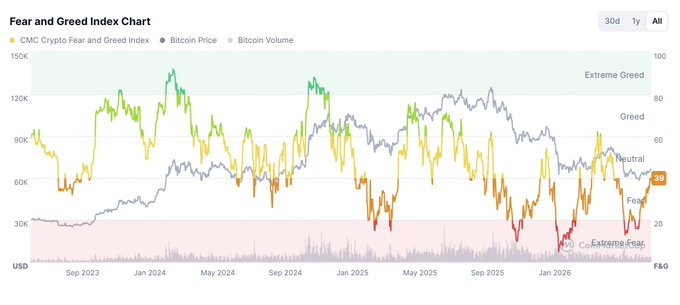
2018 was a typical example of extreme liquidation risk: Bitcoin dropped from about $19,000 to about $3,600, a decline of over 80%. Those who bought at the bottom saw returns of about +192% a year later.
2022 was characterized by governance and credit crises: Bitcoin peaked near $69,000 and fell to about $16,500, a decline of about 77%. The contagion effect triggered by the FTX collapse resulted in about 1.2 million BTC realizing losses. Bottom buyers saw returns of about +127% a year later.
The 2025–26 cycle is completely different: peak around $124,800, low at $58,115, a retracement of 53.43%—the smallest on record. As of now, this cycle has been running for about 267 days. Supply that is in a loss state accounts for 72.4% (about 10.74 million BTC underwater), with MVRV Z-Score as low as about 0.24.
My interpretation is: structural risks are lower than in 2022 (less systemic contagion), but the market will still experience a phase of capitulation—opportunity and danger are concentrated here.
Core tactics (what I am actually doing and why)
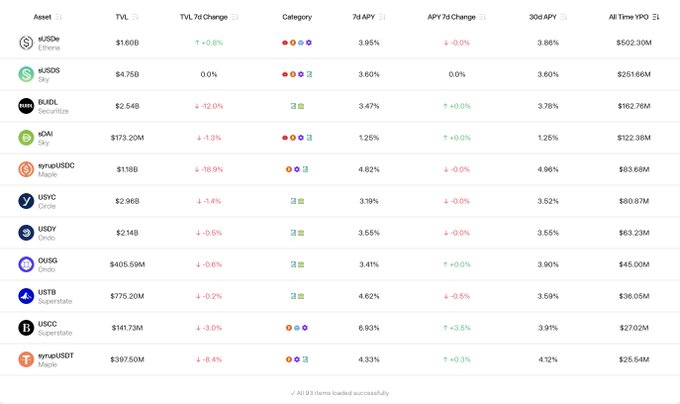
Put gunpowder in stablecoins to earn reliable returns
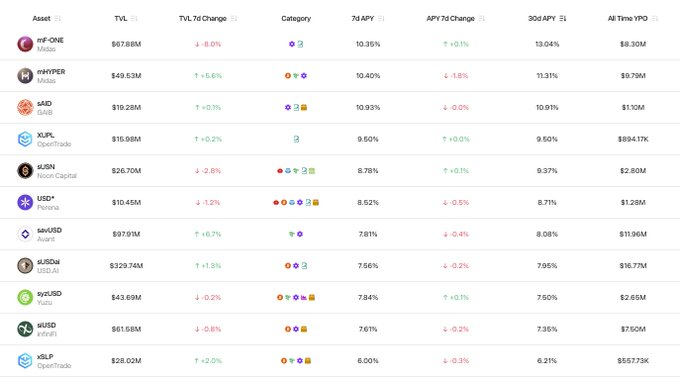
Why: The longer a bear market drags on, the more important opportunity costs become. The current stablecoin lending yield target is about 5–10% APY, while Bitcoin's liquid staking yield is about 4.5–5.5%.
How to do it: Based on your own risk tolerance, place your basic position in USDC/USDT, choosing reliable lending markets and custodians with verifiable reserves. Reinvest the returns into your dollar-cost averaging / accumulation plan.
Example: Investing $50,000 in stablecoins at an annualized rate of 7.5% could generate about $3,750 for redeployment in a year—much stronger than letting BTC sit idle with 0 returns; this is a real compounding engine.
Shift from "guessing the bottom" to a process: dollar-cost averaging + accumulators
Why: Precisely timing the market bottom is nearly impossible. Dollar-cost averaging can smooth out entry risk; accumulator-style concentrated windows outperform pure dollar-cost averaging over the long term in backtesting (3-month accumulators +10%, 6 months +13%, 12 months +26%).
How to do it: Set a basic dollar-cost averaging rhythm (weekly or biweekly), then allocate a portion for accumulation positions specifically during statistically extreme drawdowns. You may consider a multi-currency "thirds method": 1/3 deployed now, 1/3 dollar-cost averaged, 1/3 reserved for deeper corrections.
Example: Those who bought at the low of $16,500 in 2022 saw about +127% rebound in a year, but the premise was enduring through the contagion crisis. Those with a process could avoid this black-and-white gamble.
Use diversified, low-cycle risk yield strategies (vaults) for compounding
Why: Single strategy returns can collapse or be compressed (for example, Ethena's USDe heavily relies on funding rates). Vaults can automatically diversify strategies and rebalance, reducing single-cycle risk.
How to do it: Use institutional-style vaults (like Lombard Bitcoin Earn, Bybit Mantle Vault) or diversified lending pools that report transparent risk metrics. The goal is multiple sources of income: lending, tokenized treasury bonds, liquid staking.
Avoid leverage and off-exchange funding arbitrage unless you truly understand the liquidation risks
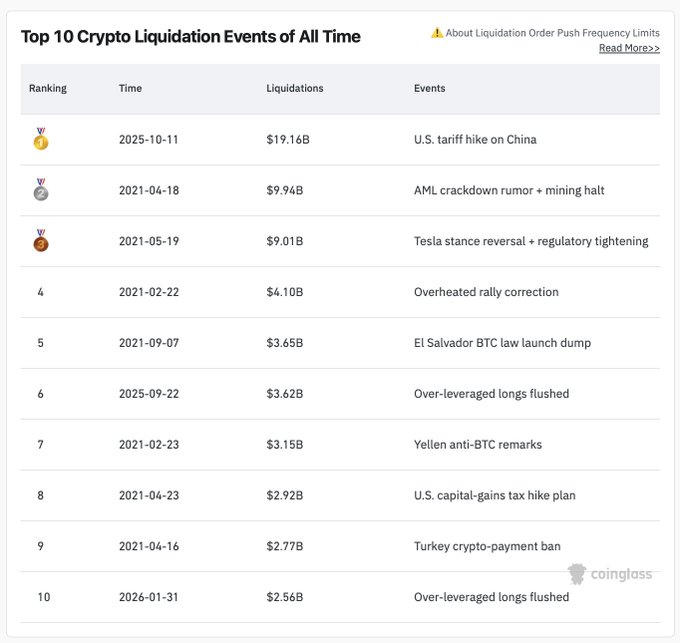
Why: In 2018 and 2022, leveraged traders were the biggest losers—forced liquidations create chain reactions. Current infrastructure has reduced systemic contagion, but leverage will still amplify downside volatility.
How to do it: If you must use leverage, keep positions conservative and conduct margin stress tests against reasonable drawdowns.
Adjust allocation tilt based on on-chain signals, rather than precise timing
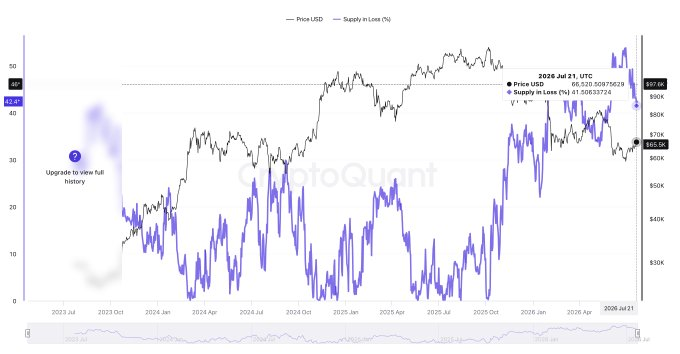
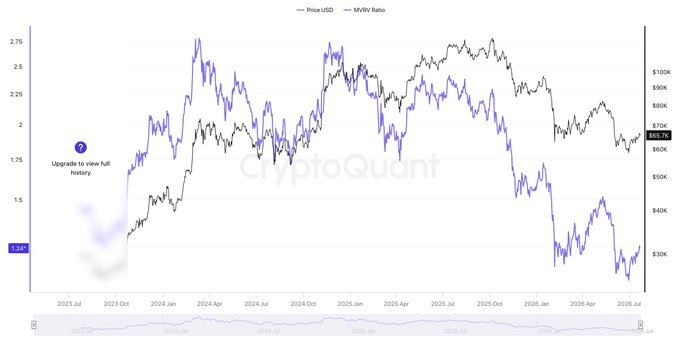
Focus on signals: MVRV Z-Score (currently about 1.24), loss supply (about 41% underwater), divergence between short-term holders and long-term holders' cost basis (according to CryptoQuant, short-term cost basis around $69,000 in July 2026).
My view: MVRV convergence overlapping with realized losses often marks the end of capitulation historically. When these signals align, I will accelerate deployment speed. Current indicators show maximum pain, but have not fully converged yet—this further supports the process rather than going all-in.
Risk control and potential pitfalls
- Yield compression: Under pressure, yields can reverse. Countermeasure: Prioritize diversified yields and tokenized treasury bonds, avoiding single funding rate plays.
- Regulatory shocks: Some legislative measures may target interest-bearing products. Countermeasure: Prioritize compliant stablecoins and Bitcoin (according to Benchmark's January 2026 report, commodity attributes are becoming clearer).
- Macro extension: Dollar index or interest rate shocks may prolong the bear market. Countermeasure: Extend dollar-cost averaging windows, maintaining a larger stablecoin buffer.
Specific execution checklist
- Allocate a reserve of stablecoins equivalent to X months' planned accumulation, invested in verified lending or vaults.
- Set dollar-cost averaging rhythm and scale, reserving 1/3 for the accumulation window. Backtesting shows accumulators significantly outperform pure dollar-cost averaging.
- Core position leverage should not exceed 2x, and record margin buffers.
- Continuously track MVRV, loss supply (CryptoQuant), and ETF fund flows; when MVRV converges and realized losses peak, accelerate deployment speed.
Final thoughts
I believe the 2025–26 bear market is more of an infrastructure-driven correction rather than the systemic collapse of 2022. This reduces tail risk but also compresses the low-price window.
Historically effective strategies—maintaining liquidity, earning diversified returns, and strictly executing accumulation processes—are still applicable, and are now amplified further by DeFi yields and more robust custody.
The biggest mistake I see is treating returns as a risk-free free lunch or simply applying past maximum drawdowns to current downside limits.
Focus on MVRV convergence, realized loss peaks, and ETF fund flows; these are signals for transitioning from steady dollar-cost averaging to accelerating accumulation.
Execute processes so that mathematics and on-chain evidence, rather than hope, compound your advantages.
免责声明:本文章仅代表作者个人观点,不代表本平台的立场和观点。本文章仅供信息分享,不构成对任何人的任何投资建议。用户与作者之间的任何争议,与本平台无关。如网页中刊载的文章或图片涉及侵权,请提供相关的权利证明和身份证明发送邮件到support@aicoin.com,本平台相关工作人员将会进行核查。


