Overview
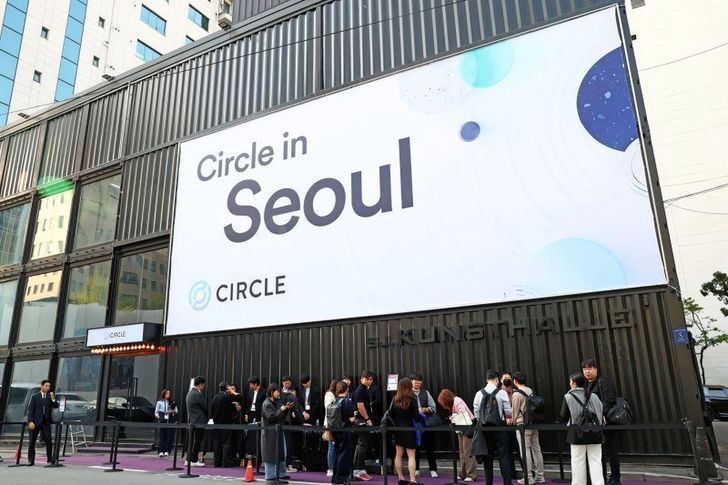
A closed-door meeting scheduled for July 23 in Seoul is becoming the latest window to observe Circle's layout in South Korea. According to an exclusive report by The Korea Times, USDC issuer Circle has invited executives from banks, crypto exchanges, payment companies, and super app operators in South Korea to an event called "Current Seoul," focusing on "Korea in the midst of a crypto upheaval." This news has not been noticed by most international media, but its significance should not be underestimated—it occurs at a critical juncture when South Korea's stablecoin legislation is entering a key game phase, coupled with the sudden intensification of competition among dollar-pegged stablecoins.

For the market, the real question is not that Circle is holding another meeting, but why it is intensifying its efforts in South Korea at this moment: just three months ago, CEO Jeremy Allaire visited and discussed cooperation with local financial institutions, and now core executives focused on strategy, policy, and business expansion are gathering again in Seoul. Behind this is a contest for the "entry ticket" to South Korea, one of the world's most active retail crypto markets.
Key Points
According to exclusive reports from South Korean media, Circle will hold a closed-door event "Current Seoul" on July 23 in Seoul, inviting executives from banks, exchanges, payment companies, and super apps to participate.
The topics will focus on regulation, industry cooperation, and long-term partnerships, with key executives such as Circle's Chief Strategy Officer Dante Disparte in attendance.
This is the second wave of engagement within three months after CEO Allaire's visit to South Korea, during which Circle had already signed cooperation agreements with Dunamu (the operator of Upbit) and Bithumb.
The South Korean "Digital Asset Basic Law" is still under negotiation in Congress, and disagreements between the central bank and the Financial Services Commission over "who can issue the won-pegged stablecoin" remain unresolved.
Under the proposed framework, foreign stablecoins like USDC will need to be licensed and establish local branches in the future to provide payment and redemption services.
On the eve of the meeting, Circle just received approval in the US to establish Circle National Trust Bank and expanded USDC cooperation with Standard Chartered and BNY Mellon.
A Discreet Yet High-Profile Closed-Door Invitation
Details of the Meeting
According to The Korea Times, "Current Seoul" is scheduled to be held on July 23 at Josun Palace in Seoul, themed "Korea in the Midst of a Crypto Upheaval," and is expected to attract senior management from crypto exchanges, banks, payment companies, and super app operators. According to the event registration page, discussions will focus on regulation, industry collaboration, and the building of long-term partnerships. The lineup of Circle executives in attendance is quite impressive: Chief Strategy Officer and Global Policy Head Dante Disparte, Vice President for Asia-Pacific Strategy and Policy David Allan Katz, and Vice President for Business Development Ben Morris are all on the list.
Second Wave of Attacks Within Three Months
This is not an isolated event. According to The Korea Herald, CEO Jeremy Allaire visited South Korea about three months ago, meeting with executives from major exchanges including Dunamu, Bithumb, and Coinone, as well as financial groups such as KB Financial, Shinhan Financial, and Hana Financial; according to Bloomingbit, Allaire announced partnerships with Dunamu and Bithumb at a closed-door press conference in Seoul on June 13 and explicitly stated: if the final legislation in South Korea allows overseas issuers to enter, Circle will establish a local subsidiary and operate under license. From high-level visits to signing contracts, to closed-door industry conferences, Circle's push in South Korea has shown a clear rhythm.
Why Choose This Moment to Deepen Engagement in South Korea
Positioning Before the Legislative Window
The timing is the key to understanding this layout. According to Korea Crypto & Blockchain Law Blog, the South Korean "Digital Asset Basic Law" is stalled due to a stalemate between the central bank and the Financial Services Commission over "the eligibility to issue the won-pegged stablecoin"—the central bank insists on a consortium led by banks with at least 51% ownership, while the Financial Services Commission warns that this will stifle financial technology innovation; substantive negotiations will only truly commence after the local elections on June 3, and the stablecoin rules may potentially be legislated separately. According to Law.asia's analysis, regardless of which model ultimately prevails, the current status of unrestricted circulation for USDT and USDC in South Korea will end—foreign issuers will likely need to be licensed and establish local branches. In other words, every contact before the rules are in place is paving the way for future "eligibility to enter."
An Indispensable Market
The significance of South Korea justifies this urgency. According to CoinGecko's market research, approximately 16 million South Koreans are active in the digital asset market, accounting for about one third of the adult population; although the trading volume in won on exchanges saw a quarterly decrease of around 21.7% in the first quarter of 2026, the ratio of stablecoin market capitalization to trading volume has risen from 2.8 times to 3.6 times—funds are not exiting, but instead shifting from retail speculation to institutional settlement. According to DL News, USDC's trading share on some South Korean exchanges has reached up to 60% to 95% of the platforms. This is a market where USDC has already penetrated significantly, but its regulatory status remains unresolved.
Key Background and Competitive Landscape
Circle's Global Compliance Push
The closed-door meeting in Seoul is just one part of Circle's global layout. According to The Korea Times, just last Friday, Circle received approval in the US to establish a crypto bank called Circle National Trust; at the beginning of July, Standard Chartered and Circle launched integrated USDC minting and redemption services for institutional clients, and BNY Mellon has also incorporated USDC into its digital asset custody platform and supports minting and redeeming. Circle is embedding USDC deeper into traditional financial infrastructure, positioning it as a "regulated bridge" connecting banks and digital assets, and South Korea is one of the most crucial pending nodes in this network in Asia.
Imminent Competitive Pressure
Competition is also closing in. According to The Korea Times, after the "Open USD" model was announced on June 30—allowing participating companies to share reserve earnings—Circle's stock price plummeted 17% in a single day, highlighting the fierce competition for dollar-pegged stablecoin standards. In South Korea, according to Decrypt, Tether executives are also meeting with leaders of major financial groups in South Korea; and according to Seoulz's roundup, Kakao, Naver, Toss, and various banking consortia are engaged in a "six-party competition" for the won-pegged stablecoin. Essentially, Circle's closed-door meeting is consolidating its early positioning amid multi-faceted competition.
What This Means for Investors
For investors, this closed-door meeting itself will not immediately change any prices, but it confirms two trend lines. First, global stablecoin giants are making "regulatory positioning" a core strategy—establishing deep ties with banks, exchanges, and payment companies before the rules are in place, so that they can enter the market under license as soon as the legislation passes. According to Bloomingbit, Allaire has clearly outlined the path: Circle will not directly issue a won-pegged stablecoin, but will cooperate with local financial institutions in a technical support partner mode, which significantly reduces regulatory friction.
Second, South Korea is becoming a global testing ground for assessing whether "non-dollar stablecoins can exist." According to CoinGecko, South Korea's direction will shape the pathway for on-chain currencies in medium-sized economies— for investors focused on stablecoins, payment sectors, and RWA narratives, the legislative progress in South Korea and players like Circle will be one of the most crucial structural variables to track in the coming quarters. To understand the dynamics of global stablecoins and mainstream asset movements, real-time data can be checked on MEXC.
What to Watch Going Forward and Potential Risks
Three key points need to be monitored going forward: First, whether new cooperation announcements emerge after the closed-door meeting on July 23—referencing the precedent of Allaire's visit to South Korea in June, where he signed with Dunamu and Bithumb, the weeks following the meeting will serve as a window to observe; second, the progress of the "Digital Asset Basic Law" or the separately legislated stablecoin framework in Congress, particularly the final form of the "51% bank ownership" clause and the admission criteria for foreign issuers; third, the actions of competitors—Tether's engagements in South Korea, the expansion of the Open USD alliance, and the timeline for local consortia's won-pegged stablecoin issuance.
Risks are also clear. First, regulatory outcomes may not be as friendly as expected—according to KoreaTechDesk's analysis, foreign issuers without local branches will be prohibited from providing payment, redemption, and remittance services under the proposed framework; if the admission thresholds are too high, Circle's early investments may not translate into market share. Second, the legislative timeline itself carries high uncertainty, with multiple delays in the bill, and there is no guarantee it will pass within 2026. Third, there is a risk of a dramatic shift in the competitive landscape—if the Open USD profit-sharing model is favored by Korean institutions, Circle's traditional model of "greater control" may face re-negotiation pressure from local partners. It should be noted that the specific content of the closed-door meeting may not be publicly disclosed, and the market should avoid overpricing unverified cooperation rumors.
MEXC Crypto Pulse Research Team's Exclusive Insights
The most important aspect of this event is not the meeting itself, but what it reveals about the shift in the focus of stablecoin competition: from the battle for on-chain liquidity to the construction of "relationship infrastructure before regulatory arrival." As Circle intensifies binding with banks, exchanges, and payment companies amid the unresolved South Korean legislation, it is fundamentally building a distribution network in advance for a market that does not yet exist under licensing—this is a typical "pre-regulation investment," where the return is completely dependent on the final form of the legislation.
The market is most likely to misinterpret the "closed-door meeting" as equating to "upcoming major cooperation announcements." In fact, according to public information, the positioning of this event is regulatory discussion and long-term partnership building, while the core disagreements of South Korean stablecoin legislation (bank ownership ratios, admission of foreign issuers) remain unresolved. Before the rules are in place, any cooperation can only remain at the level of intention and pilot projects. The competitive landscape's other side is also easily overlooked: Tether and the Open USD alliance are also knocking on South Korea's door, and Circle's early advantage is not a protective moat.
For investors, what should be focused on next are three more concrete clues: whether stablecoin legislation proceeds with separate advancement in the second half of the year, the final wording of foreign issuer admission criteria, and whether Circle's cooperation with South Korean banks can progress from memorandum of understanding to actual products. These three aspects will jointly determine whether this layout is "early positioning" or "sunk cost."
From a cross-market perspective, Circle's push in South Korea offers a clear revelation: in the second half of the stablecoin evolution, what determines the outcome will no longer be reserve transparency or market share on-chain, but the ability to "be allowed to exist" in various major jurisdictions. Compliance licenses are becoming the most scarce asset for stablecoins, and South Korea—one of the world's highest retail penetration crypto markets—is the main battlefield for this license competition in Asia.
Frequently Asked Questions
What is the closed-door meeting hosted by Circle in Seoul?
According to exclusive reports from South Korean media, Circle will hold an event called "Current Seoul" on July 23 at Josun Palace in Seoul, themed "Korea in the Midst of a Crypto Upheaval," inviting executives from South Korean banks, crypto exchanges, payment companies, and super app operators. The topics will focus on regulation, industry cooperation, and long-term partnerships. Key executives including Circle's Chief Strategy Officer Dante Disparte and Vice President for Asia-Pacific Strategy and Policy will attend, marking a high-profile event.
Why does Circle place such importance on the South Korean market?
South Korea is one of the global crypto markets with the highest retail penetration, with about 16 million individuals active in digital assets, accounting for about a third of the adult population, and USDC has reached trading shares of 60% to 95% on some local exchanges. Meanwhile, the stablecoin legislation in South Korea is in a critical negotiation phase, and establishing deep relationships with banks and exchanges before the rules are in place is essentially paving the way for future licensed entry. Circle's president has previously stated that South Korea is a long-term market of strategic significance in its global expansion, rather than just a pilot.
What is the current status of stablecoin regulation in South Korea?
It is still under negotiation in Congress. The "Digital Asset Basic Law" is stalled due to disagreements between the central bank and the Financial Services Commission over "who can issue the won-pegged stablecoin"—the central bank insists on a consortium led by banks with 51% or more ownership, while the Financial Services Commission worries about stifling innovation. Substantive negotiations only began after the local elections in June, and there is no guarantee the stablecoin rules will pass within this year. Under the proposed framework, foreign stablecoin issuers will need to be licensed and establish local branches to provide payment and redemption services in the future.
Will Circle directly issue a won-pegged stablecoin?
According to its public statements, it will not. Reports indicate that CEO Allaire has clearly stated that the South Korean market is more suited for issuance by local financial institutions, with Circle focusing on a technical support partner model rather than directly issuing a won-pegged stablecoin. This strategy reduces regulatory friction: on one hand, it expands USDC distribution through cooperation with exchanges like Dunamu and Bithumb, while on the other hand, it provides infrastructure for Korean institutions' won-pegged stablecoin projects, operating on two legs. If legislation allows overseas issuers to enter, Circle plans to establish a local subsidiary for licensed operations.
What competition does this layout face?
Competition comes from three directions. First is Tether, whose executives are also meeting with major financial groups in South Korea, vying for the same pool of partners. Second is the Open USD alliance—this model, supported by over a hundred companies and allowing participating parties to share reserve earnings, caused Circle's stock to plunge 17% in a single day after its announcement. If favored by Korean institutions, Circle's traditional model will face pricing pressure. Third are local players, as Kakao, Naver, Toss, and various banking consortia are preparing won-pegged stablecoins, resulting in fierce localized competition.
Will this event affect USDC or crypto market prices?
The short-term direct impact is limited. The closed-door meeting is primarily about relationship building and regulatory communication, and it will not immediately alter the fundamentals of any assets. Its significance lies in confirming the strategic trend of stablecoin giants making "pre-regulatory positioning" and South Korea's status as the main battlefield for stablecoins in Asia. What could genuinely impact the market are subsequent legislative developments, official cooperation announcements, and admission criteria—investors should track these hard nodes, rather than overinterpreting the meeting itself. This article does not constitute any investment advice.
Disclaimer
This article is for informational reference only and does not constitute any investment, financial, legal, tax advice, or trading recommendations. Prices of crypto assets, stocks, and related financial assets may fluctuate significantly, and there is a high degree of uncertainty regarding regulatory and legislative processes, with risks of total loss of principal. Readers should conduct their own research (DYOR) and assess their own risk tolerance, and consult licensed professionals if necessary. The MEXC Crypto Pulse team is not liable for any losses arising from the use of the information in this article.
免责声明:本文章仅代表作者个人观点,不代表本平台的立场和观点。本文章仅供信息分享,不构成对任何人的任何投资建议。用户与作者之间的任何争议,与本平台无关。如网页中刊载的文章或图片涉及侵权,请提供相关的权利证明和身份证明发送邮件到support@aicoin.com,本平台相关工作人员将会进行核查。


