On July 4, 2026, the decentralized protocol Hinkal, which focuses on on-chain privacy, became the target of the spotlight: a smart contract deployed on Ethereum was exploited by attackers, leading to approximately 797,000 USDC being withdrawn in a short time. According to multiple cryptocurrency media reports, nearly the entire amount was quickly exchanged along the same funding path for about 454 ETH. Subsequently, the stolen funds were split in two: approximately 410 ETH was directly sent to Tornado Cash, which had long been sanctioned due to money laundering allegations, while about 44.67 ETH was transferred to the Bitcoin network through the cross-chain protocol THORChain, utilizing mixing and cross-chain tools to increase tracking difficulty. Following the attack, Hinkal's official team promised to fully compensate the affected users, but what truly unsettled the community was a deeper paradox: how could a protocol that marketed itself on “protecting transaction privacy” prove to users that it could safeguard anonymity while also maintaining security and trust, especially when attackers similarly used privacy tools to conceal their tracks?
Privacy Shield Failure: Hinkal Itself Compromised
In the Ethereum ecosystem, Hinkal was originally positioned quite subtly: it was a decentralized privacy protocol promising to add an "invisible veil" over transactions on blockchains like Ethereum, allowing users to enjoy on-chain settlement while minimizing outside scrutiny of fund flows and transactional relationships. For many privacy-conscious participants, Hinkal represented a technological imagination—seeking a balance between "being unseen" and "still verifiable."
On July 4, 2026, however, this shield was torn at the very core of the protocol: according to multiple cryptocurrency media reports, the smart contracts deployed on the Ethereum network for Hinkal were attacked, with attackers exploiting contract vulnerabilities to extract approximately 797,000 USDC, which was then laundered and cross-chain transferred. It wasn't just a DeFi project being compromised, but rather a "stealth device" touted for its privacy being exposed, creating a stark contrast that negatively affected the overall image of the privacy sector. Without the technical details of the vulnerability yet disclosed, this incident has already revealed a reality: even in privacy protocols where security demands are more extreme, the existing smart contract security audit systems may still have blind spots and gaps, and questions around "how strong privacy can be and where the boundaries of authority lie" will once again become central to community debate.
79,000 USDC Disappeared: The Attackers' On-Chain Escape Route
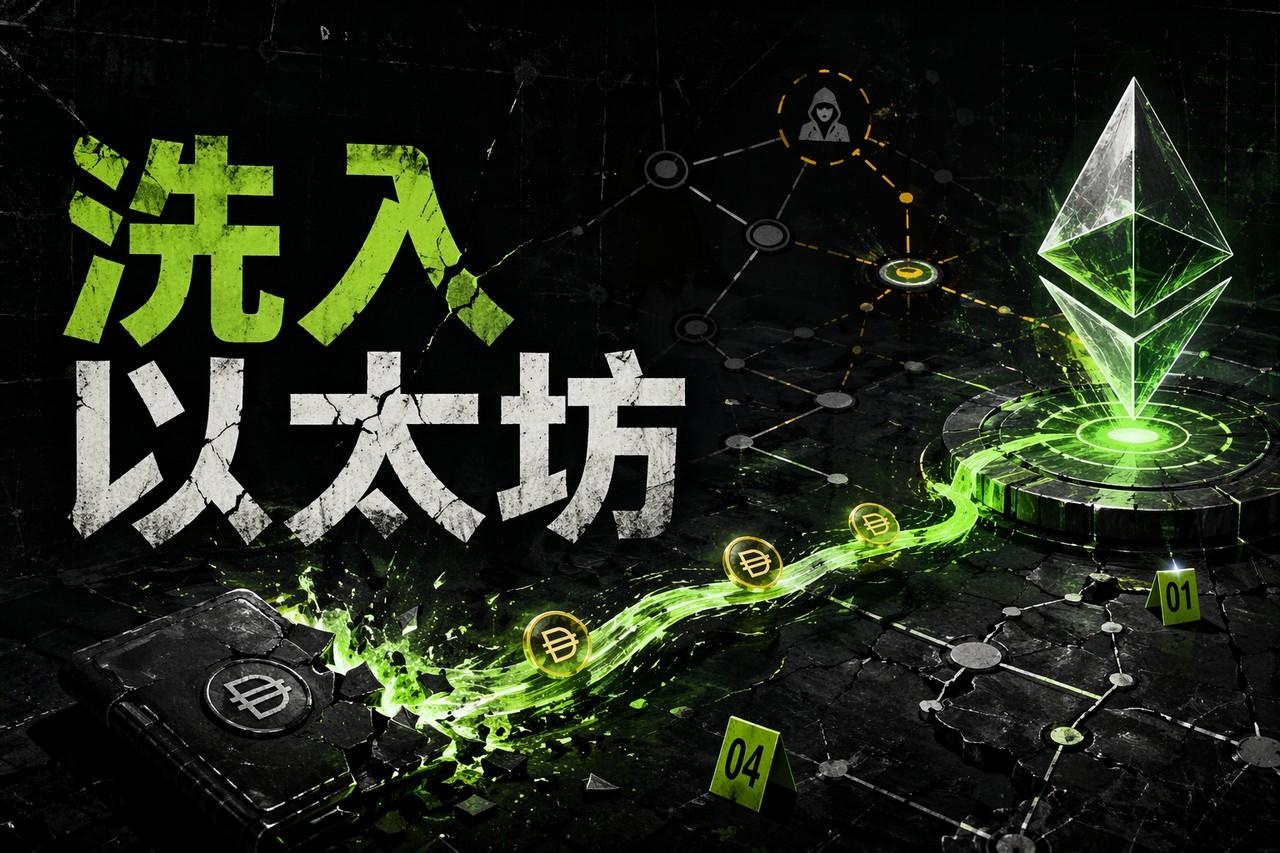
At the moment the funds left Hinkal, the escape route unfolded almost seamlessly. Shortly after the attack, the perpetrators withdrew approximately 797,000 USDC from Hinkal's contract on Ethereum, then quickly exchanged the entire amount on-chain for about 454 ETH, turning a stable asset that could easily be frozen or blacklisted into a more "neutral" mainstream asset. After the asset form was converted, around 410 ETH was directly sent to Tornado Cash, a mixing protocol, disrupting the trajectory of the funds through its mechanism of "splitting, reorganizing, and delayed withdrawals." Tornado Cash had already faced sanctions from the U.S. Treasury due to its alleged connections to money laundering activities, placing it under regulatory scrutiny. For attackers, the goal of this step was clear: to sever the visible connection between the stolen funds and upstream addresses.
The remaining approximately 44.67 ETH took a different path—exchanged and transferred to the Bitcoin network via the cross-chain protocol THORChain. THORChain acts as a bridge between Ethereum and Bitcoin, while the differences in the UTXO model on the Bitcoin chain and the account system provided space for further "washing" of the funds. When mixing tools and cross-chain channels are utilized together, on-chain tracking becomes no longer a singular analysis within one public chain but evolves into a puzzle game crossing multiple chains and asset forms; under the enforcement framework primarily centered on sanctions lists and centralized compliance, this decentralized mixing and cross-chain combination pathway raises the technical threshold for forensic evidence and forces law enforcement and compliance measures to reassess how they should engage with such fundamental protocols.
Full Compensation Commitment: The Project Team Takes the Loss
As the attacker's use of Tornado Cash and THORChain to “split and conceal” the funds made recovery significantly more challenging, Hinkal chose a different route: to cover the loss itself. After the event was made public, Hinkal's official team publicly promised to fully compensate the affected users, essentially recording the approximately 797,000 USDC black hole directly on their books. Compared to “tracking down” on-chain, this approach is a more direct and costly crisis management strategy.
This is not the norm in DeFi history. Many previously attacked protocols could either marshal limited funds for partial compensation or allow users to suffer "zero" losses, leading to a complete breakdown of relations between the project team and the community. Hinkal's commitment, clearly, is to restore trust with the strongest stance, but the briefing did not disclose the specific methods, timelines, or sources of funds for the compensation, meaning the outside world cannot yet see how this gap will be filled. For users, full compensation is a prerequisite for continued trust; for the project, how to maintain research, operations, and reputation while covering the gap of 797,000 USDC will determine whether this crisis turns into a restart opportunity or becomes the last straw that breaks the project.
Trust Crisis in the Privacy Sector Amid Frequent Attacks
Considering the recent backdrop of frequent DeFi security incidents, the theft of approximately 797,000 USDC from Hinkal is merely the latest example on a long list, but it creates a strong contrast with its original purpose of "providing privacy protection for on-chain transactions" and the reality of "its own contract being exploited on Ethereum." Ironically, the stolen assets were quickly exchanged for about 454 ETH, of which around 410 ETH was sent to Tornado Cash, which had been sanctioned by the U.S. Treasury and long accused of being related to money laundering activities. The remaining approximately 44.67 ETH was transferred via THORChain into the Bitcoin network, linking privacy tools with cross-chain infrastructure and reigniting the question of "who privacy ultimately protects" within the community.
For privacy protocols, incidents like these expose a tension that is already hard to reconcile: on one hand, increasing the untraceability of on-chain transactions as much as possible, while on the other hand ensuring the safety and verifiability of their contracts in an open environment. The thicker the privacy measures taken, the lower the visibility of their code and fund flows, making audits, monitoring, and community-driven security reviews increasingly difficult; when an attack occurs on such a protocol, and the subsequent fund paths rapidly erase traces using Tornado Cash and cross-chain tools, criticisms surrounding “whether privacy protocols are inherently more dangerous” and “how useful audits are” will be amplified, further accumulating into an unavoidable trust deficit for the entire privacy sector.
From Audits to Regulation: What to Watch After This Incident
The next critical points of observation will actually revolve around three aspects of "technical review": first, when will Hinkal provide a complete, verifiable technical review report detailing the contractual vulnerabilities exploited in the July 4, 2026 attack; second, how will the new version of the contract be upgraded in the absence of publicly disclosed technical details—will it merely be patched, or will there be adjustments to overall permissions, risk control, and suspension mechanisms; third, will new external auditing institutions be introduced to perform a "post-event review" of the upgraded contract, publicly disclosing conclusions and limitations. Without these, the outside world will struggle to determine whether this was an incidental bug or a systemic risk at the design level, leaving users without grounds for renewed investment.
Equally scrutinized as the technical aspects is the already publicly promised "full compensation." Currently, the briefing does not provide details on the affected number of users, specific compensation plans, or timelines. Every subsequent on-chain compensation transaction and progress update to the community will be directly reflected in sentiment: if the commitment can be gradually fulfilled according to public statements, this attack could be seen as a costly "tuition"; conversely, if this promise is only partially fulfilled, the trust gap will quickly widen. Beyond technology and compensation, the prevailing trends in regulation and on-chain tracking are also noteworthy: of the approximately 454 ETH in illicit funds, a large portion flowed into already sanctioned Tornado Cash, while the remainder was cross-chained via THORChain to the Bitcoin network. This pathway simultaneously involves privacy protocols, mixers, and cross-chain infrastructures, presenting a new challenge for regulatory agencies and on-chain analytical tools—how future regulatory responses and technological tracking upgrades regarding tools like Tornado Cash and cross-chain money laundering routes will impact or tighten the entire privacy sector will be a key variable in assessing the survival space of Hinkal and similar protocols.
Join our community, let’s discuss together and become stronger!
AiCoin exclusive Hyperliquid benefits: https://app.hyperliquid.xyz/join/AICOIN88
AiCoin exclusive Aster benefits: https://www.asterdex.com/zh-CN/referral/9C50e2
On-chain Telegram community: https://t.me/AiCoinWhaleData
On-chain community: https://www.aicoin.com/link/chat?cid=N6OVMor5g
AiCoin on-chain Twitter: https://x.com/aicoinwhaledata
免责声明:本文章仅代表作者个人观点,不代表本平台的立场和观点。本文章仅供信息分享,不构成对任何人的任何投资建议。用户与作者之间的任何争议,与本平台无关。如网页中刊载的文章或图片涉及侵权,请提供相关的权利证明和身份证明发送邮件到support@aicoin.com,本平台相关工作人员将会进行核查。