Source: Wall Street Journal
Intel CEO Pat Gelsinger stated that his return target for Intel is "10 times in 5 to 10 years," and he is systematically restructuring Intel's technology roadmap around advanced packaging, new semiconductor materials, and next-generation substrate technology.
In a recent podcast, Gelsinger elaborated on his path to transform Intel: after solidifying the balance sheet and focusing on the product line, he is shifting the focus to advanced packaging technologies like EMIB, glass substrates, and new material fields such as gallium nitride (GaN), silicon carbide (SiC), indium phosphide (InP), and synthetic diamonds to meet the challenge of traditional process node scaling approaching physical limits. He also revealed that the explosion of intelligent AI and inference scenarios is driving a strong recovery in CPU demand, with the ratio of CPUs to GPUs in data center servers evolving from 1:8 in the past to 1:4 or even lower.
Gelsinger stated that in the past 14 months, he has created about 6 times the return for Intel shareholders, but "this is just the beginning." He predicts that from 2030 to 2032, the outside world will begin to truly recognize Intel's potential—not limited to the traditional PC client base but extending to emerging markets such as edge computing, physical AI, and intelligent AI.
In his view, if Intel's XPU, advanced packaging, and foundry capabilities can be effectively integrated, they will provide customized chip solutions for different workloads, which is the long-term strategic direction he has anchored for the company.
New materials are key to breakthroughs, with advanced packaging and glass substrates as the focus
In the context of traditional process node scaling increasingly approaching physical limits, Gelsinger pointed his breakthrough efforts towards materials science and advanced packaging. He stated that Intel has currently mass-produced the 18A process, is advancing towards the mass production of the 14A process, and can see technological paths down to 10 nanometers and even 7 nanometers, but "this path will become increasingly expensive and difficult."
To this end, Gelsinger has initiated multiple layouts in the field of packaging materials. He invested in the glass substrate company 3DGS, focusing on the unique properties of glass as a thermal insulation material; in the area of chip interconnections, Intel is actively promoting the next-generation advanced packaging technology EMIB and has announced cooperation projects for advanced packaging manufacturing in India and New Mexico, USA. Intel owns approximately 1,000 patents in the module field; effectively integrating substrates and modules is a core engineering challenge emphasized by Gelsinger.
In the direction of new semiconductor materials, Gelsinger stated that he has invested in gallium nitride, silicon carbide, and indium phosphide, with some investments already acquired by major semiconductor companies like ADI. He also invested in a synthetic diamond wafer company, optimistic about the application potential of diamonds as insulation materials in chip packaging. "The spirit of engineers is such—continuously encountering bottlenecks and then finding ways to overcome or bypass them," he said.
Foundry business: Trust first, yield and cycle time are core metrics
Intel's wafer foundry business was once seen as difficult to sustain, but Gelsinger chose to persevere. He stated that the core logic behind this decision is: advanced manufacturing in the U.S. has strategic value for supply chain security, and no large semiconductor company can overly concentrate its supply chain in one or two geographical areas.
At the execution level, Gelsinger has locked in the priority indicators for the foundry business to yield, defect density, and cycle time. He emphasized that foundry is essentially a business of trust—"customers must trust you before handing over their wafers." Once yield standards are not met, customer attrition due to revenue losses will be difficult to recover.
He also stated that Intel and TSMC are in a partnership and not just competitors; the industry as a whole needs more capacity to meet the continuing growth in demand. He predicts that by 2030 to 2032, the real potential of Intel's foundry business will begin to be reflected in the market.
Terafab collaboration: Building semiconductor infrastructure with Musk
Gelsinger revealed that the Terafab project with Elon Musk stems from their mutual judgment—that the development of semiconductor infrastructure is lagging behind the growth of AI demand in terms of capacity, production efficiency, and power efficiency. Under this cooperation framework, Musk decided to build a wafer factory, and Intel will provide technical and process support to help accelerate production. Gelsinger stated that he meets with Musk's team every week, and the collaboration is progressing smoothly.
He also mentioned that Musk has unconventional ideas in operations, such as discussing whether to allow smoking in certain areas of the cleanroom: "I might not go that far, but certain areas might be okay, the key is to maintain an open mindset."
The biggest misunderstanding by investors: Intel is still in the 'crawling' stage, true potential will be revealed post-2030
In response to market doubts about Intel's transformation progress, Gelsinger invoked his consistent "crawling-walking-running" framework. He stated that the past few months were still in the "crawling" stage: in building CPU architecture, GPU architecture, and software architecture teams, Intel is quietly laying the groundwork and trying to advance bold innovations at the pace of a "large startup"; on the foundry side, the gap with TSMC remains significant, necessitating humility and solidifying foundational capabilities like IP and yield.
"My VC instinct tells me—look for opportunities with 10 times returns," Gelsinger said. He referenced his experience at Cadence: from acting CEO to stepping down, he created about 76 to 85 times return for shareholders. He admitted that Intel is larger and harder to replicate, but achieving "10 times returns in 5 to 10 years" is a clear goal he has set for himself.
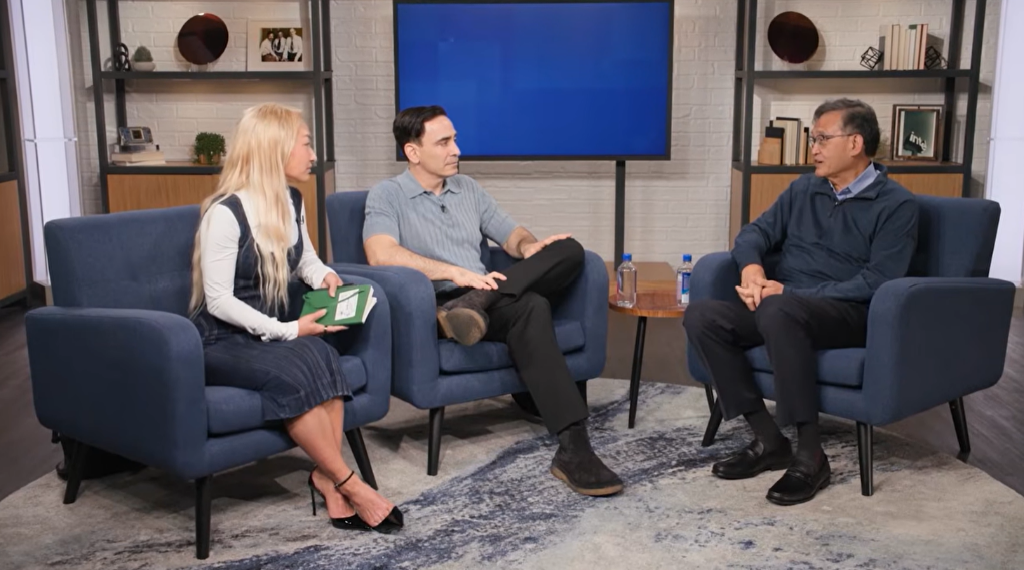
The following is a transcript of the interview:
Host: Welcome back to No Priors. Today Allad and I are joined by Pat Gelsinger—a legendary investor from Walden, former CEO of Cadence, and now CEO of Intel. We will discuss his plans to transform Intel, what it means for the U.S. government to become a major shareholder, how to be an outstanding semiconductor investor, and whether we can manufacture chips within the U.S. Welcome, Pat.
Why take on the burden of Intel?
Host: Let's start with an obvious question. Taking on the CEO role of this extremely important American semiconductor company is a truly challenging job. Why did you accept it?
Gelsinger: That's a good question. I am 66 years old this year, and many people say I should retire, why step into the hottest job in the industry? There are a few reasons: first, this is an iconic company that is extremely important to the entire semiconductor ecosystem and to America; second, after leaving Cadence, I decided to take on another big challenge.
Host: A lot has happened over the past year. What has surprised you the most?
Gelsinger: The most surprising thing was something I had never experienced in any previous job or training—one morning, President Trump asked me to resign, citing a conflict of interest, with no exceptions. At that time, I convinced myself: I don’t need this job; I am doing this purely to save Intel. After setting aside personal feelings, I began to think about what I can do for Intel. Fortunately, I secured a meeting on Thursday morning, followed by another one on Monday, where he listened to my presentation—I was born in Malaysia, grew up in Singapore, graduated from MIT, and have lived in the U.S. ever since, never leaving. I shared this with him, he took it to heart, and gave me the opportunity to continue. I am very grateful.
Host: You say this job is about "saving Intel." What does a winning, thriving Intel look like in your mind?
Gelsinger: I have been here for 14 months, and a lot has happened. First, change the culture, clarify accountability mechanisms, and accelerate decision-making speed. I am used to the rhythm of a startup, everything moving at lightning speed, but Intel has layers of bureaucratic meetings—this is something I had to change. Second, listen to customers—if you want to truly satisfy customers, you must be humble, willing to listen, and directly address their issues and solve them. Third, from day one, I decided to have all engineering teams report directly to me. I am an engineer by background; I want to know firsthand where problems occur and what needs correction. Listening to customers, ensuring their satisfaction, making sure we have the right products, simplifying the product line, and creating a clear roadmap and vision for the next five to ten years.
Intel's ten-year vision
Host: What is your vision for Intel ten years from now?
Gelsinger: My consistent way of doing things—whether at Cadence or at Intel—is to crawl first, remain humble, listen to customers; then walk; and finally run. One step at a time.
The first step is to solidify the balance sheet—honestly, the condition of the balance sheet was quite poor at the time. I am pleased that the U.S. government has become a major shareholder. I explained to President Trump: look at Japan, look at Singapore—this is infrastructure, and the government should provide support.
Secondly, I am very grateful to my old friend Jensen Huang—he invested $5 billion in Intel, and I am glad that I have done something valuable; his $5 billion has now appreciated to $25 billion or even more. Additionally, Masayoshi Son of SoftBank—who I served on the SoftBank board with—also extended his hand. Through these efforts, we stabilized the balance sheet.
Next is focusing on products, simplifying the product line, listening to customers, and launching next-generation leading products. It just so happens that the demand for intelligent AI and inference CPUs is very strong right now, so in a sense, I have caught a good opportunity. In the past, the ratio of CPUs to GPUs during training was about 1:8; now I see it changing to 1:4, or even lower. CPUs have become important, which I find very satisfying.
I have talked to some AI model developers, and they say that in reinforcement learning, as well as coordinating and scheduling all agents, CPUs actually perform better. So the demand for my CPUs is very high. After establishing a solid foundation for the data center server product line, another important business is our wafer foundry. This is a capital-intensive business; it’s not easy. You need the right IP mix—such as low-power IP for mobile customers; without these, you can't serve them. This is a service industry as well as a business of trust—if yields are not up to standard, customers will abandon you due to revenue loss. Therefore, I am very focused on yield, defect density, and cycle time, ensuring that we can serve customers with high quality and high reliability. Ultimately, we aim for a full-stack solution, not just silicon itself—you need software; customers directly ask me for "the whole rack"; you need to provide system-level solutions. I am quietly advancing all these efforts step by step while recruiting the best talent I can find. By the way, I handle all recruiting personally without using headhunters.
Collaboration with Elon Musk on Terafab
Host: Another widely discussed important initiative is Terafab and your collaboration with Elon Musk. Can you talk about how this came together and how you collaborate?
Gelsinger: I think we both agree that Elon Musk is one of the greatest entrepreneurs of this century. He and I share a common judgment: the development of semiconductor infrastructure has not kept pace with the growth of AI—whether in terms of capacity, production efficiency, or power efficiency, we see this issue.
Secondly, I really enjoy the process of working with him. He is very unconventional and questions every aspect by asking "why do it the traditional way," which is refreshing. I love hearing differing opinions and then collaboratively finding the optimal path; both sides learn a lot. He has a clear vision—his robots and cars need vast amounts of chips.
Specifically, Terafab is his decision to build his own wafer factory, and we are happy to collaborate with him to accelerate production using some of our technologies and processes—this is a jointly cooperative project. His team is great, and I meet with them weekly; working with him is incredibly invigorating. He has mentioned some ideas, like allowing smoking in cleanrooms as a means of breaking tradition—I might not go that far, but perhaps in certain areas it could work; the key is to maintain an open mindset, and we are also seriously listening and evaluating.
Transformations in the global semiconductor supply chain
Host: From a macro perspective, how do you see AI driving changes in the global semiconductor supply chain from a country-by-country viewpoint?
Gelsinger: The impact of AI on the entire landscape will surpass that of the Internet and will be far-reaching. AI primarily makes you work more efficiently, with the help of numerous agents, many tedious tasks that previously needed to be done manually can now be completed much faster. For instance, in the field of semiconductor design, timing optimization and time-to-market can be greatly accelerated, and costs can be lowered.
The growth of AI demand faces several bottlenecks: one is power limitations; some countries do not have sufficient power at all; two is the impact of helium, which many people are not aware has a significant effect on the semiconductor industry; three is the shortage of memory, which is now the most pressing issue—even if you ramp up production now, new capacity will take years to come online, CPUs and GPUs remain in short supply, leading to price increases, and costs will ultimately transfer to the client side.
The most affected companies are those that do not embrace AI. AI can help businesses improve efficiency in nearly every department; companies should proactively embrace AI and find better ways to utilize it—whether in forecasting, design, or various workloads.
Host: The simplest argument against Terafab and the competitiveness of Intel's foundry business is the issue of labor costs and the feasibility of domestic manufacturing. What logic led you to continue double down on the foundry business?
Gelsinger: When I decided to continue betting on foundry versus withdrawing from it, there were many voices in the external environment—various opinions—saying it is too expensive, saying it won't work. But I ultimately judged that this is extremely important for the U.S. and the entire industry.
We have all experienced supply chain challenges; any major semiconductor company must seriously consider the supply chain issue, must have a robust and resilient supply chain, and cannot completely rely on one or two geographically concentrated suppliers. More and more people will realize that domestic manufacturing in the U.S. is crucial.
Our most advanced process, such as the 18A, is at the 1.4 nanometer level, and we are already planning for 1 nanometer and 0.7 nanometers. Process nodes are getting smaller, with linewidths thinner than a human hair, and the complexity is extremely high; any mistake at any step can result in a complete failure. For this reason, manufacturing precision requirements are becoming increasingly stringent, which will increasingly become a bottleneck.
We have great respect for TSMC; we are good partners, and the industry needs more capacity to serve customers, so we decided to stick it out—this is a critical move for the long term and where I can create more value for the industry.
Physical limits and advanced packaging
Host: There has been a long discussion about chip scaling encountering physical limits; if linewidths become too narrow, further reductions may no longer be feasible. When do you think we will really hit a wall?
Gelsinger: We currently have the 18A process, we are advancing towards 14A mass production, and I can see paths down to 10 nanometers and 7 nanometers—this path is feasible, but it will become increasingly expensive and challenging. This is also why we need partners; we need to work closely with substrate suppliers and equipment manufacturers to jointly push for improvements in yield and performance.
Another critical area that is becoming a bottleneck is advanced packaging. TSMC has CoWoS, and we have a next-generation solution called EMIB; I must ensure that it meets customer yield requirements at mass production stage.
When traditional scaling begins to encounter bottlenecks, I started returning to the materials level to seek breakthroughs—gallium nitride, silicon carbide, and indium phosphide; I have investments in all three areas. In packaging materials, I have started to focus on glass—glass is an excellent thermal insulation material, and I invested in a company called 3DGS. Intel holds about 1,000 patents in the module area; how to integrate substrates and modules is an important topic. Recently, we also announced advanced packaging manufacturing cooperation projects in India and New Mexico. Additionally, I am also exploring synthetic diamonds—another excellent insulative material; I also invested in a diamond wafer company.
The spirit of engineers is such—that you constantly encounter bottlenecks and then find ways to overcome or circumvent them. I am now pleased to apply the experiences I gained throughout the entire semiconductor lifecycle from EDA tools to design and manufacturing to contribute to the industry.
Host: Is there a possibility that converging process nodes will level the performance gap between different foundries, forming some kind of asymptote?
Gelsinger: The essence of Moore's Law is that transistor density doubles, but power consumption and costs do not necessarily decline at the same rate—you can double the performance, but the area and cost may not decrease equally. Unless you find new materials or new design methods. This is exactly why I am ramping up recruitment for talents in materials science—this has become the core of innovation in this field.
Eighteen years ago, when I was investing in semiconductors, many top-tier VCs showed no interest in this field at all. I still remember, after discussing semiconductors at a partner meeting, half the people made excuses to leave, and the remaining half said, "Do you have software or service projects?" until only one or two stayed behind sympathetically. Now, Jensen Huang's NVIDIA is valued at $5.3 trillion, Broadcom and TSMC each around $2 trillion, my good friend Lisa Su's AMD is close to $800 billion, and Intel is close to $600 billion. Semiconductors have once again become a hot field and an indispensable foundation. Fifteen to twenty years ago, almost no venture capitalist was willing to invest in semiconductors with me, except for major institutions like Samsung, ARM, and SoftBank. Now, VCs are flocking in, and the enthusiasm for investing in this field is extremely high; I find this very gratifying.
Challenges in semiconductor investment
Host: You are both a long-term investor and an operator. Semiconductor investment faces many difficulties—capital-intensive, unpredictable results, needing to deeply understand workloads, high risks for customers in switching suppliers, strong industry cyclicality... how do you view these risks, and how would you suggest others to invest in this supply chain?
Gelsinger: Venture capital and startups are in my blood; I truly enjoy it. I am not here to boast, but for some background: I have records of 159 companies going public and 126 mergers and acquisitions, with over 200 investments in semiconductors, 38% of which are in the U.S.
In terms of investment methodology, I always start with a core question: where are the bottlenecks, what problem are you solving? For example, I invested in Cradle Semiconductor because interconnects became a bottleneck; I invested in Celestial AI because optical interconnects become increasingly important within clusters—Jensen Huang has invested in nearly all photon-related companies; this is not a coincidence.
At the design level, whether AI and machine learning can help reduce complexity and improve design quality—I believe there is a huge opportunity in the EDA space, with several startups moving in this direction, representing a gold mine. In new materials, gallium nitride, silicon carbide, and indium phosphide are all my investment directions, with some having already been acquired by large companies like ADI. Power management—transitioning from 40V to 1V incurs tremendous losses—is another bottleneck field I am optimistic about.
My investment framework is always: Is the problem real? Are customers truly struggling with it? Then it’s very important: who is the first target customer? I tend to prefer hyper-scale customers—they have the capacity and willingness, and if they like your product, they are willing to invest millions in the next few years or offer some guarantees, because winning a large customer can lead to scaling.
Talent is also crucial—America, Silicon Valley, Austin, and Israel are all key areas I focus on. Israel has incredibly disruptive, entrepreneurial innovators who work extremely hard. During wartime, they still insist on having meetings—sometimes saying, "There’s an alert; I need to go to the basement; the network might be bad, let’s switch to voice," this resilience deeply impresses me.
Besides intelligent AI, physical AI is the next major frontier; we must look seriously at the full stack, which is why I still actively participate in many investments related to cutting-edge models—I see great potential in open-source cutting-edge technologies for physical AI; this is a gold mine.
Experiences at Cadence
Host: You mentioned that AI brings faster, cheaper, and more creative possibilities for chip design and testing. Based on your experience at Cadence, which directions do you think are most fertile? What has already been working?
Gelsinger: I was at Cadence for nearly 15 years, and one of the things I am most proud of is finding my successor and personally mentoring him; he is now an outstanding CEO actively embracing AI and introducing intelligent AI into tools to enhance efficiency. Synopsys's Sassine is doing the same thing, backed by NVIDIA's $2 billion investment, and has acquired Ansys to extend to full-system design.
Large companies are doing this, but there are also opportunities for startups to do more disruptive things; ultimately, these companies can go public or be acquired by two larger companies. It depends on the entrepreneurs' vision. My consistent philosophy is: if an entrepreneur wants to exit quickly, help them achieve that; if they intend to go public from day one, guide them on that path. As VCs, we support entrepreneurs' dreams and help them realize them.
Scaling and investment decisions
Host: Regarding the directions you mentioned—materials companies, EDA, manufacturing—will Intel or future semiconductor companies be completely transformed by AI in ten years?
Gelsinger: I believe so. Returning to your points about capital intensity, unpredictability, and cyclicality, these need to be included in the investment decision-making process. I usually like to enter early and build the team; find suitable investors who will stick with you during difficult times, not just friends you have in good times; at the same time, seek strategic investors who can add value to the company, whether in manufacturing, storage, interconnection, or other dimensions. I also have some growth-stage friends and hedge funds that have unique perspectives on public markets, which can help entrepreneurs determine which direction to avoid; this is very valuable.
To be honest, looking back, among ten companies I have invested in, nine have changed their business plans halfway because the market changed. So I prefer entrepreneurs with teams rather than just individuals. They also need to have openness of mind, willing to listen and accept our advice, but ultimately draw their conclusions— the best outcome is not "he told me what to do, so I did it," but rather you provided enough feedback for them to derive conclusions that you recognize or understand; that is the joy of entrepreneurship.
Looking ahead ten years, the winners will be those companies that can focus on a niche area, find the right partners, and scale up. It’s important to have a full-stack solution. Large companies can focus on CUDA and platform building, like Jensen Huang did; they achieved that. Startups can also change the game in a more elegant way, like Anthropic and OpenAI; they can move at lightning speed and truly become the leaders.
For Intel, I hope it can play such a role—we have XPU, advanced packaging, and foundry; if we can integrate these to customize dedicated chips for different workloads, that is my direction.
Team restructuring in the AI era
Host: The software industry is undergoing significant changes—what kind of people to hire and who is suitable for managing multiple agents. Many people are now more inclined to hire individuals aged 30 to 50, as they are more accustomed to managing teams, and this capability can directly translate to managing agents. In the context of hardware or foundries, how do you view the changes in team structure and capabilities?
Gelsinger: Returning to the crawling-walking-running framework. In the "crawling" phase, I recruited the best talent in the semiconductor industry; now I am starting to think about what software talents I need to bring in to build a full stack capability. I also note that the average age of the team is in their 40s to 50s; I need to bring in some younger talent who can understand workloads and familiarize themselves with cutting-edge open-source models.
Interestingly, my son has become my teacher. Every time I go to his place to play with my grandson, I consult him about AI and machine learning; he understands these topics better than I do. I have learned a lot from him and then attempt to translate these insights into investment judgments and talent acquisition.
Intel has historically been an old-fashioned company heavily reliant on spreadsheets; I am transforming it into an AI-empowered enterprise—not just in the design phase, but embracing AI organization-wide to reduce reliance on spreadsheets. We need to combine seasoned technical talent with AI tools, not just in sales and marketing; now the design side is also actively embracing AI.
Industrial policies and capital sources
Host: For capital-intensive enterprises, how to acquire funding has always been a big issue. Industrial policies have created the most important companies like TSMC, but this approach has long been looked down upon in U.S. business culture. What’s your perspective on this?
Gelsinger: For capital-intensive businesses and infrastructure projects, access to capital is crucial. Now some VCs are willing to invest $1 billion in a single company, which was previously unimaginable. Therefore, in early investment strategies, it’s necessary to either enter very early while valuations are still reasonable or be part of Series A, but it is now difficult as Series A valuations have exceeded $1 billion.
I highly welcome capital that can help with scaling, such as mutual funds—they are not as sensitive about ownership percentages. For capital-intensive projects like AI factories and foundries, it is essential to seek support from government funding, sovereign wealth funds, or large infrastructure funds. Sovereign wealth funds and government funding will become increasingly important.
As a publicly traded company, I also consciously focus on long-term growth-oriented investors rather than short-term funds that keep asking, "When will you buy back stocks" each quarter—of course, shareholder returns are a reasonable concern, but I must also build the business; this balance is important.
The biggest misunderstanding by investors about Intel
Host: What do you think is the biggest misunderstanding investors have about Intel right now?
Gelsinger: There are a few points. First, returning to crawling-walking-running: I am still in the crawling phase over the past few months, but people have begun to see the potential. In terms of products, we still have market share in PC clients, but we must significantly improve performance—so I am quietly building CPU architecture, GPU architecture, and software architecture teams, preparing for leapfrogging advancements while moving swiftly like a large startup, leveraging better technologies to achieve breakthroughs.
In terms of foundry, we still have a significant gap with TSMC; we must remain humble and focus on solidifying the foundations—IP, yield, defect density, and cycle time—to make foundries more efficient and reliable. This is a business of trust, and customers must trust you before they hand you their wafers. These things take longer, but I believe that by 2030 to 2032, people will start to see how great Intel's true potential will be.
The PC client is our foundation, but we are extending towards the edge, towards physical AI and intelligent AI. In the past, you only provided servers and PCs to humans; but now there is a whole new dimension—millions of agents need access to computing power, need access to software stacks. I believe Intel has opportunities in both intelligent AI and physical AI; this game is not over.
AI is still just the beginning; you have the training front led by Jensen Huang, you have the edge, you have intelligent AI, and you have physical AI—this is a massive opportunity; there is still an opportunity for all, and this is the direction I want to devote all my efforts to. The past 14 months have already created 6 times the return for shareholders, but this is just the beginning, and there is still a lot of room for growth.
My VC instinct tells me—to look for opportunities with 10 times returns. At Cadence, I went from acting CEO to retirement, and the stock price rose from $2.4 to provide shareholders with about 76 times return; as chair, it was around 85 times. Intel's scale is larger and more challenging to replicate, but my target is 10 times—achieving 10 times returns in 5 to 10 years, as a person deeply rooted as a VC, that is my goal.
Where will computing power reside?
Host: There is a viewpoint that data centers will keep growing larger, with gigawatts being just the beginning, and centralization being the mainstream. However, the business picture you describe also seems to include edge and client computing. How do you foresee the distribution of computing power between data centers, edge, and client, or will it be entirely determined by application workloads?
Gelsinger: The current large-scale AI infrastructure construction is correct; I see no reason for a slowdown, as workloads continue to grow. The current limiting factor is primarily on the supply side—any slowdown is constrained by supply, not demand.
But what I am more concerned about is: once all this infrastructure is built, what kind of applications will run on it? You must find truly scalable applications—just like in the internet era, applications like Amazon and Netflix stood out while others disappeared or were acquired. The AI industry will undergo the same process: after massive growth comes consolidation, leading to one or two real winners rising to the top.
Focusing on applications is key; look at Netflix as a true application, and Amazon as well; they both won. Moreover, certain applications are indeed more suited to run on the edge or on clients—robots, defense scenarios are critical in terms of computing power selection at the device level; your assumptions about connectivity and built-in device capabilities determine what you can do. This aspect was overlooked during the SaaS era.
My investment method remains as always: to find real problems, identify the right partners, and assess whether the market size of applications is sustainable—if you truly believe in it, double or triple your bets. Of course, this also includes betting on applications that have not yet been fully realized at scale.
Host: Thank you very much for coming today; it has been a real pleasure.
Gelsinger: Thank you for the invitation.
免责声明:本文章仅代表作者个人观点,不代表本平台的立场和观点。本文章仅供信息分享,不构成对任何人的任何投资建议。用户与作者之间的任何争议,与本平台无关。如网页中刊载的文章或图片涉及侵权,请提供相关的权利证明和身份证明发送邮件到support@aicoin.com,本平台相关工作人员将会进行核查。


