Author: Tara Tan
Translated by: Shenchao TechFlow
Source: The Strange Review
Senchao Introduction: SpaceX's xAI acquires Cursor's parent company Anysphere for $60 billion in stock, buying not market share, but high-quality training data from 7 million developers coding daily. Strange Ventures partner Tara Tan throws out a judgment with this deal: to become an AI giant, one must fully integrate computing power, models, and applications. This short commentary breaks down Anthropic's path to a 540-fold revenue increase over 28 months and explains why model companies will frantically acquire application layers next. Note that the author is a VC, and full-stack is their investment theme.
Code generation is the strongest killer application of large language models to date, without exception.
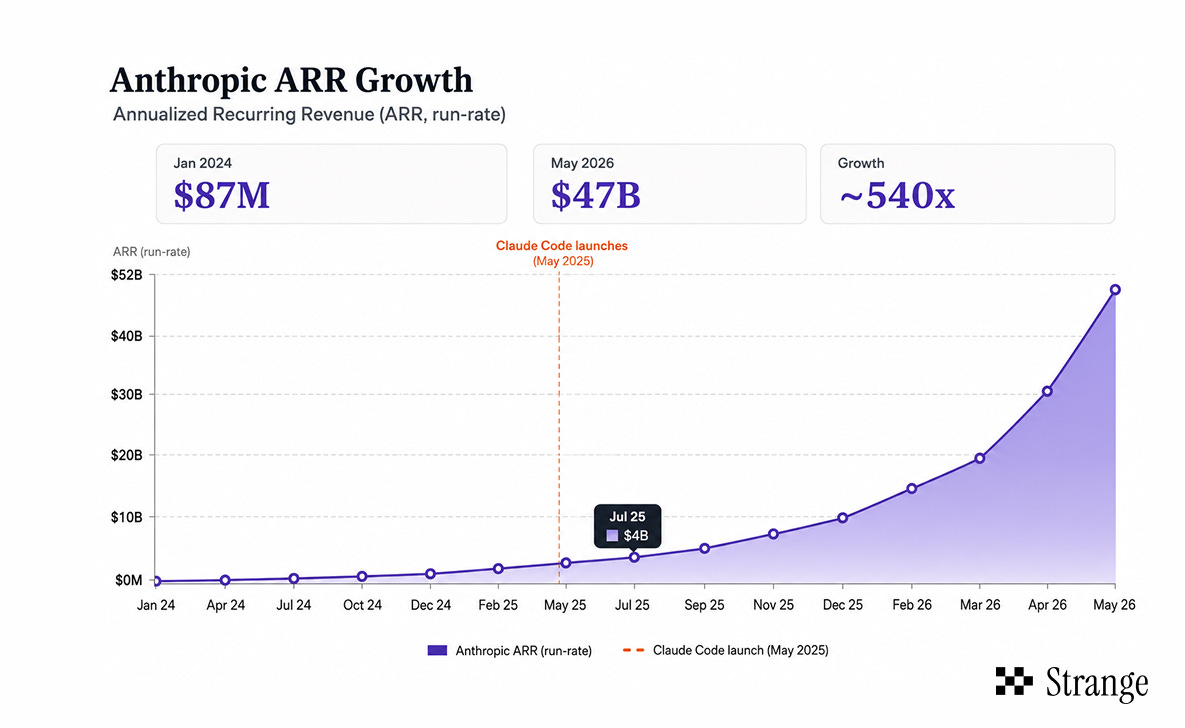
Anthropic's revenue increased from an annualized income of $87 million in January 2024 to $47 billion in May 2026, approximately a 540-fold growth over 28 months. Supporting this growth rate are two engines operating simultaneously: one is top-down enterprise collaboration (Claude being the only cutting-edge model available on three major cloud platforms), and the other is bottom-up developer penetration, driven by Claude Code. This product is the fastest-growing in the company's history, going from 0 to an annualized income of $2.5 billion in just 9 months. Now Anthropic holds a 54% share of the enterprise AI programming market.
Cursor is the same bet placed by SpaceX.
Yesterday, SpaceX announced the acquisition of Anysphere, the company behind Cursor, for $60 billion in stock. The AI programming tool Cursor is used daily by 7 million developers. It was incubated at MIT four years ago and has reached an annualized income of $2 billion, making it the highest-grossing AI programming tool in its category. Over the past year, its market share has been sliding from 41% to 26%, as Claude Code emerged. However, what xAI is buying is fundamentally not market share.
xAI originally has the full stack: Colossus is computing power, Grok is the model, and X is the application. The issue is that X is for casual use, while Cursor is for coding. The code generated by developers produces some of the strongest training data signals in the AI field, and this is precisely what Grok needs to enhance its combat power.
This solidifies an idea I've been contemplating since the deal between OpenAI and Nvidia last September:
To become an AI giant, one must operate the full stack.
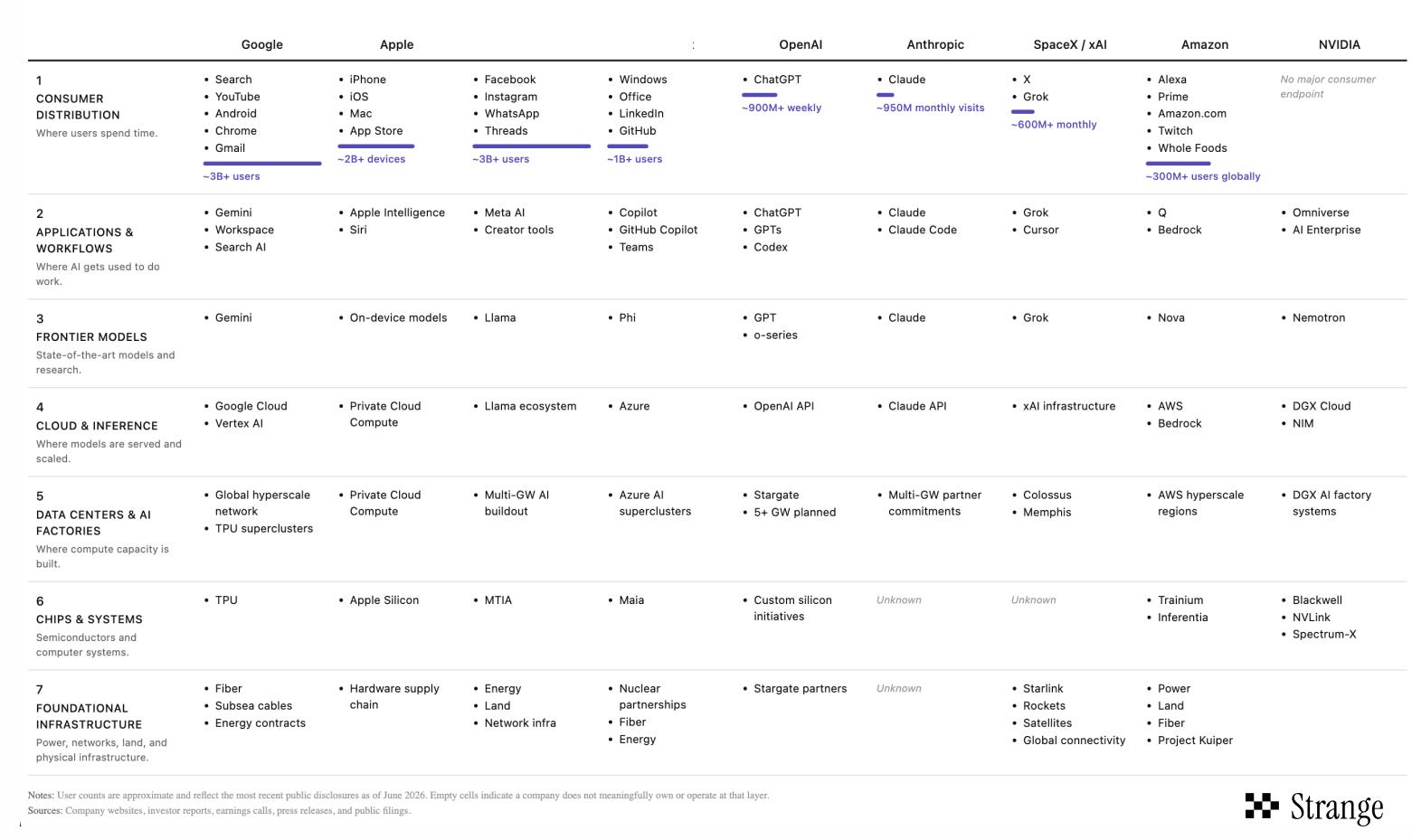
This logic is becoming clearer. Better products lead to better infrastructure (more data), which in turn leads to better experiences. This has always been the core investment logic at Strange.
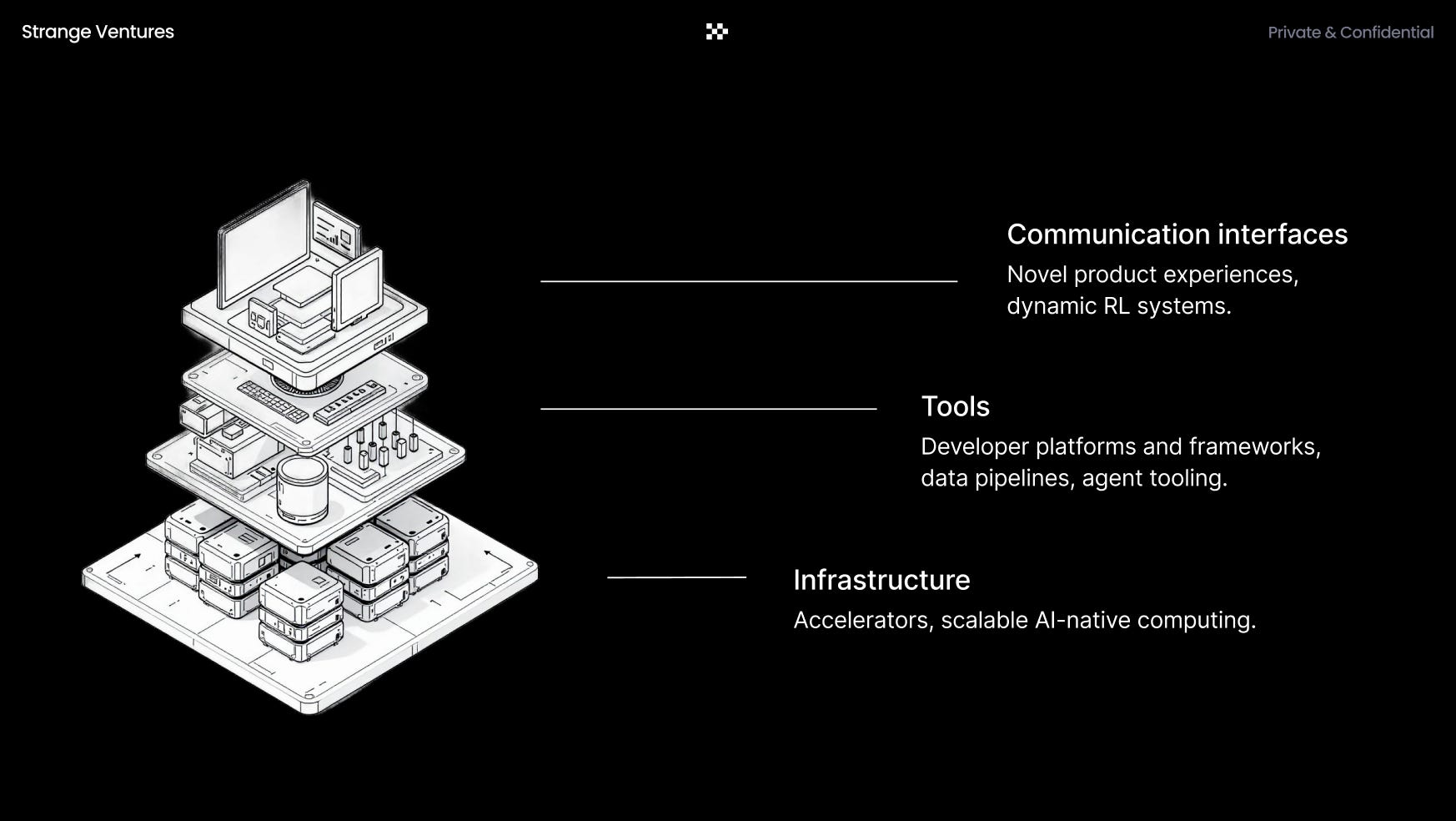
Caption: The author's team diagram on the "full-stack closed loop" investment logic
Operating the full stack brings two things:
First, the unit economics of building and training models become sustainable.
Second, you can obtain proprietary training data from the application level, distinguishing yourself from other model vendors. Locking in user data and workflows creates an attractive moat.
In the coming years, we will likely see actions where model companies either develop applications internally or aggressively acquire and directly integrate application layers.
Entrepreneurs currently popularize a saying: Because making products is 10 times easier than before, companies must be 10 times more ambitious than before to succeed. At present, this statement holds true across various fields.
——Tara
免责声明:本文章仅代表作者个人观点,不代表本平台的立场和观点。本文章仅供信息分享,不构成对任何人的任何投资建议。用户与作者之间的任何争议,与本平台无关。如网页中刊载的文章或图片涉及侵权,请提供相关的权利证明和身份证明发送邮件到support@aicoin.com,本平台相关工作人员将会进行核查。


