Author: Pu Fan, Touw China
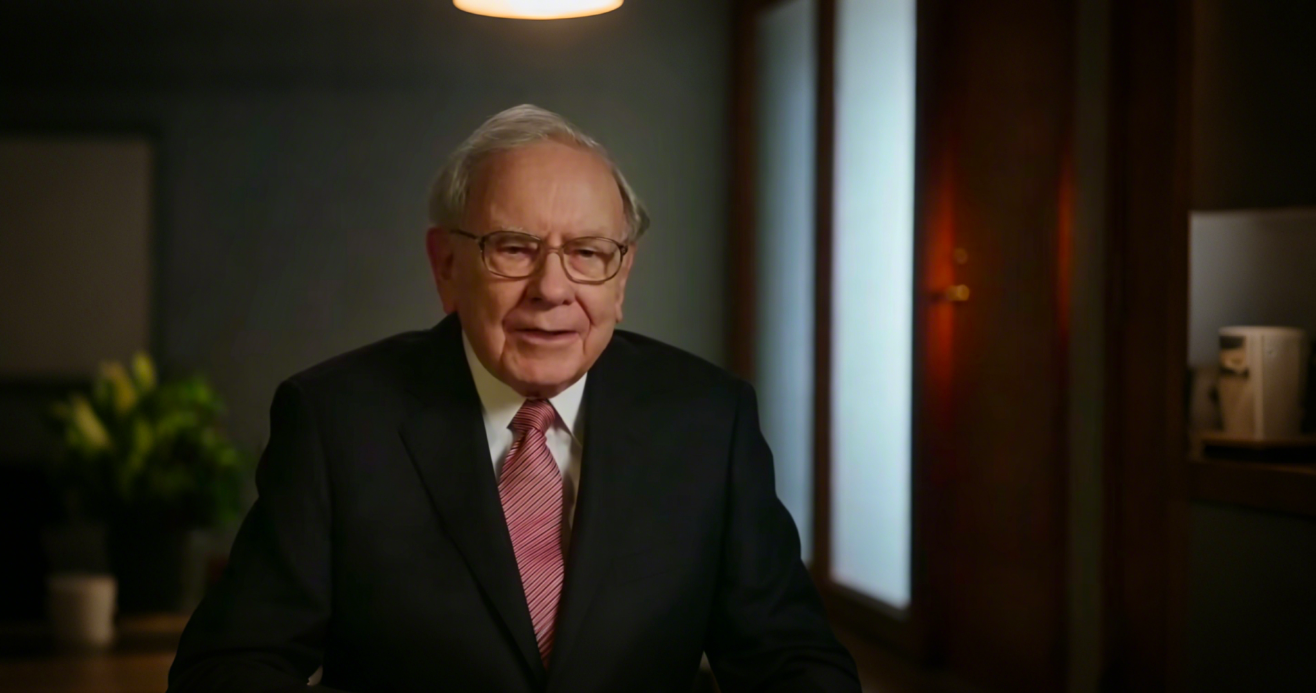
What Buffett opposes is replacing specific investment judgments with agnosticism or even a form of divine rhetoric.
“Buffett and VCs must lose one.”
This was relayed to me by a colleague. Recently, as he traveled around the country for research, he found that many people mentioned this viewpoint, with similar reasoning:
On one hand, Buffett's Berkshire Hathaway has net sold stocks for nearly three consecutive years, and by May of this year, its cash and cash equivalents had reached an all-time high of $397 billion;
On the other hand, the U.S. capital market has seen an unprecedented "tech boom," with the market value of information technology concept companies on U.S. stock exchanges nearing $30 trillion, accounting for 37% to 39% of the S&P 500 index, far surpassing the internet bubble period—this does not even include various AI unicorns that have not yet gone public.
In contrast, isn't this a bet on the future between Buffett and the VCs? Buffett is expressing his concerns through practical actions, warning everyone that the technology sector has entered a standard "bubble state" and that it is necessary to hedge early. Meanwhile, venture capitalists are pouring their hard-won liquidity into artificial intelligence, semiconductors, and computing centers, using unprecedented growth rates in valuations and investment paces to indicate that "bubbles do not exist" and "value is far underestimated."
Whichever possibility among them comes true means "complete exit" for the other side.
Following my colleague's relay, I seriously searched around. To conclude: There are very few who directly discuss this topic, and the opposing sentiments are not so severe. Among all the information I retrieved, the article with the strongest tone probably came from Yahoo Finance on May 21, titled "Buffett Issues His Harshest Warning Yet," which did not mention VCs or venture capital but focused more on Berkshire Hathaway's investment strategy.
However, many are hinting at it. For example, not long ago, the World Economic Forum released a research report titled "The Future of Venture Capital 2026: Unlocking Liquidity and Growth." The report sharply pointed out: For a long time, venture capital has been a powerful engine for economic growth and technological progress, but the capital cycle supporting its ecosystem is being broken.
This cycle refers to "funds investing in early-stage companies, successful companies exiting through initial public offerings or mergers and acquisitions, and then reinvesting the distributed funds in the next generation of startups"—however, nowadays, venture-backed companies remain privatized much longer than in the past decades. Around 1,900 venture-backed unicorns (startups valued at $1 billion or more) still remain private, representing valuations exceeding $7.3 trillion, with an estimated $3 trillion of unrealized value remaining on the balance sheets of venture capital funds.
Recently, after the flash crash of semiconductor stocks in the U.S. stock market, this kind of meme began to circulate online:

Interestingly, although Buffett has not yet publicly slammed VCs, in fact, during the two significant financial storms in 2000 and 2008, Buffett and many investors engaged in intense debates. This is also the theme of today's article, and I want to borrow the topic of "Buffett and VCs must have a battle" to revisit the arguments Buffett had with the capital markets back then.
“The Internet has a negative impact on capital”
In December 1999, the prominent business magazine Barron's published a provocative column titled "Warren, What's Wrong With You." At the beginning of the article, the author directly set the tone: Buffett is viewed by an increasing number of investors as overly conservative, even out of date. As Chairman and CEO of Berkshire Hathaway, Buffett may be the greatest investor in the world, but he neither predicted the boom in tech stocks over the past few years nor profited from it.
Now that we look at it from a vantage point, it's easy to overturn this conclusion. At the very least, Berkshire Hathaway is still active in the capital markets, with a total market value exceeding $1 trillion, undoubtedly a "master-level" presence in the financial industry. Those star companies that created phenomenal growth during the Internet bubble, like Pets.com, WebVan, and Netscape, have long since ceased to exist.
However, at that time, this article garnered considerable support. Because the entire Nasdaq was experiencing an unprecedented surge driven by internet concept stocks, with Qualcomm's stock price rising over 2,600%, twelve stocks gaining over 1,000%, and seven stocks climbing more than 900%. Meanwhile, due to the excessive hype surrounding the Internet, it triggered severe FOMO in the market, attracting many investors to decide to switch portfolios, leading to a situation where in reality, the number of falling stocks on the Nasdaq in 1999 actually exceeded the number of rising stocks, with an overall increase of about 85%, while the S&P 500 index rose by 19.5%.
Against this backdrop, while people also recognized the existence of a bubble, they generally believed it wasn't a "crisis moment" yet.
More importantly, the article "Warren, What's Wrong With You" used a wealth of detailed examples to substantiate Buffett's "getting old." For instance, the author pointed out that between 1998 and 1999, Buffett, while maintaining a long-term friendship with "Bill Gates," made entirely opposite investment choices, acquiring General Re, Dairy Queen, Mid-American Energy, and a furniture retailer with a large amount of cash. The author noted that these transactions could only bring "stability" and failed to excite Wall Street.
Additionally, the author mentioned a detail where he sought direct dialogue with Buffett, but Berkshire Hathaway declined the request, writing that "Buffett—a person with a strong competitive spirit hidden beneath a façade of humility—felt his pride was hurt." Coupled with the fact that Berkshire Hathaway's stock price had fallen for the first time since 1990, creating the second worst annual performance in the company's history since 1965, many more firmly affirmed their "faith" after reading this article, which became the "general program" for opposing Buffett in the following period:
An investor from an old era, claiming to have unparalleled investment experience, consistently renowned for impressive investment performance, has shown signs of collapse in almost a disgraceful manner—what could prove the correctness of the "internet economy" more than this?
So how did Buffett retaliate?
The first face-off occurred at the Sun Valley Conference held in July 1999. The Sun Valley Conference, founded in 1983, hosted by the American investment bank Allen & Company, takes place every July in Sun Valley, Idaho, and only the absolute top elites from various fields globally are invited, such as Bill Gates, Bezos, Zuckerberg, and so on. "Coincidentally," many influential business events also tend to be completed shortly after the conference, leading to it frequently becoming a subject of "conspiracy theories," akin to the Freemasons or the Illuminati.
To get back on track, at this year's Sun Valley Conference, the organizers fittingly invited numerous internet newcomers. However, Buffett, as a closing speech guest, chose to pour cold water on the hype, stating right off, "The stock market often deviates from its true value for an extended period, but ultimately, value is the decisive factor," and that this essence means "identifying a transformative technology is distinctly different from selecting specific winning companies."
Buffett believed the aviation and automotive sectors are very concrete examples. In the early 20th century, the automotive and aviation industries fundamentally changed human civilization, but nearly all of the hundreds of early automobile manufacturers and airlines went bankrupt. Based on this premise, Buffett considered one of his biggest lessons from investing to be "the key to investing is not to assess the societal impact of an industry or its growth potential but to determine the competitive advantage of a specific company, and more importantly, how long that advantage can be sustained."
Referring back to the current capital frenzy, Buffett made a judgment: "I find it hard to find a compelling reason to prove that the stock market's performance over the next 17 years can approach that of the past 17 years," even going so far as to say, "the damage caused by Karl Marx to capitalists is not as great as that of the Wright brothers."
This speech occurred in July 1999, and in November 1999, Fortune magazine obtained authorization to publish it, causing an uproar in public opinion. In fact, it was this speech that led to Barron's "Warren, What's Wrong With You" article and similar criticisms.
The second confrontation occurred in early 2000, just a few months after the ridicule. The beginning of this confrontation was slightly beyond expectations, as the old man admitted his "failure." In an open letter released in March 2000, Buffett openly acknowledged that "1999 was the worst year of my investment career," and conceded that General Re, Coca-Cola, and Gillette were somewhat outdated, noting that "they are struggling to adapt to the rapidly changing global situation."
However, in the same open letter, the old man did not disguise his contempt for the frenzied venture capitalists and tech stock investors, stating "If someone starts explaining to you what really crazy things are happening in this 'magical' market, you might recall a saying: 'Fools give you reasons, wise men never try.' Moreover, he publicly announced the following predictions and decisions:
1. Berkshire Hathaway is confident in their investment portfolio, believing it will outperform the S&P 500 index in the coming years, thus the company will not initiate buybacks due to temporary stock price declines;
2. Berkshire Hathaway believes that the S&P 500 index will significantly underperform its performance since 1982 in the coming years, and the current market boom cannot sustain itself, therefore they will not alter their current investment decisions.
What I wrote in the subtitle comes from the third confrontation, which occurred in April 2000 at the Berkshire Hathaway shareholders' meeting. In response to an investor's question, Buffett said: "If you analyze the Internet, you will find that it is more likely to reduce company profitability than to increase it. It will enhance efficiency, but many things can improve the efficiency of American companies... So far, it (the Internet) has enhanced the monetary value of American businesses, but this merely follows economic laws. And I believe it is more likely to lead to the overall value of American companies falling below what it should be."
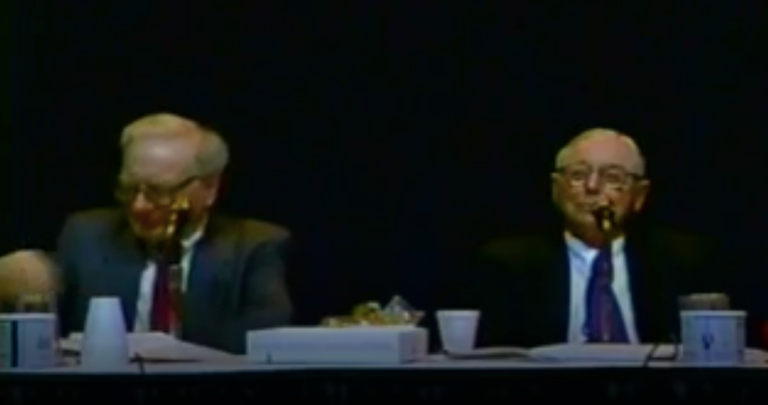
(Buffett in 2000 with Munger, source: video screenshot)
Of course, strictly speaking, this should not even be considered a "confrontation." Because after the Nasdaq index peaked in March 2000, it already began its downward cycle. By the end of April 2000, the Nasdaq had experienced a staggering weekly decline of 25%, reaching the "settlement moment." However, there were still a significant number of investors believing that Buffett was not the true winner. For instance, Marc Andreessen, founder of A16z, argued that Buffett was merely "delaying" and "avoiding" certain occurrences, emphasizing that the "internet bubble" itself was not wrong, but rather "the timing was off."
He said: "The bursting of the internet bubble instantly made all ideas considered genius regarded as utterly crazy and foolish. Pets.com is a typical example. But actually, all ideas are still effective today. I can't think of any ideas that are not feasible today."
“Most of the time, intelligence cannot overcome risk”
If the debate in 2000 was a hasty response from Buffett under market exuberance, then in the second debate years later, Buffett's role was more of a "proactive attacker."
Fast forward to May 2006, at the annual shareholders' meeting, Buffett made a point that as long as the time span is long enough, those so-called "professionals" engaging in "active management" will yield lower returns than those "passive" business investors, because these professionals impose "excessive" management fees that prevent investors from acquiring assets at low costs. To verify his point, Buffett proposed a wager: if anyone could identify five high-fee hedge funds managed by well-known managers that matched the returns of a non-managed S&P 500 index fund, he would willingly lose $500,000 to them.
Clearly, with Buffett's stature, no one dared to challenge this viewpoint, let alone contest it. It was not until July 2007 that the challenger finally emerged, the hedge fund Protégé Partners LLC.
First, a brief introduction to Protégé Partners. The founder of Protégé Partners is Jeffrey Glynn Tarrant, a veteran in the finance industry who graduated from Harvard Business School. His first job in 1985 was co-managing one of the earliest hedge funds, the Sequoia Fund, at Berkeley Asset Management. Protégé Partners was Tarrant's second entrepreneurial venture (his first was a consulting firm he established in 1996, later acquired by consulting giant Morningstar), initially a venture capital fund focused on early-stage projects, it later gradually evolved into a hedge fund company.
The focus here is that Protégé meets Buffett's criteria: sufficiently well-known, capable of charging higher management fees, and a hedge fund. The specific wager was that Protégé, represented by co-founder Ted Seides, bet on the performance of five hedge funds, specifically targeting their average returns after deducting all fees, costs, and expenses. For reference, Buffett chose a low-cost S&P 500 index fund launched by Vanguard (with a management fee of only 0.04%). The wager would start on January 1, 2008, and continue for ten years, concluding on December 31, 2017.

(Ted Seides, source: personal social media)
To begin with, Buffett won again, and the game ended early. Between 2008 and 2016, the five hedge funds chosen by Ted Seides all underperformed the index fund chosen by Buffett, with three of the funds having annualized returns of less than 1%.
In the article announcing "surrender," Seides had to acknowledge Buffett's correctness, stating, "He was right; hedge fund fees are indeed very high, and his argument is also very persuasive. Fees are crucial in investing, there is no doubt about it." Buffett also displayed enough grace after the wager, saying that both Seides and the managers of the five funds are actually "honest and smart people." However, he also added, "The common fee structure employed by hedge funds—2% management fee plus 20% of profits—means that while fund managers often only provide some vague nonsense, they receive hefty compensation."
However, the entire process did not go as smoothly as it appears. As is well known, the 2008 subprime mortgage crisis occurred, leading to the emergence of a global financial storm. Such an environment was particularly capable of highlighting the value of hedge funds, specifically "risk resistance." In terms of specific performance, the index fund chosen by Buffett lost 37.0% of its value, while the hedge funds recorded a loss of 23.9%, and it wasn't until four years later that the index fund's returns finally surpassed those of the hedge funds.
During this period, Buffett's own investment business also faced a setback. At the 2009 shareholders' meeting, Buffett publicly announced that he incurred an unprecedented loss of $3 billion in personal assets in 2008. Berkshire Hathaway's loss was even greater, exceeding $8 billion, with profits down 62%, marking it the worst year of performance since he took over the company. Buffett's reflections in the shareholder letter were very profound, stating, "In 2008, I made some dumb mistakes," believing that everyone was facing an "economic Pearl Harbor" and pessimistically predicting that the current recession would be "long and deep." In 2015, the hedge funds selected by Seides briefly outperformed the index fund in positive returns.
Moreover, the most ironic part was that throughout the wager, the best-performing assets were neither Buffett's chosen funds nor Seides's chosen ones, but the government bonds purchased with both parties' stakes. In 2008, they purchased $640,000 worth of ten-year government bonds, anticipating that these bonds would appreciate to $1 million upon maturity, precisely fulfilling the initial commitment of $500,000 each. However, due to the subprime crisis and the global necessity for low-interest-rate bailouts, these bonds surged, completing $1 million by 2012 and reaching $1.8 million by 2017.
So, similar to the previous debate during the internet bubble, hedge funds were destined to fail after 2015, but they held onto their pride. Seides argued: "The goal of hedge funds is not to beat the market, but to strive for positive returns over the long term, regardless of market conditions. Their thinking is vastly different from traditional 'relative return' investors, whose main goal is to outperform the market, even if that means losing less than the market average when the market declines."
Economist Noel Watson asserted that while Buffett won the wager, the whole victory resembled "a funeral celebration," as it seemed to indicate that the capital market had become highly homogenized. One of the most intuitive reasons is that the five hedge funds chosen by Seides were very diversified, with stocks comprising only a small portion. Bonds, commodities, derivatives, currencies, and real estate were all included. Seides also pointed out in another article that Buffett's victory was merely a matter of good fortune timing with the "post-economic recovery period," while in reality, the S&P 500 becoming one of the best-performing indices globally was actually benefiting from returns generated by "market exposure."
From an investment logic standpoint, Seides believed that "hedge funds—especially the mixed funds chosen in the wager—are geographically more diversified, lean towards small-cap stocks, and bear much less market risk compared to fully invested long-only portfolios."
In response, Buffett directly corrected Seides's misdirection in his 2016 shareholder letter, mocking without reservation: "Many very smart people aim to achieve returns above average in the securities market. We call them active investors. In contrast, passive investors, as the name suggests, can only reach average returns... However, to a large extent, their efforts cancel each other out, and their high IQ cannot compensate for the costs they impose on investors. In the long run, on average, investing in low-cost index funds yields higher returns than investing in fund portfolios."
“Mr. Market should serve you, not guide you”
So to sum it up, what Buffett truly opposes is neither the internet nor hedge funds, and certainly not all active management. He opposes two simpler things:
First, replacing specific investment judgments with agnosticism or some form of divine rhetoric;
Second, artificially adding excessive variables and thresholds in investment decisions, with the ultimate goal merely being "process monetization."
These two matters can likely also be applied to the current narratives of VCs and AI. VCs, of course, have their own difficulties; early-stage investments are all about betting in times of incomplete information—if every company is already profitable, has barriers, and has certainty, then VCs are no longer VCs. The aforementioned World Economic Forum report also acknowledged that venture capital remains an important engine for technological progress. One of the most intuitive data examples is that in the United States, companies that have received VC financing and eventually went public account for 94% of R&D expenditure among publicly listed companies formed over the past 50 years.
But the report also mentioned another set of changes that are more relevant today: AI is changing the economics of venture capital. On one hand, AI-native companies can achieve revenue scales that were once hard to imagine with smaller teams; on the other hand, they rely on computing power, data centers, and energy systems, which require industrial-level capital investment. By 2025, AI is expected to account for more than half of global VC transaction amounts, with increasing capital concentration in financings over $100 million.
This would likely capture Buffett's interest. He may not deny that AI represents the future. However, he will likely continue to ask: How does this company ultimately make money? Will profits remain in the model companies, or will they flow to chipmakers, cloud vendors, electricity, and data centers? Is today's valuation supported by cash flow, or by the next round of financing? If an industry increasingly requires massive capital expenditures as it advances, then what are investors actually purchasing: technological dividends or capital consumption?
So if, as in the previous two financial crisis periods, Buffett and the capital markets erupt into a debate again, I believe the old man's target will not be with VCs. He will merely remind investors whether they are once again using "this time it's different" to skip past prices, using "the future is too vast" to jump over business models, and obscuring the most straightforward questions with complex structures and private market valuations.
In conclusion, I would like to end with a fable told by Buffett during the 1987 shareholders' meeting: "You should imagine the market quotes as coming from a particularly enthusiastic fellow—Mr. Market, who is your partner in your private business. Mr. Market shows up daily without fail, quotes a price to buy your shares or sell you his shares.
Although the business you both own may have stable economic characteristics, Mr. Market's quotes are certainly not so stable. For unfortunately, this poor fellow suffers from incurable emotional diseases. Sometimes he feels euphoric, only seeing favorable factors affecting the business. In this emotional state, he quotes very high buy and sell prices because he fears you will snatch his shares away, depriving him of his impending profits. At other times, he falls into despair, seeing nothing but heavy challenges facing the business and the world. In this state, he will quote a very low price because he fears you will throw your shares at him.
So please interact with Mr. Market like Cinderella at the ball; you must heed a warning; otherwise, everything will turn into pumpkins and mice: Mr. Market is there to serve you, not to guide you. It is his money bag that is useful, not his wisdom. If one day he shows particularly foolish emotions, you can freely ignore him or take advantage of him; but if you are influenced by him, it will be disastrous. In fact, if you cannot be certain that you understand your business and value it better than Mr. Market, you should not participate in this game."
免责声明:本文章仅代表作者个人观点,不代表本平台的立场和观点。本文章仅供信息分享,不构成对任何人的任何投资建议。用户与作者之间的任何争议,与本平台无关。如网页中刊载的文章或图片涉及侵权,请提供相关的权利证明和身份证明发送邮件到support@aicoin.com,本平台相关工作人员将会进行核查。


