
In the early morning of June 12, 2026, the World Cup between the United States, Canada, and Mexico officially kicked off.
As the most highly anticipated sporting event in the world, the World Cup is not just about the direct competition among players on the field. Who will lift the trophy? Which team will be the biggest dark horse? Who will win the Golden Boot? For months before the start of the tournament, hundreds of millions of fans have engaged in active discussions and predictions on social media about various outcomes.
Unlike previous years, this year's fans can choose to engage in banter on social platforms or participate in traditional betting (which usually has strict regional regulations). A new on-chain probability perception tool originating from the cryptocurrency world — Prediction Market — is becoming the biggest off-field highlight of this World Cup.
The charm of the prediction market, which converts collective intelligence into real profits, is undeniable. Over the past few years, prediction markets represented by Kalshi and Polymarket have repeatedly broken into global macro events, geopolitical conflicts, and financial market trends; their extremely high information feedback sensitivity has even been regarded by many mainstream media as a "more accurate barometer than traditional polls."
However, for a long time, prediction markets have seemed more like an exclusive battlefield for native users of the cryptocurrency market. For an ordinary fan attracted by the World Cup, participating often requires overcoming a steep learning curve — wallets, mnemonic phrases, on-chain transactions, Gas, smart contracts, authorizations, trades… These concepts, which inner circle users are already accustomed to, objectively form a high entry barrier for a huge number of new users, potentially keeping 90% of interested potential users out.
In other words, although prediction markets have proven their product and value, they have always been stuck on the cumbersome experience of infrastructure when it comes to achieving "mass adoption".
Taking Gate as an example: Analyzing the channel significance of CEX
Facing this industry pain point, major centralized exchanges (CEX) such as Gate are trying to break the cumbersome barriers faced by new users by integrating (or building) prediction market products and reconstructing the interaction experience.
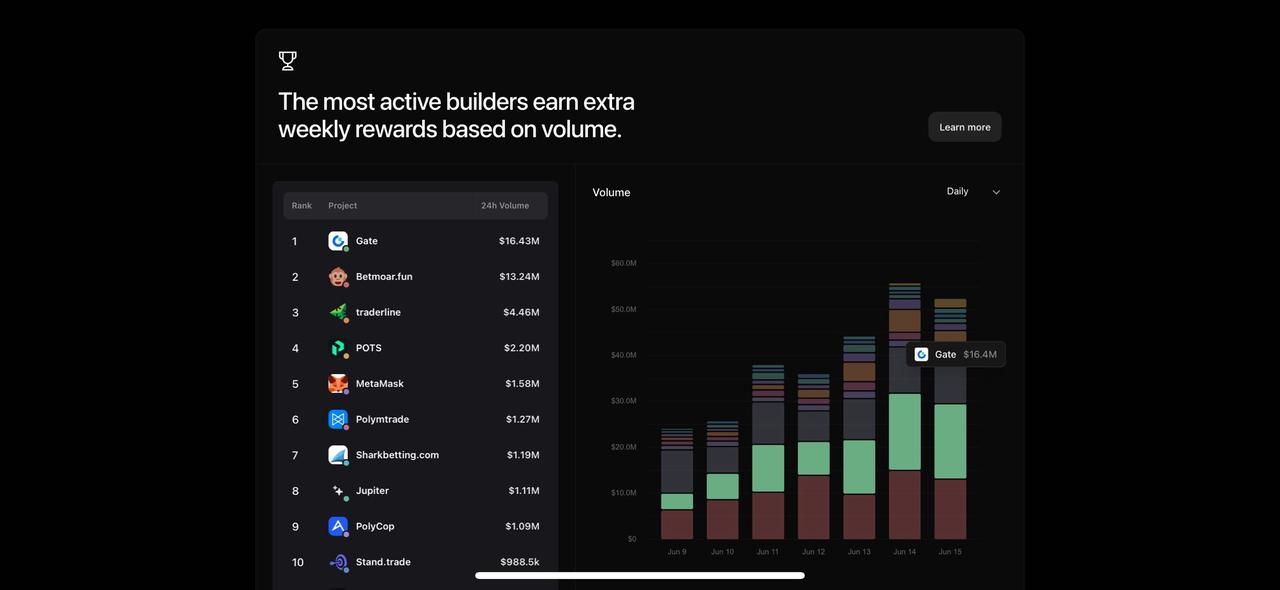
Gate is a typical example of this. As the first CEX to directly connect with Polymarket, Gate has established a classic partnership model — Polymarket provides participatable events, transaction matching capabilities, and settlement capabilities as the underlying layer; Gate, on the channel side, offers on-chain trading access and an account system, allowing users to complete all transaction operations with their Gate accounts and USDT directly. As of June 16, 2026, the cumulative trading volume of Gate's prediction market product has exceeded 251 million USD, with a single-day peak reaching nearly 69 million USD, ranking first in nominal trading volume among over 300 partners collaborating with Polymarket.
For ordinary users, the most direct manifestation of this channel value is the reduction of participation barriers and the optimization of the interaction experience.
Within Gate's product system, users no longer need to consider complicated steps like wallet creation, cross-chain assets, Gas payments, or on-chain authorizations; they can directly participate in prediction market transactions by logging into their accounts and using USDT. The entire process is essentially no different from spot or contract trading experiences. Meanwhile, for seasoned users accustomed to on-chain operations, Gate also retains the Web3 wallet access method, providing a larger choice space between convenience and native experience.
Specifically, in terms of trading experience, Gate offers two different interaction schemes: "Prediction Mode" and "Trading Mode".
- Prediction Mode is more suitable for ordinary users. In this mode, users only need to choose "Yes" or "No," input the participation amount, and complete the confirmation to make a trade. The system will simultaneously display the corresponding probability and potential return, compressing the entire operational path into an extremely simplified three-step process.
- High-level users with trading experience may consider the Trading Mode. This mode provides more professional market tools, including order books, candlestick charts, and depth data. At this point, the prediction market is not just about betting on the final result but becomes a market for real-time pricing and trading around probability changes.
In terms of trading flexibility, Gate allows users to engage in "two-way trading" at any time, meaning they can buy or sell their holdings based on changes in market expectations before the final settlement of events, without needing to hold until the results are revealed. When the progress of matches, macro events, or market sentiment changes, the corresponding contract prices will fluctuate, creating more dynamic trading opportunities for participating users.
In terms of trading scope, Gate's prediction markets now cover multiple hot fields, including sports events, cryptocurrencies, macroeconomics, and traditional financial markets. Whether it's the World Cup champion, Bitcoin price trends, or the direction of global hot events, users can find corresponding prediction markets to participate in.
However, if it stops there, it is clearly not sufficient to support the mass popularity of prediction markets. From the product design perspective, Gate aims to transform the prediction market from a relatively niche on-chain tool into a complete information discovery and trading system.
For most users, another real problem they face when participating in prediction markets is — even though operational barriers have been significantly reduced, it is still difficult to answer the core question of "what to buy". After all, prediction markets are fundamentally a game centered around information and cognition. Compared to the trading operation itself, the ability to timely obtain information, understand market sentiment changes, and discover potential opportunities is often the key factor that determines the final outcome.
Around this demand, Gate has further built a relatively complete information support system beyond trading functions.
- Smart Money Leaderboard: Quickly identify "smart money" and active traders in the market and view their historical performance, holding records, and trading trajectories. For inexperienced new users, this publicly transparent on-chain behavior display mechanism reduces the cost of information acquisition to some extent and provides more reference dimensions for market observation.
- Market Dynamics Monitoring: Users can track specific wallet addresses or key focus objects, and when relevant accounts have new trading behaviors, the system will automatically push notifications. For users wishing to continuously track whale movements or learn from mature traders' strategies, this tool can effectively improve market observation efficiency.
- Live Zone and Real-Time Dynamics: Real-time aggregation of progress in popular events, market dynamics, and real-time trading data helps users quickly understand the current most discussed topics.
- AI Insights: Around popular market events, it integrates various viewpoints and the latest dynamics to help users quickly understand the logic behind events and enhance trading decision efficiency, providing more reference angles for judgment.
From discovering hot topics, tracking market sentiment, observing smart money movements, combining AI and capital flow analysis, to making trading decisions, what Gate is attempting to build is not just a simple Polymarket channel, but a comprehensive participation link covering information acquisition, viewpoint formation, and trading execution.
The World Cup is here: From watching matches to participating in matches
If the value of prediction markets lies in transforming collective judgment into market probabilities, then the World Cup is undoubtedly one of the most ideal application scenarios for them.
Compared to macroeconomic events, football matches exhibit more frequent information changes, a broader participating demographic, and stronger emotional fluctuations. From the announcement of pre-match lineups and the revelation of injury news to every goal, yellow and red card during the match, and tactical adjustments, these can quickly change the market’s expectations for the match outcome and are directly reflected in the corresponding prediction market price changes.
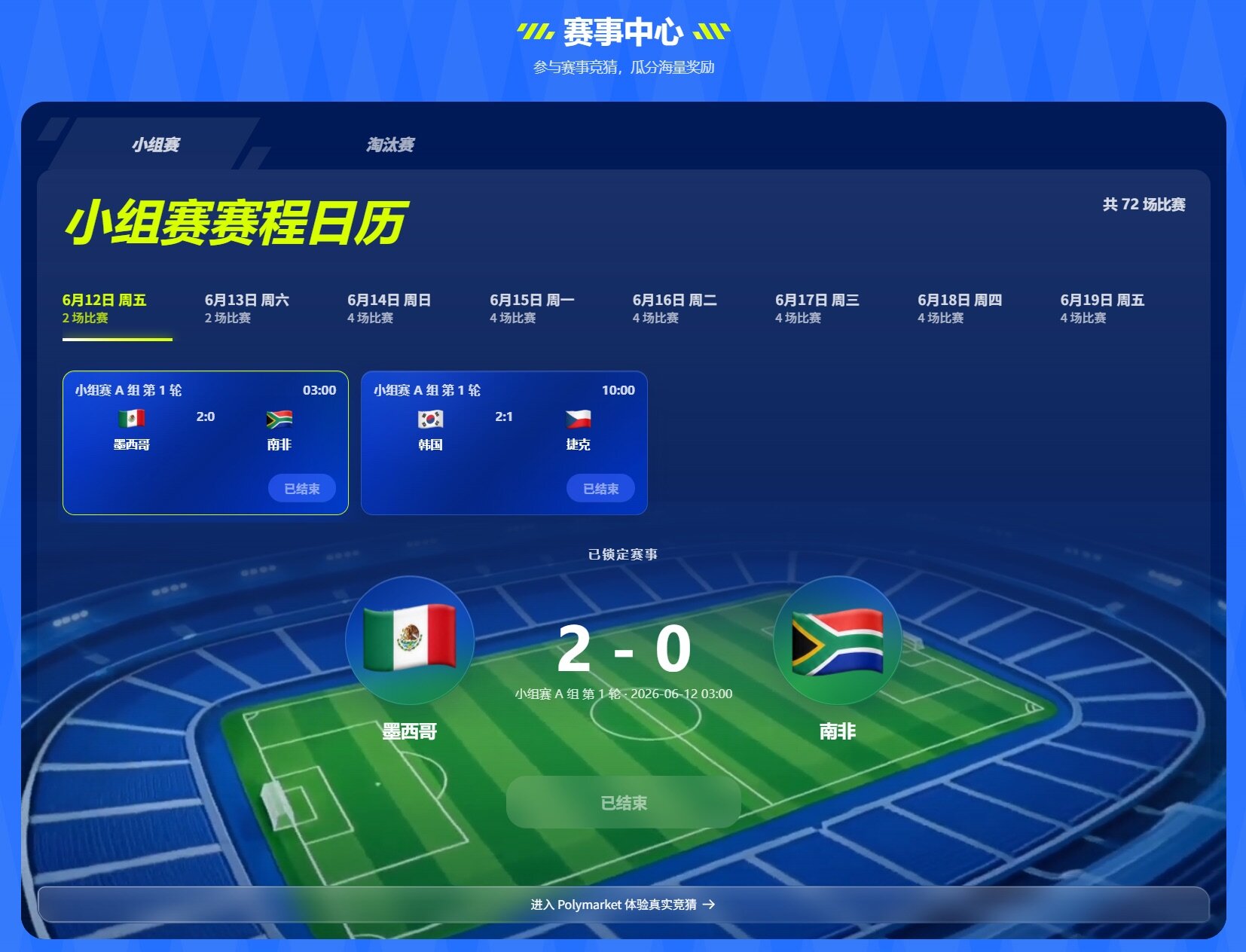
In response to the World Cup, a global top-tier sports IP, Gate recently launched a World Cup-themed zone, unifying content such as schedule arrangements, leaderboards, popular prediction markets, and event dynamics.
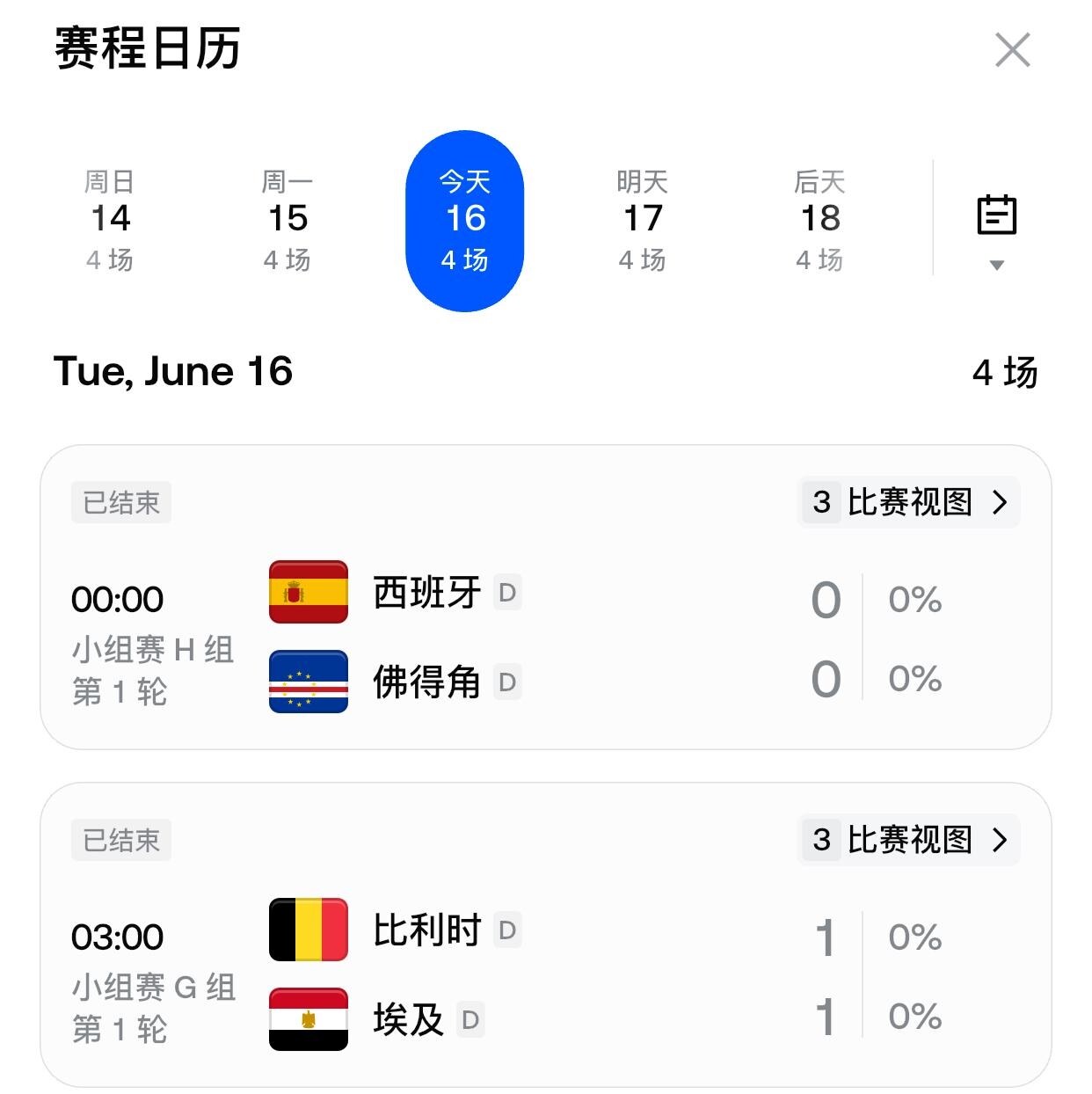
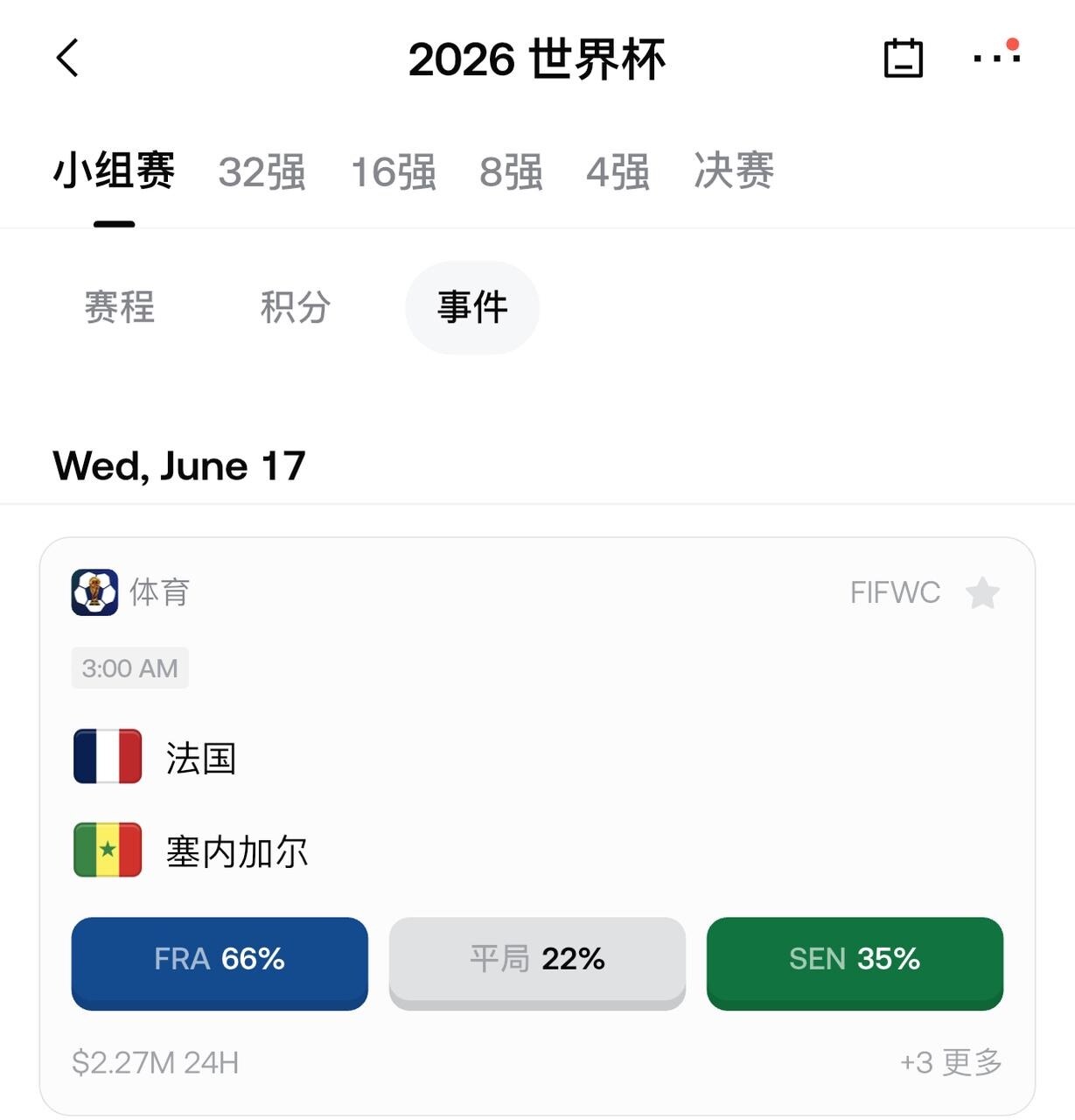
For fans, there is no longer a need to switch frequently between different pages; they can quickly complete a series of operations such as browsing events, obtaining information, and participating in predictions within the Gate site. The zone also provides a match calendar and reminders for upcoming games, allowing users to keep an eye on the matches they're interested in and receive notifications before the matches start, thus avoiding missing key events and related prediction opportunities. During the tournament, the Live real-time dynamics function further strengthens the connection between prediction markets and match viewing scenarios. Match progress, popular events, and market trading dynamics are updated in real-time, allowing users to keep track of score changes and observe real-time pricing of market expectations for the match.
From an operational experience perspective, the entire process of participating in the World Cup has been simplified by Gate — after entering the corresponding event page, users only need to choose to support or oppose a certain outcome, input the participation amount, and confirm the trade to complete the order. As the match progresses, users can either hold their position waiting for the final results or execute trades early based on market price fluctuations.
From this perspective, the prediction market is transforming the World Cup viewing experience. For participants, they are trading not just in the match results but in their judgment of the game's trajectory, and in a process where market consensus continuously adjusts with changing information.
Next step for the prediction market: From the crypto circle to the mass market
Looking back on the development over the past few years, the prediction market has actually completed the most challenging step — proving product effectiveness and market value.
Whether for the U.S. elections, macroeconomic events, or global sports events like the World Cup, more and more cases are proving that when enough people invest real money to express opinions around the same event, the market can often reflect the changes in collective expectations faster than traditional surveys, expert predictions, or even some media reports.
On the other hand, the prediction market is clearly still a distance away from true mass adoption.
For a long time, native infrastructure of cryptocurrencies such as wallets, Gas, and on-chain interactions have formed the foundational framework for the operation of prediction markets, yet they have also restricted the user boundaries invisibly. For the vast majority of ordinary people, they may be willing to express their judgment on a World Cup match, an interest rate decision, or a market hot event, but they are often not willing to learn a whole set of complex on-chain operational processes for this.
This also means that the focus of competition in the next phase of prediction markets may no longer be about who can establish a more effective product, but rather about who can bring more users into the market.
From this perspective, centralized exchanges, social platforms, and even more internet products may become important entry points for the future of prediction markets. The entity that is able to package complex underlying mechanisms so they can reach ordinary users with lower learning costs and smoother product experiences will have a greater opportunity to drive prediction markets from being crypto-native applications to mainstream markets.
What Gate is attempting is precisely this path. By replacing wallet barriers with account systems, substituting complex on-chain interactions with familiar trading experiences, and building a complete product system around information discovery, opinion exchange, and trading decisions, the prediction market is gradually evolving from a professional tool accessed only by a few on-chain players into a new market that more ordinary users can understand, participate in, and benefit from.
When prediction markets no longer belong to a few people's on-chain experiments but become an open market where anyone can participate, express their opinions, discover consensus, and trade judgments, its true growth story may just be beginning.
Disclaimer: This content does not constitute any invitation, solicitation, or advice. You should always seek independent professional advice before making any investment decisions. Please note that Gate may restrict or prohibit all or part of its services from restricted regions. Please read the user agreement for more information.
免责声明:本文章仅代表作者个人观点,不代表本平台的立场和观点。本文章仅供信息分享,不构成对任何人的任何投资建议。用户与作者之间的任何争议,与本平台无关。如网页中刊载的文章或图片涉及侵权,请提供相关的权利证明和身份证明发送邮件到support@aicoin.com,本平台相关工作人员将会进行核查。


