From the deep mountains of Sichuan to the Ohio scam, from a global 9% computing power to the defendants in court.
Written by: Nicky, Foresight News
Caixin published an article on June 11, titled "How did a female boss in the cryptocurrency circle get scammed out of $60 million in the U.S. by 'Middle Eastern royal family' brothers?" Following the clues in the article, we investigated the remarkable story of this 'female boss' in the cryptocurrency circle, Lu Moumou.
According to Caixin's report, a female wealthy entrepreneur in the domestic cryptocurrency circle experienced an investment scam in the U.S., losing over $9.4 million (about ¥60 million). This individual is Lu Moumou, CEO of a computing power technology company in Southwest China, whose mining pool reportedly accounted for about 9% of the world's total Bitcoin computing power at its peak.
The report highlighted that two brothers, claiming to have backgrounds from the 'Middle Eastern royal family', committed fraud through falsified identities. One claimed to be a 'prince' of the Middle Eastern royal family, asserting he controlled funds, international business relations, and resources from local governments in the U.S.; the other impersonated a character from the American TV series "Billions," presenting himself as a hedge fund manager. The two also successfully contacted and influenced Michael Smedley, the chief of staff to the mayor of East Cleveland, Ohio, ultimately enticing Lu Moumou to sign a cryptocurrency mining development contract.
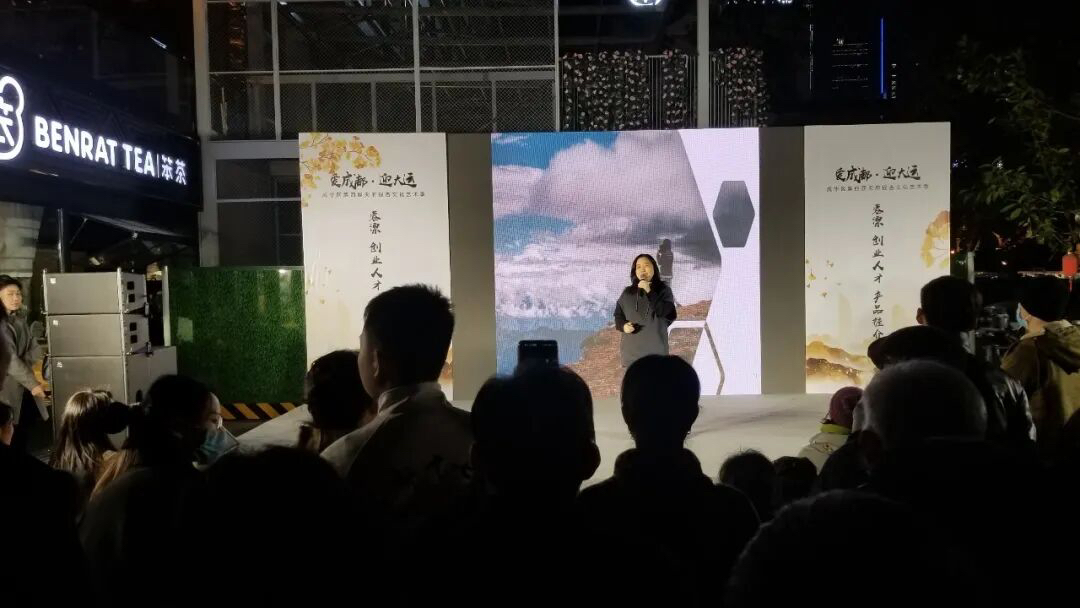
The Lu Moumou mentioned in the report is actually a woman named Lu Yongshuang (Fiona Lyu), a post-80s entrepreneur who founded Chengdu Valarhash Technology Co., Ltd., which owns the mining pools 1THash and Bytepool.
According to Caixin's report, Lu Yongshuang was born in Ningbo in the 1980s. Before entering the cryptocurrency industry, her life trajectory was unrelated to finance or technology. In her early years, she engaged in international trade and later established a custom travel agency; she is an enthusiastic outdoor travel, diving, and sailing lover. In an interview in 2020, she mentioned that from 2008 to 2018, she spent up to half a year traveling each year, with footprints across the globe.
According to TokenInsight's previous report, she stumbled upon Bitcoin in 2013 and immediately plunged into this emerging industry. At that time, China's cryptocurrency mining was still in its early stages, where miners had to venture deep into the southwestern mountains to find cheap hydroelectric resources. Lu Yongshuang recalled that she was one of the earliest people to go to Sichuan to 'find electricity'. 'The conditions were very harsh back then, but electricity was cheap and profits were high, everyone was very excited.'
In 2016, she began formally building her own mining site; from 2017 to 2018, she shifted to mining machine distribution; in July 2019, she founded Chengdu Valarhash Technology Co., Ltd. as CEO, integrating business into a comprehensive platform that included mining pool operation, mining site construction, mining machine hosting, and computing power trading. In December of the same year, the company held a product launch conference in Chengdu, officially launching the mining pool brands 1THash and Bytepool, along with the 1TMine computing power contract trading platform.
During the peak period in the first half of 2020, 1THash ranked 7th among global Bitcoin mining pools, and Bytepool ranked 11th, with both pools together controlling about 9% of the global Bitcoin computing power. This was a remarkably impressive figure at the time, meaning that for every 100 Bitcoins produced worldwide, about 9 were channeled to her mining pools.
A Ban and a Turning Point in Fate
On May 21, 2021, the Financial Stability Development Committee of the State Council held its fifty-first meeting and explicitly proposed "to crack down on Bitcoin mining and trading activities."
In mid-June, the Sichuan Provincial Development and Reform Commission and the Sichuan Provincial Energy Administration jointly issued a notice requiring power generation companies to conduct self-examination and immediately stop supplying electricity to virtual currency 'mining' companies. For miners in Sichuan, this was the most fatal blow, as Sichuan is China's largest mining hub; during the rainy season, the electricity prices can be as low as ¥0.2-0.3 per kWh, making it one of the cheapest electricity resources in the world.
According to Caixin's report, Lu Yongshuang later told friends that it was an "extremely anxious" time. Her company had nine data centers spread across China, the U.S., Canada, Russia, Sweden, etc., but the major mining farms in the country were the core source of computing power. "Overnight, thousands of mining machines were forced to shut down, hundreds of containers were waiting to be shipped out, and every day was burning money."
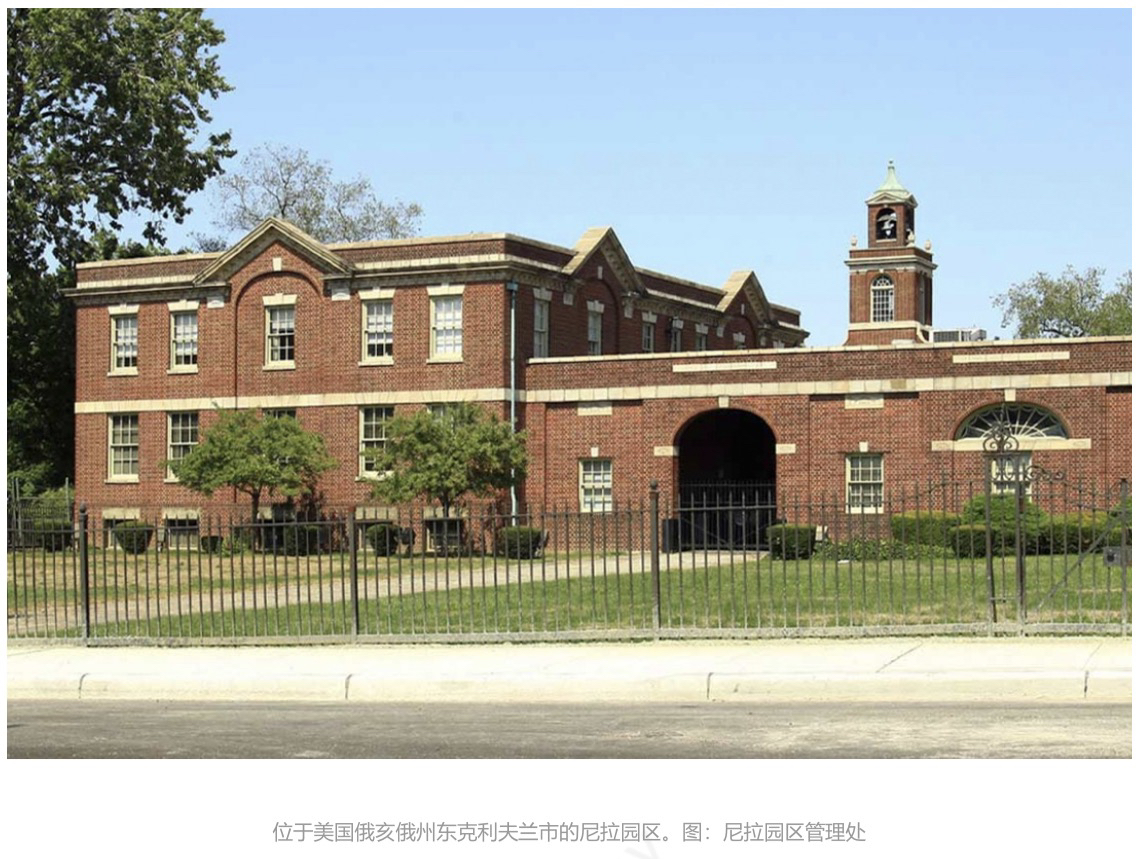
Image source: Caixin
She ultimately chose the U.S. as her first overseas destination. However, when she brought hundreds of containers of mining machines across the ocean and searched for a new base in Ohio, what awaited her was a meticulously planned scam.
According to Caixin's report, in July 2021, through an intermediary, she met Zubair Al Zubair, a man who claimed to be a 'prince' of the UAE royal family, asserting that he controlled Middle Eastern family funds and local government resources in the U.S. Zubair recommended an industrial property located in East Cleveland, Ohio, called Nela Park, claiming it could supply electricity at a low cost of $0.04 per kWh.
On August 11, 2021, a seemingly formal signing ceremony took place at the East Cleveland City Hall. Witnessed by then-mayor Brandon King and other municipal officials, Lu Yongshuang eagerly signed her name on a cryptocurrency mining development contract. She paid Zubair's company, Dubai Bridge, $3 million and transferred the first $1 million from a Hong Kong account.
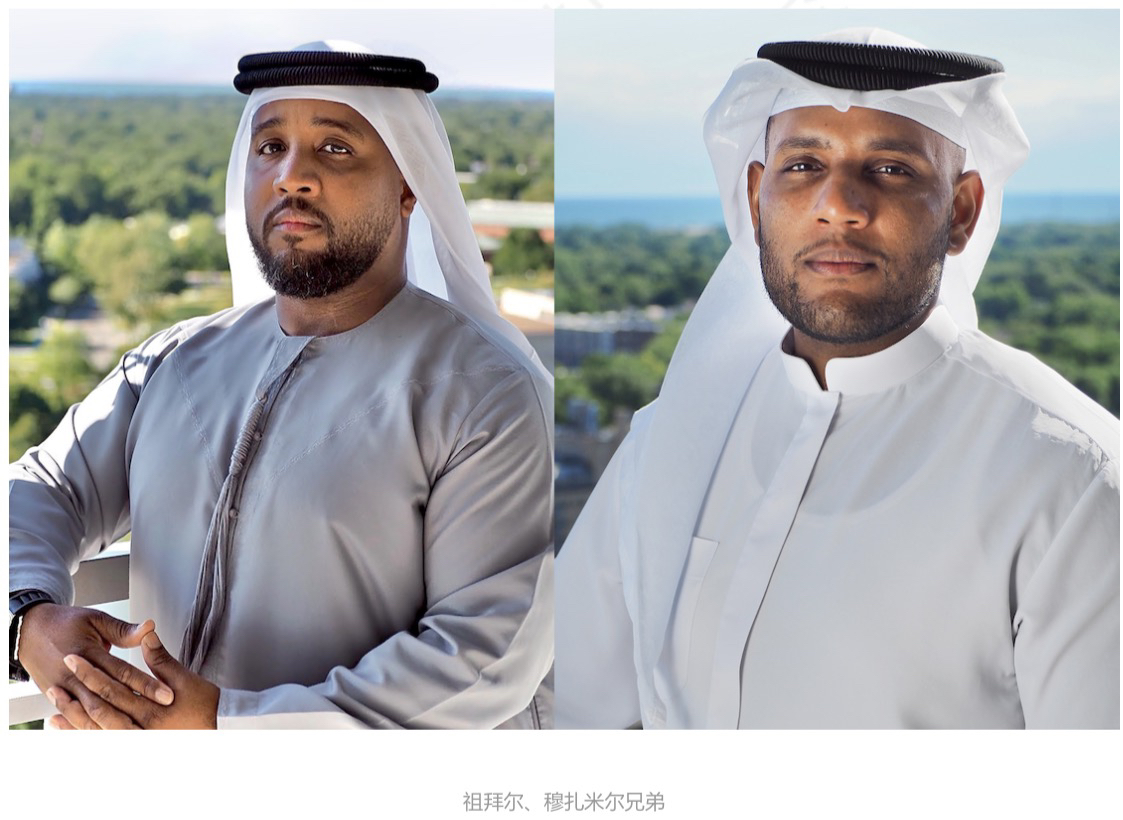
Image source: Caixin
However, this was merely the beginning of a meticulously planned scam. In fact, Zubair and his brother Muzamil were American-born and had no connections to any Middle Eastern royal family. The identity of the brother's self-proclaimed 'prince' was entirely fabricated; the brother's supposed 'hedge fund manager' title was 'self-taught' through watching videos on YouTube and following the TV series 'Billions.'
In subsequent interactions, Zubair and Lu Yongshuang developed a 'close personal relationship'. In Lu Yongshuang's view, this relationship had a romantic nature. The prosecution later pointed out that such personal relationships were part of Zubair's fraud model, aimed at lowering the victim's likelihood of questioning his statements.
The scam ultimately caused Lu Yongshuang to lose over $9.4 million (approximately ¥60 million), including the contract amount and 1,067 mining machines that were later scammed away by Zubair's brother and resold to Canada (worth $6.17 million). And the signing ceremony held in the mayor's office was merely a false endorsement obtained by Zubair through bribing the mayor's chief of staff, Michael Smedley.
In May 2026, the U.S. Department of Justice announced the verdict: Zubair was sentenced to 24 years in prison, Muzamil 23 years, and Smedley 8 years. Lu Yongshuang appeared in the case under the code name 'Victim 2.'
Another Lawsuit at Home
At the same time Lu Yongshuang was falling into a scam in the U.S., she was also facing another legal dispute domestically, with ST Zhongchang (600242.SH) and its subsidiary Shanghai Jincai Network Technology Co., Ltd.
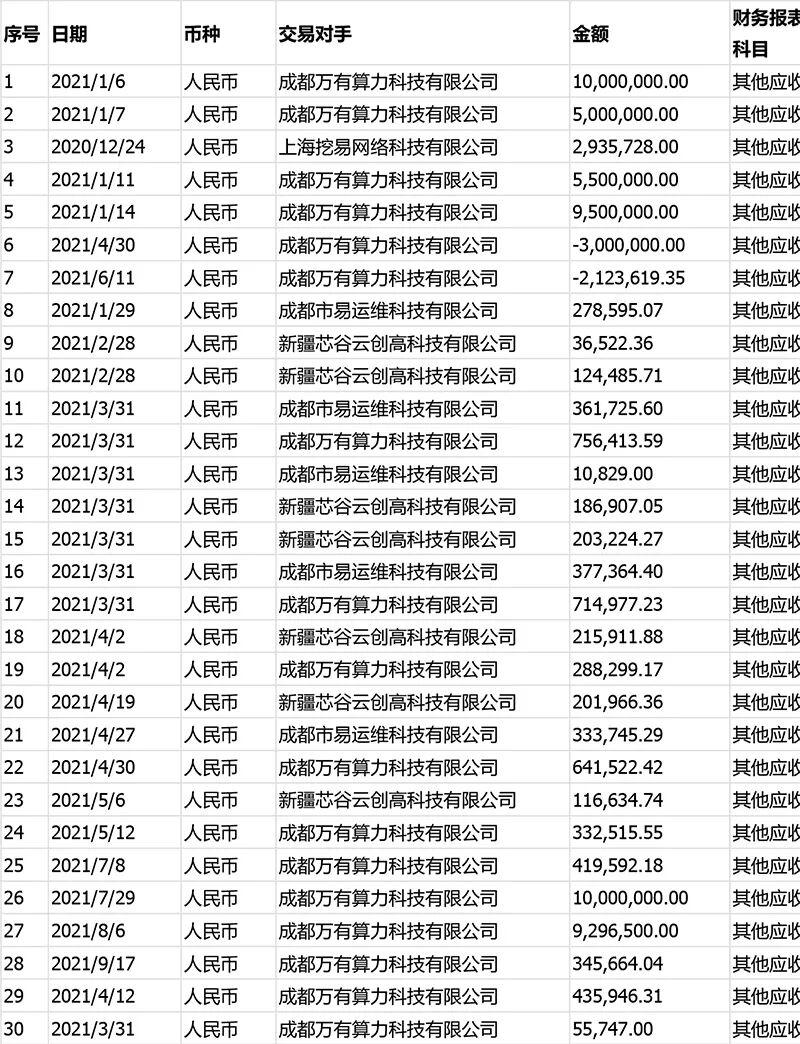
Image source: Shanghai Securities News
According to Economic Observer and Interface News's previous reports, the trigger for the incident was the then-chairman of ST Zhongchang, Li Qunnan. From January to September 2021, Li Qunnan was suspected of embezzling the listed company's funds to purchase Bitcoin mining machines and pay related hosting fees, totaling up to ¥53.5472 million. Among them, the company spent a total of ¥30 million on servers (Bitcoin mining machines) purchased from Chengdu Valarhash. These purchases were disclosed in the 2021 interim report as 'company fixed assets used for actual operations,' but audits found that the related funds had not substantiated into assets on the company's accounts.
In this context, the new management of ST Zhongchang filed a lawsuit against Chengdu Valarhash in April 2022 in the name of Shanghai Jincai to recover the losses, seeking to terminate the 'Technical Service Agreement' signed on April 1, 2021, and to return the contract amount of ¥19.2965 million.
In October 2022, the People's Court of Chengdu High-tech Industrial Development Zone made a first-instance judgment: the contract was deemed invalid due to its involvement in Bitcoin 'mining' activities, and Chengdu Valarhash was required to refund ¥19.2965 million within ten days. After the company appealed, the second instance upheld the original judgment.
This lawsuit ran almost concurrently with Lu Yongshuang's experience of being scammed in the U.S., from filing to final judgment. On one side, there was the nearly $9.4 million lost overseas, and on the other, close to ¥20 million in contract payments judged to be refunded domestically. Under this dual blow, the woman who once controlled 9% of global Bitcoin computing power, known as the 'Queen of Mining,' faced the darkest moment of her life.
免责声明:本文章仅代表作者个人观点,不代表本平台的立场和观点。本文章仅供信息分享,不构成对任何人的任何投资建议。用户与作者之间的任何争议,与本平台无关。如网页中刊载的文章或图片涉及侵权,请提供相关的权利证明和身份证明发送邮件到support@aicoin.com,本平台相关工作人员将会进行核查。


