SpaceX's "trinity super closed loop" is a collaborative system composed of Starship launch, Starlink, orbital computing, ground AI, and self-developed chip Terafab. Starship provides an extremely low-cost launch base, boosting Starlink to generate massive cash flow; cash flow supports the expansion of orbital and ground AI computing power; Terafab chip manufacturing underpins the scaling of the entire vast ecosystem from the supply chain end.
Written by: Zhang Yaqi
Source: Wall Street Insights
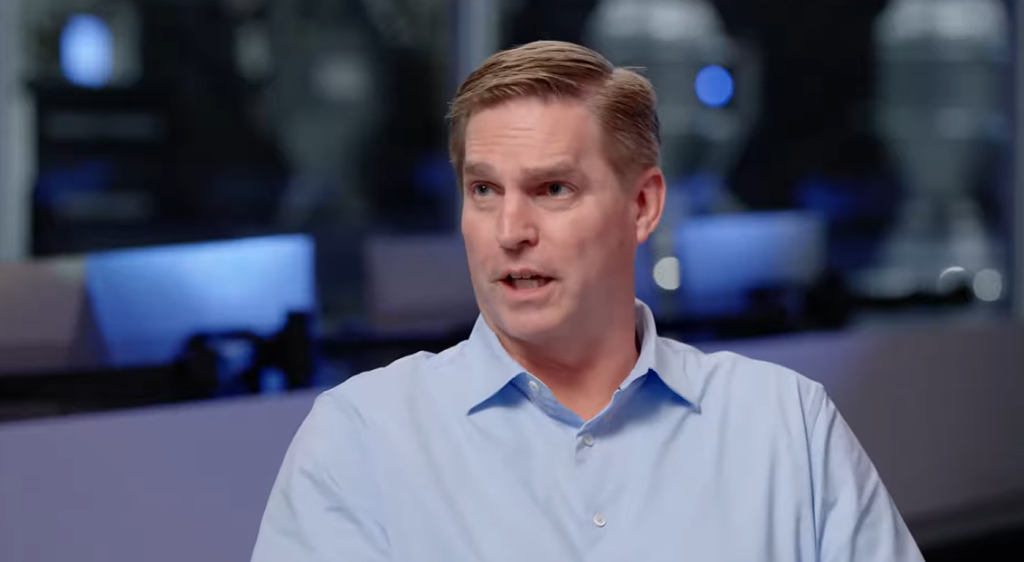
As the IPO window approaches, SpaceX's Chief Financial Officer Brett Johnsen elaborated for the first time on the intrinsic logic of the company's five core business segments — a collaborative system that connects Starship launches with Starlink, orbital computing, ground AI computing power, and self-developed chip manufacturing.
In a deep dialogue with investor Gavin Baker, Johnsen disclosed that SpaceX's AI infrastructure business has achieved an annualized revenue of $3.75 billion, making it the fifth-largest AI computing company in the world. He characterized the recently completed Starship E3 maiden flight as a "great success" and anticipates that once the secondary vehicle achieves rapid reuse, Starship will realize a tenfold reduction in the cost per kilogram to orbit based on the existing Falcon foundation.
For investors, the capital logic and timing outlined by Johnsen are equally critical: Starship launches Starlink V3 satellites, unlocking growth in connection business and generating cash flow; cash flow supports substantial capital investment in orbital computing; ground data centers first validate the business model; Terafab then underpins the scaling of the entire system from the supply chain end.
Johnsen summarized this framework as "all of these play into each other and work together" and emphasized that every business aspect is open to the outside — competitors can purchase SpaceX launch services, Starlink is available to everyone, ground computing power is sold externally, and Grok is also open for use. This strategy not only strengthens vertical integration efficiency but also further expands the scale base, which in turn reduces costs at all steps.
Starship: The Launch Base for All Business
Brett Johnsen positioned launch capability as the foundation of all SpaceX's businesses. "If you want to be a space company, you must first ensure you have a reliable pathway to space," he stated. SpaceX is currently the operator with the lowest cost per kilogram to orbit in the entire industry, and Starship's goal is to achieve a further tenfold improvement on this basis.
The recently completed E3 maiden flight verified the new V3 Raptor engine, modifications to the vehicle bottom, and soft landing capability for the second stage. Brett Johnsen described this as a "demonstration of the entire system's capabilities" and directly instilled confidence for the upcoming flights. He particularly emphasized that the significance of Starship lies not only in cost but also in capacity — its 100-ton capacity to low Earth orbit makes the commercialization of large mass payloads possible, which is a prerequisite for the orbital computing business.
To accommodate the anticipated high launch frequency, SpaceX is constructing two launch towers in southern Texas, with the first at Cape Canaveral nearing completion and the second scheduled to start within a year. Brett Johnsen stated that the company is building capacity for thousands of launches annually.
Starlink: The Cash Flow Engine Connecting a $20 Trillion Market
Starlink currently has over 10 million users, having launched over 10,000 satellites, covering more than 160 countries. Brett Johnsen believes that 10 million users are just the starting point, with future growth potential into the hundreds of millions.
He pointed out that global internet access and cellular connectivity together constitute an existing market of approximately $1.6 trillion, while Starlink’s competitive advantages lie in speed, low latency, and coverage — "Faster, better, cheaper; this has always been a winning combination in technology investments." Compared to ground solutions, the marginal customer acquisition cost after the satellite network is built is extremely low, with no digging and laying of cables required.
Incremental growth comes from direct-to-phone services. Brett Johnsen revealed that the next generation of direct connection devices will achieve 5G quality within two years, achieving true global coverage without blind spots, "whether you are in the depths of a desert or the highest peak." He anticipates that this new business will have high profit margins and will follow a relay with broadband services in terms of timing.
Orbital Computing: A New Market Enabled by Starship
Brett Johnsen described orbital computing as "a market that truly requires Starship to realize," citing the need for large mass payloads and extreme cost sensitivity as prerequisites. He expects that orbital computing capabilities can be demonstrated as early as next year.
Technologically, he defined orbital computing satellites as "racks in space" — essentially enlarged versions of the Starlink V3 satellites equipped with computing modules, NVIDIA GPUs, and thermal radiators, utilizing existing inter-satellite links and propulsion systems. "People think this is a new concept, but it’s not — it’s a natural extension of our existing satellite technology," he stated.
The cost logic is equally favorable: solar panels in space capture energy at about five times that of ground, with no atmospheric losses; the vacuum environment enables radiative cooling instead of liquid cooling, eliminating land leasing costs; as launch scales grow, the main cost of satellites — silicon — will continue to decrease along Moore’s Law. "The cost curve for ground data centers is trending upwards, while the advantages of orbital computing will only continue to broaden," Brett Johnsen said.
Ground AI: Validating Business Models First
Before the large-scale rollout of orbital computing, SpaceX is using ground data centers to validate business models. The computational power hosting agreement signed with Anthropic has made annualized revenue reach $3.75 billion, placing SpaceX among the top five global AI infrastructure companies.
AI business also includes self-developed model Grok, enterprise-facing API services, and recently integrated coding tool Cursor through acquisitions. Brett Johnsen revealed that Cursor has served over half of the Fortune 500 companies, and performance improves substantially after its internal model goes through weeks of reinforcement learning fine-tuning on SpaceX's AI computing cluster. "Integrating Cursor's coding engine, Grok large model, and Grok Build is truly amazing," he said.
He emphasized that one of the differentiating factors of the AI business is the real-time data from platform X. "We must ensure that the AI models people truly rely on are models that pursue truth, and the real-time content integration from X is a crucial differentiator for our AI products."
Terafab: The Last Piece of Supply Chain Sovereignty
Brett Johnsen admitted that the "fundamental driving force behind Terafab is concern over the supply chain." He pointed out that whether it’s NVIDIA chips or TPUs, it ultimately revolves around TSMC. "If our goal is to launch 100 gigawatts of computational power each year, we must ensure a stable chip supply that is not affected by tariffs."
Terafab is a collaboration project between SpaceX and Tesla, with Intel also participating, bringing decades of industry experience. Brett Johnsen believes that anchoring SpaceX and Tesla as customers — promising to absorb all production capacity — can eliminate the most challenging demand risks in establishing new wafer foundries, "leaving only capital risk."
He also hopes to apply first-principle thinking in the semiconductor field: "Walk into engineering teams with 50-step processes and ask why each step must be done that way, and completely rethink how to approach it. Elon has proven the power of this method in one industry after another."
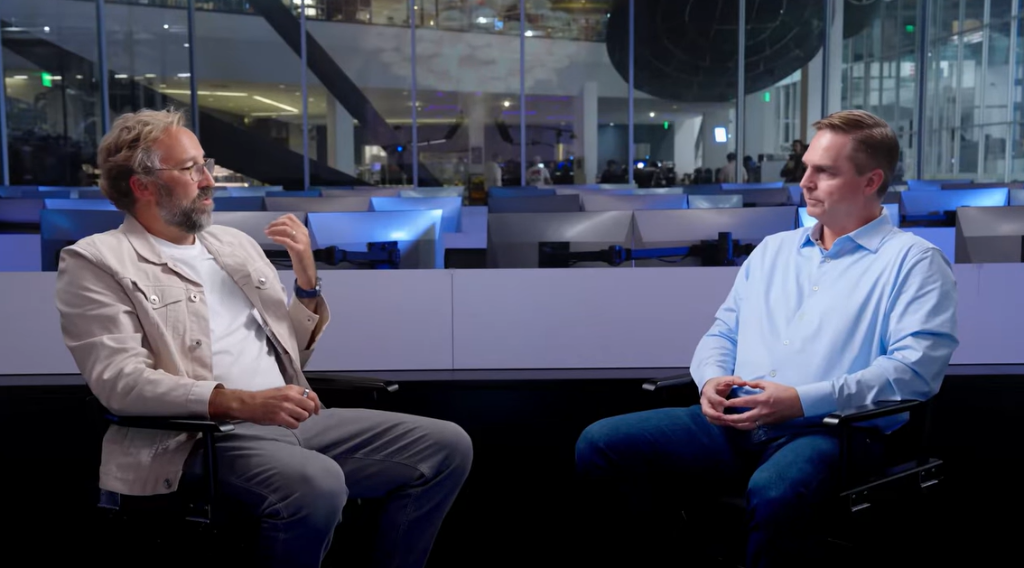
Below is the full text of the interview:
Gavin Baker: Launching is the foundation of all your businesses. You have been leading the world in reusability for ten years, and Starship is designed for rapid reuse, enabling larger payloads to be launched to orbit at lower costs. Can you discuss the importance of launching and the role of Starship in this?
Brett Johnsen: I believe if you want to be a space company, you must first ensure you have a reliable pathway to space. So we’ve made launching a solid foundation from the very beginning. Elon is genuinely focused on lowering the cost of getting to space at an unprecedented low price — we are now the operator with the lowest cost per kilogram to orbit in the history of the industry, and we hope Starship will achieve another tenfold cost improvement as we move towards rapid reusability of Starship.
Launching is undoubtedly the core of all our businesses, and it is an enabling factor for every other business, whether it’s Starlink, the upcoming direct-to-phone service, or even the current AI computation. When discussing SpaceX, you must start with launch capability. Starship will be the next level because we are challenging the holy grail of rocket technology — rapid reuse. Recovering the first-stage rockets was already impressive; we accomplished that with Falcon ten years ago, which completely transformed the industry. But now we are flying the largest rocket ever built, aiming for it to operate like an airplane. This is an entirely different dimension, and I believe it is the key to catalyzing the entire space industry, allowing us to truly realize the space age we anticipated back in the 2030s.
Gavin Baker: What stage is the Starship project at now? The last launch was the E3 version of the spacecraft and booster, and frankly, it felt like a high-risk gamble before the IPO, but from my and SpaceX team's perspective, the launch was very successful. What did we learn? How far are we from rapid reuse?
Brett Johnsen: Last week’s E3 maiden flight was a significant success for us. We showcased the capabilities of the entire system: the new V3 Raptor engine, all the modifications at the bottom of the vehicle, the adjustments on every operational front, and finally the soft landing capability of the second stage. This gives us confidence in our future direction — not just in the coming years, but for the next several flights. This is very exciting because it’s precisely that platform that enables all other businesses.
A rocket capable of delivering a 100-ton payload to low Earth orbit is crucial for everything we’re going to do next.
Gavin Baker: How does the cost of that 100 tons compare to Falcon?
Brett Johnsen: Once we can recover the second stage on the launch pad and begin rapid reuse — probably in the next few years — I believe you’ll see the cost per kilogram to orbit drop by another tenfold compared to today’s Falcon levels. This represents a massive leap for several of our business segments.
Gavin Baker: I love to think of launches as the foundation enabling various applications, just like Microsoft has an operating system. Launching is fundamental, and the first and best-known application is Starlink. Can you give us a sense of the scale and growth of the business?
Brett Johnsen: It’s incredibly exciting. Think about it; it has only been six years since we first sent mass-produced satellites into space, and since then we’ve grown to over 10 million customers, having launched over 10,000 satellites, covering more than 160 countries — it shows we are providing a capability that is genuinely needed globally.
Every month we send out an email detailing how many communities we positively impact worldwide — whether it’s Indigenous tribes in Canada, communities in Brazil, or schools in Africa that have never had internet connectivity. Bringing Starlink to the world is a significant mission.
This also extends our mission — first to make humanity a multi-planetary species, but above all, we now have the capability to connect an additional 3 billion people on Earth who lack internet access, truly bridging the digital divide. I believe 10 million customers is just the beginning, and we could grow into hundreds of millions globally because covering multiple different locations from space is inherently more efficient than laying ground infrastructure.
Gavin Baker: I am a seasoned telecom industry analyst, and I'll add a few observations. The telecom market is vast — internet access is about $800 billion, cellular connectivity is about $800 billion, totaling around $1.6 trillion. What’s remarkable about the telecom industry is that historically there has never been a truly differentiated or disruptive product since all operators essentially use the same base stations, the same access rights, and the same equipment, leading to highly commoditized products — whether it’s landline, long-distance, or cellular.
I am a serious gamer, and I take gaming as seriously as someone else takes golfing — that’s why you hired me. And my grandfather always said, "Age and experience will always triumph over youth and skill." In gaming, this means having the best GPUs and the lowest latency. I have tested Starlink in every place I’ve been, and it’s always the fastest with the lowest latency. Can you talk about how this product differentiation helps you grow from 10 million users to hundreds of millions?
Brett Johnsen: Beyond broadband, it is particularly worth noting our upcoming direct connection device business. Our next generation direct connection phones will achieve 5G quality in two years. What we are bringing is something truly unique: whether you are deep in the desert or atop the highest peak, your phone will have signal with no blind spots and offer true global roaming. People are willing to pay extra for this, especially if the price remains the same.
In terms of broadband, low latency is crucial as you pointed out. High-speed, low-latency connections covering almost anywhere are simply unattainable with ground solutions. I think it’s becoming increasingly difficult to justify extensive ground deployment because Starlink is already available.
You're now also starting to see applications in the aviation sector, with United Airlines and American Airlines announcing connections to Starlink. Passengers experience low-latency, high-speed networks on planes, naturally realizing that they should have the same experience at home or in the office.
Gavin Baker: Every time a natural disaster happens, SpaceX promptly dispatches Starlink terminals and activates free service, which undoubtedly saves lives.
Brett Johnsen: Yes, that’s indeed the case.
Gavin Baker: Besides Starlink and orbital computing, what other applications or businesses enabled by Starship excite you the most?
Brett Johnsen: In connectivity, both of these businesses will continue to grow. When people talk about space, they often focus on new markets that will be created in the future—whether it’s point-to-point transport on Earth (30 minutes to Singapore) or the lunar economy; I believe these will happen. But what is underestimated is that there’s already an existing Earth market nearing $2 trillion just in connectivity, and before you even discuss any interstellar scenarios, you can already provide a better product in this existing market.
And it’s not just about better products; there are also cost advantages — you won’t need to dig trenches or lay pipes; you won’t have enormous upfront construction costs. Once the satellite network is built, it predominantly becomes about issuing a user terminal, completing most of the customer acquisition cost. Faster, better, cheaper, this has always been a winning strategy in my years of technology investment experience.
The next biggest new market, I believe, is AI computing — this is a market that can only truly be realized with Starship because it involves large mass payloads and is extremely cost-sensitive.
Gavin Baker: Right, Starship is not just about costs—
Brett Johnsen: Yes, it’s about large mass payloads plus costs, both are necessary. And you can already see the development of those other two businesses; AI computing will contribute significantly to growth.
If you consider the impact of Starship on our broadband satellites, we are about to launch V3 satellites with Starship; the capability brought by each Starship launch is equivalent to 20 times that of today’s Falcon launches. This is a massive enabling factor for broadband services as well as the upcoming direct 5G service.
Gavin Baker: I want to help everyone really understand what orbital computing is because after engaging in numerous interactions on X, I find that many people envision a building the size of the Pentagon floating in space, but it’s absolutely not that. Orbital computing is a rack in space. Can you describe what these satellites look like?
Brett Johnsen: I love the term "rack in space,” I might borrow it. In fact, when someone first said "space data center" internally, I was equally baffled: "Wait, how are these components connected?" They told me: "Brett Johnsen, it’s essentially just another constellation." Yes, just like that.
Virtual networking has been the core technology in networking for many years; the same concept is applied here — satellite interconnection is virtualized, and each satellite acts like a rack. These satellites essentially look like enlarged, forthcoming Starlink V3 satellites, equipped with larger solar panels on top and added computing modules — starting with NVIDIA GPUs, plus a large metal plate for thermal radiation.
From a communication architecture standpoint, it’s basically the same as our operational Starlink, just that the communication payload has been replaced with computing payload. People perceive it as a novel concept, yet it’s not — it’s a natural evolution of the satellite technologies we are already using today, leveraging all existing infrastructures like inter-satellite links, propulsion systems, etc. When people compare images of the two types of satellites side by side, there is often an enlightening realization — "Ah, they can really do this quickly."
Gavin Baker: Let me help everyone visualize this more concretely: a NVIDIA NVL72 rack is roughly as wide as a few pizza boxes stacked up, forming a rack about 2.4 meters high, 1 meter wide, and 1 to 1.5 meters deep, containing 72 GPUs. This rack sits centrally within the satellite, with solar panels extending about 50 meters on either side, operating in a sun-synchronous orbit, with the heat radiation panels stretching backward, always remaining in the shadow to maintain low temperatures. What advantages does this design have in terms of energy, thermal management, cost, and ground latency from a first-principle perspective?
Brett Johnsen: I agree with these four dimensions, but I want to start from a possibly overlooked angle: regulation. There is a budding resistance to "I don’t want a data center built in my backyard," which is a trend to note. What we can provide is a fully solar-driven clean energy solution, which benefits everyone.
The energy captured by solar panels in space is approximately five times or even more than that on the ground — no need to pass through the atmosphere, plus in sun-synchronous orbit, sunlight hits the panels 24/7. Also, due to the absence of environmental degradation in a vacuum, there’s no need for glass protective layers, reducing the manufacturing costs of the panels. This represents a significant first-principle advantage in energy.
Regarding thermal management—this was one of the trickiest challenges for ground data centers. If you walk into our data centers, you will see all the liquid cooling pipes — whereas in space, everything becomes simple thermal radiation, which is a natural extension of the solutions we use in Starlink.
Additionally, there is no land leasing cost, so your costs are fundamentally just the satellite itself and the launch. From a technological background, as someone who previously worked in semiconductors, I am accustomed to seeing costs move down along the curve as volumes increase, benefiting from Moore’s Law. The main cost of satellites is silicon, which will continue to decline as we scale our factories and advance from one process node to the next. Conversely, ground solutions see the cost curve trending upwards — thermal management becomes more expensive, electricity costs haven’t dropped, and land and regulatory costs keep rising. So in terms of cost trajectory, the advantages of orbital computing will only continue to expand.
Gavin Baker: Computing is one of the largest markets globally today. How do you view the size of this market and the timing of SpaceX's entry into orbital computing?
Brett Johnsen: My engineers often say, every time I suggest this is a natural transition, and we’ve already done most of the work, "You must let people understand that there is still a lot of work to be done." I get that. Launching gigawatt levels of computation into space every year is a massive challenge, particularly regarding scaling. But we have indeed demonstrated scaling capability — whether in the volumes of launches or the ability to autonomously construct thousands of satellites each year.
We expect to showcase orbital computing capabilities as early as next year. Looking at the current list of supporters for orbital computing solutions, basically, it’s a who's who of the AI tech industry, with Elon Musk certainly at the front. They believe it is still distant mainly because there hasn’t been a suitable launch platform — without the rapid reuse launch capability provided by Starship, none of this can even be discussed.
One day, I will ask Grok — SpaceX’s general AI — a question, and the reasoning will be completed on an orbital computing satellite, then fed back to my phone through Starlink connected directly. That will be a breathtaking moment.
Gavin Baker: To help everyone visualize scale, there are currently only a few gigawatt data centers on Earth. One Blackwell rack consumes as much power as 100 American households, and gigawatt data centers connect hundreds of such racks together. What does launching gigawatt levels of computational capacity to space every year signify?
Brett Johnsen: Moreover, Elon is far from satisfied with gigawatt levels, and so am I. That’s why we put so much effort into achieving rapid reusability of Starship. With our current first-generation satellites and just flown V3 version of Starship, launching one gigawatt of computation would typically require about 200 launches. And this is just the first generation of satellites and rockets. Thus, we are now building capacity for thousands of launches each year — you can see the two launch towers and launch pads in southern Texas; the first at Cape Canaveral is nearing completion, and the second will also commence within a year. Just these first four launch towers have provided an initial path, and we’re discussing additional launch sites.
Gavin Baker: Before discussing the AI business, let me mention a detail: Jensen Huang said bringing Colossus One — then the largest Hopper computing cluster in the world — online in 122 days is a "superhuman feat," and he thinks only Elon could achieve that. What is it like working under Elon?
Brett Johnsen: I have worked with him for 15 years, and each time is a special experience; that’s one of the reasons I’m still here. He creates a culture where, as we’ve discussed, you set those seemingly bold goals, and step by step, you realize you’re moving towards something entirely achievable.
Take traveling to Mars as an example; back in 2011, when I first joined, talking about going to Mars would draw eye-rolls. And now when we mention it, people’s reactions are, "What year?" — it doesn’t even sound ambitious anymore. I think one thing Elon does exceptionally well is building a complete business model around every piece of IP needed for ultimate goals: to enter orbit, to have reusable rockets, to have Falcon Heavy and Starship's heavy lifting capabilities, to have crewed capabilities, leading to the Dragon spacecraft and crewed version of Starship, to have space communications, leading to Starlink… each step has a corresponding business model. Once you have rapid reuse launch capabilities, whenever a Mars window opens, you have a fleet of vehicles ready for launch, returning to the normal operational pace after each use.
Every two years has a window, and each launch no longer requires a crazy one-time investment. Then there’s the lunar economy, learning how to live in space while accumulating the capability to ultimately head for Mars. This step-by-step approach has eliminated all the initial concerns about "How to fund a multi-planetary species," and no one is worried about that anymore; we can focus on the mission itself.
And a similar dynamic is unfolding in the AI domain — we will leverage this capability to enhance our launch capabilities, extending the mission to take human consciousness beyond Earth and preserve that consciousness in space while also creating an excellent business model.
Gavin Baker: My understanding is that Elon is personally involved in the engineering work on the critical path, tackling problems directly with the engineers. The Raptor engine used to be the critical bottleneck, and it’s said that there are fixed Sunday night or Monday night meetings only attended by the engineers responsible for Raptor, even if they are just 24 years old, sitting in that small room solving problems.
Brett Johnsen: You are absolutely correct. What amazes me is how he truly dives into the details, solving these critical issues together with the engineers. And knowing that your leader is fighting alongside you — and likely working harder than any employee — is incredibly motivating. I truly don’t know how he maintains that energy over decades. I have witnessed many such technical challenge discussions numerous times; the Raptor engine was one of them, but many other challenges have also emerged along the way. He engages directly with the technical leaders, which is inspiring.
Now we see the iterative evolution from Raptor 1 to Raptor 3, and the latest Starship flight shows Raptor performing excellently.
Gavin Baker: SpaceX's original mission was to make humanity a multi-planetary species, and now there’s a new mission added: acquiring xAI, which aims to pursue maximum truth, and X, which is committed to free speech. These missions converge into a larger narrative — bringing the light of consciousness to the stars. Can you talk about the AI business?
Brett Johnsen: There are several exciting dimensions to entering the AI business. Certainly, there are financial opportunities and business reasons driving us towards thousands of launches annually, but I think the more critical aspect is: we must ensure that the AI models people genuinely rely on are models that pursue truth. The real-time content integration from X into our solutions is something I believe is crucial, and it will ultimately become an essential differentiator for our AI products.
Gavin Baker: Let’s discuss the specific businesses. We have Grok, enterprise APIs, now Grok Build, and ground-based computing power… can you introduce them one by one?
Brett Johnsen: We have a highly diversified AI business, and this aligns seamlessly with our approaches in other businesses — our space operations include commercial launches, space force missions, NASA missions; our connectivity business encompasses broadband, direct-to-phone, as well as enterprise and government markets within broadband. The AI business is diversified in a similar way.
Of course, providing hosted computing to external parties is something we will pursue in future orbital computing applications, but the best way to validate now is to do so on the ground first — our recently announced agreement with Anthropic is to provide computation power in our ground data centers. Current annualized revenue has reached $3.75 billion, making us the fifth-largest AI infrastructure company globally, next only to the top four.
At the same time, we are building our own models aimed at enterprises and consumers. On the consumer side, real-time data from X offers a significant differential advantage. We are also optimizing the technologies related to X's advertising engine. In terms of enterprise programming, we realized that progress wasn’t fast enough, so we acquired Cursor, integrating industry-leading coding solutions to expedite progress while introducing loads of enterprise data.
Now it’s SpaceX AI — walking into the office in Palo Alto, you can feel this integration. The speed at which we are blending the DNA of both companies is thrilling, and our story in AI is just getting started.
Gavin Baker: Regarding the Anthropic agreement, one detail impressed me: Cursor's internal model Composer experienced a significant performance improvement, already at the Pareto frontier, only requiring weeks of reinforcement learning fine-tuning on SpaceX AI Colossus 2 cluster.
Brett Johnsen: Cursor is an amazing team with a strong cultural fit. When we find that fit, the data they bring is incredibly valuable — they have served over half of the Fortune 500 companies and have thousands of enterprise customers. They urgently need computing power, and you see immediately how the added computational support enhances their tools. Now integrating Cursor's coding engine, our own Grok large model, and the upcoming Grok Build is truly exciting.
Gavin Baker: Finally, let’s talk about Terafab.
Brett Johnsen: Terafab is fascinating. As someone previously involved in semiconductors, this project firstly connects SpaceX and Tesla, and now Intel has joined, bringing decades of experience from the semiconductor industry.
My thought is: if you set up a wafer foundry from scratch, it’s extremely difficult to persuade other companies to come to you for tape-outs — you can hardly start a new company to do foundry work unless you have anchor customers like SpaceX and Tesla, committed to "we will take every wafer you can produce." This eliminates demand risk, leaving only capital risk.
Moreover, witnessing the most entrepreneurial and innovative minds of our era bringing their first-principle approach into the semiconductor industry is likely to yield very exciting results — questioning the 50-step processes with engineers and asking why each step must be done, integrating everything together, and completely rethinking how to do it differently. Elon has proven the power of this method across one industry after another.
But our fundamental driving force behind Terafab comes from concerns over the supply chain. When talking about NVIDIA chips, AI5 chips, or TPUs, it ultimately revolves around TSMC. If our goal is to launch 100 gigawatts of computational power each year, we must ensure stable chip supplies that are not affected by tariffs.
Gavin Baker: One last question: SpaceX has maintained high capital efficiency, but now with Terafab, Starship, and orbital computing, you will begin to invest capital in vast quantities both on the ground and in space literally. How will this transition proceed, and where will the funding come from?
Brett Johnsen: Capital allocation has always been one of the biggest challenges of this job for the last 15 years. The amount of funding is now greater than in the past, but our track record speaks for itself — we have created tremendous value, and I hope people take this record into consideration when reflecting on our future.
We adopt a capital allocation method similar to lean manufacturing's "just-in-time" approach — you need to plan for different launch towers, air separation equipment, and factories for Starship, you need to plan for entirely new satellite fabrication and solar facilities while also planning for ground data centers and orbital computing, all of which are advancing simultaneously, requiring precise quarter-by-quarter planning to avoid ahead of actual-needed rhythm.
From a timeline perspective, the logical chain is very clear: Starship begins launching Starlink V3, unlocking Starlink’s growth, while Starlink itself is a business that generates cash flow; the growth of Starlink also unlocks direct-to-phone services, a brand new business expected to have high profit margins; and all this peaks just as we need to launch a large number of racks into orbit.
Gavin Baker: The timing aligns perfectly —
Brett Johnsen: I wish I could say this is my credit, but it’s Elon’s. I am merely executing this person’s breathtaking vision.
Gavin Baker: Elon has said that execution is everything, and vision is secondary, but execution is crucial as well. I want to wrap up with a quote — we have Starship launching to enable everything, ground gigawatt data centers, AI models, Starlink, orbital computing, and Terafab, all of these play into each other and work together. Please tell us what this represents.
Brett Johnsen: From the outside, people may think this involves many disparate businesses, but it does not at all. The core is that we have a launch platform — first Falcon, soon to be Falcon plus Starship — which is the enabler of every business you mentioned. We are continuously evolving in our core launch capabilities, which is the DNA of us as a global aerospace company; each vertical business line thus gains differentiated advantages because the products come from space, allowing us to provide better solutions.
Moreover, at every level, it is open: competitors can purchase SpaceX's launch services, Starlink is open to everyone, ground computing is being sold externally, and Grok can also be used by anyone. So, despite the high vertical integration in orbital computing, each aspect can be accessed independently, with each business being distinct and powerful on its own, further expanding scale, reducing costs, and in turn reinforcing the advantages of vertical integration.
This is truly an exciting time.
免责声明:本文章仅代表作者个人观点,不代表本平台的立场和观点。本文章仅供信息分享,不构成对任何人的任何投资建议。用户与作者之间的任何争议,与本平台无关。如网页中刊载的文章或图片涉及侵权,请提供相关的权利证明和身份证明发送邮件到support@aicoin.com,本平台相关工作人员将会进行核查。


