Introduction: Google launched the eighth generation TPU and Virgo Network at Cloud Next '26, while NVIDIA has advanced the Vera Rubin platform to a clearer stage of commercialization. The focus of industry competition is shifting from single-chip performance to the overall synergy of computing, networking, and rack-level systems.
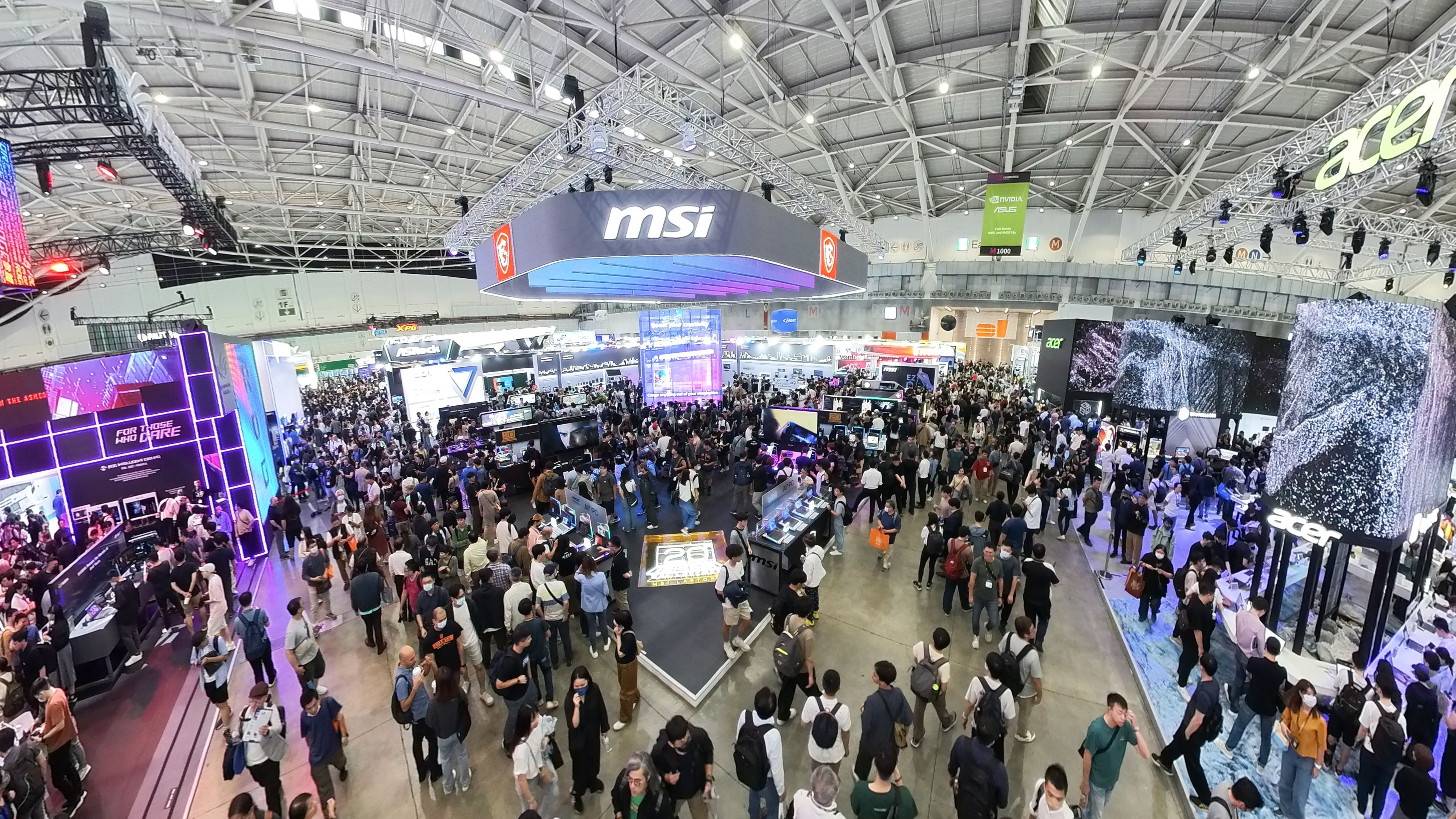
If in the past two years, the focus of competition in the AI industry was mainly on "whose chip is stronger," by 2026, this race has clearly entered the next phase: it's no longer just about the chip itself, but about who can more efficiently organize computing power, networking, software stack, and data center systems together.
This change is particularly evident in this year's Google Cloud Next '26 and NVIDIA's latest announcements.
Google officially launched the eighth generation TPU at Cloud Next '26, including the TPU 8t aimed at training scenarios, and the TPU 8i aimed at inference and reinforcement learning scenarios.
This means Google is still continuing to advance its self-developed AI accelerator path and is starting to more clearly differentiate between the infrastructure needs of training and inference core workloads.
More noteworthy than the chip updates is Google's description of its large-scale computing power network. Google stated in official materials that Virgo Network can connect 134,000 TPUs within a single data center and can connect over 1 million TPUs across sites to form training clusters.
The signal released by this data is straightforward: in Google's AI infrastructure landscape, networking is no longer just a supporting element for chips, but a core part that determines cluster efficiency and scalability.
Another point worth noting is that Google has not placed all its bets on self-developed TPUs. In addition to the TPU system, Google announced that it would also provide the A5X infrastructure and utilize the NVIDIA Vera Rubin NVL72 rack-level system.
For the external market, this indicates that major cloud vendors are becoming more pragmatic in their AI infrastructure strategies: strengthening their self-developed stack while continuing to incorporate NVIDIA's high-end GPU platforms to meet the deployment needs of different customers and scenarios.
On NVIDIA's side, the Rubin platform has also progressed from a roadmap concept to a clearer implementation phase. NVIDIA disclosed that the Vera Rubin platform is designed for system-level synergy around Vera CPU, Rubin GPU, NVLink 6, ConnectX-9 SuperNIC, BlueField-4 DPU, and Spectrum-6 Ethernet switch.
The emphasis behind this description is not on individual chip parameters, but on NVIDIA raising the dimension of competition to the level of entire cabinets, entire networks, and entire systems.
More specifically, NVIDIA has confirmed that Vera Rubin NVL72 will integrate 72 Rubin GPUs and 36 Vera CPUs, and indicated that related platforms will be provided by partners in the second half of 2026.
This means that Rubin is not just a name for the next generation of GPUs but a complete platform solution aimed at AI factories and large-scale deployments.
When looking at the actions of Google and NVIDIA together, a clearer industrial trend has emerged: the competition in AI infrastructure is shifting from "chip generational upgrades" to "system-level capability upgrades."
Whether it is Google emphasizing the cross-data-center connection capability of Virgo Network or NVIDIA continuously strengthening NVLink, Ethernet switching, and rack-level system synergy, it points to the same judgment—what will determine the upper limits of AI capacity in the future is increasingly not single-point computing power, but whether computing power can be organized effectively.
This also explains why discussions in the industry in 2026 are increasingly revolving around fabric, rack-scale, POD-scale, and AI factories.

At this stage, chips are still important, but networking, system architecture, and data center-level deployment capabilities have transformed from "supporting roles" into the new main battlefield.
The more prudent conclusion at this stage is that both Google and NVIDIA are pushing AI infrastructure towards larger scale, stronger interconnectivity, and higher system integration levels.
As for the more detailed supply chain beneficiaries, changes in device usage, and price transmission rhythms, public materials are currently insufficient to confirm definite facts, and this part should still be strictly distinguished from the officially confirmed information.
免责声明:本文章仅代表作者个人观点,不代表本平台的立场和观点。本文章仅供信息分享,不构成对任何人的任何投资建议。用户与作者之间的任何争议,与本平台无关。如网页中刊载的文章或图片涉及侵权,请提供相关的权利证明和身份证明发送邮件到support@aicoin.com,本平台相关工作人员将会进行核查。


