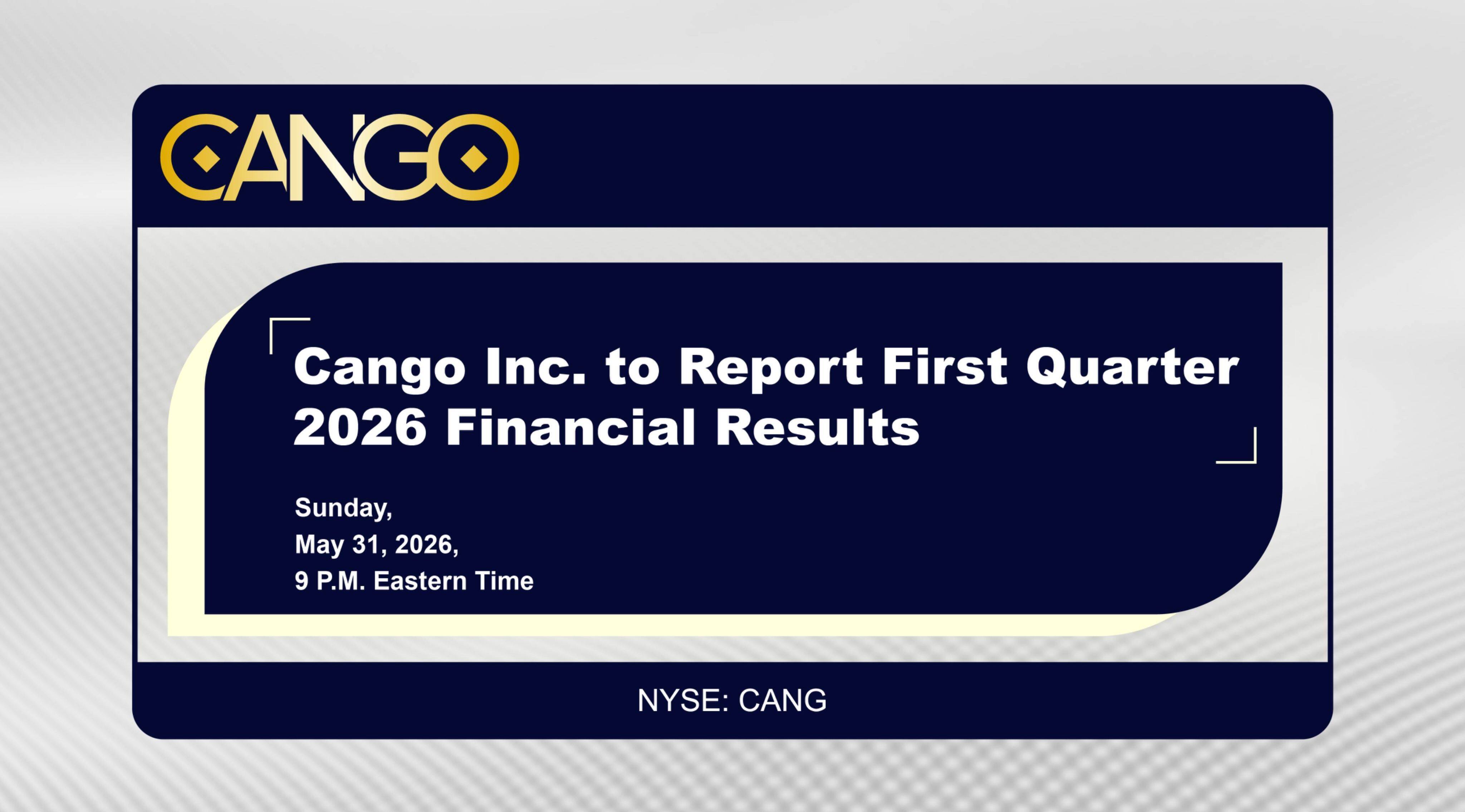
Today, Bitcoin mining company Cango announced its unaudited financial results for the first quarter of 2026. The company is currently leveraging its global operational capabilities to expand its business from Bitcoin mining into the fields of energy and AI computing infrastructure.
First Quarter 2026 Financial and Operational Highlights
- Financial Performance: In the first quarter of 2026, the company achieved total revenue of $102 million, with Bitcoin mining operations contributing $98.4 million, making it the primary source of the company's revenue for the quarter. During the reporting period, the company reported a net loss of $261.1 million. The loss mainly arose from non-cash items, including impairment of mining machines due to the decline in Bitcoin market prices and losses from changes in the fair value of held Bitcoins. As of March 31, 2026, the company's long-term debt was reduced to $30.6 million, down from $557.6 million on December 31, 2025. At the end of the quarter, the company held 1,026 Bitcoins as digital asset reserves.
- Mining Operations and Costs: The company continued to enhance operational efficiency while maintaining a more prudent operational scale. During the reporting period, the company’s total hash rate was 37.01 EH/s, with self-mined hash rate accounting for 27.98 EH/s and leased hash rate for 9.02 EH/s. In the first quarter, the company mined a total of 1,266 Bitcoins. Benefiting from the optimization of its mining machine portfolio and cost management, the company’s average cash cost per Bitcoin decreased by 9.0% compared to the fourth quarter of 2025, falling to $76,928, reflecting the company's continuous investment in improving mining operational efficiency.
- AI Business Expansion: The company is leveraging its existing infrastructure capabilities to extend its business from Bitcoin mining to AI computing services. This quarter, Cango launched a new commercial platform EcoHash, aiming to reuse its experience in energy management and high-density computing to provide infrastructure support for AI computing demands. The company is currently promoting the pilot deployment of modular, containerized computing units. This project adopts a phased advancement approach, initially focusing on GPU computing leasing, and will gradually expand into a global AI computing network.
Cango CEO Paul Yu stated, "The company is executing a robust and disciplined strategy, continuing to solidify its Bitcoin mining business while advancing AI infrastructure layout through EcoHash. In recent months, the company has seen some positive progress, including a sustained reduction in costs through mining machine upgrade strategies and stable operations in global mining. Meanwhile, the EcoHash project is progressing continuously, with related pilot deployments proceeding as planned. Leveraging its global energy network and operational experience, Cango is capable of further enhancing operational efficiency, capturing emerging opportunities in the AI computing sector, and driving long-term sustainable value growth."
Additionally, Cango CFO Simon Tang mentioned, "Despite the impact of industry adjustments and non-cash items in the first quarter, the operating environment remains challenging, but the company has made substantial progress in optimizing its cost structure and strengthening its balance sheet. The company has reduced long-term debt and has driven down mining cash costs through strictly executed operational strategies. Looking ahead, the company will continue to focus on enhancing cash flow resilience, maintaining financial flexibility, and supporting its transition to a more efficient and diversified infrastructure platform."
First Quarter 2026 Continuing Operations Financial Performance
Revenue
In the first quarter of 2026, the company’s total revenue was $102 million, with revenue from Bitcoin mining operations amounting to $98.4 million. Compared to the fourth quarter of 2025, total revenue decreased by approximately 43%, mainly due to the company's proactive decision to downsize operational hash rate. In this process, the company gradually phased out older, less efficient S19 series mining machines and converted some of its hash rate to leased hash rates.
Operating Costs and Expenses
In the first quarter of 2026, the company’s total operating costs and expenses were $356.4 million. These costs were primarily related to the company's Bitcoin mining operations, recognition of mining machine impairment losses, mining machine disposal losses, and losses from changes in the fair value of Bitcoin collateral receivables.
- Cost of revenue (excluding the depreciation listed separately below) was $99.6 million, down from $155.3 million in the fourth quarter of 2025, mainly due to the decrease in electricity and hosting costs following the reduction in hash rate;
- Depreciation expenses were $29.4 million;
- General and administrative expenses, including related party expenses, totaled $7.2 million;
- Mining machine impairment losses were $49 million;
- Mining machine disposal losses were $20.3 million;
- Losses from changes in the fair value of Bitcoin collateral receivables amounted to $151.8 million, down from $171.4 million in the fourth quarter of 2025. This non-cash loss was mainly impacted by the decline in Bitcoin prices during the quarter.
Operating Loss
In the first quarter of 2026, the company reported an operating loss of $254.4 million, compared to an operating loss of $26.9 million in the same period of 2025. The loss widened mainly due to the decline in Bitcoin prices.
Net Loss from Continuing Operations
In the first quarter of 2026, the net loss from continuing operations was $261.1 million, compared to a net loss of $28.3 million in the same period of 2025.
Adjusted EBITDA
In the first quarter of 2026, the company’s adjusted EBITDA loss was $154.1 million, compared to an adjusted EBITDA loss of $1.7 million in the same period of 2025.
Balance Sheet
As of March 31, 2026, the company held:
- Cash and cash equivalents of $7.2 million, down from $41.2 million at the end of 2025, mainly due to debt repayment and cash used in operating activities;
- The company held Bitcoin collateral receivables, non-current related party items, with a net value of $68.2 million;
- The company held mining machine assets with a net value of $130.8 million;
- The company’s long-term debt (related party items) was $30.6 million, significantly down from $557.6 million as of December 31, 2025;
Cango stated that the significant decline in Bitcoin collateral receivables and related long-term debt reflects the company’s proactive efforts to deleverage during the quarter.
免责声明:本文章仅代表作者个人观点,不代表本平台的立场和观点。本文章仅供信息分享,不构成对任何人的任何投资建议。用户与作者之间的任何争议,与本平台无关。如网页中刊载的文章或图片涉及侵权,请提供相关的权利证明和身份证明发送邮件到support@aicoin.com,本平台相关工作人员将会进行核查。


