As an intelligent wallet developed by JustLend DAO, the core protocol of the TRON ecosystem, the emergence of GasFree has undoubtedly brought a significant breakthrough in the interactive experience of Web3. It directly addresses the long-standing industry pain point that “on-chain transfers must be preceded by the purchase of native tokens” by innovatively implementing the feature that allows transfer tokens to directly offset Gas fees. Now, ordinary users can make USDT transfers using GasFree without needing to hold TRX in reserve, allowing them to automatically settle on-chain fees with USDT.
Since its launch, GasFree has quickly broken down the barriers for newcomers with this minimalist “seamless” experience and has ignited the community’s enthusiasm for participation during the recent “JUST 6th Anniversary × GasFree Super Carnival Month” event. However, this ultimate convenience, which perfectly hides the complex underlying logic, has also sparked profound reflections within the industry.
This special X Space discussed this phenomenon: as GasFree lowers the barrier for “first-time Web3 usage,” will the next phase of Web3 lead to mass adoption, or will it completely transform into a Web2-like realm in the pursuit of convenience? Some firmly believe that truly great technology should leave complexity to the underlying layers and allow ordinary users to use it “seamlessly.” However, others are concerned that when users no longer perceive the chain, Gas, and control over assets, Web3 will lose its unique value of decentralization. In this Space dialogue, several industry veteran KOLs gathered to engage in a deep confrontation and discussion around the themes of “pursuing user seamlessness” and “upholding on-chain fundamentalism.”
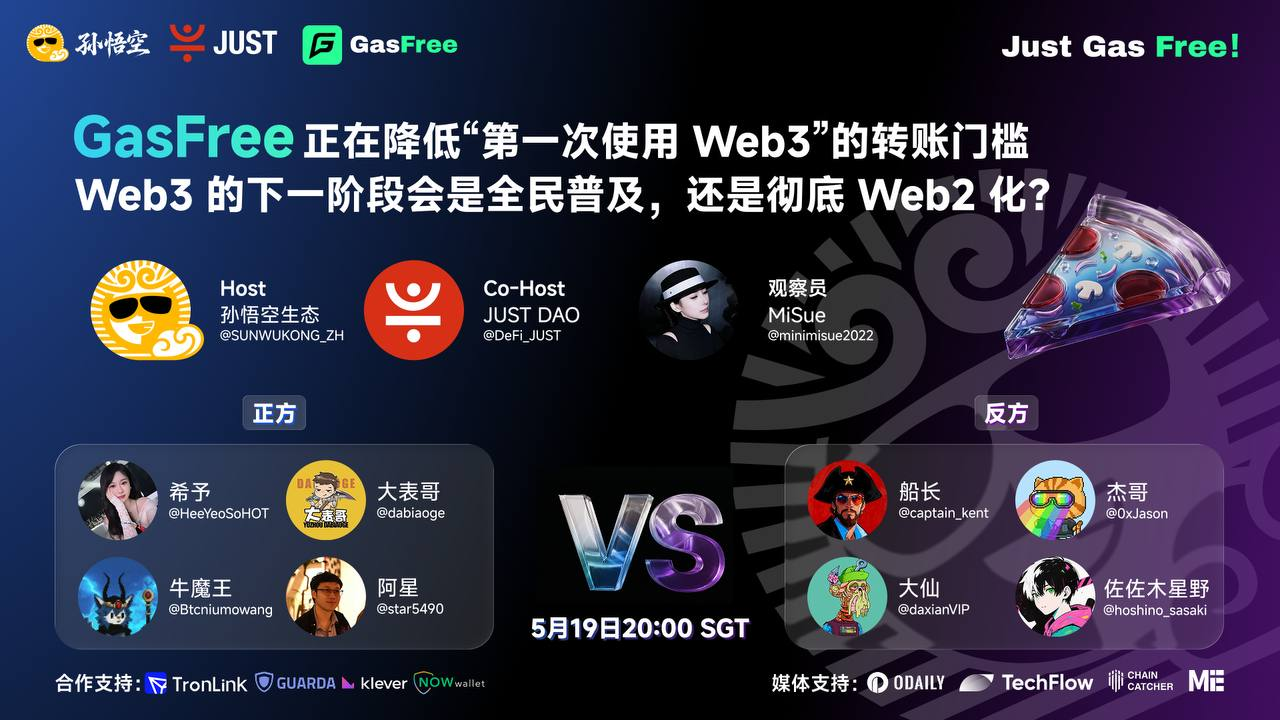
The Core Debate: Is Web3's “seamless experience” an inevitable path to mass adoption, or a breeding ground for Web2 transformation?
Proponent speaker Xiyu pointed out that truly successful technology should make users “seamless.” The fundamental reason why Web3 has yet to achieve true mass adoption is due to excessive user barriers. Just as in the Web2 era, ordinary users do not need to understand TCP/IP protocols or routing node matching logic when using WeChat or browsing the web. In the Web3 era, if every new user is forced to first learn to purchase native tokens, understand cross-chain logic, and have private key authorization, it precisely indicates that the industry’s development is still immature. Viewing complex technical barriers as a form of “elitist arrogance” not only hinders the entry of fresh blood but also violates the original intention of decentralization to benefit the masses.
At the same time, the proponents stress that user experience “seamlessness” does not equate to centralized control at the underlying level or a loss of decentralization spirit. Proponent speaker Niumo Wang stated that requiring users to use native tokens for transfers is essentially a “kidnapping” of users by rules, whereas GasFree's innovation brings transfers back to the assets themselves, such as allowing users to directly use USDT to offset fees, eliminating the cumbersome steps of being “kidnapped” by native tokens (like TRX or ETH). This does not eliminate Gas fees nor change the core essence of blockchain assets being on-chain, publicly transparent, and immutable. On the contrary, only by significantly lowering usage barriers can we transform Web3 from a niche geek celebration into an infrastructure easily usable by the general public, thereby giving Web3 the qualification to discuss future ecological prosperity and value realization.
However, behind the beautiful vision of “mass adoption” painted by proponents, the opposing team sees significant hidden dangers. They pointedly note that the greatest value of Web3 has never been “more convenient,” but rather absolute autonomy over assets and decentralization. If the threshold is infinitely lowered to cater to the masses, leading users to become completely unaware of private keys, Gas, and the existence of the chain, Web3 will inevitably regress to Web2's custodial logic.
Opponent speaker Jie Ge clearly indicated that without understanding, there is no respect; when users no longer comprehend the underlying operational logic, they are prone to fall into a “trust illusion” concerning platform providers or wallet service providers. Once a platform engages in wrongdoing or suffers a hacking attack, users will again face the centralized risk of asset loss without recourse.
Furthermore, Yoshinosuke Sasaki combined experiences from past bull markets to note that moderate thresholds and friction are not only part of the blockchain security mechanism but also the driving force behind industry innovation. Looking back at history, what truly attracts large-scale users has often been breakthroughs in underlying technology and the consequent wealth effects (such as DeFi, NFTs, inscriptions, etc.), rather than mere experience optimization. If today we hide the Gas for usability, tomorrow we may sacrifice decentralization and immutability for efficiency. When every experience in Web3 becomes indistinguishable from Web2 products like Alipay and WeChat, blockchain loses its irreplaceable unique value. The opposing team firmly believes that we cannot sacrifice the core soul of the industry for short-term user growth.
Bridging the Divide: How does GasFree find balance between experience and sovereignty?
The confrontations in the debate arena may be intense, but in real industry building, idealism and pragmatism often need to seek a delicate balance. If we step out of the black-and-white binary opposition and examine real business scenarios, we will find that lowering thresholds and adhering to decentralization are not necessarily a multiple-choice question. The GasFree intelligent wallet built by the JustLend DAO of the TRON ecosystem attempts to present an optimal breaking solution between the "ultimate seamless experience" and "transparent on-chain sovereignty."
In the traditional on-chain transfer logic, users must first go to an exchange to buy TRX and then withdraw it to their wallets to pay Gas fees when transferring USDT. This process is not only lengthy but also prone to asset loss due to price fluctuations or user errors. As the proponent speaker stated, this “kidnapping” rule by native tokens is the highest barrier hindering users outside the circle from entering.
The core product logic of GasFree does not strip users of their private key control nor transfer assets to centralized custodial servers; instead, it has conducted a thorough “subtraction” at the interaction level of smart contracts. In specific functionalities, it innovatively implements a direct offset mechanism for transfer tokens, allowing users to conduct transfers (like TRC20-USDT) without needing to hold TRX or other native tokens to pay Gas, reverting the operation to a smooth experience of “using whatever to transfer whatever.” More importantly, as a strong response to the concerns of the opposing team, GasFree's “seamlessness” is limited to the operational experience rather than asset custody; its fund flows are entirely public and transparent, ensuring users maintain absolute control over their private keys and assets.
This underlying logic that balances sovereignty and convenience is becoming increasingly integrated into the daily interaction points of users. Currently, wallets supporting GasFree functionalities include the official TRON wallet TronLink, as well as various crypto wallets like Klever, Guarda, and NOW Wallet. In specific use cases, USDT holders and users of the TRON ecosystem can use GasFree for transfers through the above wallets, significantly lowering the entry barrier for new users.
The market has always had a keen sense for products that genuinely address pain points. Since the official launch of the GasFree intelligent wallet in March 2025, this “seamless” experience, which directly hits core pain points, has rapidly ignited the market, causing significant increases in user retention and activity rates. As of now, GasFree’s cumulative transaction count has surpassed 5.16 million, with a total transaction volume reaching 89.3 billion USD, effectively saving users over 6.28 million USD in fees. This impressive data proves that when unnecessary technical barriers are stripped away, the real payment needs of Web3 are being released in abundance.
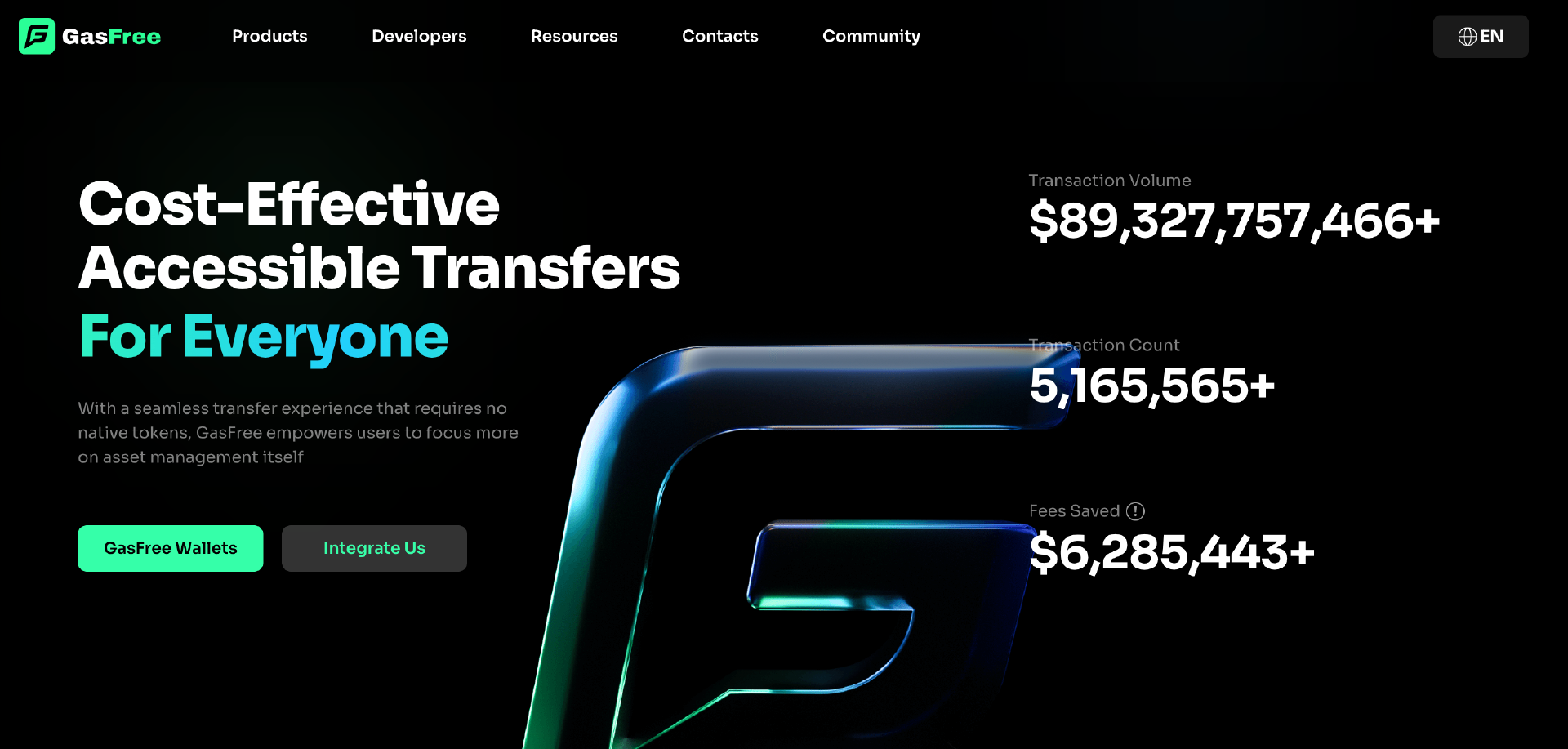
Whether the ultimate outcome of Web3 is complete “mass adoption” or maintaining its “geek threshold” in the financial arena, one thing is certain: infrastructures like GasFree, which are dedicated to continually enhancing “user experience” while “defending sovereignty,” are truly expanding the boundaries of the industry. GasFree’s actions demonstrate that upholding asset sovereignty can still achieve a user-first experience. Rather than worrying about Web3 being assimilated by Web2, it is precisely because of infrastructures like GasFree that quietly simplify at the underlying level, that Web3 genuinely possesses the confidence to accommodate a large-scale user base.
免责声明:本文章仅代表作者个人观点,不代表本平台的立场和观点。本文章仅供信息分享,不构成对任何人的任何投资建议。用户与作者之间的任何争议,与本平台无关。如网页中刊载的文章或图片涉及侵权,请提供相关的权利证明和身份证明发送邮件到support@aicoin.com,本平台相关工作人员将会进行核查。


