Many friends have told me that whenever they encounter volatile markets, they don't know how to operate; chasing highs and cutting losses results in being cut repeatedly, or they just hold on and watch their profits fluctuate helplessly. Actually, it doesn't have to be so exhausting. There is a strategy specifically designed for volatile markets, no matter if it’s a sideways consolidation, small rise, or slow drop, as long as there is volatility, you can make money. This is grid trading. I have been navigating the market for many years and have tried countless strategies, and I believe grid trading is the most suitable and worry-free for ordinary investors. You don't have to keep watching the market; once you set the parameters, it can automatically help you buy low and sell high, truly making money while lying down. 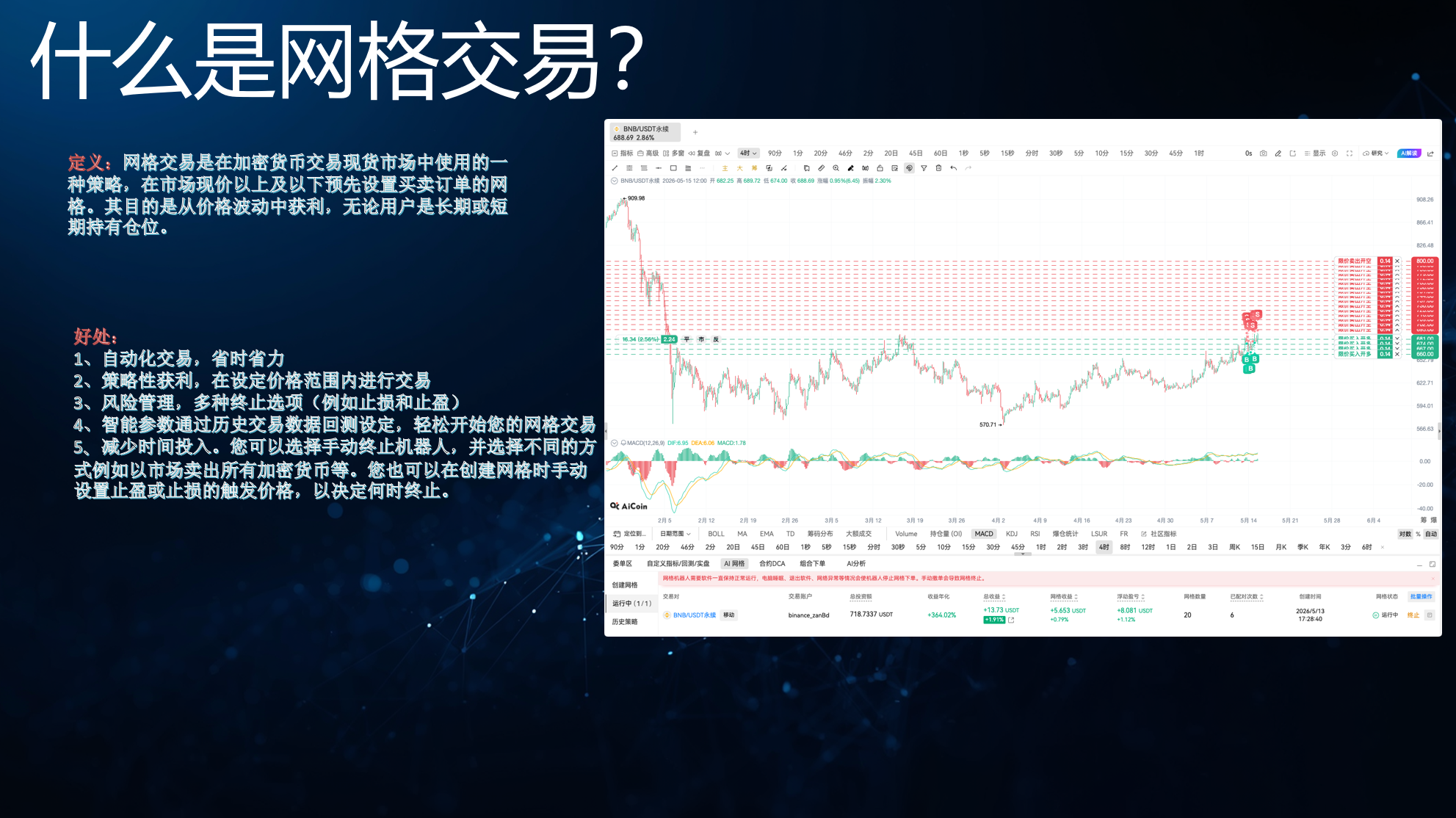
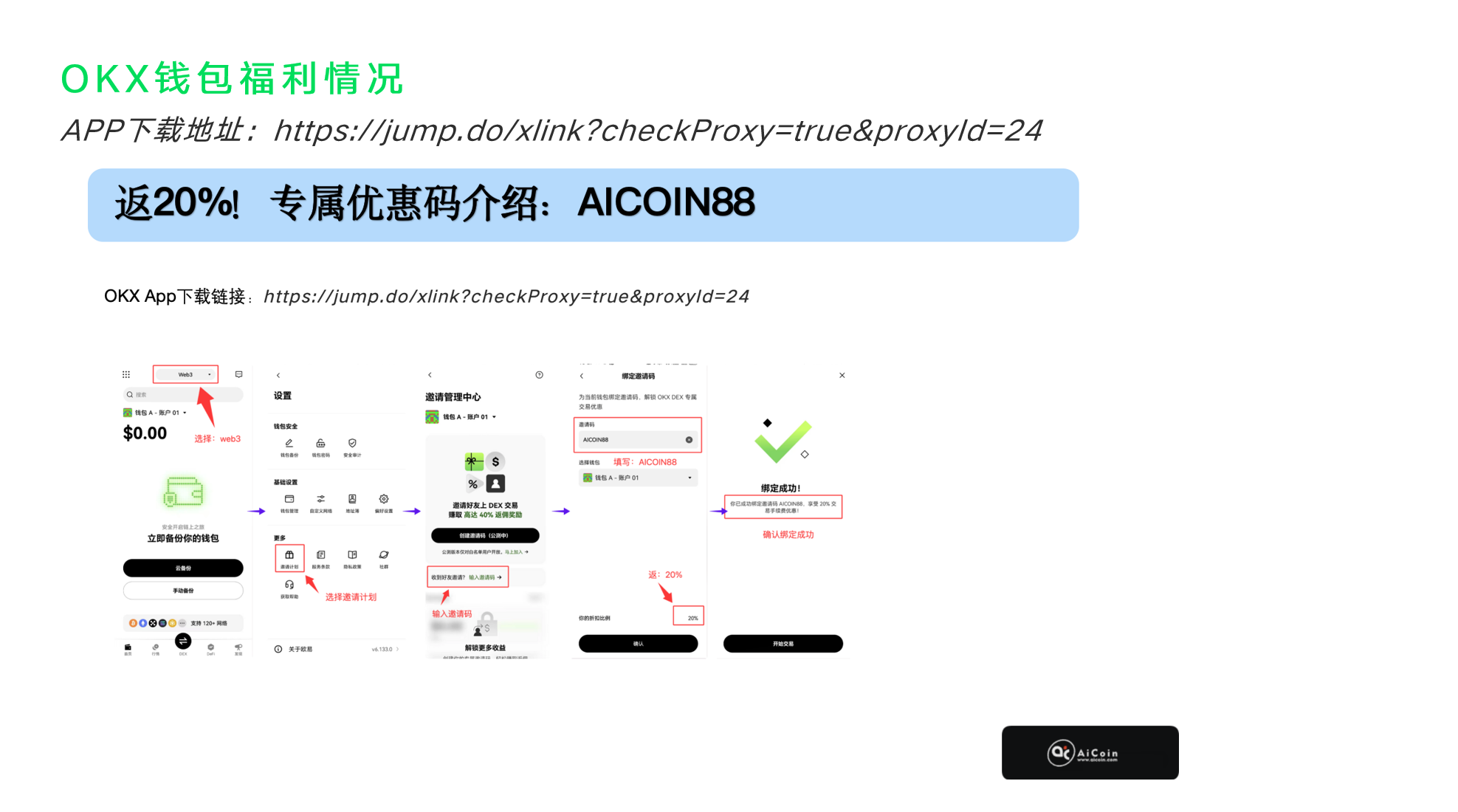
Download: https://jump.do/xlink?checkProxy=true&proxyld=24
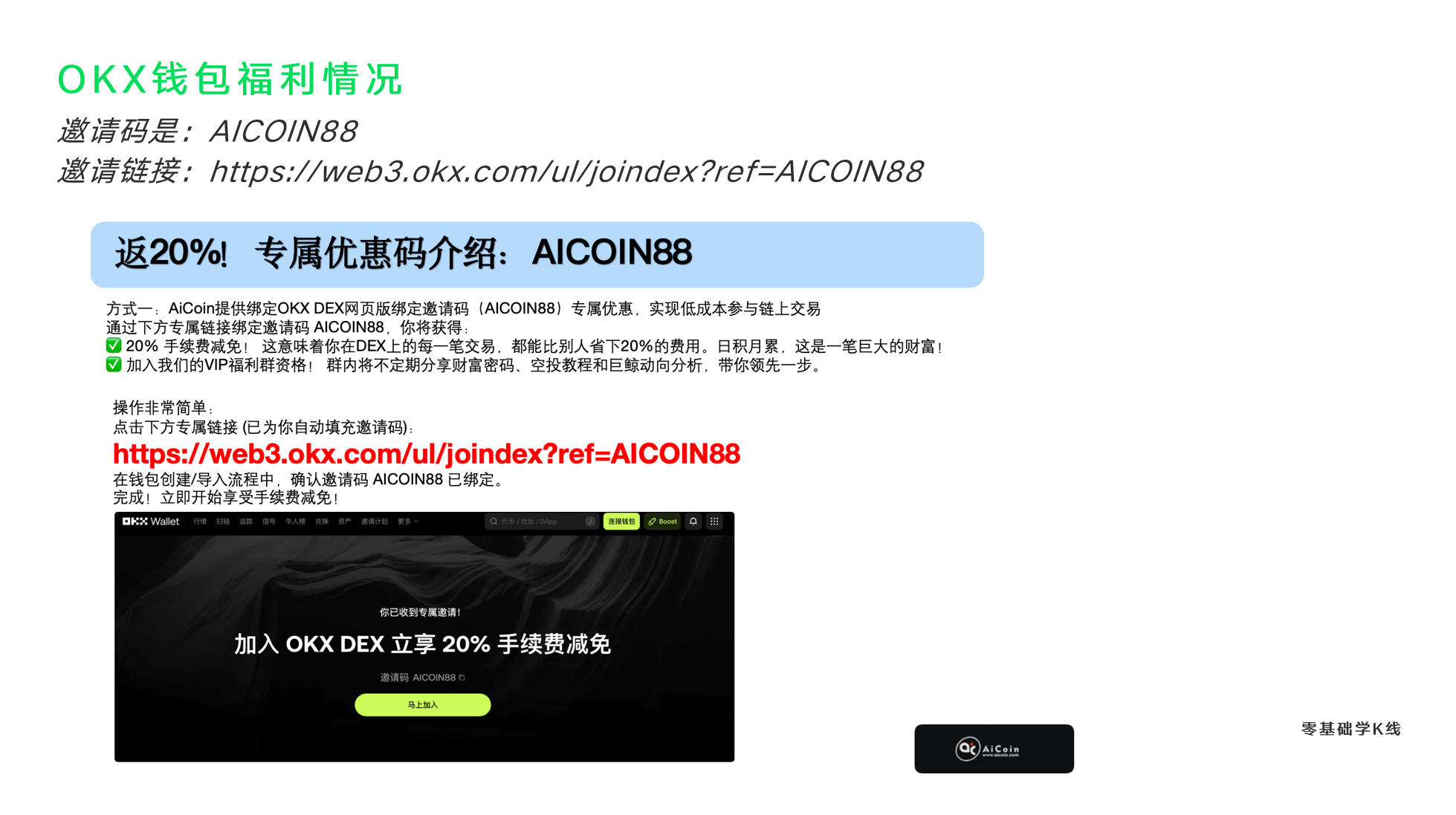
Commission rebate 20%: https://web3.okx.com/ul/joindex?ref=AICOIN88
In simple terms, grid trading is an automated trading robot. You set a price range in advance, divide the funds into several equal parts, and lay down a "buy-sell net" in this range - when the price drops to a certain point, it automatically buys; when it rises to the corresponding point, it automatically sells. Each time you buy low and sell high, you pocket a profit. It's like fishing; as long as the fish swim in your net, you can continue to reap rewards. Its biggest advantage is that it operates continuously 24/7. No matter whether you are sleeping, working, or busy with other things, as long as the market has fluctuations, it will automatically execute trades, perfectly solving the problem of not having enough time to monitor the market and missing buy-sell points. Moreover, it comes with risk management attributes; you can set profit-taking and stop-loss in advance, controlling maximum losses, and you don't have to worry about making wrong decisions due to emotional control.

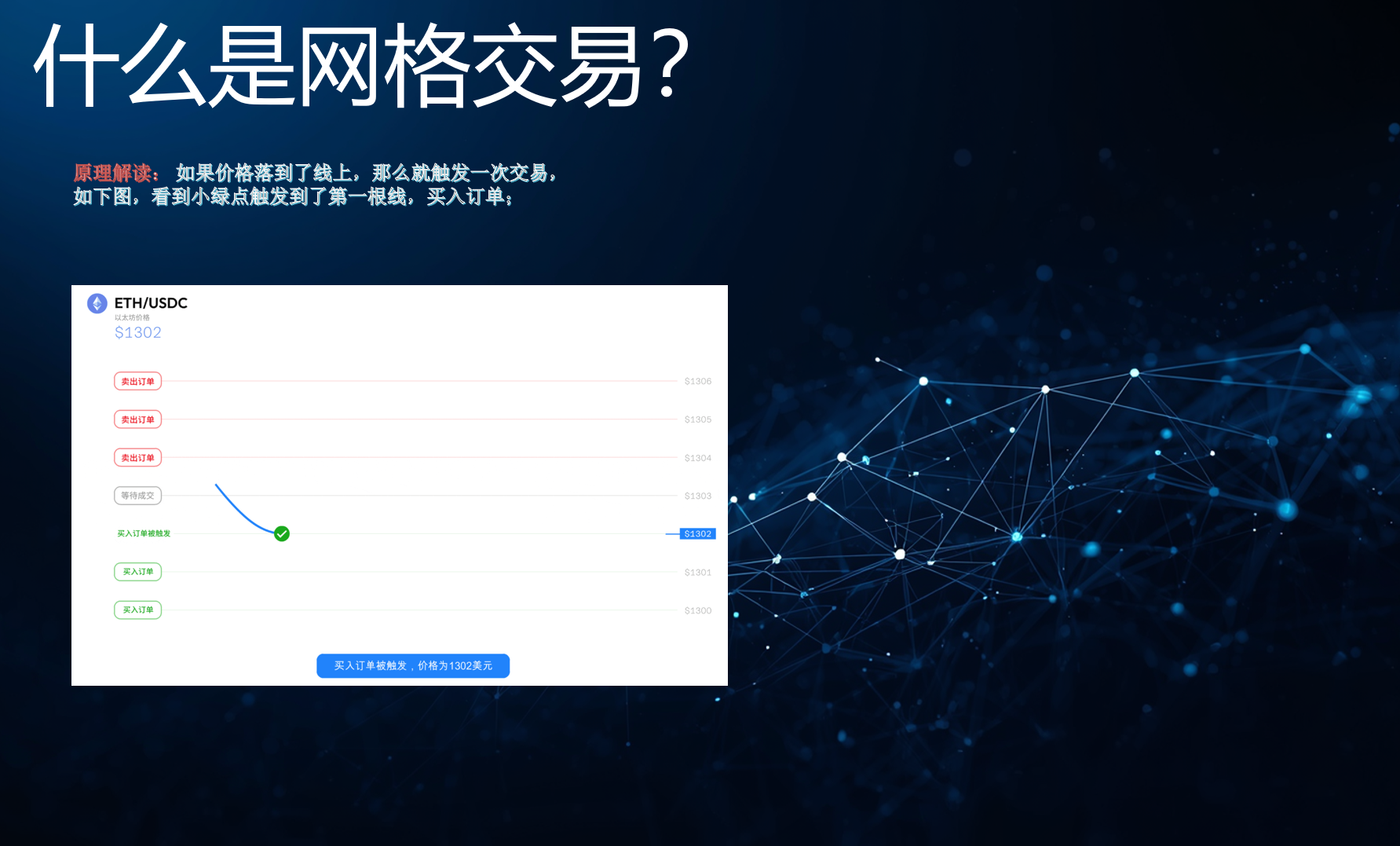
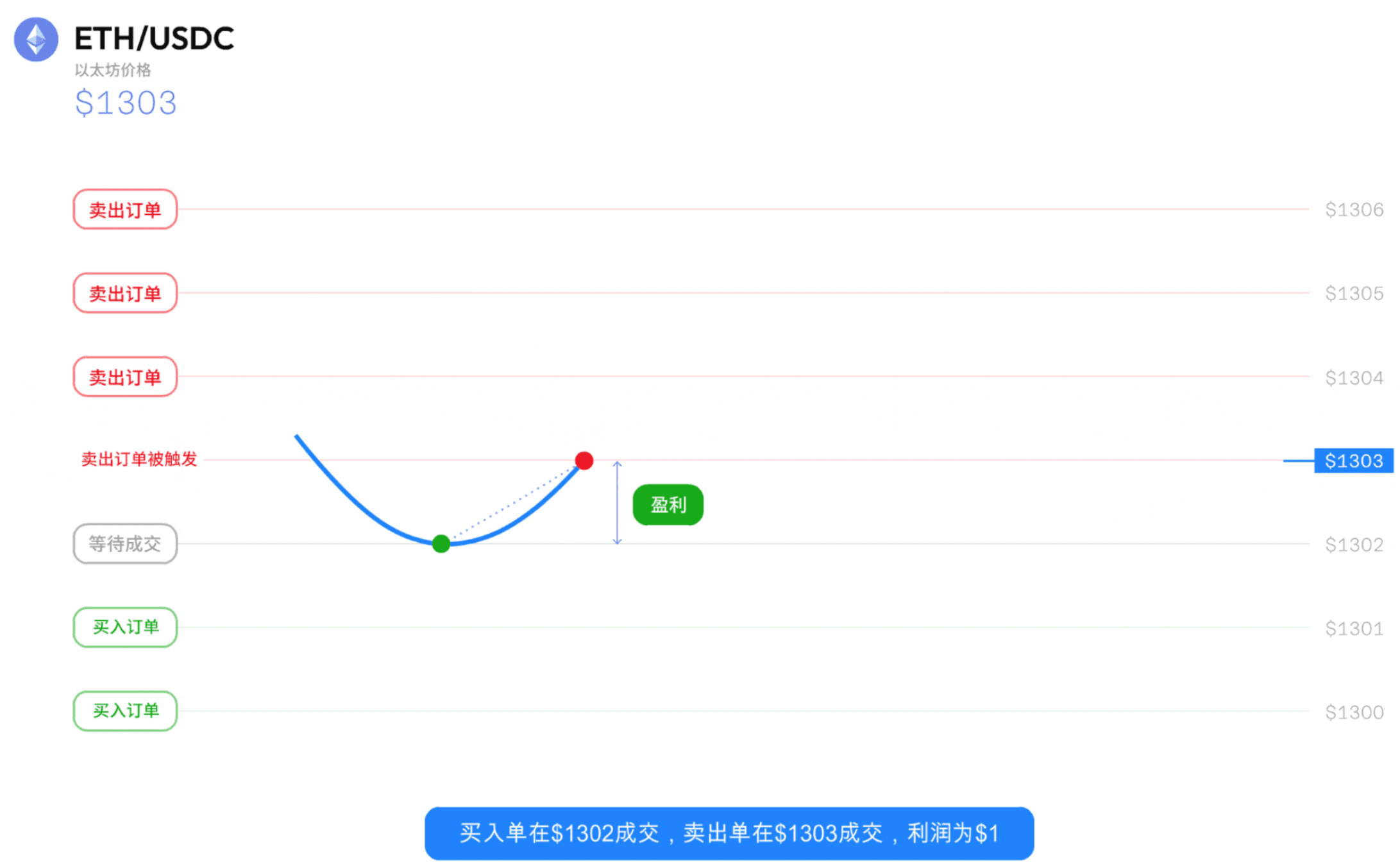
We can understand its operational logic with a very simple example. For instance, if we set the price range of ETH between 1300 dollars and 1306 dollars, divided into 7 grids, with a gap of 1 dollar. When the price drops from 1303 dollars to 1302 dollars, the system will automatically trigger a purchase; when the price rebounds back to 1303 dollars, it will automatically sell. This back and forth nets you a profit of 1 dollar. Moreover, this process is cyclical; as long as the price fluctuates within the range you set, the grid will keep repeating buying low and selling high, accumulating small gains over time. Many people feel that the profit per grid is not much, but over time, with compound interest, the returns can be very considerable. What is even more thoughtful is that after each transaction is completed, the grid line will automatically reset and update, adjusting buy-sell orders based on the latest prices, with the entire process being completely automated and requiring no manual intervention.
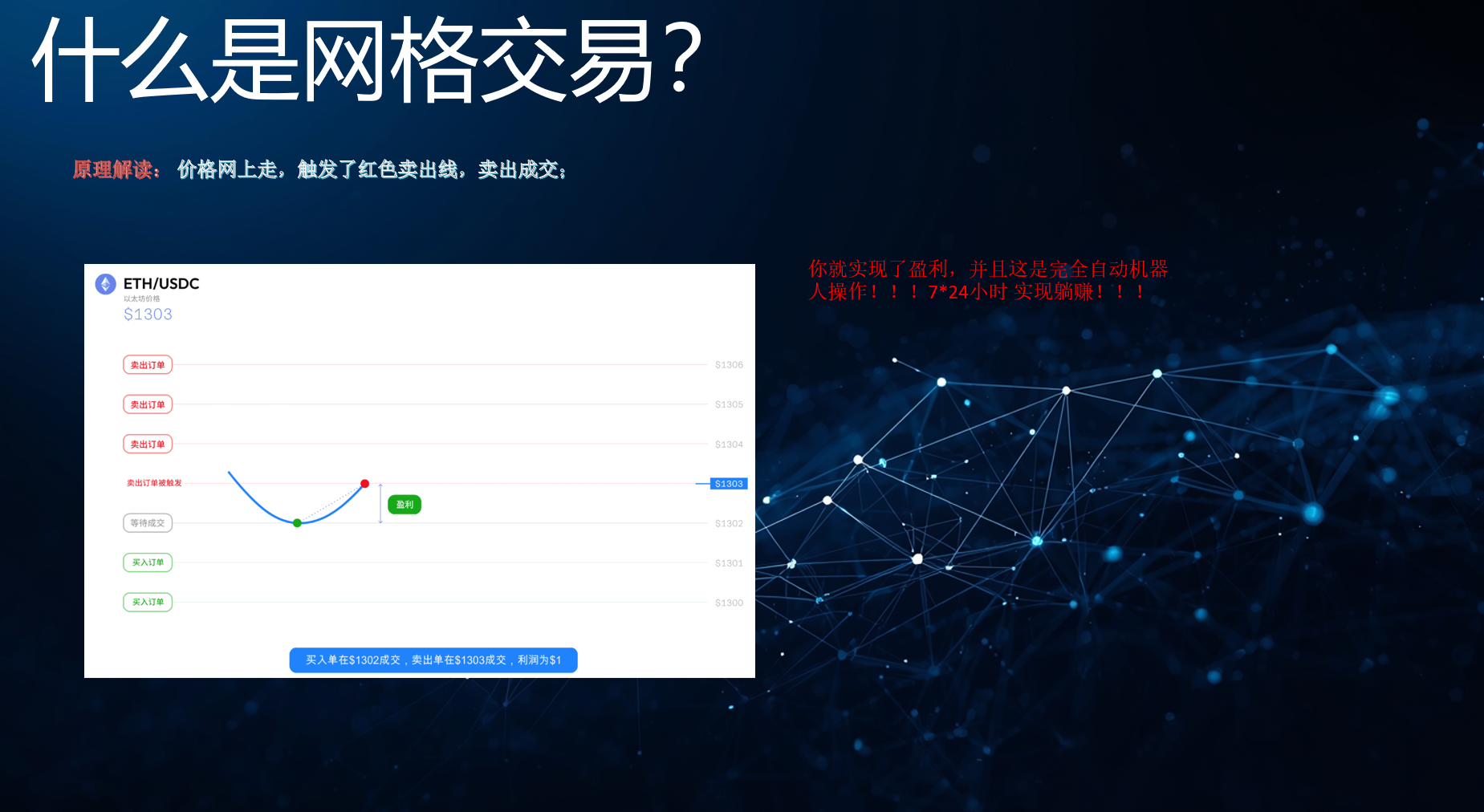
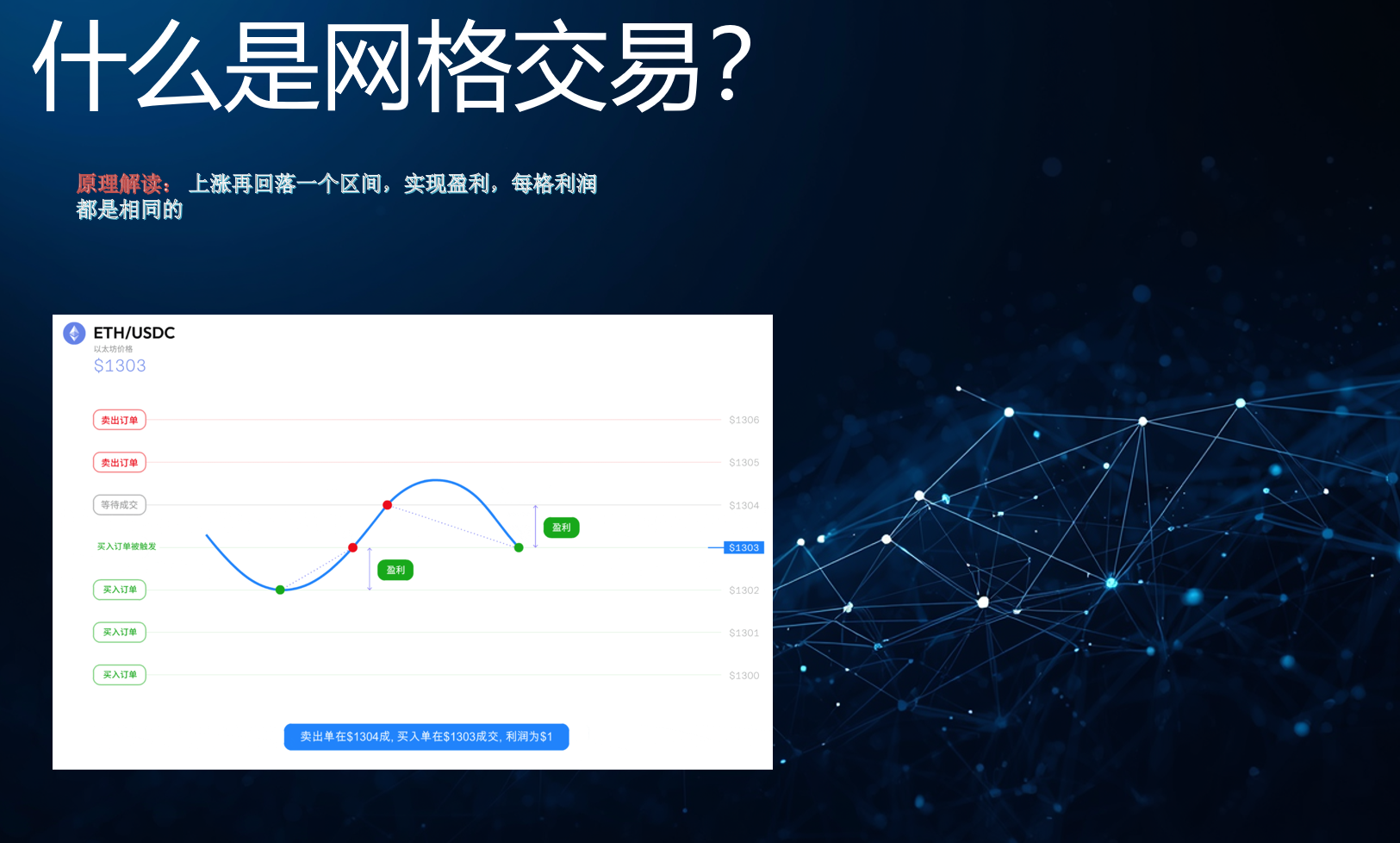
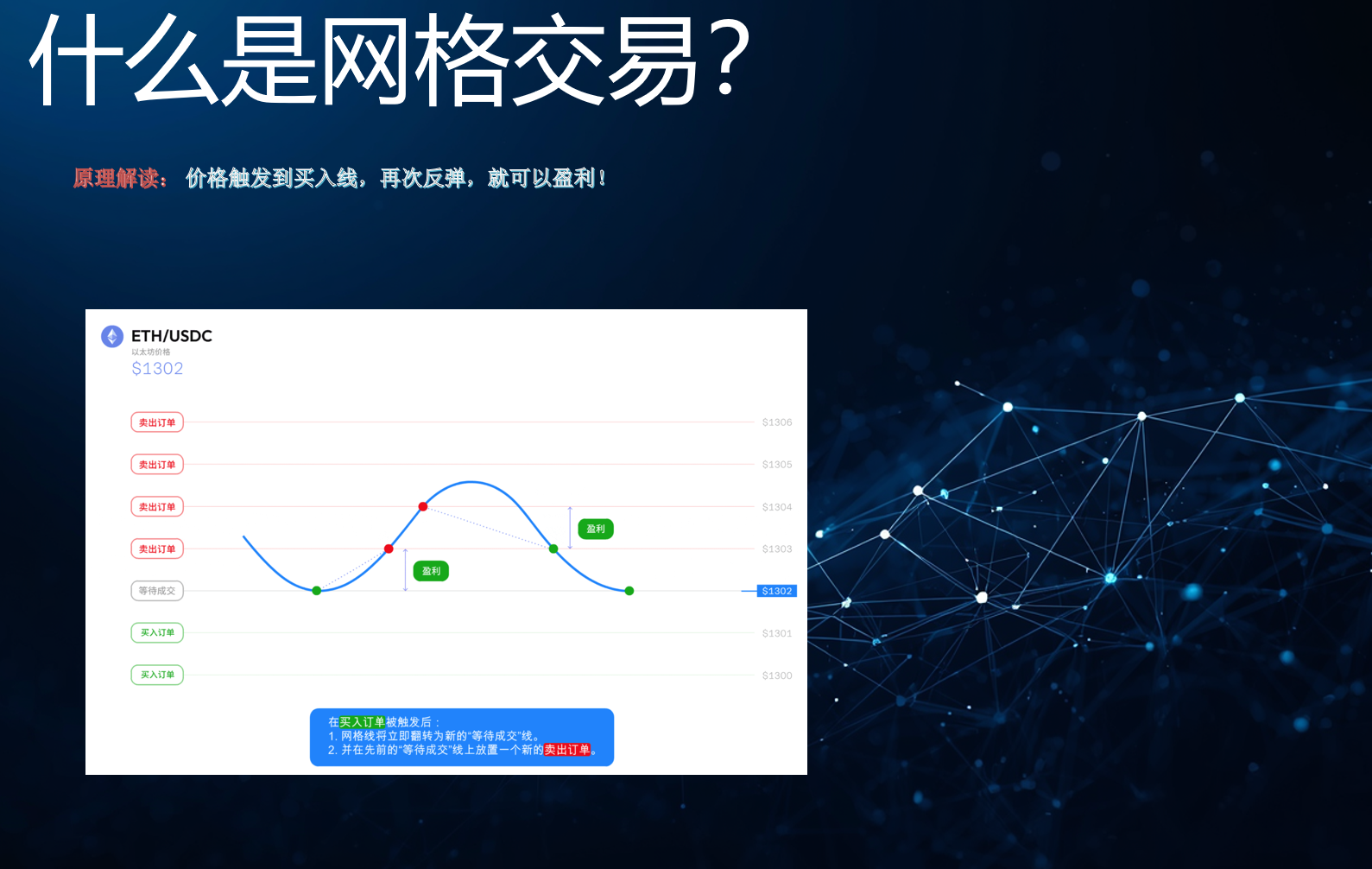
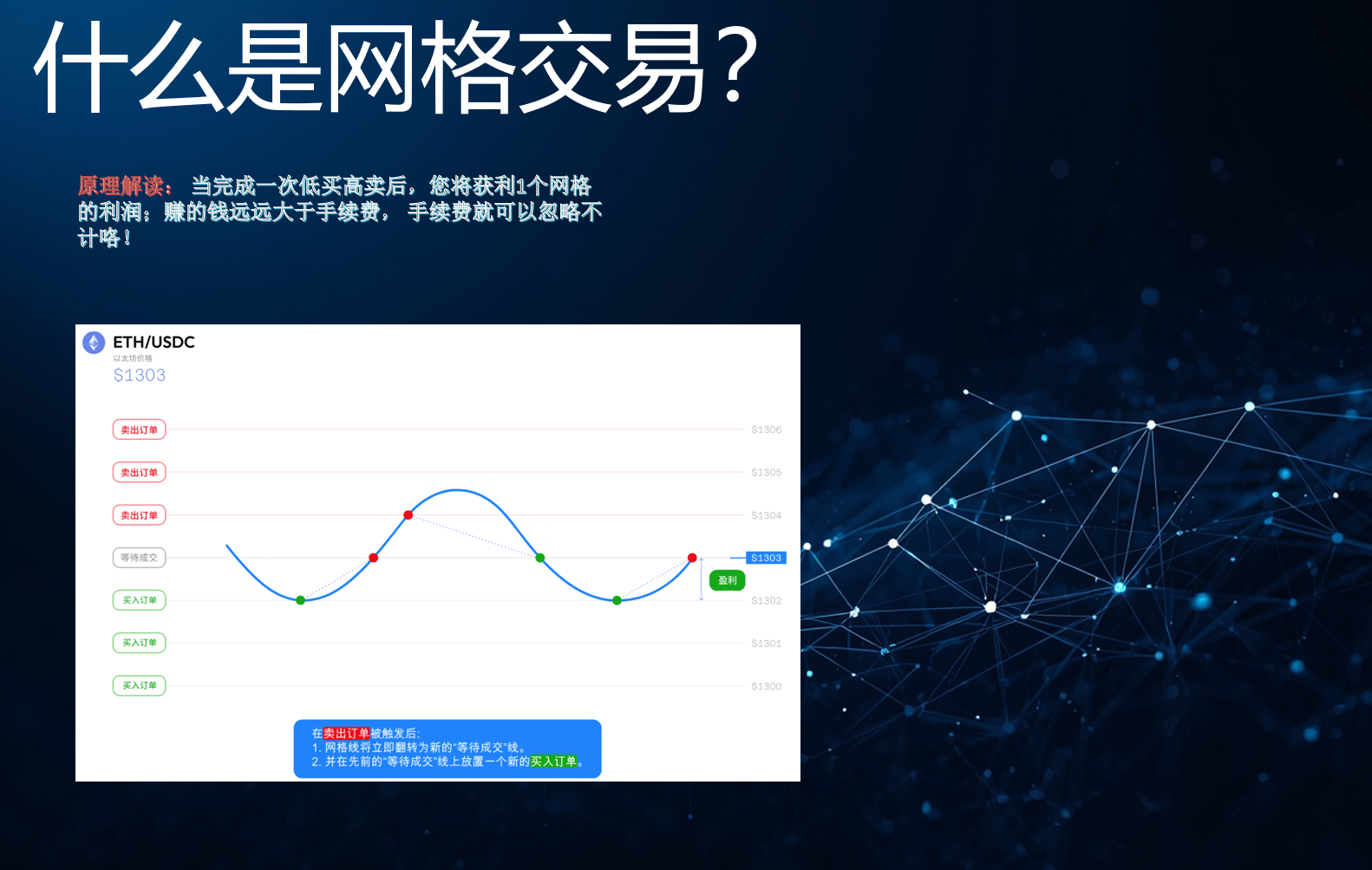
If you want to use grid trading effectively, you must understand its four core elements, which directly determine whether your grid can be profitable and how much you can earn. The first is the price range, which is the upper and lower limit you set for the grid. This is the most crucial step; the range cannot be too large or too small. The second is the grid density, which is the size of each grid's interval. If the interval is too large, it will reduce the number of trades; if it is too small, it will lead to thin profits and increase transaction costs. The third is capital allocation. You need to evenly distribute the funds you plan to invest across each grid, reasonably control your positions, and never invest all your money. Always keep enough cash for living expenses; investing should always be done with spare money. The fourth is profit-taking and stop-loss, setting profit targets and loss limits in advance to protect your principal; this is the first principle of investing.


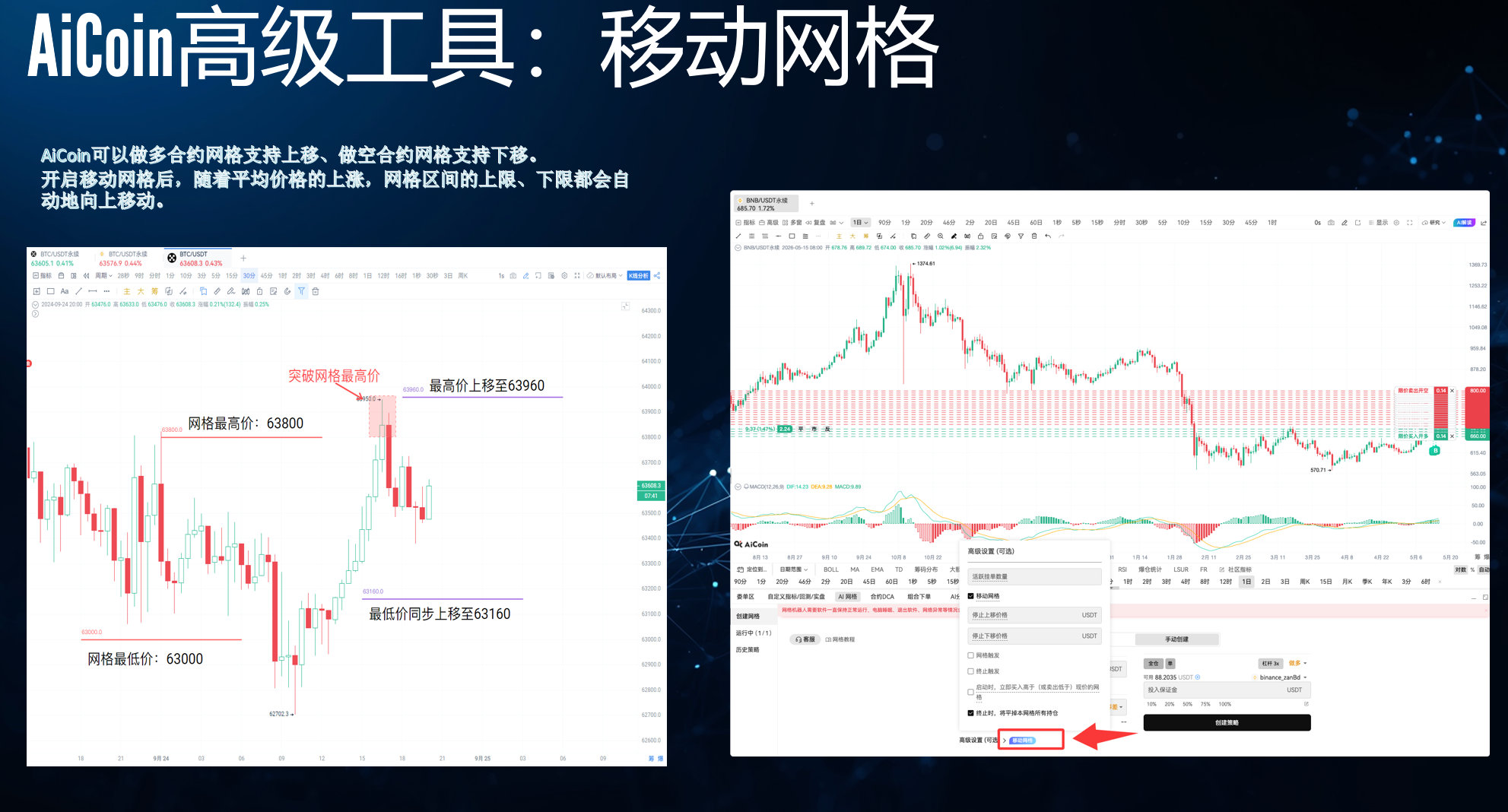
One of the most concerning questions for many friends is: what if I encounter a one-sided market? A perfectly good volatile market suddenly experiences a surge or a plunge; will the grid become ineffective or even lose money? This question does not need to be feared at all; today’s grid trading has long been upgraded, and the mobile grid feature is specifically designed to address one-sided markets. A normal grid stops running automatically when prices break the upper and lower limits, or even liquidates, but a mobile grid will automatically adjust the entire range according to price movements. For example, if your original BTC grid upper limit is 63800 dollars, and the market surges and breaks this price, the mobile grid will shift the entire grid upward, continuing to help you buy low and sell high within the new price range. If the price plunges below the lower limit, it will also move the grid down accordingly, ensuring that you don't miss out on rebound opportunities during the downward trend. This way, whether it’s a spike or one-directional trend, the grid can continue to operate, maximizing the safety of your funds.
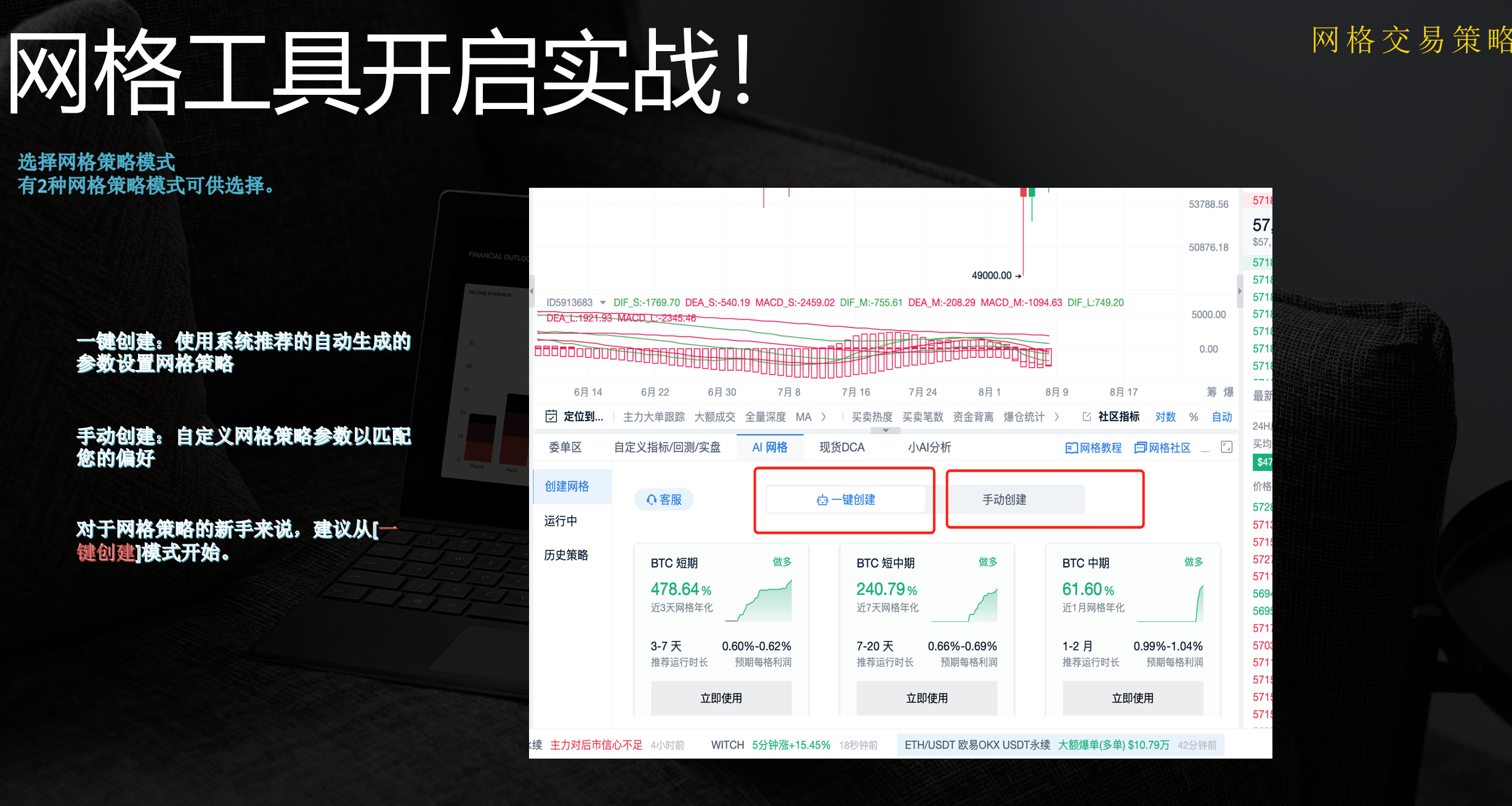
Having explained the principles, let’s get into practical operations to see how to create a grid trading strategy on AiCoin. The operation is actually very simple, and beginners can quickly get started. Open the AiCoin client, find the "AI Grid" entry at the bottom, and click "Create Grid" to start. There are two methods available; beginners can start with One-Click Creation. The platform has many quality grid strategies shared by other investors, showing returns over the past month, recommended duration, and other information. You can directly click "Use Now" to copy someone else's strategy, which is very convenient. Once you become familiar with it, try Manual Creation where you set the parameters based on your own judgment.
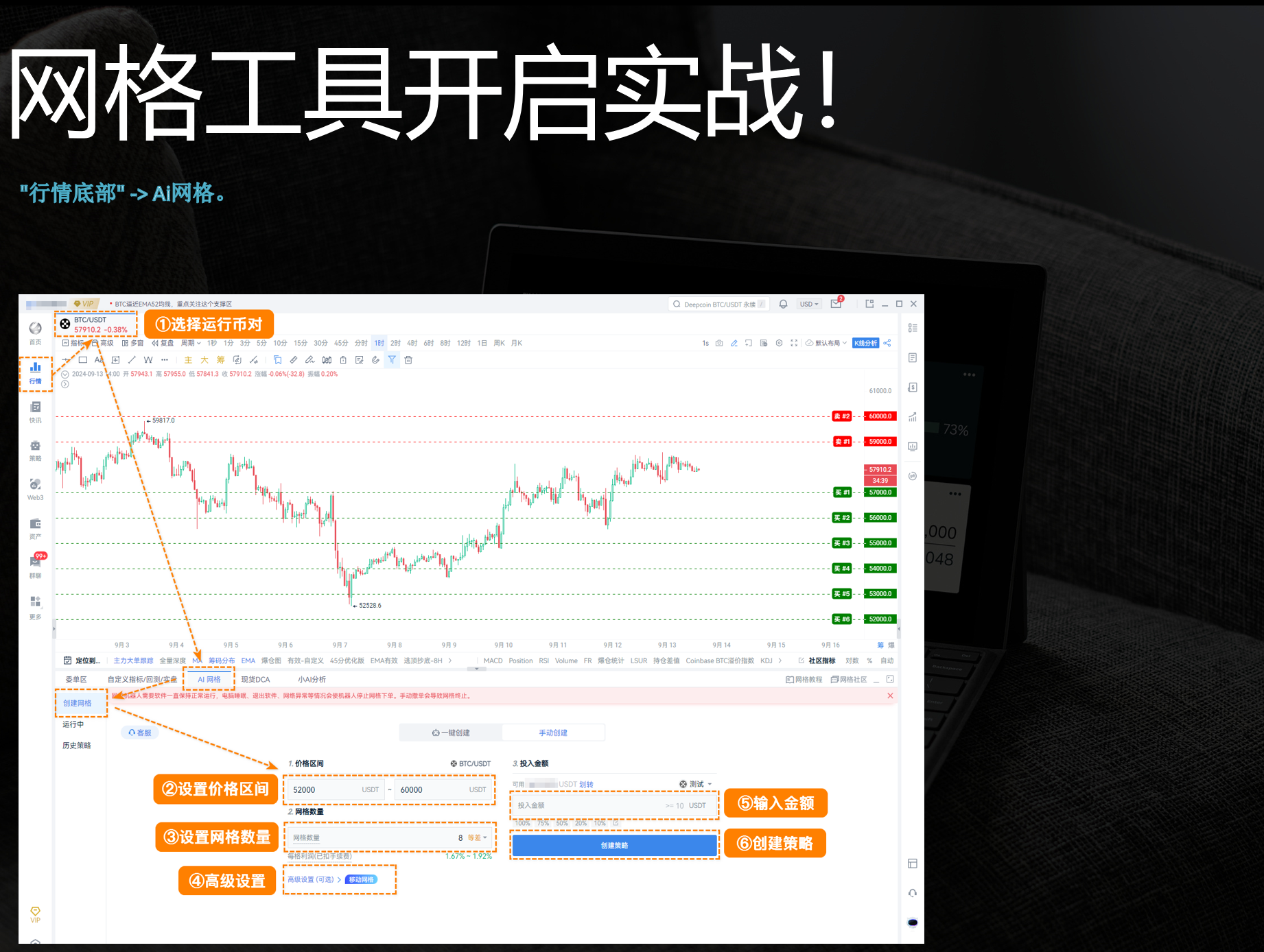
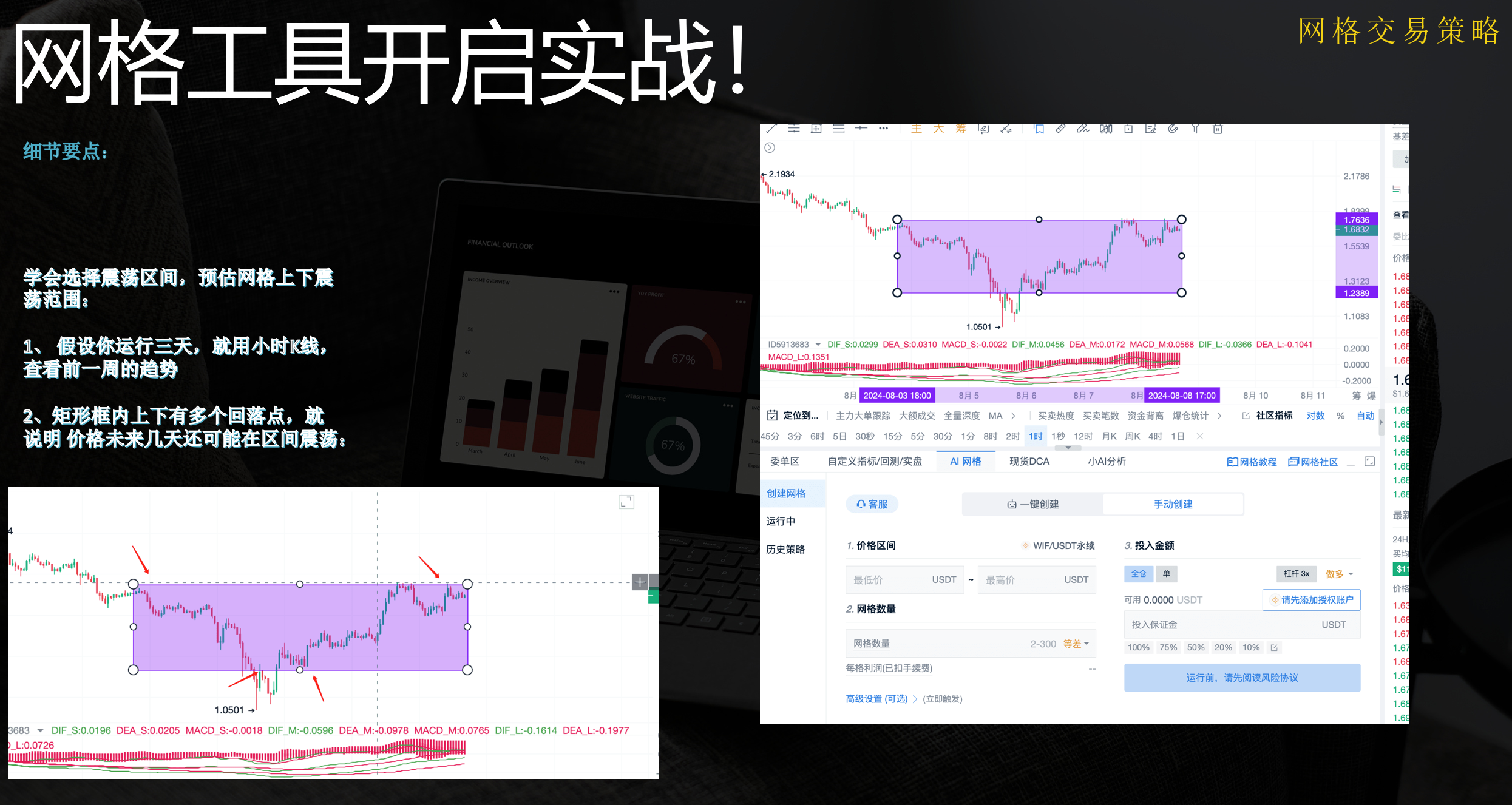
When manually creating, first select the trading cryptocurrency, then set the upper and lower limits of the price range, input the number of grids you want, and the amount you wish to invest. You can also choose to go long, short, or use a neutral grid. Generally speaking, I recommend everyone use the neutral grid since it can trade regardless of whether the market rises or falls, making it more versatile. The most critical point is to remember to enable the mobile grid, setting the trigger prices for upward and downward movements to cope with one-sided markets. Additionally, in the advanced settings, there are options for grid trigger conditions and stop conditions; you can adjust these according to your needs, such as setting the grid to start only when the price reaches a certain level, or automatically terminating and closing when it breaks a certain point.
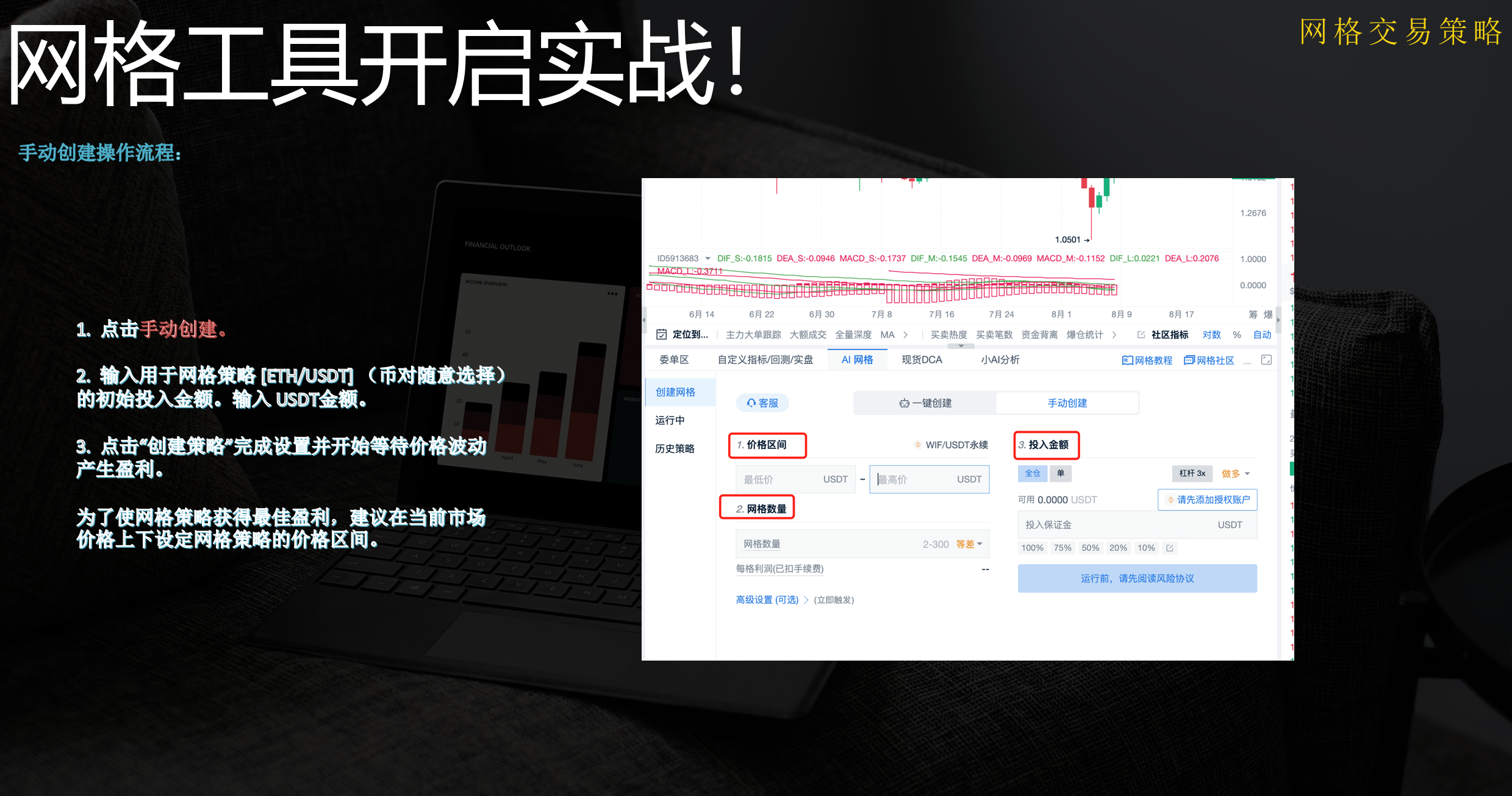
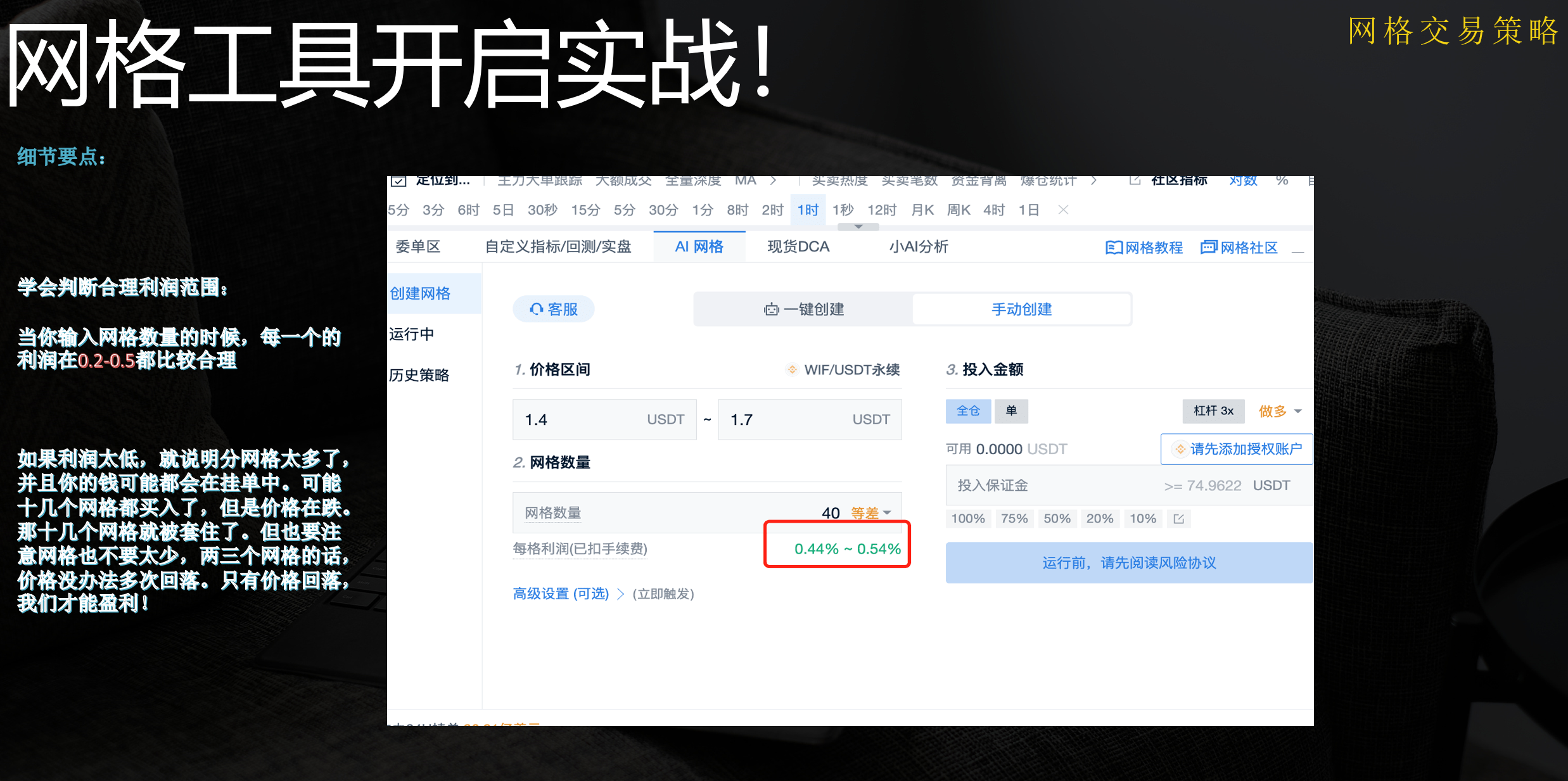
There is no absolute standard answer for parameter settings, but there are some experiences I can share. The core point is to look at the profit per grid, generally keeping it between 0.2%-0.5% is reasonable, as this range ensures sufficient trading frequency while covering transaction costs. If the profit per grid is too low, it indicates that your grids are too many, making it impossible to earn money and potentially resulting in losses due to transaction fees; if the profit is too high, it suggests that the grids are too sparse, making it hard to trigger trades and very low capital utilization. You can observe the profits per grid and estimated annualized returns calculated by the system in real-time when setting up, adjusting to a suitable figure gradually.
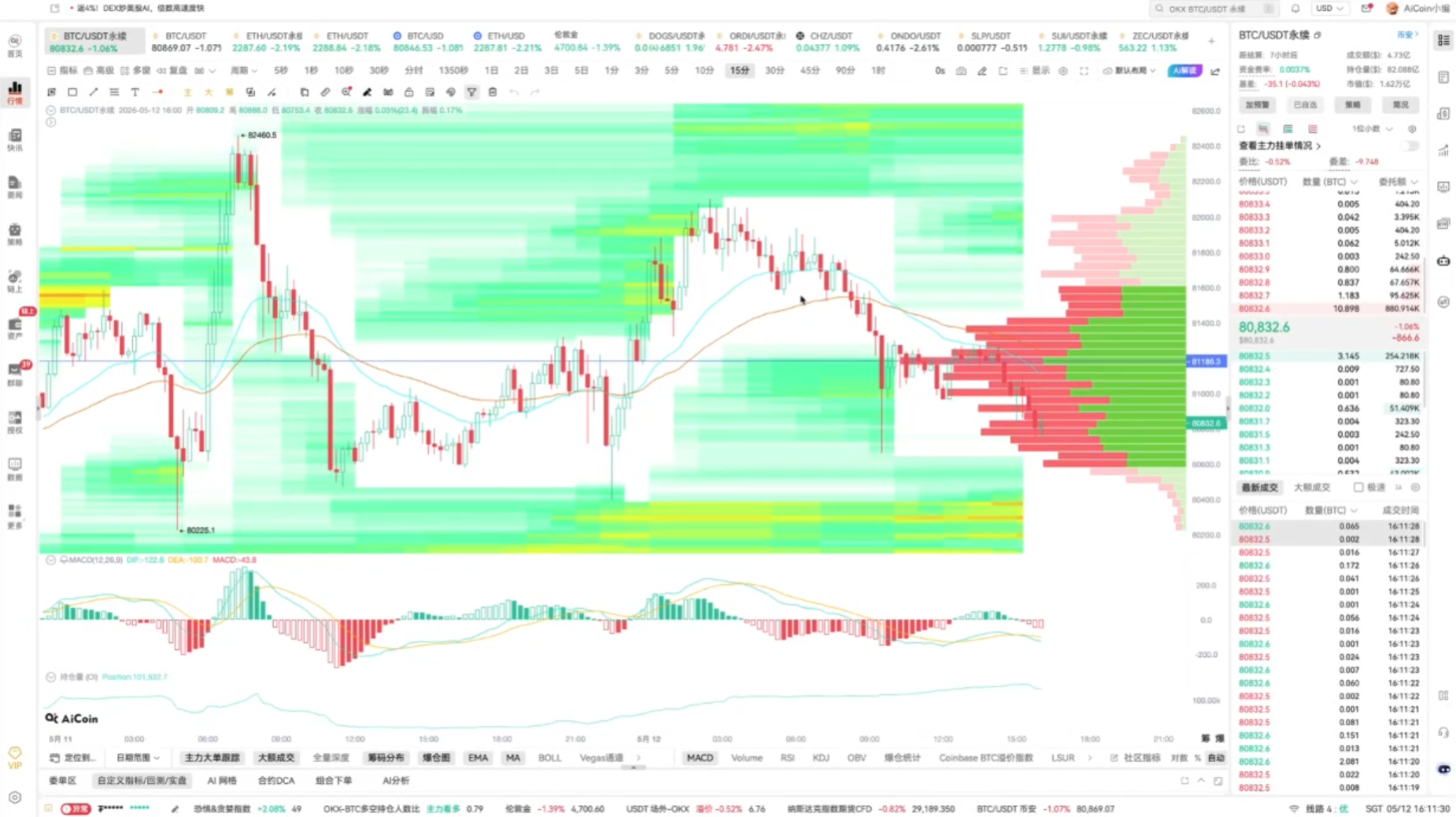
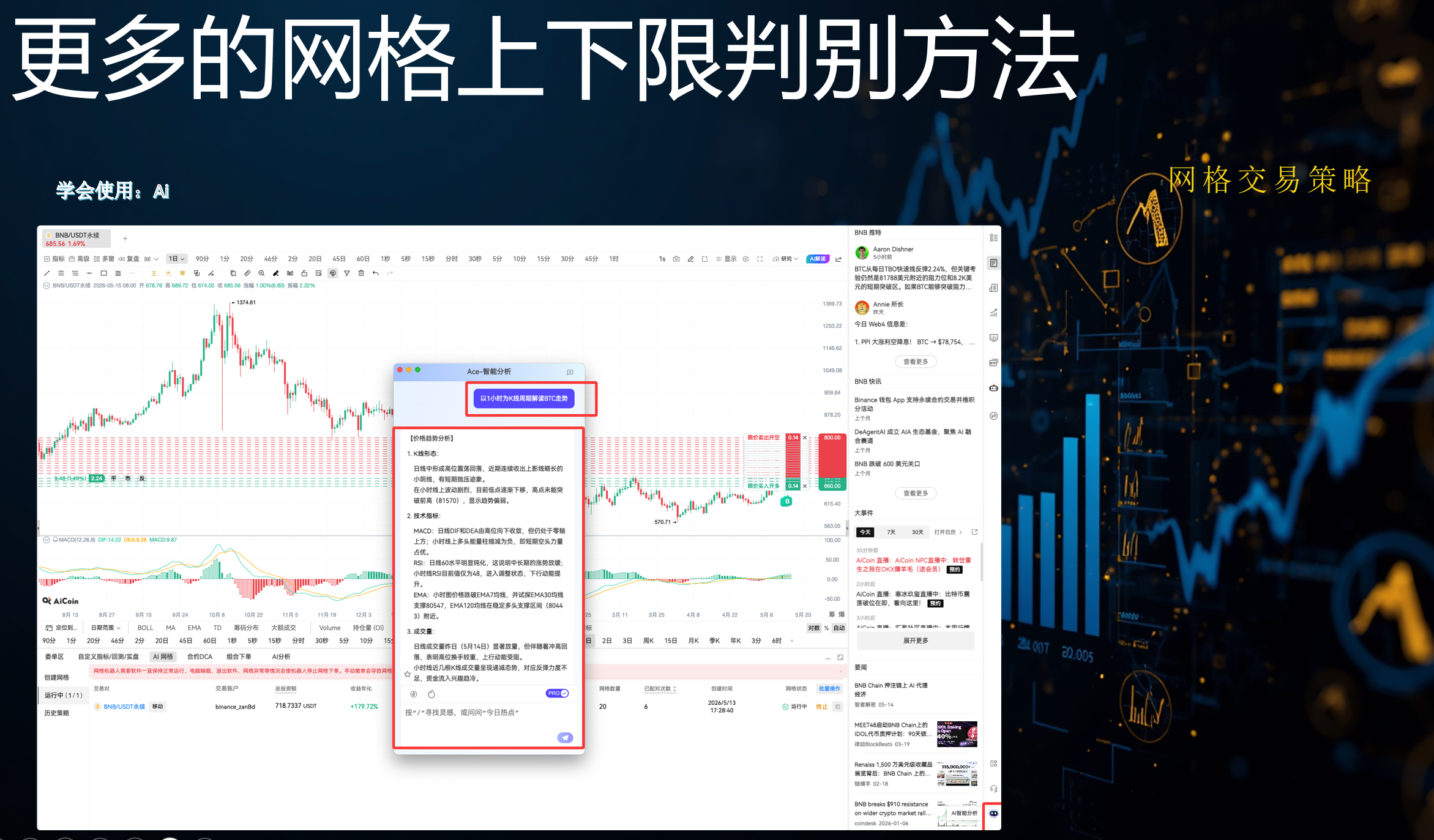
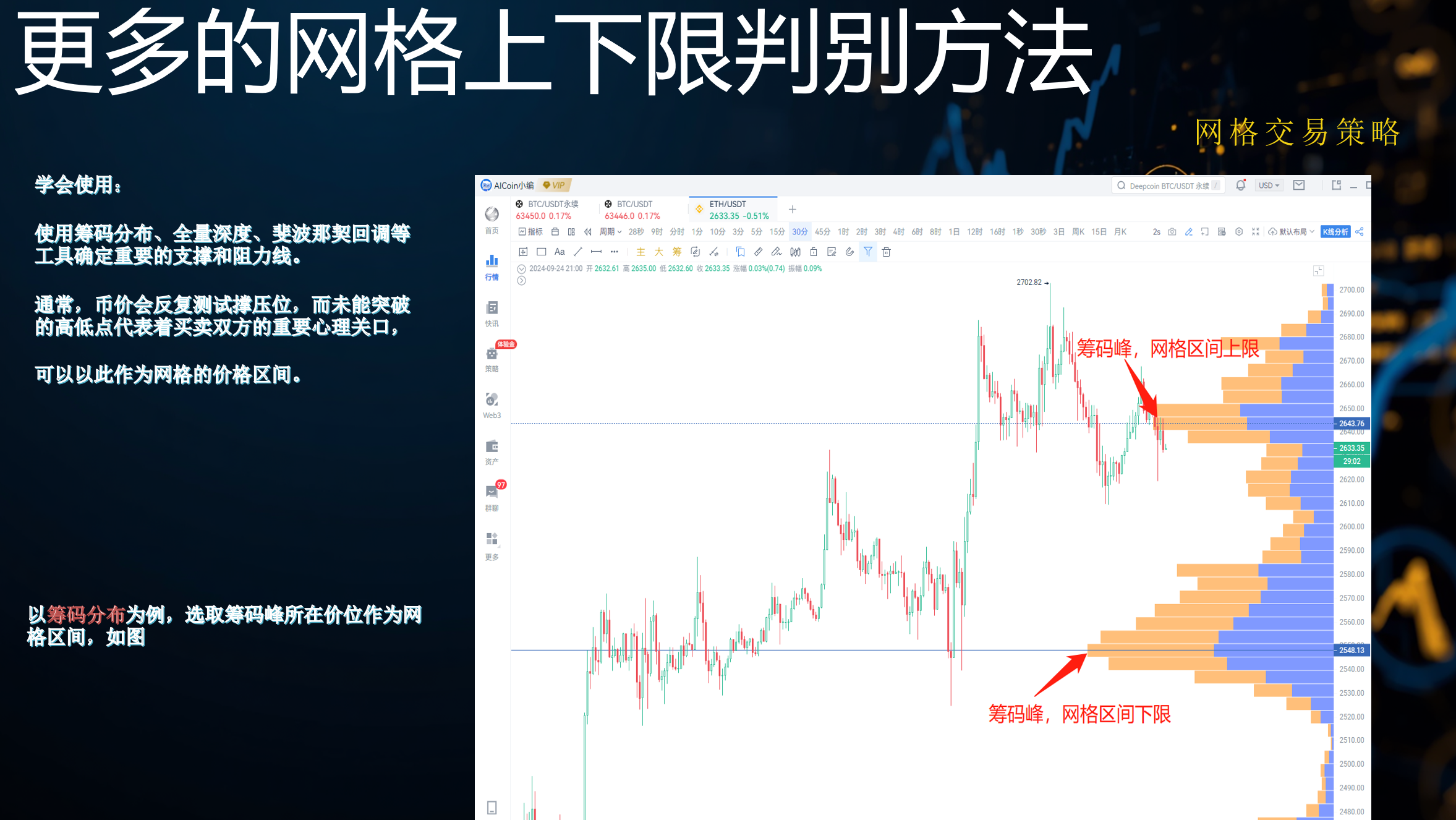
Next is the most concerning topic: how can you select a suitable price range? This is the soul of grid trading; if the range is set correctly, the returns can be assured. I will share some very practical methods. The first is to use the platform's AI Smart Analysis; it interprets the recent K-line trends, provides critical support and resistance levels, and gives high-selling low-buying advice, which you can directly refer to for setting the upper and lower limits. The second is to look at the Bollinger Bands; the upper and lower bands naturally signify a volatile range. When the Bollinger Bands contract and the bands narrow, it indicates that the market has entered a stable volatility period. At this time, using the upper and lower bands as the grid's range will have a high accuracy rate. The third is to review chip distribution, a feature for Pro members; the regions between the chip peaks are dense transaction areas and the zones where price volatility is most likely to occur. Consider using the high and low points of chip peaks as the upper and lower limits of the grid, which is highly valuable. Finally, observe the K-line patterns; if there is a clear rectangular consolidation pattern, it indicates that the market is likely to continue to fluctuate within this rectangular range; therefore, opening a grid between the upper and lower edges of the rectangle is the best opportunity.


Finally, I want to emphasize that grid trading is not万能 (all-powerful). It is most suitable for high volatility markets without obvious one-directional trends. It performs perfectly in volatile markets, achieving stable compound growth through repeated buying low and selling high. However, if faced with extreme one-sided surges or drops, such as a market skyrocketing without looking back, or plummeting continuously, grid trading may result in early sell-offs and missed opportunities or continually buying without being able to exit. At this time, you must remember to pause the grid promptly or adjust the parameters and wait for the market to return to volatility. Additionally, any investment carries risks, so be sure to manage your funds well, control your positions, regularly review and adjust your grid strategy, and do not set it up and neglect it.
As long as you master these methods, you can turn grid trading into your cash machine in volatile markets and stop being led by market trends, earning money steadily from the fluctuations.
This article only represents the author's personal views and does not represent the stance and opinions of this platform. This article is for information sharing only and does not constitute investment advice for any person.
免责声明:本文章仅代表作者个人观点,不代表本平台的立场和观点。本文章仅供信息分享,不构成对任何人的任何投资建议。用户与作者之间的任何争议,与本平台无关。如网页中刊载的文章或图片涉及侵权,请提供相关的权利证明和身份证明发送邮件到support@aicoin.com,本平台相关工作人员将会进行核查。