This lawsuit appears to be a private feud between Musk and Altman, but in essence, it is a legal issue: when OpenAI accepted donations from Musk, did it create a "charitable trust obligation" that must be obeyed?
Written by: Boyang
Edited by: Xu Qingyang
On May 14, U.S. time, the case of Musk vs. OpenAI, Sam Altman, Greg Brockman, and Microsoft entered closing arguments. The jury is expected to begin deliberations on May 18.
This lawsuit appears to be a private feud between Musk and Altman, but in essence, it is a legal issue: when OpenAI accepted donations from Musk, did it create a "charitable trust obligation" that must be obeyed? If so, did OpenAI's later commercialization, Microsoft's investment, and the executives' benefits violate this obligation?
01 Three Charges to Determine Outcome
Before the trial, Musk had already withdrawn charges of fraud and presumed fraud. Now, what the jury will really look at mainly involves three aspects:
- First, did OpenAI, Altman, and Brockman violate the charitable trust? Musk must prove that the money he donated to OpenAI was not an ordinary donation, but was designated for a specific purpose: to develop AI for the benefit, safety, and openness for all humanity, rather than for the profit of any individual or business entity.
- Second, did the OpenAI executives gain unjust enrichment? That is, did Altman, Brockman, and others use the technology, organization, and reputation formed by Musk's early donations to later obtain substantial economic benefits through a for-profit structure?
- Third, did Microsoft assist and instigate OpenAI to violate the charitable trust? Musk's side must prove that Microsoft knew OpenAI was constrained by its original nonprofit mission, yet still encouraged or helped its commercialization and profited from it.
Is There a "Charitable Trust"?
This is the crux of the entire case. If the core principle does not hold, the subsequent charges cannot be discussed.
The position of Musk's side is that, although there is no formal contract, there are enough public commitments, emails, founding documents, and witness testimonies to prove that when OpenAI accepted donations, it formed a specific charitable purpose.
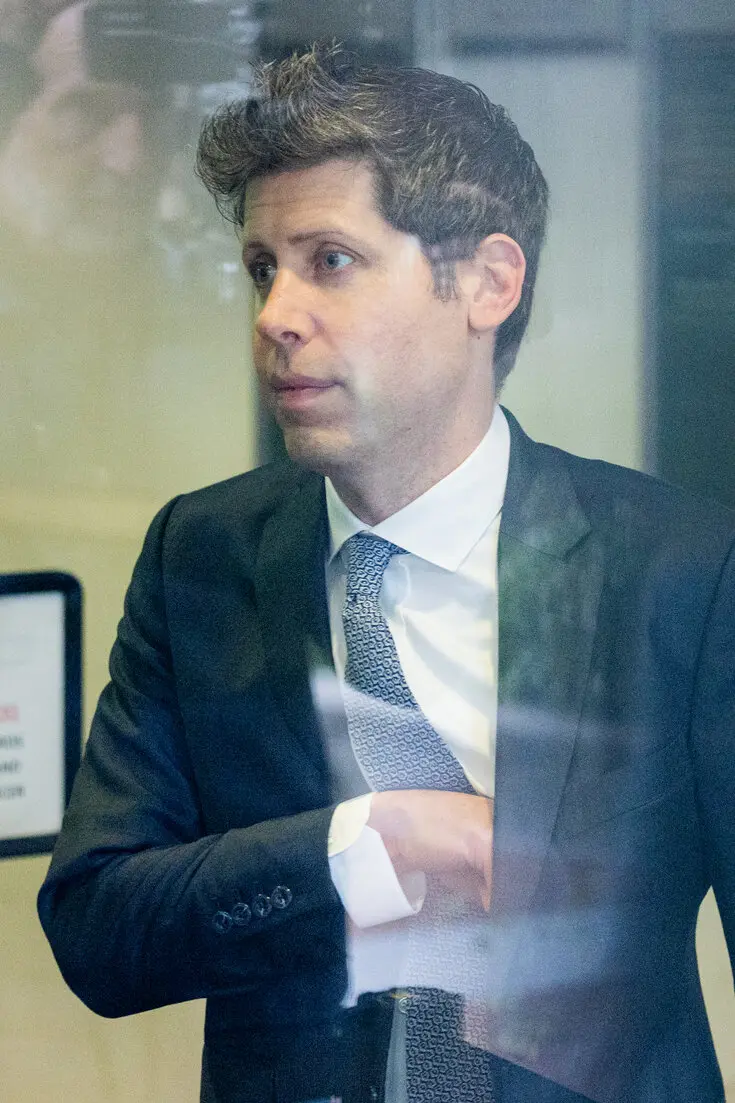
OpenAI CEO Altman
Musk's chief attorney, Steven Morolo, displayed a 2015 blog post to the jury during closing arguments, stating that Musk and Altman "worked closely" on this announcement of OpenAI as a nonprofit organization, "there was no disagreement on OpenAI's core mission."
They emphasized that when OpenAI was founded in 2015, it publicly declared itself a "non-profit institution," aiming to benefit all of humanity through AI rather than profiting any individual or company. Musk donated approximately $38 million based on this premise.
Musk himself previously testified that he could accept OpenAI establishing for-profit subsidiaries, but only on the condition that these for-profit entities must serve the nonprofit mission, rather than control or drain the nonprofit organization. His long-time assistant, Jared Birchall, testified that he was responsible for sending about 60 donations to OpenAI, totaling around $38 million, with decisions coming from Musk.
OpenAI's counterattack was direct and straightforward: there were no clear written restrictions.
OpenAI's lawyers repeatedly asked witnesses whether there were any specific conditions when Musk made his donations. OpenAI claimed that Birchall, Sam Teller, Shivon Zilis, and others closely connected to Musk could not state a clear, enforceable donation restriction. Attorney Sarah Eddy informed the jury during closing arguments: "In this case, besides Musk, no one testified that Altman, Brockman, or OpenAI made any commitments or guarantees to Musk."
OpenAI also emphasized that Musk was not opposed to commercialization itself. He had considered allowing OpenAI to establish for-profit entities controlled by himself and had even advocated for OpenAI to merge with Tesla. In 2017, Musk submitted a list of terms for a for-profit company, granting himself over 50% of the shares, while Altman and Brockman each held only 7.5%.
Eddy's counterpoints directly hit the core: "Musk never cared about the nonprofit structure. He cares about winning."
Did They Deviate from Their Mission?
Even if it could be proven that a charitable trust exists, Musk still needs to prove that OpenAI's later actions deviated from it.
Musk's side views Microsoft's $10 billion investment in 2023 as a key point. Morolo pointed out in his arguments that this deal allowed the potential return cap for investors to increase by 20% annually, and this "extraordinary" deal completely violated OpenAI's charitable mission, indicating that it "abandoned safety priorities."
He also cited an internal email from Microsoft CEO Satya Nadella emphasizing "not wanting to be IBM" to argue that Microsoft was pushing OpenAI to sacrifice its nonprofit mission in favor of accelerating commercialization.
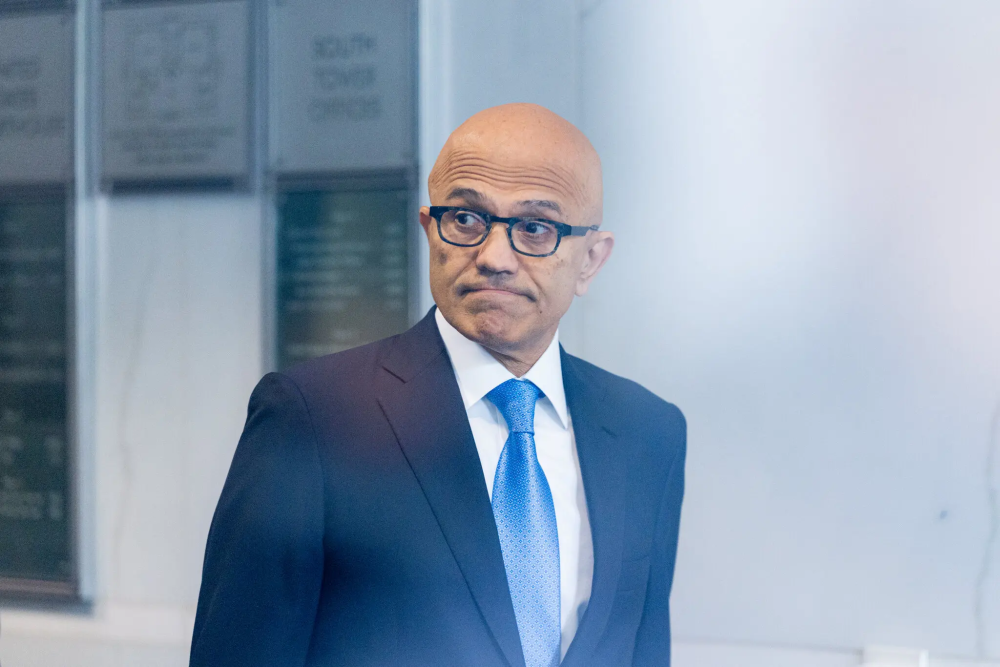
Microsoft CEO Satya Nadella
To prove that OpenAI had deviated from its safety mission, Musk's side summoned former employee Rosie Campbell. She was responsible for AI safety-related work at OpenAI and testified that the company increasingly shifted toward commercial products rather than research and safety; safety teams such as the AGI Readiness Team and Superalignment Team were also dissolved or weakened. She believed that without such safety work, it would be hard to achieve OpenAI's original mission.
Testimonies from former board members Natasha McCauley and Helen Toner were also used to demonstrate that the nonprofit board lost effective oversight. McCauley stated that there were several concerns about Altman, including resistance to oversight, lying, reflecting issues, and the crises created by Altman's behavior. Toner stated that Altman's removal was not a singular incident but related to integrity, transparency, and resistance to board oversight.
OpenAI provided a number as a response: $200 billion. Attorney William Savett pointed out that OpenAI's nonprofit entity still exists and controls the for-profit sector, with assets valued at $200 billion. The attorneys general of California and Delaware have approved this structure. "Has anyone ever heard of a bank robbery where the robber enters the bank and deposits $200 billion?" he retorted.
Savett also added a legal detail: all funds donated by Musk were spent before 2020, and nothing remained afterward. This means that even if a so-called charitable trust existed, there would be no Musk funds left to be "misused" after 2020.
OpenAI also claimed that ChatGPT being freely available to the public is itself a reflection of "broadly sharing AI benefits." Commercialization is not a betrayal of the mission but a necessary financing tool to achieve the mission.
Did Executives Gain Unjust Enrichment?
This is the part most likely to resonate with the jury because the figures are astonishing.
Morolo specifically pointed out in closing arguments that Brockman "never invested a penny" in OpenAI, yet his stake in the company is now worth approximately $30 billion. He showed the jury a passage from Brockman's personal diary, which stated, "It would be nice to make billions of dollars." Another entry read, "Financially, what can get me to a billion?" Morolo questioned the jury: "What could the problem be? It's a big problem."
Altman's situation is more complex. He emphasized that he does not have direct equity in OpenAI, but Musk's side pointed out that he has interests in companies or funds that do business with OpenAI. Morolo highlighted in court that Altman indirectly holds a small stake in OpenAI through the Silicon Valley startup accelerator Y Combinator and has invested in multiple companies that do business with OpenAI. Musk's team used this to argue that even without direct holdings, Altman might benefit through affiliated companies and ecosystem investments.
OpenAI's response was: Musk's money was spent before 2020, and the equity distribution occurred after he left OpenAI, so it cannot be said that executives "made money off Musk's funds."
Savett also argued that most startups do not succeed, and taking equity instead of high salaries is risky. "Looking back today, people would say, wow, these individuals made hundreds of billions," Savett said, "but back in 2019, no one knew how far OpenAI could go, and no one could predict what happened later." OpenAI's logic is that giving equity incentives to researchers and executives is to attract talent, raise computing power, and advance AGI research—not to illegally occupy charitable assets.
02 Beyond the Main Line, Is Microsoft a Co-conspirator?
Musk's side listed Microsoft as a co-defendant, accusing it of "aiding and abetting" OpenAI in deviating from its mission.
Morolo cited Nadella's internal email about not wanting to become IBM to argue that Microsoft was worried about falling behind in the AI era and hoped to maintain technological leadership by leveraging OpenAI, indicating that Microsoft was not a passive investor but an important force pushing OpenAI's commercialization. Morolo also listed multiple ways OpenAI violated the charitable trust, including "failing to open-source" its foundational AI technology, although he did not mention that Musk's own xAI also has not open-sourced most of its AI research.
In response, Microsoft’s chief attorney, Russell Cohen, stated at the start of the closing arguments that he and other Microsoft lawyers spoke little during the trial because Microsoft was not truly involved in the key issues of the case.
Cohen argued that Microsoft was completely unaware of any potential restrictions on Musk's donations; these terms had never appeared in pre-investment due diligence. He pointed out that investments made by Microsoft between 2019 and 2023 were approved by OpenAI's nonprofit board, which included Zilis, who was working for Musk at that time.
Zilis is a special figure in the case—she is not only a former board member of OpenAI but also the mother of Musk’s four children. During the trial, an OpenAI executive accused Zilis of "leaking" information to Musk while serving on the board, but both Zilis and Musk's team insisted she acted independently.
Cohen's central message was a rhetorical question: why has Musk never approached Microsoft directly? He quoted Nadella's testimony saying, "We both have each other's phone numbers," implying that Musk had ample opportunity to express concerns but chose to remain silent.
03 Musk's Weakness: Statute of Limitations
This may be more critical than "who is the bigger liar."
Musk's side filed the case on August 5, 2024. OpenAI claimed that Musk had known or should have known about OpenAI’s direction towards commercialization prior to August 5, 2021, so the charitable trust-related claims have expired. For unjust enrichment, the key date is August 5, 2022. For the accusation against Microsoft of assisting in violating the charitable trust, as Microsoft was added as a defendant later, the critical timeline shifts accordingly.
One of OpenAI's most important pieces of evidence is Musk's public statement in 2020 that "OpenAI is basically controlled by Microsoft." Attorney Eddy also targeted Musk's assertion—he claimed to have not read a four-page term sheet from 2018 regarding OpenAI seeking external investment, which was right in his inbox.
Eddy expressed disbelief: "One of the shrewdest businessmen in history wouldn't bury his head in the sand. That assertion is utterly absurd." Microsoft's Cohen similarly quoted Musk's tweet: "Mr. Musk had to sue within three years, but he didn't."
Musk's attorney Morolo provided a specific timeframe: October 20, 2022. He showed the jury an email Musk sent to Altman that day, which included a news link about Microsoft's further investment of $10 billion into OpenAI. In the message, Musk referred to Microsoft's deal as "a bait-and-switch." Morolo stated that it was at that moment that Musk truly realized the charitable trust was being violated, which is completely within the three-year time limit.
The judge had previously indicated that if the jury believes Musk's lawsuit is time-barred, he is likely to adopt this and rule in favor of the defendants. Thus, the issue of statute of limitations is OpenAI's toughest line of defense.
04 Not Just the Facts, but Competing Narratives
Apart from the core facts, both teams are actually building narratives they hope will influence the jury's perception.
Musk's strategy is to frame the case as "the charity was stolen." They are not only playing the legal card but also the credibility card.
Morolo spent a significant amount of time attacking Altman's credibility in closing arguments. He used a metaphor for the jury: "Imagine you're hiking and come across a dangerous bridge. A woman next to you assures you, 'Don't be afraid, Altman personally said this bridge is safe.' Would you dare to put your life in his hands and walk across? I think not many people would."
He then emphasized: "Altman's credibility is the core issue of this case. If you don't believe him, they cannot win."
Morolo told the jury that five witnesses, including Musk, former board members, and former chief scientist Ilya Sutskever, had all referred to Altman as a "liar." The courtroom screen even displayed a photo of Altman that made him look like a suspect mugshot. Morolo also pointed a finger at Brockman, stating he was evasive in his testimony, and he had to remind him multiple times to "answer the question directly."
OpenAI's side framed the case as "revenge after losing control." Savett bluntly stated that Musk suffers from "selective amnesia," repeatedly saying "I don't remember" on the witness stand, with estimates ranging from 150 to 200 times. "One of the shrewdest businessmen in history" could not possibly forget so many key details.
Savett said: "When Mr. Musk left, he believed OpenAI was dead in the water. We survived thanks to funds raised from elsewhere. It turns out that in the field of artificial intelligence, what he could do was go to court."
On the day of closing arguments, Musk did not appear in court; he was accompanying former President Trump on a visit to China. Altman and Brockman were present throughout. Savett highlighted this contrast at the end: "Altman and Brockman are both here, but Musk is not. This indicates who is credible."
05 Who Is More Likely to Prevail?
Current mainstream media judgment is roughly that Musk's moral narrative is sharper, while OpenAI's legal defense is stronger.
Associated Press believes that the statute of limitations could directly determine the outcome. If the jury finds that Musk filed the lawsuit too late, the judge is likely to rule in favor of the defendants.
TechCrunch reminds the public not to be distracted by the dramatic conflicts in court; what the jury truly needs to determine is not "who is worse," but three strictly defined legal issues: does the charitable trust exist, did executives gain unjust enrichment, and did Microsoft assist in violating the trust.
The Guardian pointed out each side’s respective weaknesses: Musk's biggest challenge is producing a written contract, while OpenAI must convince the jury that Musk was well aware of the commercialization plans and he himself had also considered ways to control OpenAI at the time.
Reuters broadened the perspective to the industrial level, arguing that regardless of who wins, both Musk and Altman's reputations have been thoroughly exhausted in this trial. However, if Musk wins, OpenAI's IPO prospects, partnership model with Microsoft, and the entire corporate governance structure would face a reshaping.
Axios's summary was concise and biting: this trial precisely proves that in matters of AI safety and public interest, no party can claim a clean moral high ground.
What may ultimately determine the outcome of this lawsuit is not whether Altman is a "liar," but whether Musk can overcome the statute of limitations and evidential thresholds.
However, outside of the lawsuit, both individuals have already fallen into the mire of personal reputation.
Special contributor Jin Lu also contributed to this article.
免责声明:本文章仅代表作者个人观点,不代表本平台的立场和观点。本文章仅供信息分享,不构成对任何人的任何投资建议。用户与作者之间的任何争议,与本平台无关。如网页中刊载的文章或图片涉及侵权,请提供相关的权利证明和身份证明发送邮件到support@aicoin.com,本平台相关工作人员将会进行核查。


