Author: Lex
Translation: Deep Tide TechFlow
Deep Tide Introduction: The financial reports released last week by Coinbase and Robinhood both fell short of expectations, resulting in a market value evaporation of $12 billion. This exposes the fundamental problem of the exchange model: how to survive in a bear market when revenue heavily relies on transaction fees? In contrast, platforms like Revolut, which are centered around payments, derive only 15% of their revenue from trading and remain largely unaffected. This comparison reveals the underlying logic of competition among fintech platforms.
Cryptocurrency is deep in a bear market.
Bitcoin hovers around $80,000, down about 36% from its peak of $126,000 on October 12, 2025. Spot trading volume on centralized exchanges has fallen to its lowest level since September 2019, with a year-over-year decline of 44% in the first quarter, according to Coinbase data.
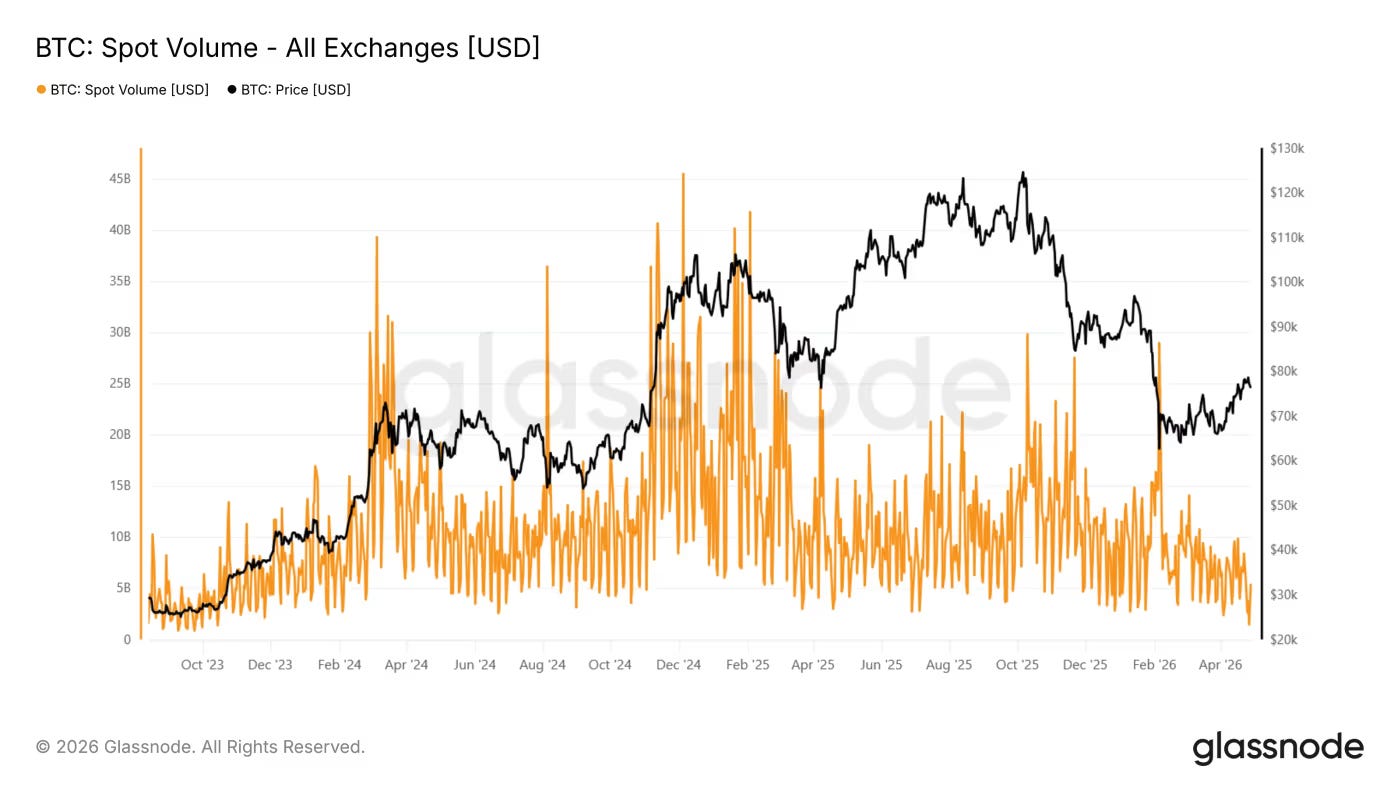
Some on-chain analysts believe that the recent bounce back from $60,000 may lack sustaining momentum. This is already the longest bear market rally over the past two cycles, but it appears to be more technical than fundamentally driven. The open interest in derivatives (perpetual contracts) has risen, but spot activity is low, indicating that the increase is driven more by short liquidations and speculative position closings rather than persistent buying pressure.
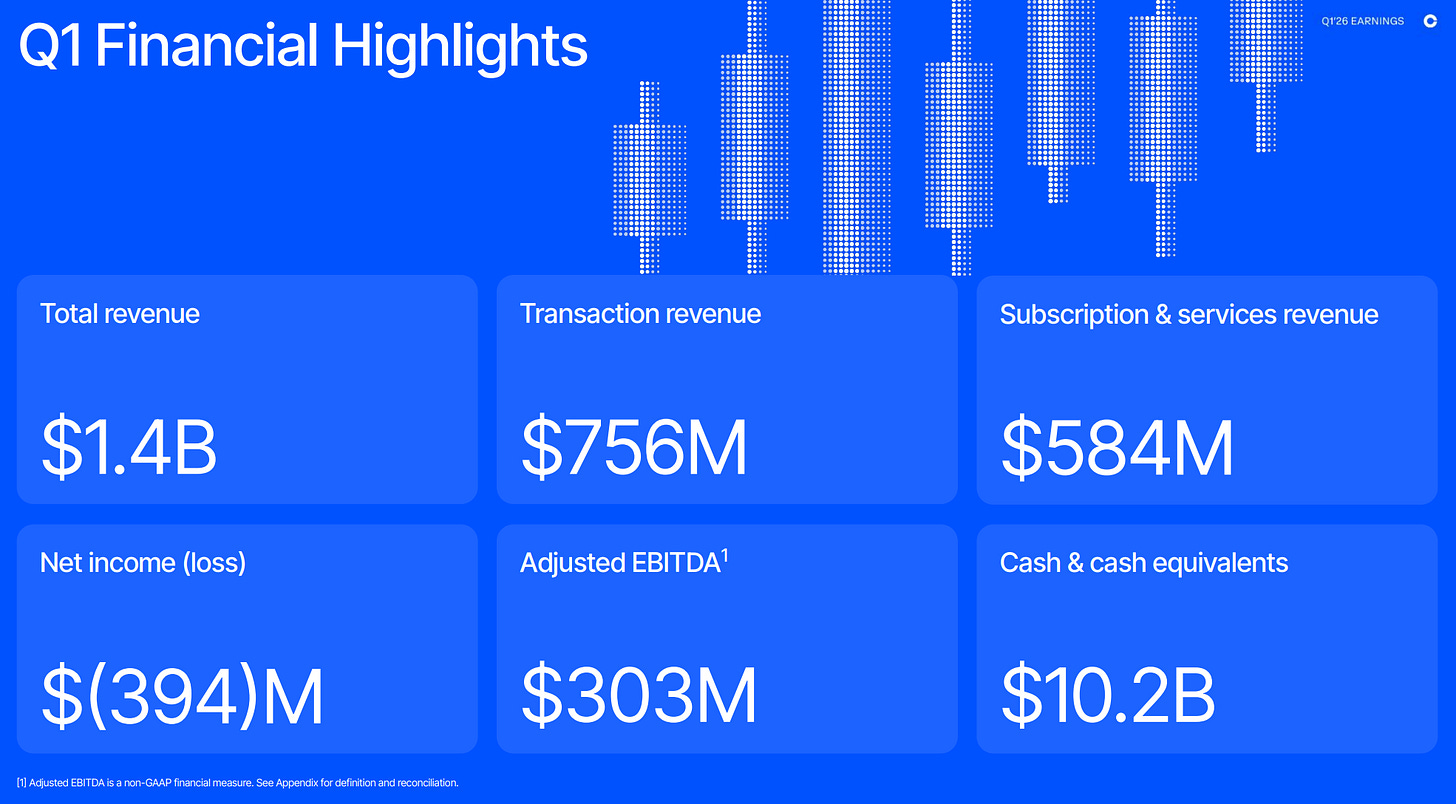
The decline in trading activity is eroding the revenue of trading platforms. Coinbase's revenue dropped 31% year-over-year to $1.41 billion, with a net loss of $394 million, compared to a profit of $66 million in the same period last year. Management also announced layoffs of 700 employees (about 14% of the total workforce) that week, citing both the cyclical nature of cryptocurrency and a cost reset for the "AI era."
The trading business is at the center of the decline.
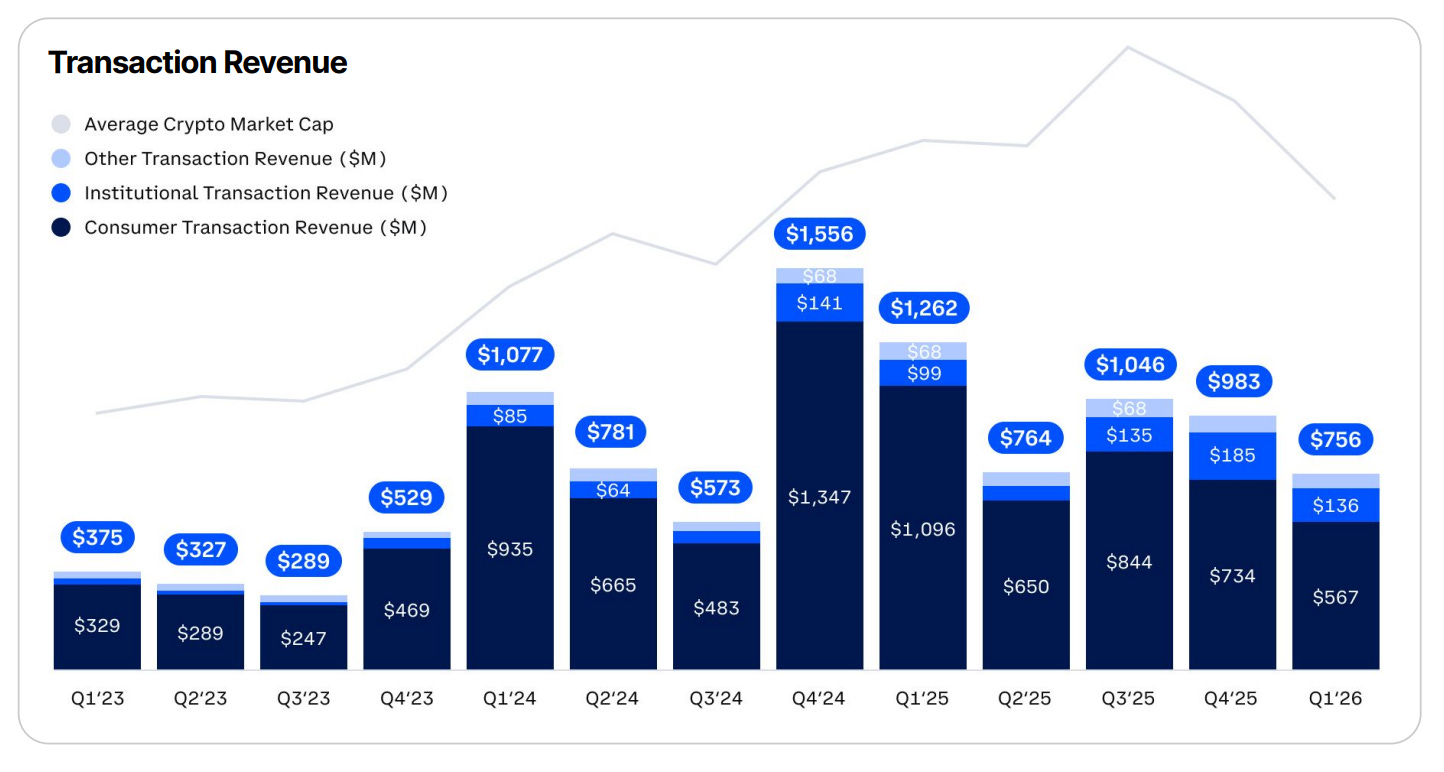
In the first quarter, trading revenue accounted for 56% of total revenue, down 40% year-over-year, with consumer trading revenue falling 48% to $567 million. Institutional trading revenue actually grew during this period, but this was almost entirely attributed to the $4.3 billion acquisition of Deribit completed in August 2025; organic institutional trading volume actually decreased by 48%.
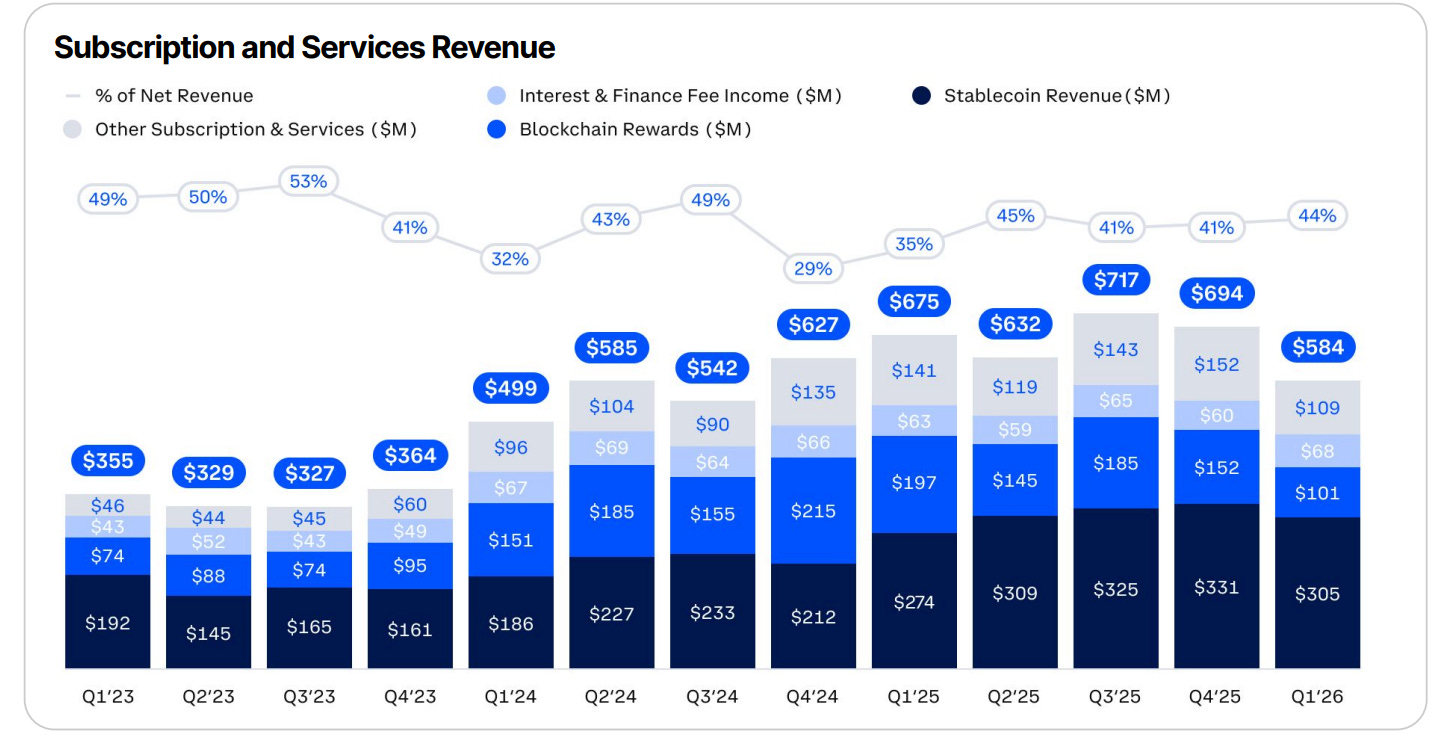
The remaining revenue comes from subscriptions and services, distributed across stablecoin revenue (interest earned from clients' USDC balances through the partnership between Coinbase and Circle), blockchain rewards, interest and financing fees, as well as other subscription products like Coinbase One.
This segment now accounts for 44% of total revenue, and management positions it as a "durable buffer" against trading volatility. However, this is somewhat misleading. Stablecoin revenue is the largest single item, accounting for 22% of net revenue, growing 11% year-over-year, but it is also highly correlated with trading volume. Customers move into USDC when they want to avoid volatility or rotate between assets, but they will reallocate back into volatile assets once the market turns. This dynamic partly explains why the proportion of subscriptions and services in total revenue appears quite stable over the past three years.
Meanwhile, Robinhood reported stronger data.
Revenue grew 15% year-over-year to $1.07 billion, with net profit of $350 million, but still fell short of analysts' revenue expectations. Like Coinbase, the shortfall was driven by cryptocurrency, with related trading revenue down 47% year-over-year to $134 million. Notably, this was the only major revenue item that declined year-over-year.
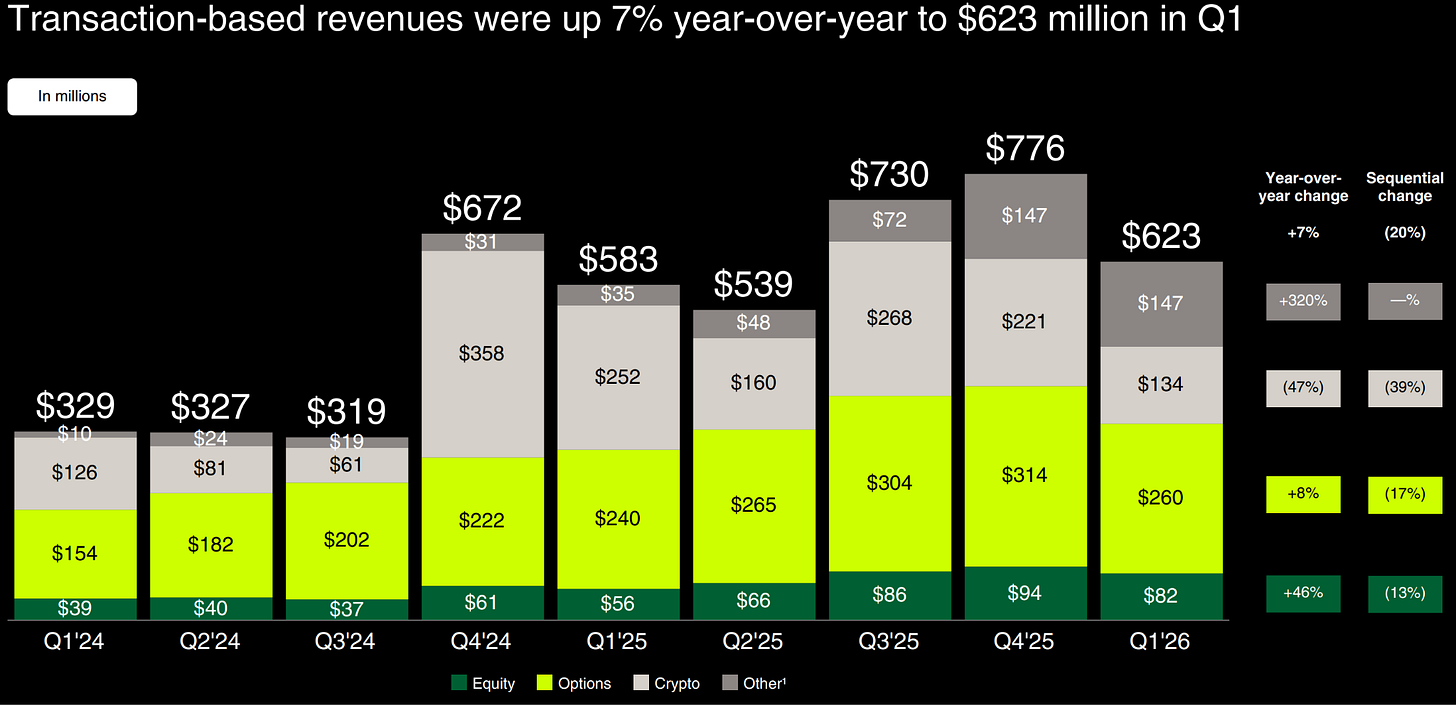
Trading still accounts for 58% of Robinhood's revenue, essentially unchanged from a year ago. However, due to the diversity of trading asset classes, the company performed better throughout the bear market. Total trading revenue grew 7% year-over-year to $623 million, driven by a 320% surge in revenue from the prediction markets in collaboration with Kalshi, a 46% increase in stock revenue, and an 8% rise in options revenue.
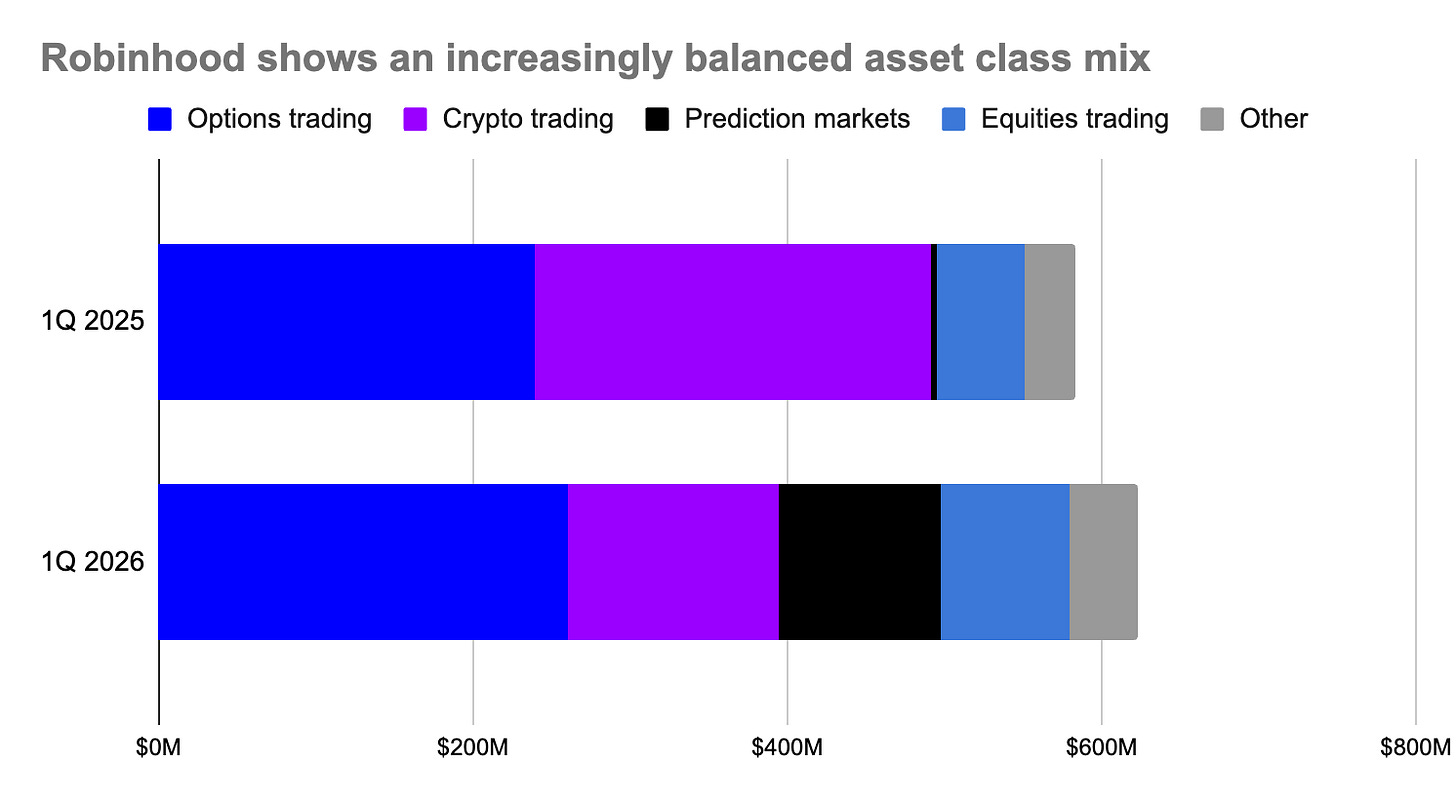
Prediction markets and derivatives like perpetual contracts showed greater resilience during the downturn. Kalshi raised $1 billion last week at a valuation of $22 billion, doubling its valuation in just six months, with annualized trading volume tripling to $178 billion.
Event-driven trading, such as predictions, typically focuses on sports, elections, and economic data, thus being less sensitive to the overall market. However, growth is also driven by institutions beginning to use them as hedging tools during market volatility. There is a favorable organic adoption trend that masks the cyclicality.
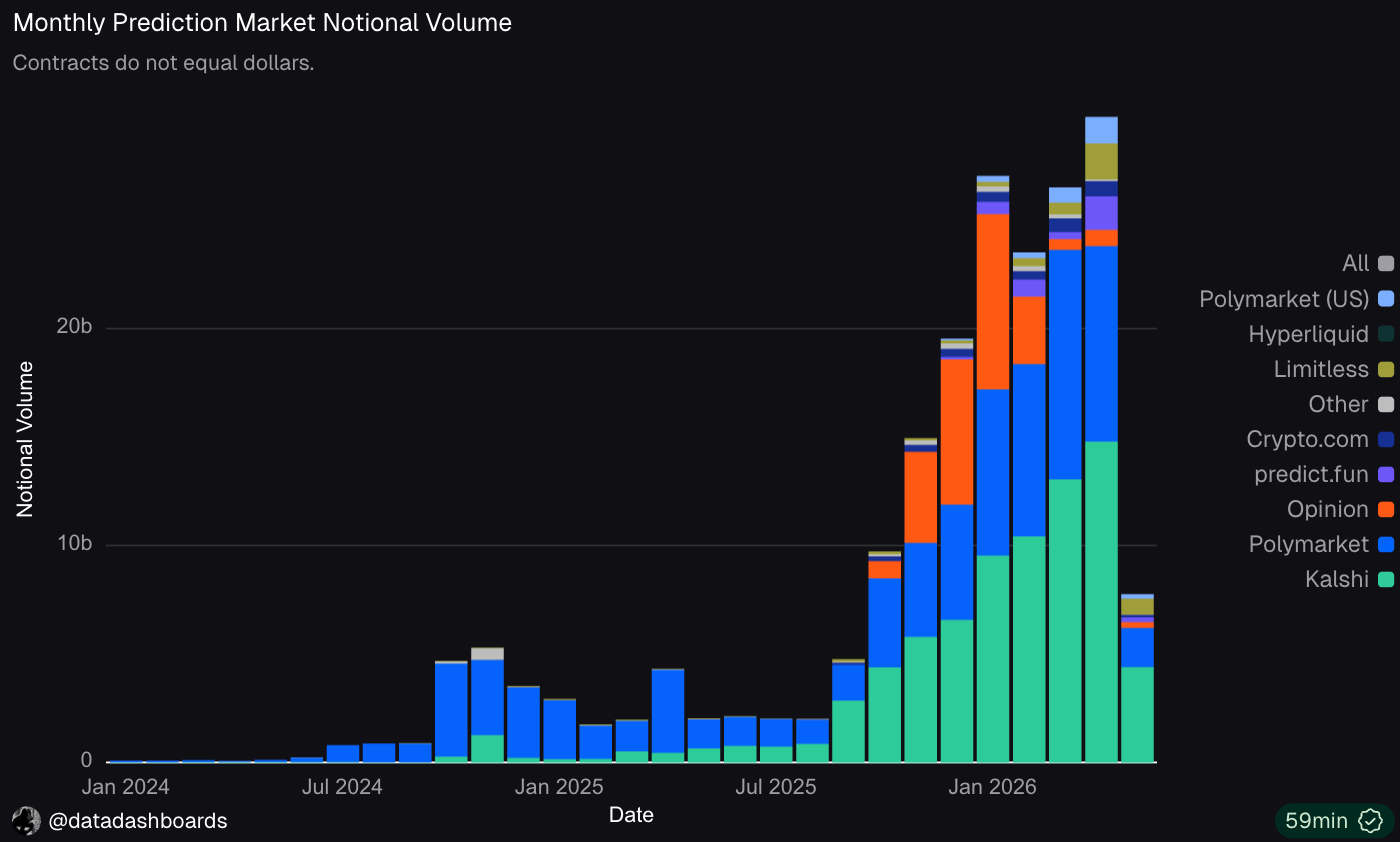
Perpetual contracts show a similar pattern. As of the end of April, the total value of leveraged positions traded by Hyperliquid traders (measured by "open interest") was $4.3 billion, having grown 9% over the past two months despite a general collapse in the spot market. This metric remains down from the peak in October but performs significantly better.
This is significant for trading platforms that have these features.
Prediction markets now account for 17% of Robinhood's total trading revenue!
Although it does not directly offer perpetual contracts, it provides similar margin trading on stocks and cryptocurrencies, earning interest from it. In the first quarter of 2026, margin interest revenue grew 75% year-over-year to $193 million, accounting for 18% of total revenue.
Coinbase is late to this shift. While it launched prediction markets and perpetual contracts for retail customers in January 2026, it has yet to have a substantial impact on its profit and loss statement. Therefore, the exchange has greater exposure to spot trading.

Financial platforms like Revolut, which are centered around payments and banking but have significant trading activity, are much less affected. Revenue grew significantly by 45% to $6.1 billion in 2025, evenly distributed among major revenue streams, each accounting for 13-22% of total revenue.
Card interchange fees and interest income are the two largest items, each around $1.3 billion. Cryptocurrency trading, along with stocks and CFDs, falls under the wealth segment, accounting for 15% of total revenue, just a small fraction of Robinhood's exposure, and a tiny part of Coinbase's.
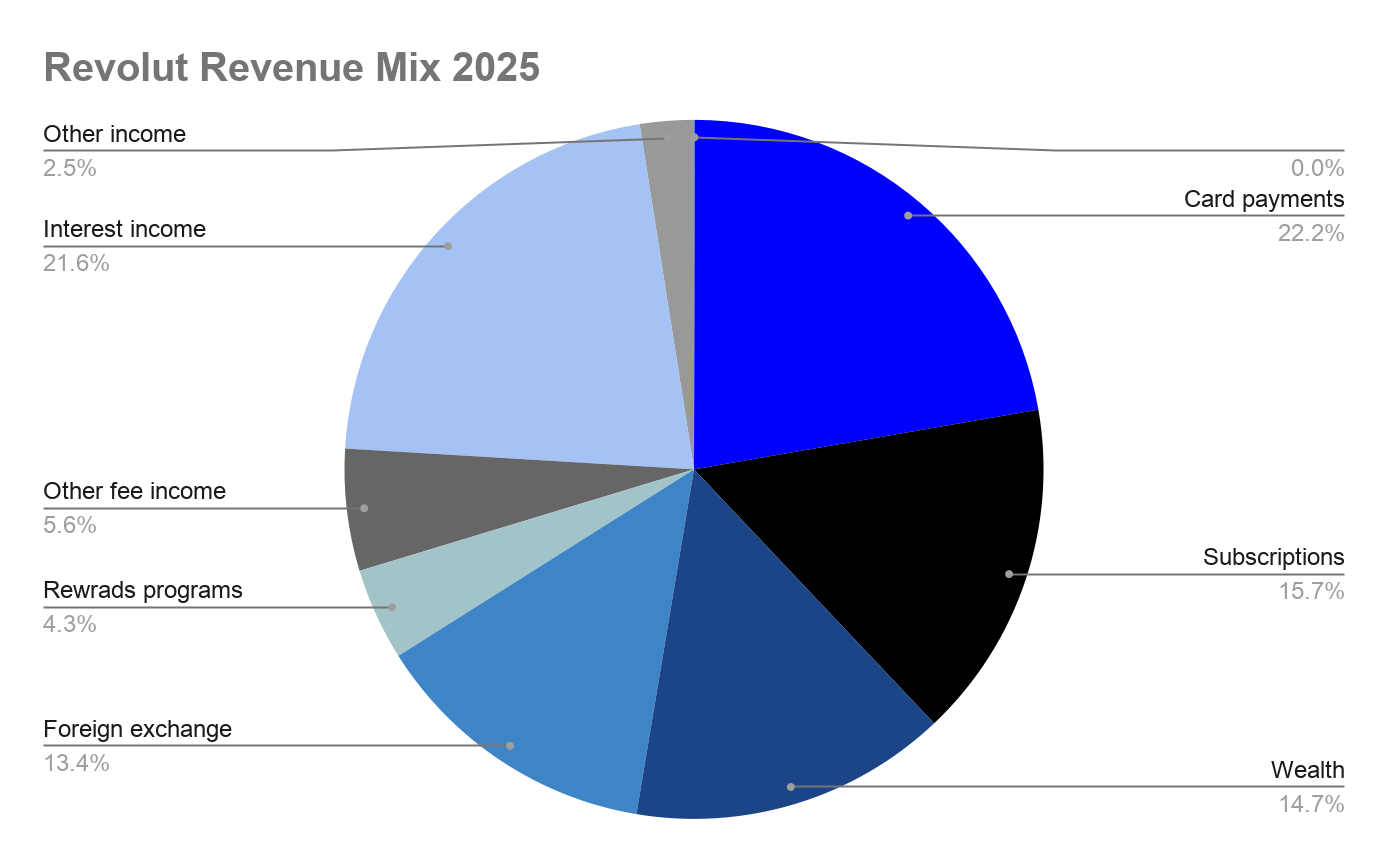
Notably, Revolut's interest income is similar to Coinbase's stablecoin income, with both monetizing idle customer balances. By the end of the year, Revolut placed 90% of its $68 billion in customer balances in cash and treasury bill investments. However, the behaviors driving these balances are fundamentally different. Revolut's deposits grow along with major banking relationships and direct deposits (up 45% year-over-year), while Coinbase's USDC balances grow as trading willingness decreases. If the cryptocurrency market turns more bullish, Coinbase is more likely to see its balances decrease.
The challenge for trading-first platforms like Coinbase and Robinhood is whether they can meaningfully expand into adjacent financial products while being tightly linked to market cycles. Robinhood has already shown that the diversity of tradable asset classes, especially prediction markets and derivatives, can serve as a hedge.
Coinbase is moving in a similar direction. The risk is that a prolonged bear market may hinder their growth potential, while fintech competitors like Revolut, Nubank, and Cash App increase their share of customer deposits.
免责声明:本文章仅代表作者个人观点,不代表本平台的立场和观点。本文章仅供信息分享,不构成对任何人的任何投资建议。用户与作者之间的任何争议,与本平台无关。如网页中刊载的文章或图片涉及侵权,请提供相关的权利证明和身份证明发送邮件到support@aicoin.com,本平台相关工作人员将会进行核查。


