Original | Odaily Planet Daily (@OdailyChina)
Author | Asher (@Asher_0210)
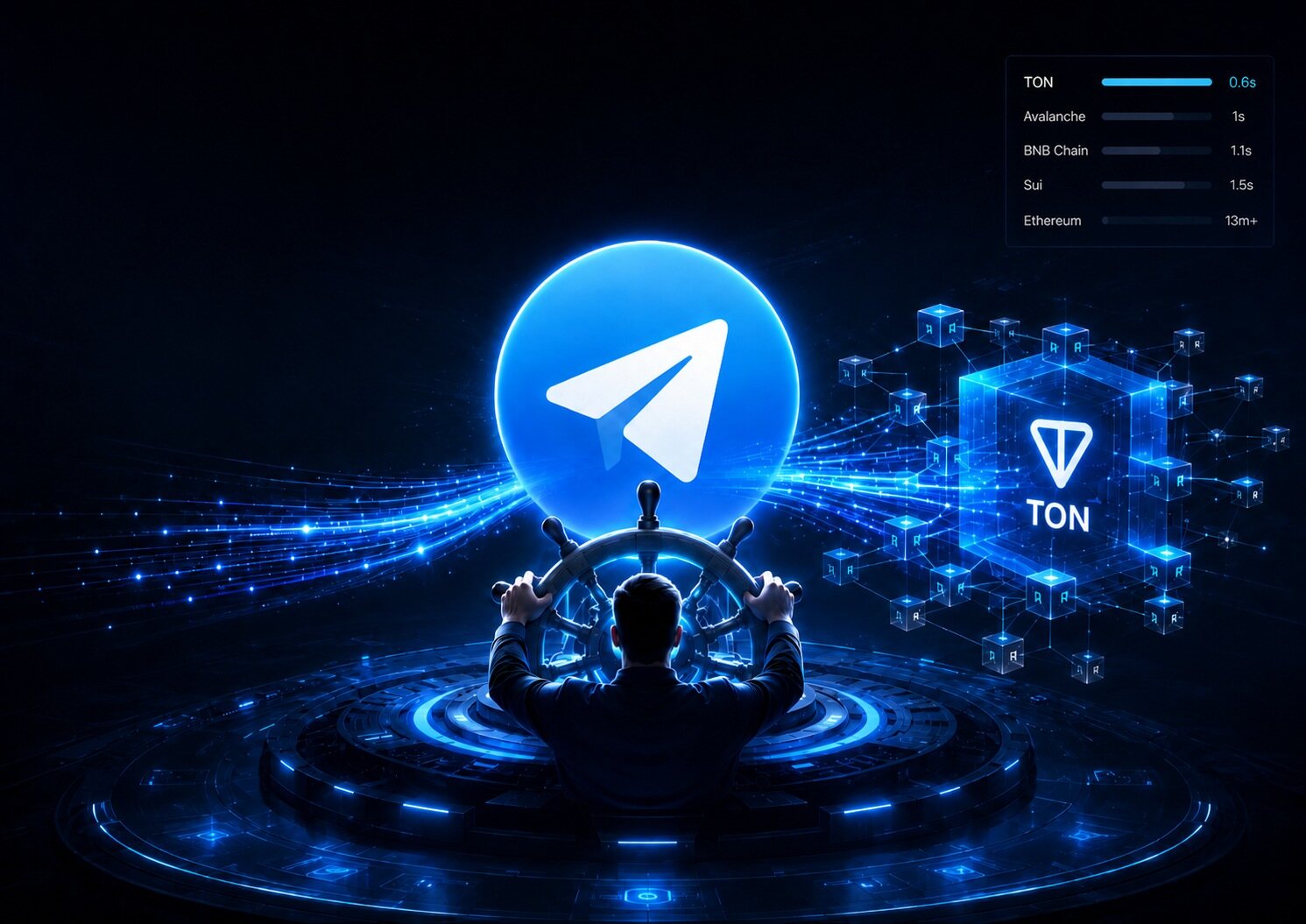
On May 4, Telegram founder Pavel Durov stated on the X platform that the transaction fees on the TON network have been reduced by six times, nearly to zero. More critically, he stated that Telegram will replace the TON Foundation and become the new core driving force of the TON network, becoming the largest validator of the network. The focus of TON will shift towards technological advantages, including the new ton.org, new developer tools, and performance upgrades, with a time window of the next 2 to 3 weeks.
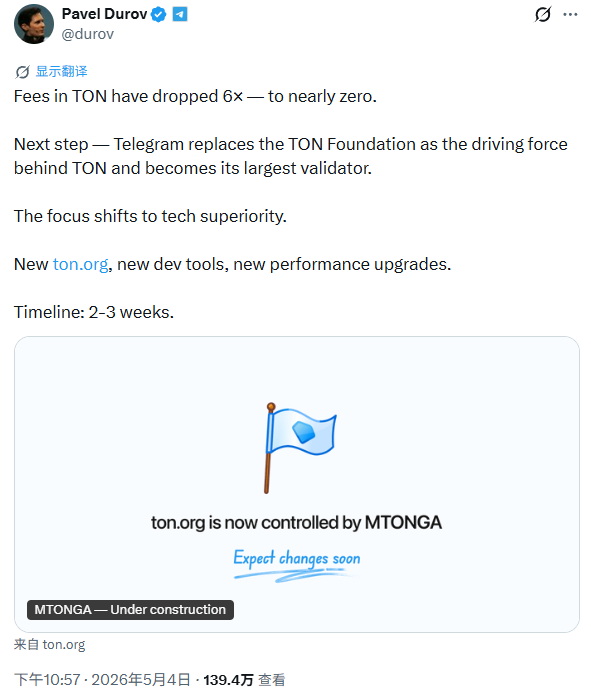
Telegram Founder: TON Fees Reduced by Six Times, Telegram Will Become the Largest Validator
In the past, the relationship between TON and Telegram was more like a strong binding but weak dominance. Telegram provided the entry point, while the foundation and community were responsible for promotion, always separated by a layer of distance. But this time, Telegram is not just continuing to bring users to TON; it is starting to enter the deeper roles of validators, technical routes, and development tools. TON is no longer just a chain next to the Telegram ecosystem; it is being reintegrated into Telegram's product system.
TON Does Not Lack Entry Points, But Needs to Turn Entry Points into Usage Scenarios
Past market discussions about TON often revolved around Telegram's user scale. However, for a public chain, having an entry point does not equate to having an ecosystem, and having user access does not equate to long-term use. What makes TON special is that it is inherently tied to a high-frequency social platform, where Mini Apps, wallets, channels, bots, games, and payments already exist within Telegram. This allows TON not to have to search for users from scratch like most Layer1 chains, but if these scenarios cannot be transformed into sustained on-chain interactions, Telegram's traffic can only bring about cycles of short-term excitement.
Projects like Notcoin and Dogs have already proven that Telegram can rapidly create viral distribution. Simple gameplay combined with social relationship chains can indeed attract a large number of users to crypto applications in a short time. However, such bursts come quickly but also retreat quickly. TG mini-games and airdrops can attract attention, but they are hard to sustain a long-term ecosystem on their own.
Therefore, the emphasis on reducing fees, speeding up, developer tools, and validators' identities by Pavel Durov points to not a single technical upgrade, but to the most critical link that TON needs to address—turning Telegram's entry points into sustainable usage scenarios. When transaction fees are low enough, confirmation speeds are fast enough, and integration for developers is simple enough, only then can channel rewards, Mini Apps tasks, game rewards, creator income, ad sharing, bot calls, and small group payments potentially shift from product functions to on-chain activities.
TON no longer needs to repeat the story of "backed by Telegram." What it truly needs to prove is whether the high-frequency behavior within Telegram can be carried forward by TON.
Reducing Fees and Speeding Up, Aimed at Smaller, Higher-Frequency Transactions
TON's recent fee reduction should not be understood merely as cost optimization for a typical public chain. Viewed from within Telegram, it actually addresses the issue of whether small, high-frequency interactions can become established.
Potential on-chain behaviors in Telegram are mostly not large transfers, but rather more fragmented daily operations. While the individual transaction amounts may not be high, their frequency is very high. If users have to perceive transaction fees, wait for confirmations, and repeatedly handle wallet interactions every time they press a button, such scenarios are unlikely to truly take off.
Therefore, fee reduction and speed increase must be viewed together. Fees approaching zero lower the usage threshold; shortening the final confirmation time to 0.6 seconds reduces the waiting sensation. For Telegram, the chain should not become an additional layer perceived by users but should be concealed as much as possible behind actions like message sending, button clicks, and balance changes.
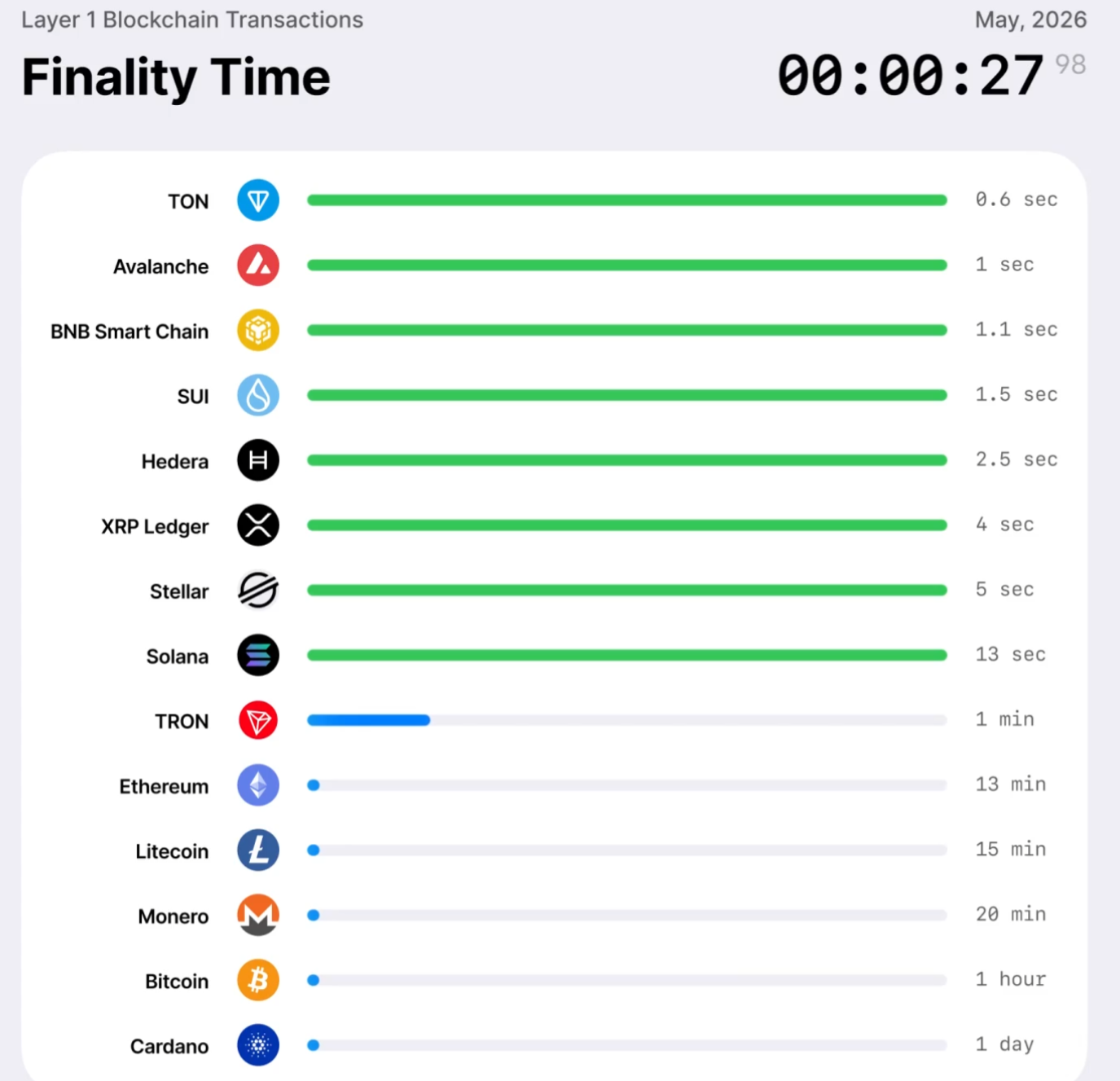
Comparison of "Final Confirmation Time" of Mainstream Public Chains
This is also a point of difference for TON compared to many Layer1s. It is not simply aimed at making DeFi transactions faster or transfers cheaper; rather, it seeks to embed the chain into the daily usage of Telegram. Only when cost, waiting, and wallet operations are sufficiently lightweight can TON potentially evolve from a public chain related to Telegram into a foundational network that Telegram apps can directly utilize.
From Entry Point to Validator, Telegram Begins to Deepen into TON's Core
Telegram becoming the largest validator of TON is the most significant step in this change. This means Telegram is no longer just providing an entry point and brand endorsement for TON but is entering the realm of network security and operational mechanisms. Previously, TON was pushed by the foundation and community, providing greater openness but a relatively dispersed pace. Now, with Telegram directly involved, products, wallets, Mini Apps, payments, and developer tools have the chance to be realigned.
Efficiency will improve, but controversy will also grow. Telegram replacing the TON Foundation as the main driving force and becoming the largest validator will inevitably lead to renewed discussions about the centralization risks of TON. In response, Pavel Durov remarked that Telegram's involvement would attract more large participants into the validator pool, thereby enhancing decentralization. This logic isn't without merit, but ultimately it depends on the results, not just the statements.
The real importance moving forward will be whether the validator structure can become more diverse, whether governance information is sufficiently transparent, whether the foundation and community still have independent space, and whether ecosystem projects can continue to grow without relying on the will of Telegram.
Thus, Telegram's return is not merely a good thing; it represents a trade-off. For TON to enter the mass application layer, it needs Telegram's strong enforcement; but the further forward Telegram stands, the more TON needs to prove it is not merely an internal settlement chain serving Telegram.
High Staking Rewards Retain More Chips for TON
Pavel Durov subsequently emphasized that TON ranks first among cryptocurrencies in the top 50 by market capitalization for annual staking rewards, at a staggering 18.8%. Compared to reducing fees and speeding up, high staking rewards can more easily stir up funding sentiment and add another layer of justification for holding TON from the market's perspective.
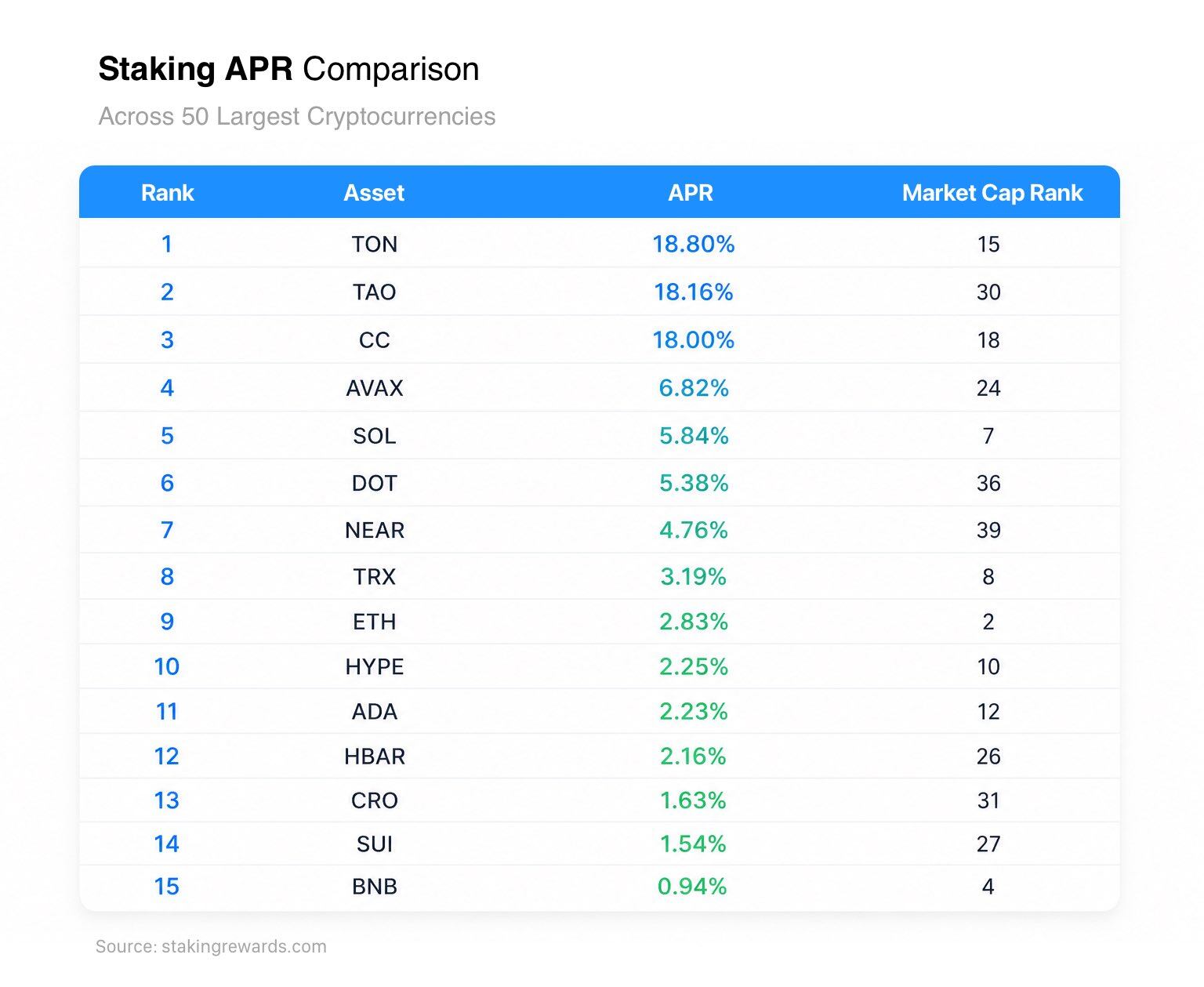
TON's annual staking rewards rank first among the top 50 cryptocurrencies
This also makes TON's story more complete. It is not just relying on Telegram's user entry to attract attention, nor only improving experiences through technological upgrades; it is also using staking rewards to keep funds within the ecosystem. The simultaneous emergence of entry points, performance, validators, and rewards makes this change weightier than a singular benefit.
Of course, high yields themselves are not the endpoint; they are more like a means to grant TON a longer observation period. As long as subsequent developer tools and performance upgrades can be delivered, and more funds are locked into the network, it may form a positive feedback loop with real usage. For TON, the value of staking rewards lies not only in enhancing return on holding but also in persuading the market to continue waiting for it to genuinely leverage Telegram's entry advantages.
TON Returning to Telegram is Not the End, But a More Challenging Phase
The next key for TON is not to continue leveraging Telegram to gain traffic, but to truly become a part of the Telegram application ecosystem. If Telegram's chats, payments, applications, creator economy, and automated interactions are progressively taken over by TON, then TON's competitors will not only be other Layer1 chains but all networks trying to become the next generation of application infrastructure.
TON is not just repeating the story of social media traffic; it is beginning to attempt to transform social media traffic into on-chain order. The entry point is just the beginning; usage is the answer. Telegram can bring TON to the forefront, but whether it can stay ultimately depends on whether TON can become that layer of infrastructure that operates within applications beyond user perception.
If in the past, TON was proving how close it was to Telegram, now it must prove how deeply it can embed within Telegram's daily usage. True mainstreaming is not about making users aware that they are using a chain, but about making the chain an integral part of the application experience.
TON's opportunities lie here, and so do its pressures.
免责声明:本文章仅代表作者个人观点,不代表本平台的立场和观点。本文章仅供信息分享,不构成对任何人的任何投资建议。用户与作者之间的任何争议,与本平台无关。如网页中刊载的文章或图片涉及侵权,请提供相关的权利证明和身份证明发送邮件到support@aicoin.com,本平台相关工作人员将会进行核查。


