Author: New Intelligence
Shenzhen Robots, Where Do They Win?
It’s not about the number of enterprises, but the crushing ecosystem.
As of April 2026, Shenzhen has gathered over 74,000 enterprises in the robot industry chain, with more than 1,000 core enterprises, and the total output value of the industry chain has exceeded 200 billion yuan, maintaining the top position in the country.
What astonishes the industry the most is Shenzhen's hardware innovation efficiency—within 1 hour, over 70% of the core components of robots can be assembled.
80% of components can be supplied within a 40-kilometer radius; design in the morning, prototyping in the afternoon, verification the next day.
This is not just a slogan; it reflects the real operational speed of Shenzhen’s robot industry chain.
"Brain—Senses—Limbs—Torso—Scene," Shenzhen has formed a complete closed loop:
- Upstream enterprises like Succexplore, Orbbec, and Inovance constitute the "muscles and nerves" of robots;
- Midstream leaders include UBTECH, Yujing, Pudu, and Zhuhai Dynamics, leading the manufacturing of complete machines;
- Downstream, over 300 "city + AI" application scenarios continuously provide real validation grounds for technological iteration.
The entire chain is located in Shenzhen.
Joints: The Most Expensive Part of Robots
For Humanoid Robots to Achieve Scale Commercialization, the Most Challenging Aspect Is Not the Brain, But the Joints.
Joint costs account for 35%—45% of the entire machine.
The industry's requirements for joint motors can be summarized in six words: compact size, high torque, energy production.
Unfortunately, it is extremely difficult to meet all three conditions simultaneously.
Traditional radial flux motors have reached a performance ceiling—insufficient power density, oversized, and limited heat dissipation. Axial flux motors, with higher power density, lightweight, and efficient heat dissipation, are theoretically a better route.
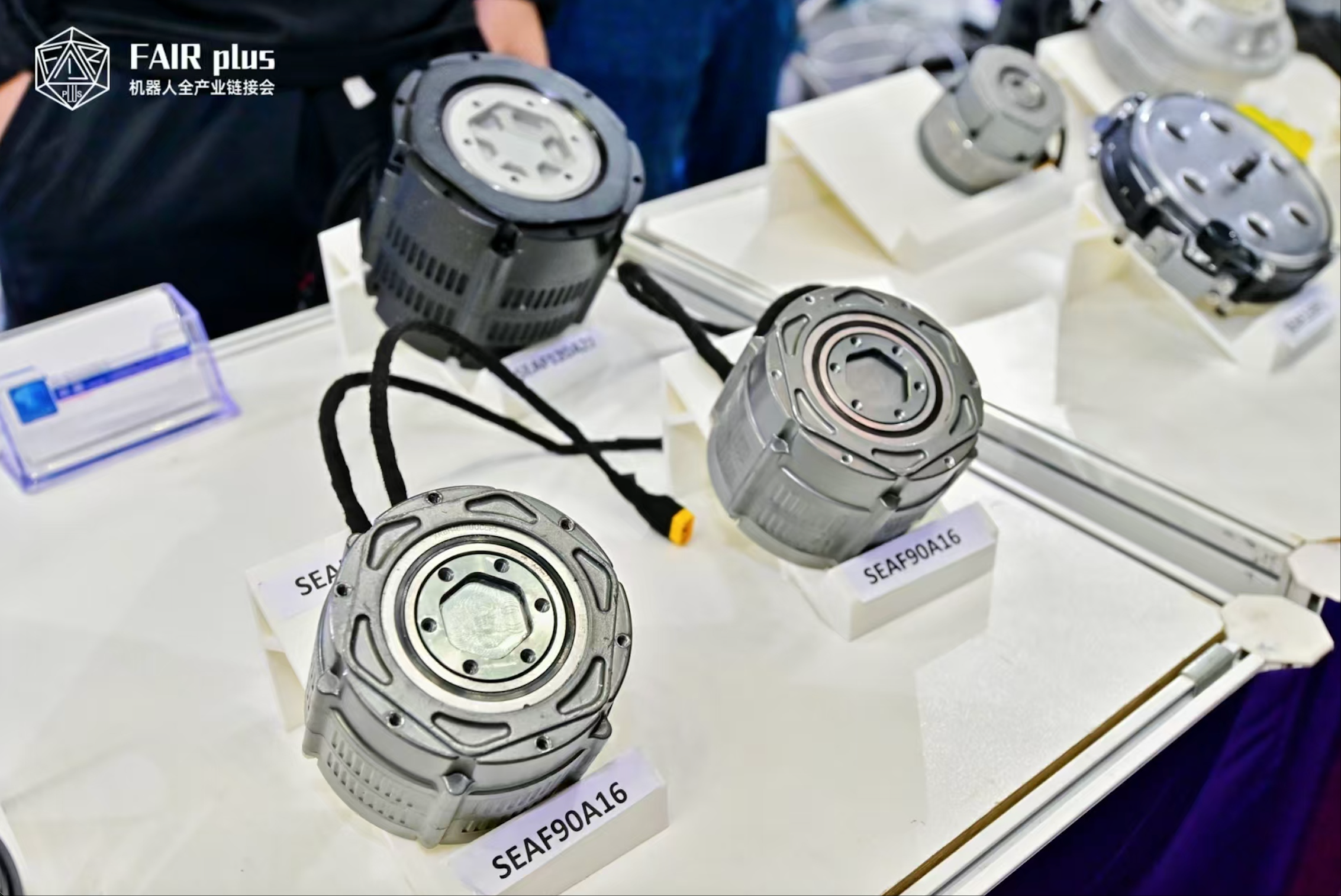
But theory is just theory; the real bottleneck in the industry has never been "Can it be designed?" but "Can it be produced in large quantities and stably?".
Most enterprises remain at the sample stage and cannot support large-scale commercial use.
Prototypes are easy to develop, mass production is extremely difficult.
This wall blocks the vast majority of players.
Xiao Xiang Electric
The One That First Achieved Mass Production
A group of component enterprises in Shenzhen has been the first to break through this wall.
Xiao Xiang Electric is the most representative one among them.
On the technical level, it has chosen a harder but more correct path.
Xiao Xiang Electric focuses on the axial flux route, using its own SMC soft magnetic materials to achieve a set of core breakthroughs: at the same power, both volume and weight are reduced by 1/3;
Torque density increased nearly 4 times, power density increased nearly 3 times; conversion efficiency 97.5%; defect rate stable at over 96%;
Cumulative patents exceed 150, with all core technologies fully under its control.
This is not a minor improvement but a breakthrough at the route level.
In terms of mass production, it has produced numbers that others cannot match, with cumulative shipments nearing 70,000 units.
What does this figure mean in the industry? It means it is not just a prototype showcased at exhibitions, but an industrial-grade product that can be stably delivered and trusted by leading customers.
Relying on collaborative manufacturing to achieve efficient and low-cost production, it will establish the world’s first automated production line for axial flux motors within the year, with an annual output scale of over 150,000.
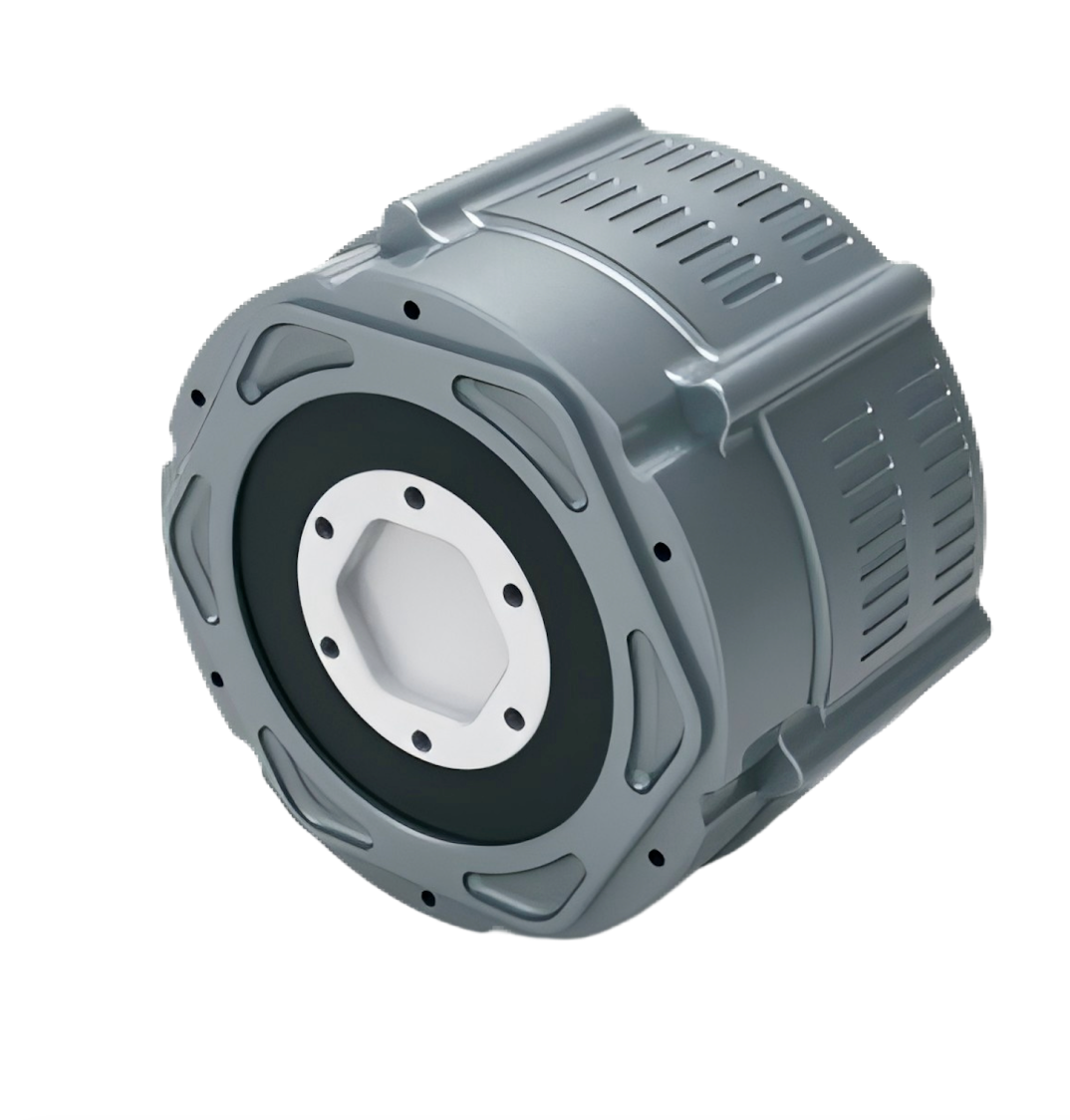
On the scene level, the supply chain it has entered speaks volumes.
Huawei, BYD, GAC, Meituan, Succexplore, Seres, Lenovo, Pudu, Songyan Power—none of these clients are easy to fool.
Stably entering these leading supply chains is not reliant on PowerPoint but on validated mass production capability and product consistency.
Products cover various fields including embodied intelligent robots, smart consumer electronics, two- and three-wheeled micro vehicles, low-altitude aircraft, engineering machinery, and sports rehabilitation wearable devices, with electric exoskeletons about to enter mass production.
Over 100 Million in Financing
Capital is validating an industry inflection point
Since 2026, Xiao Xiang Electric has completed financing of over 100 million, led by Hengxu Capital, with follow-up investment from Nanchuang Investment, New Fourth Army Foundation, and others.
This money targets three directions: capacity building, product iteration, and global expansion.
However, what is truly worth paying attention to about this financing is not the number itself, but the timing of its occurrence. During the same period, core component enterprises like Pacini Sensory Technology have also continuously received capital recognition.
Capital is concentrating on lower-level components, and behind this are three synchronously occurring industry signals—humanoid robots have officially entered the mass production phase, shifting from "demonstration" to "deliverable," leading to a surge in demand for joint motors;
The axial flux route has gained verification from both industry and capital, with lightweight and high power density becoming mainstream consensus;
Shenzhen's lower-level component enterprises have begun to take on scaled orders, and the pace of technological industrialization has significantly accelerated. Capital is voting with its feet, confirming that the inflection point has arrived.
This is Not a One-Off Explosion
It is the overall victory of Shenzhen's industry chain
The growth of Xiao Xiang Electric can only be truly understood within the overall context of Shenzhen's robot industry chain.
Shenzhen robots have never relied on a single star enterprise to win.
On the complete machine side, variables like Robot and Wankey have successively entered the hundred billion valuation tier;
On the perception side, Pacini Sensory Technology has gained capital recognition in the field of touch sensors;
On the motion control side, Zhuhai Dynamics and DiGua Robot have formed distinctive supply…
In each link, there are Shenzhen enterprises pushing hard.
It is this kind of full-link collaboration that has transformed Shenzhen from a "manufacturing city" to a "hard technology innovation ecosystem."
Xiao Xiang Electric’s ability to first achieve mass production in axial flux motors relies on Shenzhen’s unique supply chain efficiency—1 hour to gather core components and complete the full closed loop from prototyping to verification within 40 kilometers.
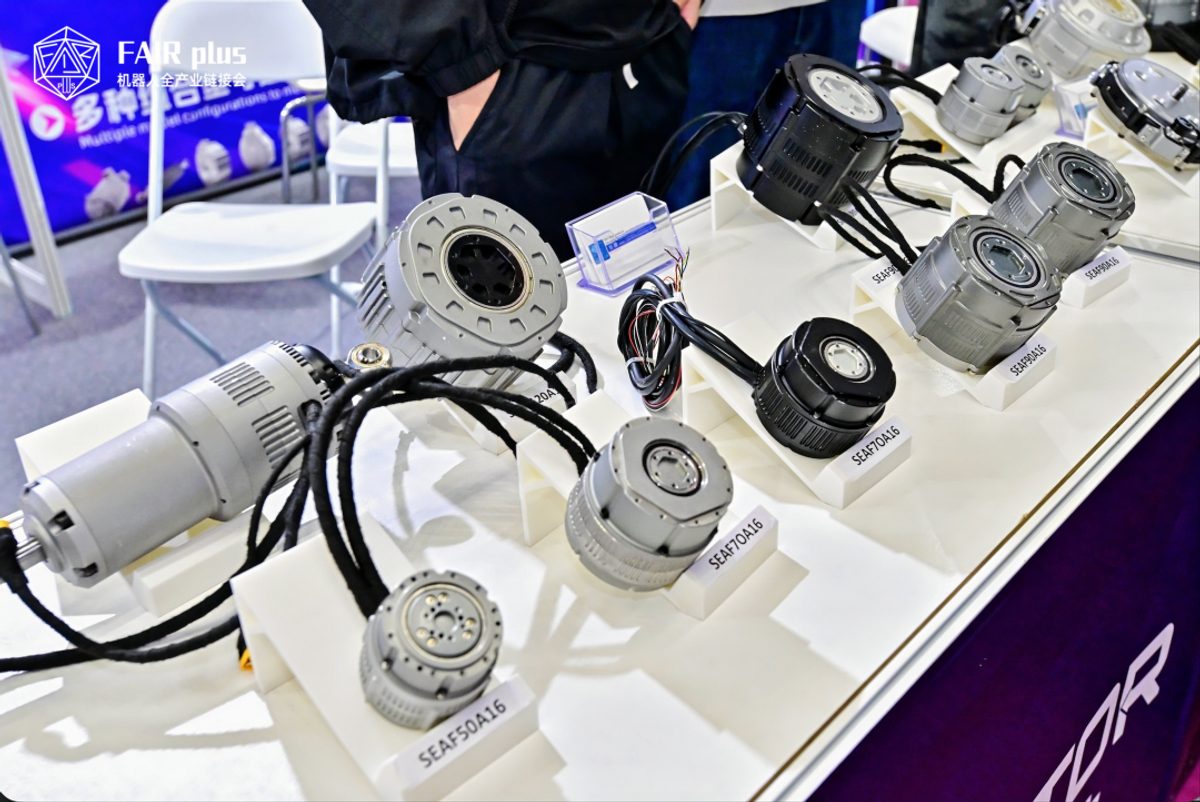
Changing to another city is hard to replicate.
One motor, one city, one era
The global competitiveness of Shenzhen robots has never been achieved by one enterprise or one product fighting alone.
It is the entire chain that wins together.
And the core component army represented by Xiao Xiang Electric is the most easily overlooked but indispensable part of this victory.
Without high-performance, mass-producible, cost-controlled joint motors, humanoid robots will always remain on display;
With them, large-scale deployment truly has a foundation.
As humanoid robots, new energy vehicles, low-altitude economy, and rehabilitation exoskeletons fully erupt, the demand for power systems will magnify geometrically.
Whoever first achieves mass production will grasp the ticket to the next round of explosion.
Shenzhen has already given its answer.
One motor supports one joint, and a mature industrial chain supports a city’s global position.
This is the solid strength of Shenzhen robots.
免责声明:本文章仅代表作者个人观点,不代表本平台的立场和观点。本文章仅供信息分享,不构成对任何人的任何投资建议。用户与作者之间的任何争议,与本平台无关。如网页中刊载的文章或图片涉及侵权,请提供相关的权利证明和身份证明发送邮件到support@aicoin.com,本平台相关工作人员将会进行核查。


