Original Title: Kevin Warsh to say Fed independence not threatened by political pressure
Original Author: Claire Jones and Myles McCormick, Financial Times
Translated by: Peggy, BlockBeats
Editor's Note: At the confirmation hearing of the Senate Banking Committee, Kevin Warsh systematically elaborated on his understanding of the Fed's role and independence for the first time.
This hearing seemingly revolves around interest rates and inflation, but it essentially points to a more core question: how is the boundary of central bank independence defined and can it be continuously maintained in the context of escalating political pressure?
This discussion occurs within a set of highly intertwined realities. On one hand, Trump has repeatedly exerted public pressure on the Fed to cut interest rates and has harshly criticized the current chair, Jerome Powell; on the other hand, the U.S. Department of Justice's investigation into a $2.5 billion renovation project at the Fed's headquarters has been seen by Powell as an indirect pressure. At the congressional level, Republican Senator Thom Tillis has linked this investigation directly to personnel appointments, stating he would block nominations from proceeding to a full Senate vote until the investigation concludes. Monetary policy, regulatory investigations, and political appointments are overlapping and intensifying at this juncture.
The macroeconomic environment has also provided no buffer. Post-pandemic inflation soared above 7% and currently remains significantly higher than the 2% policy target; combined with the Iranian conflict driving up energy prices, price pressures could continue to rise in the coming months. With inflation not yet effectively subdued, the debate on "whether to cut rates" quickly shifts from a technical discussion to a political topic.
In this context, Warsh's statements reflect a more realist framework: on one hand, he aims to "cool" public interventions from the president and Congress, arguing that expressing opinions on interest rates does not constitute a substantive erosion of independence; on the other hand, he points the real risk to the Fed itself—if it fails to fulfill its core responsibility of controlling inflation, public trust will be weakened, and independence will lose its support.
Thus, the meaning of "central bank independence" is undergoing a subtle shift: it is no longer just an abstract principle at the institutional design level, but more akin to a result-oriented credibility mechanism. Independence does not exist naturally but is continually tested and reshaped under the triple pressures of inflation, politics, and the market.
The following is the original text:
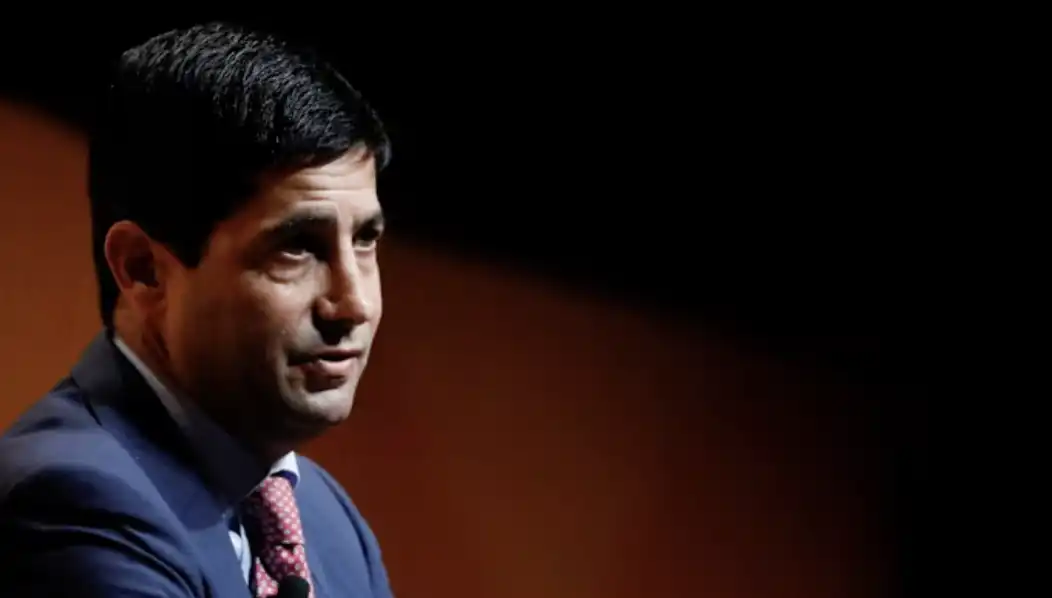
Kevin Warsh, the nominee for the next Fed chair nominated by President Trump
The Fed chair nominee put forth by Trump will tell Congress that the independence of the U.S. interest rate-setting body is "not particularly threatened" when politicians call for the central bank to adjust borrowing costs.
Kevin Warsh will state during his opening remarks to the powerful Senate Banking Committee on Tuesday, "When elected officials—whether they are the president, senators, or representatives—express their views on interest rates, I do not believe that the operational independence of monetary policy is under particular threat."
According to a advance prepared statement seen by the Financial Times, he will tell senators that "central bank officials must be firm enough to listen to diverse opinions from all sides," while also being "humble enough to remain open to new ideas and new economic developments."
This statement comes at a time when Trump has repeatedly called for the Fed to cut rates. The president has called current Fed chair Jerome Powell a "moron" and "idiot," accusing him of failing to follow orders.
Powell stated that the current investigation by the Department of Justice into a $2.5 billion renovation project at the Fed's headquarters is an excuse to pressure the interest-rate decision-makers to lower borrowing costs.
Republican Senator Thom Tillis from North Carolina, a member of the Banking Committee responsible for reviewing the Fed chair nomination, indicated he would block Warsh's nomination from proceeding to the full Senate vote until the investigation against Powell concludes.
Warsh could potentially replace Powell as early as May 16. He will clearly state that the Fed's independence in setting interest rates is "crucial" to controlling inflation.
However, this former Fed governor will also call for the Fed to "stick to its knitting," believing that when the central bank "ventures into areas of fiscal and social policy where it has neither authorization nor expertise," it undermines its own independence.
He stated, "The Fed should not become a catch-all agency for the U.S. government, nor should it serve as an appeals court for matters that should be discussed and decided in other venues." The 56-year-old candidate will also elaborate on why he is fit for the position, telling lawmakers that he will bring "both insider experiences and an outsider's spirit of inquiry," while referencing his educational background at Stanford University, his experience on Wall Street, and his previous role as a Fed governor.
Warsh also noted that "independence" reaches its highest degree when executing monetary policy, but this level of independence does not apply to the other functions the Fed undertakes under congressional authorization. He told the committee, "In managing public funds... or in bank supervision and prudent policy... as well as in areas involving international finance, Fed officials should not enjoy the same special respect."
The Fed plays an important role in bank regulation, but in setting regulatory rules and supervising financial system risks, it has already cooperated with the U.S. Treasury and other regulatory agencies.
Warsh also told senators that when the Fed fails to fulfill its duty of controlling inflation, it is effectively undermining its own independence. He believes this could make the public "lose confidence in our economic governance system, thus questioning whether the so-called independence of monetary policy is really as important as people say it is."
After the COVID-19 pandemic, inflation once soared to its highest level in decades, exceeding 7% in 2022. Currently, inflation remains above the 2% target set by the Fed, and with the Iranian war driving up energy prices, price pressures are expected to rise further in the coming months.
Warsh stated, "The mission granted to the Fed by Congress is to ensure price stability—without excuses, without ambiguity, and without argument or evasion." He will also emphasize, "Inflation is a choice, and the Fed must take responsibility for it."
免责声明:本文章仅代表作者个人观点,不代表本平台的立场和观点。本文章仅供信息分享,不构成对任何人的任何投资建议。用户与作者之间的任何争议,与本平台无关。如网页中刊载的文章或图片涉及侵权,请提供相关的权利证明和身份证明发送邮件到support@aicoin.com,本平台相关工作人员将会进行核查。


