On April 20, 2026, Apple announced that Cook would step down on September 1, and his successor would be Senior Vice President of Hardware Engineering John Ternus. He is the engineer behind the Vision Pro and has been responsible for almost all heavyweight hardware at Apple over the past fifteen years.
This is the first time in 15 years that Apple has changed leadership. The signal generally interpreted by the outside world is "hardware returns." However, the internal structure of hardware is much more complicated than this label. On the same day that Apple announced the leadership change, it also issued another personnel appointment: chip engineering head Johny Srouji will replace John Ternus as Chief Hardware Officer.
Ternus has worked at Apple for over 25 years, leading the engineering design of the iPhone, Mac, iPad, Apple Watch, AirPods, and Vision Pro. The outside world interprets his succession as a signal of "hardware return." But at the moment Ternus becomes CEO, he hands over the daily management authority of hardware engineering. What he will lead is software, AI, services, and the overall strategic direction of Apple. These four areas are things he has never led in his 25 years at Apple.
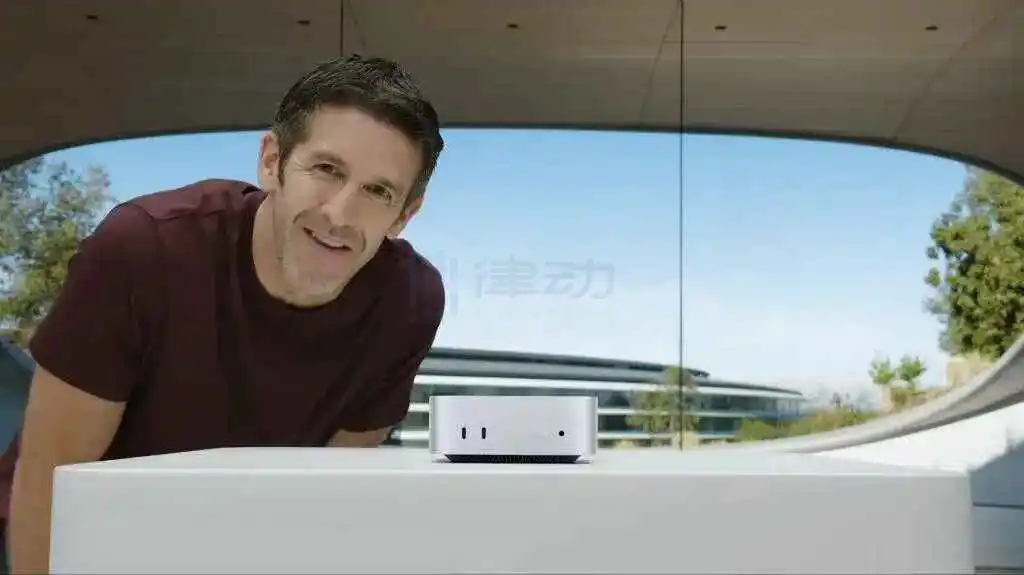
The Kingdom of Hardware is Not Level
Looking back at Ternus's 25-year career at Apple, the first association the outside world has with his recent performance is most likely "Vision Pro failure." But his mistakes occurred earlier.
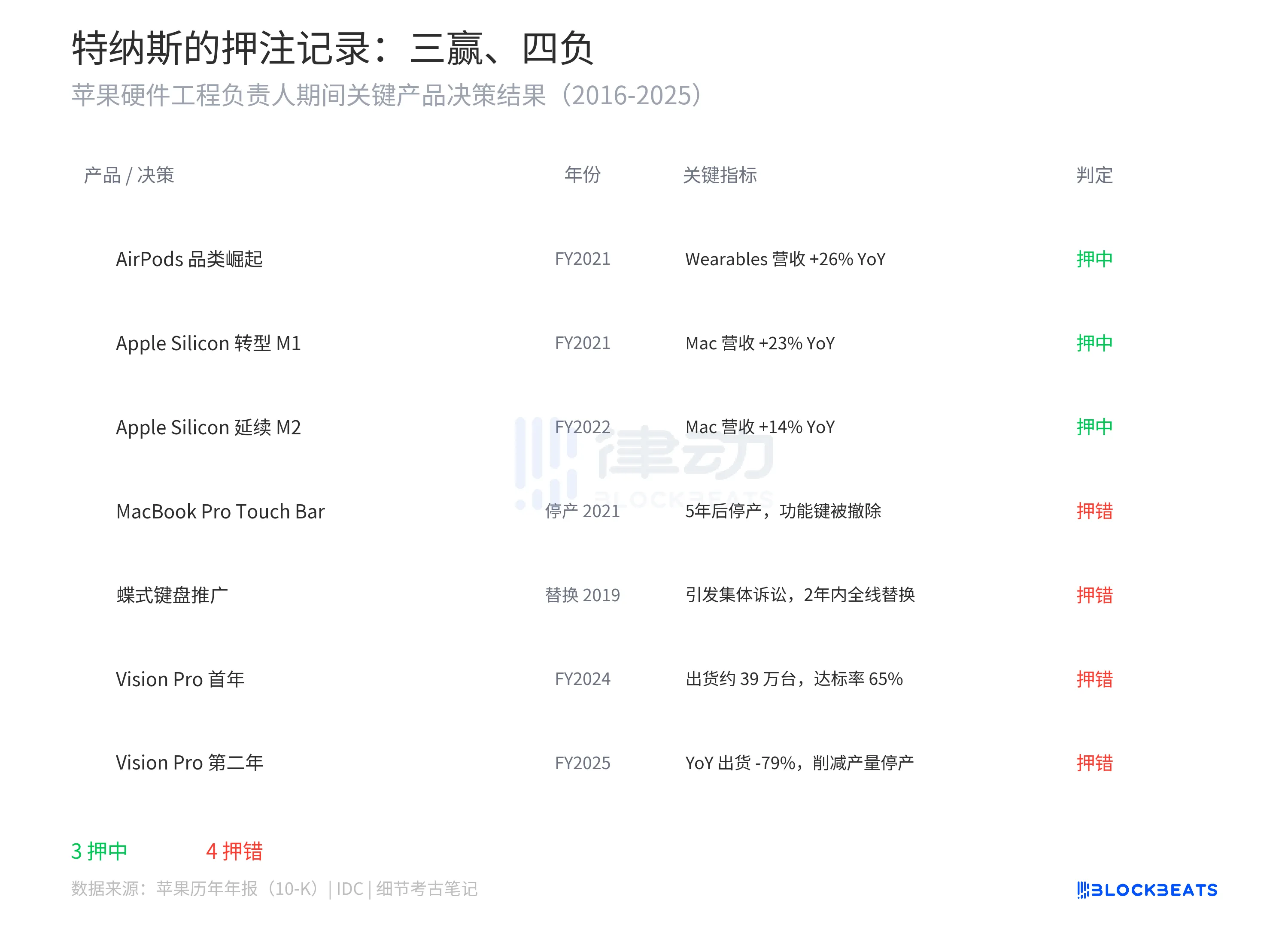
Ternus was a key supporter of the MacBook Pro Touch Bar. This touch bar, introduced in 2016, was quietly abandoned by Apple in 2021. He was also deeply involved in promoting the butterfly keyboard. This keyboard design, known for being ultra-thin and infamous for its faults, led to a collective lawsuit by consumers, ultimately being entirely replaced by Apple. Both failures were borne by users and Apple's reputation.
Vision Pro is the third instance. According to IDC data, Apple shipped about 390,000 units in 2024, below the previously expected 600,000 units by analysts, with a completion rate of about 65%. Shipments further dropped to less than 90,000 units in 2025, prompting Apple to reduce production, and the manufacturing partner Luxshare stopped the related production line. A product with a starting price of $3,499, defined by Apple as the "gateway to spatial computing," took two years to complete its entire journey from launch to phase-out.
The fortunate side is also worth looking at separately.
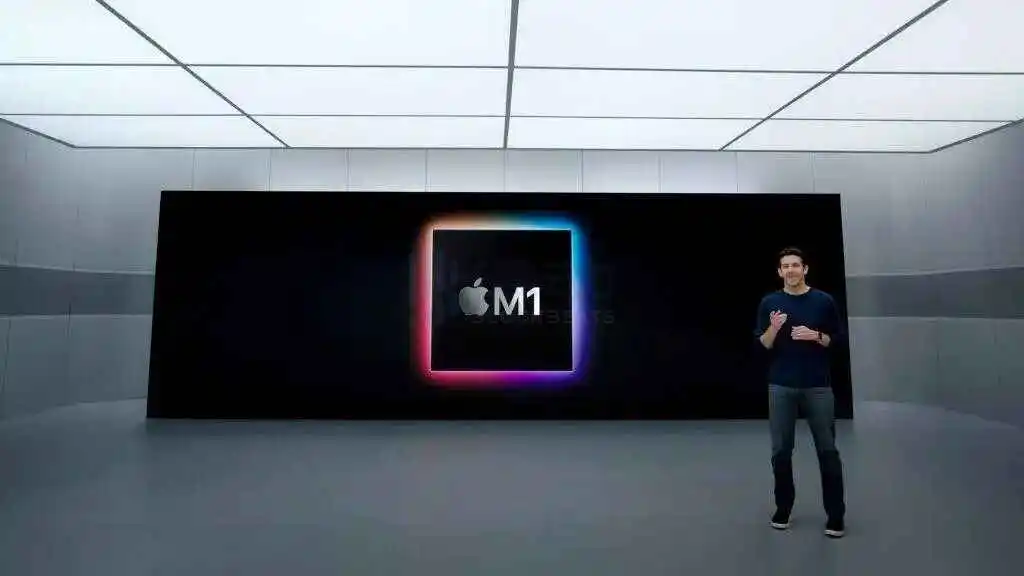
The first is the transition to Apple Silicon. In November 2020, with the launch of the M1 chip, Apple began migrating from Intel architecture to self-developed processors, with Ternus as a core driver. According to Apple’s annual report, Mac revenue experienced remarkable growth for two consecutive years after the M1 release, with FY2021 growing by 23% year-on-year and FY2022 continuing to grow by 14%, reaching a historical peak of $40.2 billion in the 2022 fiscal year.
It opened up the possibility for Apple to vertically integrate chip design, truly liberating the Mac from Intel's product rhythm. The second is AirPods. During his tenure as vice president, he transformed the wearables category from a marginal part of Apple's product line into a pillar with annual revenue exceeding $30 billion. This marks Apple's third major category in consumer electronics after the iPhone and Mac.
This report card reveals a pattern: what he got right was placing a decisive technology in a mature category (M1 for Mac, AirPods for wireless audio). What he got wrong was attempting to define an entirely new computing paradigm with hardware. The Touch Bar aimed to redefine keyboard interaction but failed. Vision Pro intended to define spatial computing but also failed.
On the other hand, while Apple discusses hardware as a whole, the stories within it are far more complex than "the iPhone sells well." According to Apple’s annual reports over the years, during the fiscal years 2020 to 2025 when Ternus fully led hardware engineering, the four main categories exhibited markedly different curves. The iPhone maintained its dominance, with revenue steadily increasing from $137.8 billion to $209.6 billion over six years, but the growth rate is slowing.
The Mac had a genuine surge due to the M1, followed by a sudden decline in FY2023 of nearly 27%, after which it slowly recovered, not yet returning to peak levels. Wearables rose from $30.6 billion to a peak of $41.2 billion, then fell back to $35.7 billion, having passed the growth inflection point. The iPad represented the quietest line, oscillating between $26.7 billion and $31.9 billion over six years without any structural breakout.
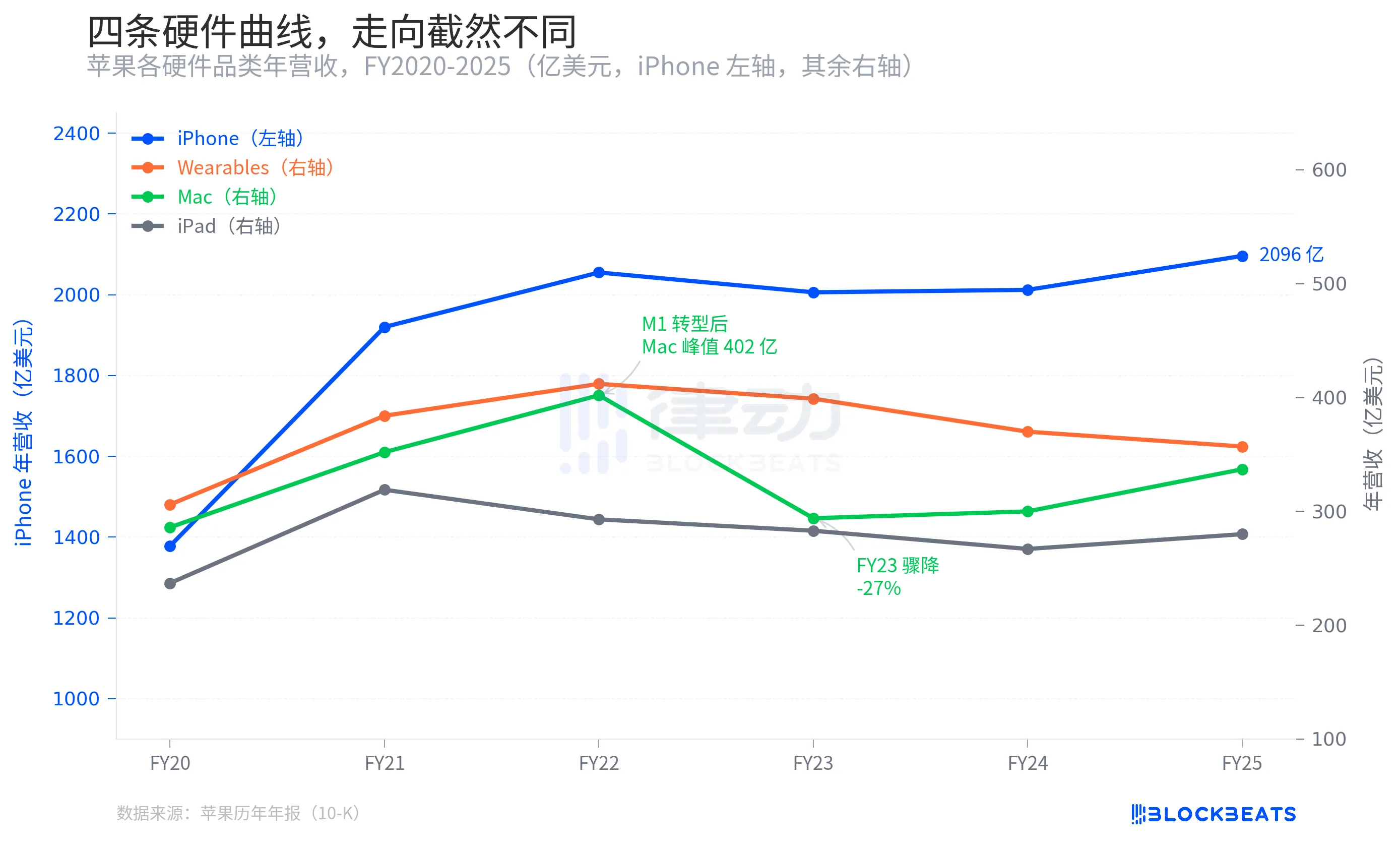
The iPhone held steady, relying on inertia. The only significant structural breakout was those two years driven by the M1. Now he needs to hand hardware engineering over to Srouji and manage all of Apple.
The Bill Left Behind by Cook
The Apple that Ternus takes over has a financial structure that is completely different from fifteen years ago.
According to Apple’s annual reports (10-K), service revenue grew from $19.9 billion in 2015 to $109.2 billion in the 2025 fiscal year, with a compound annual growth rate of over 18%, and its share of total revenue increased from 8.5% to 26.3%. During the same period, product revenue increased from $213.9 billion to $307 billion, but its share decreased from 91.5% to less than 74%. Cook restructured the profit logic of a hardware company over 15 years, relying on services.
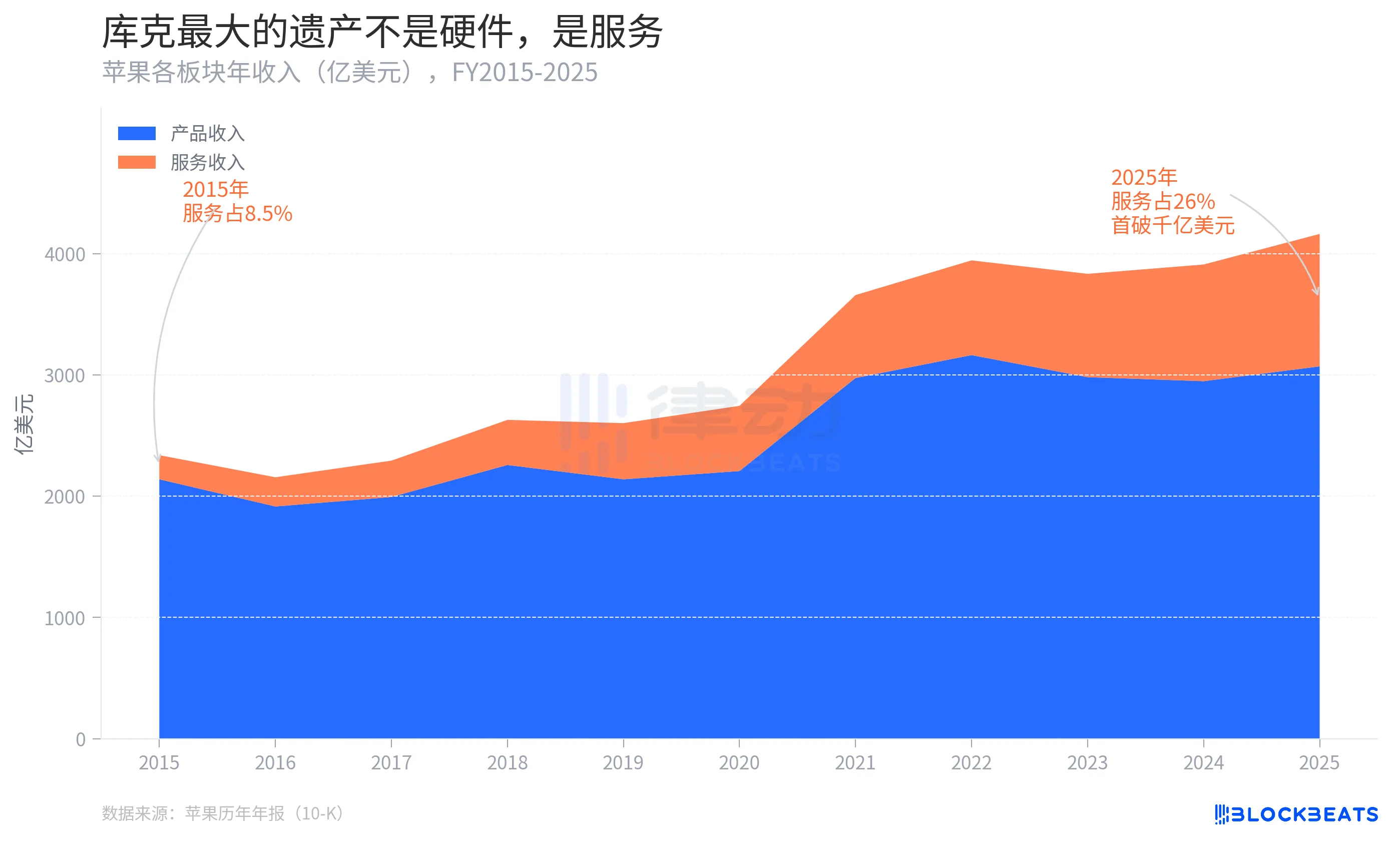
This restructuring has a clear numerical footnote. According to Apple’s annual reports, in 2017, Apple’s services segment had a gross margin of about 55%, while the product segment had about 34.2%, a difference of 20.8 percentage points. By the 2025 fiscal year, service gross margin rose to 75%, while product gross margin remained virtually unchanged at 36.8%, widening the gap to 38.2 percentage points. For every dollar Apple shifts from product to service, the gross margin contribution increases by approximately 38 cents.
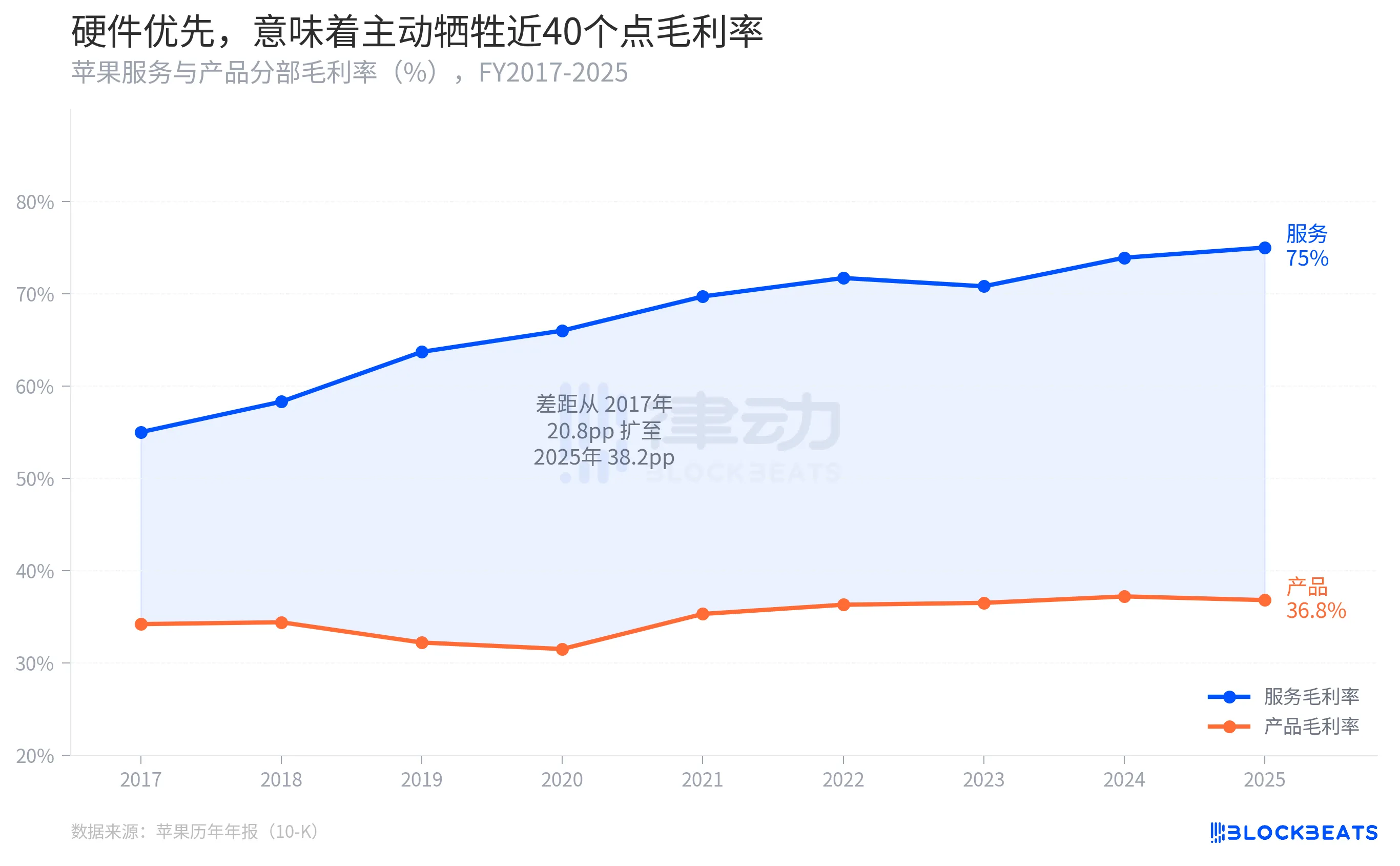
This disparity will not narrow simply because of a change in CEO. If Ternus reallocates resources back to hardware, with product gross margin close to 37%, it is not low in itself, but the potential for improvement almost entirely depends on product premium rather than structural migration. This is an arithmetic problem, not a multiple-choice one.
Another detail has been overlooked by most reports. While Cook steps down as CEO, he will become Apple's executive chairman. This is not an honorary position. The executive chairman typically retains substantial influence over strategic direction, participates in major decisions, and represents the company's interests in political and industry matters. Current non-executive chairman Arthur Levinson will concurrently become lead independent director.
This passing of the baton is not in the mode of Jobs stepping down directly after resigning in 2011. Cook will remain on the board.
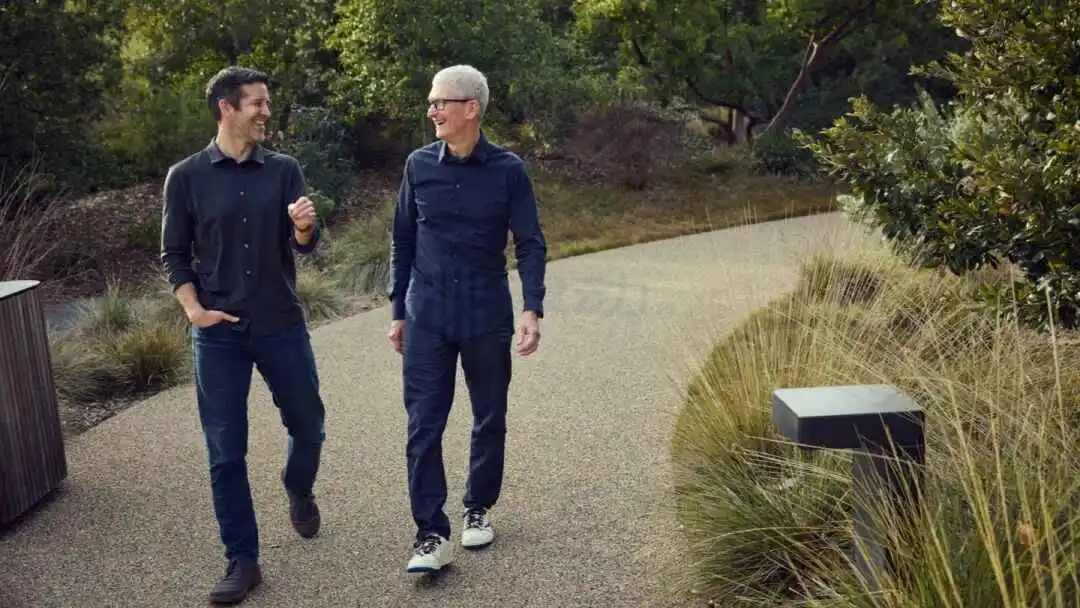
Ternus's style has been described as calm, focused, and approachable, establishing influence through product results rather than personal image, quite similar to Cook. This similarity is a stabilizing factor during the transition, but it also means: the market's expectation for a "clear reset" style of directional shift is not in the script for this baton handover.
The Apple that Ternus takes over last answered the question "What is the next computing platform?" with a $3,499 head-mounted display. With shipments of less than 90,000 units, it has already been discontinued.
免责声明:本文章仅代表作者个人观点,不代表本平台的立场和观点。本文章仅供信息分享,不构成对任何人的任何投资建议。用户与作者之间的任何争议,与本平台无关。如网页中刊载的文章或图片涉及侵权,请提供相关的权利证明和身份证明发送邮件到support@aicoin.com,本平台相关工作人员将会进行核查。


