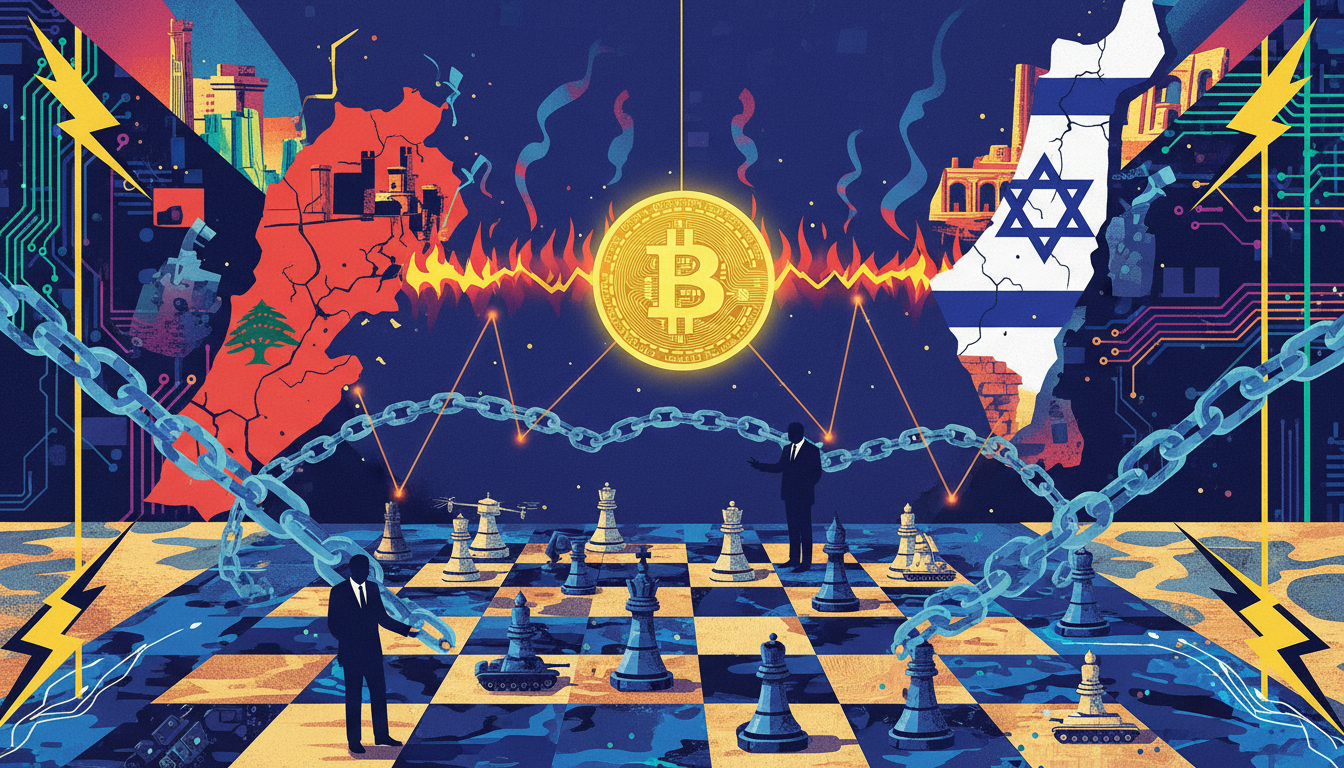
On April 15, 2026, Eastern Eight Time, the U.S. military's troop increase in the Middle East, fluctuations in crude oil and the U.S. dollar, and the strengthening of cryptocurrency assets unfolded almost simultaneously, forming a clear yet complex narrative line. According to public reports, the U.S. has sent thousands of soldiers to the Middle East, which the market quickly interpreted as a signal of an escalation in U.S.-Iran tensions, leading to heightened expectations of energy supply risks. During the same period, Bitcoin rose approximately 8% within two weeks, with prices approaching $74,000, in stark contrast to the U.S. Dollar Index DXY falling to 98.14. Funds are reducing their dollar and long-term asset allocations while reassessing the roles of gold, crude oil, and Bitcoin as "hedging assets." What truly warrants questioning is: in the shadow of a new round of geopolitical maneuvering, why are funds once again focusing on cryptocurrency assets, attempting to use a new narrative of "digital gold + financial infrastructure" to rationalize their hedging and allocation behaviors.
The Rising Tension in the Middle East: Repricing of Oil Prices and the Dollar
On April 15, various media outlets cited U.S. government and regional sources reporting that the U.S. military is deploying thousands of soldiers to the Middle East. This move has quickly been labeled in market discourse as the latest signal of "escalation in U.S.-Iran tensions." Although the related reports did not disclose specific troop compositions, missions, or timelines, any additional troop presence in the currently tense Middle Eastern situation would be amplified as an advance pricing of potential conflict risks. What has not been fully reflected in prices is the potential medium to long-term premium that could arise from the layered transmission of oil production, transportation, and insurance costs should the situation remain tense.
Simultaneously, reports from Japan indicate that it plans to utilize about 36 million barrels of national oil reserves in May and is actively seeking crude oil supplies from non-Middle Eastern sources to hedge against potential supply disruption risks. This operation simultaneously sends a soothing signal to the market that "there is supply available in the short term," while also indirectly confirming major importing countries' worries about the safety of Middle Eastern supply chains. When "releasing reserves in advance + diversifying procurement" becomes policy consensus, the benchmark expectations in the energy market shift quietly from normal supply and demand to "tightening may occur at any time."
In this context, the U.S. Dollar Index DXY at 98.14 level also holds symbolic significance: risk-averse funds have not flowed unidirectionally into the dollar, but are reallocating risk exposures among the dollar, commodities, and certain cryptocurrency assets. Some funds choose to increase allocations to crude oil and energy-related assets to hedge against dual uncertainties of geopolitics and inflation, while others prefer the more liquid assets with lower cross-border transfer costs, such as gold and Bitcoin. It should be emphasized that details regarding whether the U.S. military will undertake blockade missions, the specific scope of such blockades, and the troop numbers aboard individual vessels are currently unverifiable information; there is a lack of authoritative disclosures regarding operational objectives in public channels. Therefore, no tactical-level deductions can be made in military terms, and we can only judge from a macro perspective of "increased troop strength = rising risk premium."
The Return of the Digital Gold Narrative: Bitcoin and Macro Resonance
In sync with the rising tensions in the Middle East, Bitcoin rose approximately 8% within two weeks, with the latest price hovering around $74,000. If this price curve is overlapped with the timeline of geopolitical news since early April, a highly overlapping rhythm is revealed: regional situations heat up, oil and policy discussions frequently appear in the media, while Bitcoin first consolidated with low volume, then broke above its upper range under the joint driving force of risk-averse and speculative funds. In contrast, the U.S. Dollar Index remained in a 98.14 line of consolidation, reflecting that the "strong risk aversion/strong dollar" linear logic is being replaced by a more complex allocation game.
The market view that "Bitcoin's next price rise depends on macro factors" has gained a real sample in this wave of geopolitical impulses. Macro factors are no longer merely traditional measures of interest rates and inflation; they overlay broader risk factors such as energy security, military deployment, and supply chain restructuring. When oil price expectations are pushed up by geopolitical events, and the dollar is under pressure due to fiscal deficits and monetary easing expectations, some funds are once again viewing Bitcoin as a "gold-like" option for cross-border value storage: an asset that is not deeply bound to any single sovereign credit but has sufficient global liquidity, naturally being reintegrated into the candidate pool under the risk parity framework.
In the dual context of a weakening dollar and energy uncertainties, Bitcoin's "digital gold" narrative gains short-term acceleration: some institutions view it as part of a "basket of external assets to the dollar" alongside gold to hedge against potential currency depreciation and tail risks from regional conflicts; some retail investors and native crypto funds focus more on the price momentum itself, treating geopolitical events as "fuel" to ignite market movements. However, it is essential to clarify that the above price and growth data currently rely on a single source, representing a snapshot of the market at a specific point in time rather than long-term conclusions validated through multiple sources. Future trends will still depend on the interplay of evolving geopolitical situations, macro data, and regulatory attitudes. It cannot be simply concluded that "one resonance" indicates the risk-averse logic has been permanently written into Bitcoin's pricing model.
Regulatory Delays and the Narrative Vacuum: The Shadow of the CLARITY Act
Apart from geopolitical tensions and asset repricing, developments on the U.S. regulatory front also constitute an important backdrop for this narrative. The CLARITY Act, initially seen as likely to provide clear compliance boundaries for cryptocurrency assets, has not been included in the recent Senate agenda, significantly hampering its advancement. Legislative delays mean that the legal attributes, market boundaries, and regulatory responsibilities of cryptocurrencies continue to linger in a "gray area," making the entire market more sensitive to changes in policy direction—any new statements from executive, judicial, or central bank levels can be amplified and interpreted as signals of "regulatory shifts."
As geopolitical risks and policy uncertainties overlap, market emotional elasticity has been significantly amplified. On one hand, investors, in the absence of clear regulatory anchors, are more inclined to use "external major events" to find explanations for price fluctuations: troop surges, energy tensions, and monetary easing expectations can all be packaged into the narrative of "macro risk aversion"; on the other hand, regulatory voids also enable some gray operations and marketing narratives to take advantage of the situation, exacerbating the herd effect and FOMO rhythms on social media and trading platforms.
The traditional legislative process often advances on a yearly basis, while on-chain innovations can evolve on a weekly or even daily rhythm. This speed difference creates an ongoing "regulatory vacuum zone." In this vacuum zone, the role recognition of Bitcoin and cryptocurrencies is more easily rewritten by event-driven narratives: institutions begin trial layouts with views of "macro hedging tools" or "alternative asset allocation" before seeking compliance paths; retail investors attach new meanings to Bitcoin in every geopolitical conflict and macro noise—from "digital gold" to "high beta risk assets," to "geopolitical hedging targets." Without clear rules, these labels can be frequently swapped, while every swap is essentially an opportunity for narrative arbitrage.
From Hedging to Infrastructure: Another Line of Ripple and Kyobo
Alongside the short-term risk aversion sentiment, there is a less emotion-driven but equally important long-term adoption clue. According to reports from a single source, Ripple is collaborating with South Korean insurance giant Kyobo Life to advance a pilot project for real-time settlement of tokenized bonds, partially migrating the issuance, custody, and settlement processes of traditional bonds onto the blockchain. This development seems to bear no relation to the Middle Eastern conflicts and energy tensions, yet points towards the same thing: the financial system is seeking more efficient, programmable, and resilient infrastructures, and cryptocurrencies and blockchain are quietly transitioning from "speculative assets" to candidates for "financial underlying facilities."
If the driving forces of war and risk aversion sentiment relate to short-term price fluctuation narratives, then mainstream financial institutions' on-chain attempts provide another adoption trajectory characterized by a longer timeline and smaller volatility. For large insurance companies, banks, and asset management firms, the appeal of tokenized bonds, real-time settlement, and on-chain custody lies in its potential to reduce settlement time costs and counterparty risks while enhancing position transparency and capital efficiency. The funding occupied under traditional T+2/T+3 settlement cycles and operational risks are compressed to "near real-time" levels, not only improving asset-liability management but also providing infrastructural support for more complex risk hedging strategies.
From this perspective, a new narrative of "crypto = financial infrastructure" is taking shape: tokenized bonds are just the entry point, followed by on-chainization of asset securitization products, insurance payouts, cross-border payments, and even regulatory reporting in more extensive scenarios. It should be noted that the technological details, regulatory paths, and scales of the collaboration between Ripple and Kyobo are still based on single-source disclosures and lack verification from multiple parties. Therefore, they are more suitable as trend signals rather than quantitative bases. Nevertheless, this long-term adoption clue exists in parallel with Bitcoin's risk-hedging narratives—the former discusses "crypto as payment and settlement infrastructure," while the latter discusses "Bitcoin as a value storage tool." These two narratives do not conflict; on the contrary, they mutually reinforce each other against the backdrop of escalating macro uncertainties: as infrastructure gradually moves on-chain, the existence and circulation of assets on the chain also become more natural.
Platform Competition Intensifies: Binance's High-Yield Temptation
While the macro and geopolitical landscapes shift dramatically, competition among trading platforms is also accelerating the fluctuations in risk appetite. According to reports from a single source, Binance has recently raised the annualized reward for its "discount buy coins" products to 50%, attempting to attract existing and new risk-averse funds during this volatile market sentiment. For some users, when the external environment is filled with uncertainties, the high annualized returns promised by the platform appear to be an opportunity for "steady progress": maintaining exposure to cryptocurrency assets while seemingly earning interest returns several times higher than traditional investments.
From a platform perspective, raising the rates of financial products amid macro and geopolitical turbulence is a typical means of competing for funding pools and user attention. On one hand, it can lock in users' asset retention times, reducing the frequency of funds circulating across multiple platforms; on the other hand, high-yield products also serve as marketing tools to amplify the brand's volume on social media and in communities. However, such high-yield products often come bound with complex leverage structures, counterparty risks, or project risks; while users pursue returns, they are effectively taking on latent risks exacerbated by the platform or market fluctuations.
High-yield products can also produce feedback effects on overall market risk appetite and volatility: when a substantial amount of funds is directed into high-yield strategies, leverage behavior and term mismatches may accumulate both on-chain and off-chain. Should prices experience a sharp pullback, the embedded mechanisms for liquidation, redemption, or yield resetting within the product structure could amplify downward fluctuations, causing a chain reaction of "expectations of returns being dashed—intense selling pressure—further price declines." Therefore, it is necessary to clearly distinguish between "platform marketing-driven returns" and "macro risk aversion-driven price increases": the former relies on the sustainability of a single platform and product design, while the latter depends more on the rebalance of global funds across multiple assets. Confusing the two easily creates mismatches between emotions and expectations, leading investors to take on unnecessary structural risks while still "seeing the right direction."
Three Interwoven Clues: Hedging, Regulation, and Infrastructure
Returning to the timeline of April 15: The U.S. troop increase in the Middle East, rising risks in oil supply, and the U.S. dollar hovering at 98.14 form the backdrop of intertwined geopolitics and macroeconomics. Against this backdrop, Bitcoin’s 8% increase over two weeks and its ascent to around $74,000 rekindle the narrative of "digital gold/risk-averse asset" in the short term—funds are reordering their positions among the dollar, gold, crude oil, and Bitcoin, attempting to find combinations that better hedge against the double uncertainties of energy and currency.
Meanwhile, the much-anticipated CLARITY Act not being included in the Senate agenda highlights the slow progress of the U.S. regulatory framework for cryptocurrencies. This "regulatory void" will not directly determine prices but casts a long shadow over the narrative level: when rules fail to provide clear anchors, the market is more likely to reshape understandings of Bitcoin and cryptocurrencies' roles by using geopolitical events, macro noise, and individual institutional actions, with hedging, speculation, and allocation logic frequently switching on social media and trading interfaces.
Parallel to these high-volatility narratives are seemingly "less dramatic" progressions, such as Ripple and Kyobo Life exploring real-time settlement for tokenized bonds and Binance competing for funds with a high-yield product of 50%. The former represents the long-term application landing of "crypto = financial infrastructure": on-chain bonds, real-time settlements, and institutional on-chain initiatives provide realistic uses for cryptocurrencies beyond just price; the latter reflects how platforms amplify user return expectations through financial engineering and marketing strategies in a time of competitive existing resources. Together, these create a "dual imagination" for the current market: one side tells the story of "Bitcoin as a risk-averse asset," while the other depicts "crypto as financial infrastructure."
Looking ahead, the evolution of geopolitical situations, regulatory progress in the U.S. and globally, as well as the rhythm of institutional adoption will constitute the three main lines that investors need to closely monitor:
● On the geopolitical front, it is essential to observe whether tensions in the Middle East shift from "troop increases" to "substantial damage to supply chains," and how this will continuously affect the risk premiums of energy and risk-averse assets.
● On the regulatory front, it is crucial to track whether the CLARITY Act and similar legislation return to the agenda, as improved regulatory clarity could compress speculation while opening the floodgates for institutional involvement.
● In terms of applications and institutional adoption, it is important to watch whether Ripple's tokenization practices can be scaled, and how the high-yield products of platforms like Binance perform before and after risk events, to assess the true impact of the "infrastructure narrative" and "platform competition" on the long-term industry structure.
In such a multi-threaded resonant market environment, making emotional decisions based on singular events—whether they stem from war, policy, or high-yield promises from a particular platform—will amplify the cost of decision-making errors. A more rational approach is to maintain distance while understanding the narratives, treating geopolitical conflicts, regulatory advancements, and institutional adoption as three interwoven yet relatively independent variables, examining Bitcoin and the entire crypto market's position over a longer cycle and broader asset perspectives.
Join our community to discuss together and become stronger!
Official Telegram community: https://t.me/aicoincn
AiCoin Chinese Twitter: https://x.com/AiCoinzh
OKX Benefits Group: https://aicoin.com/link/chat?cid=l61eM4owQ
Binance Benefits Group: https://aicoin.com/link/chat?cid=ynr7d1P6Z
免责声明:本文章仅代表作者个人观点,不代表本平台的立场和观点。本文章仅供信息分享,不构成对任何人的任何投资建议。用户与作者之间的任何争议,与本平台无关。如网页中刊载的文章或图片涉及侵权,请提供相关的权利证明和身份证明发送邮件到support@aicoin.com,本平台相关工作人员将会进行核查。