On April 14 local time, Amazon announced its acquisition of the satellite communication operator Globalstar for approximately $11.6 billion (about $11.57 billion), marking a significant upgrade in Amazon's low Earth orbit (LEO) satellite business. After the completion of the transaction, Amazon will gain Globalstar's satellite fleet, infrastructure, and critical mobile satellite service (MSS) spectrum licenses, which are essential for expanding the Direct-to-Device (D2D) business. The transaction is expected to be completed by 2027, pending regulatory approvals and meeting specific satellite deployment milestones set by Globalstar.
According to the formal announcement from both parties, Globalstar shareholders can choose $90 in cash per share or exchange each Globalstar share for 0.3210 shares of Amazon common stock (with a maximum value of $90 per share). The cash portion will be controlled within 40% of the total shares via a proportional allocation mechanism, with any excess automatically converted to stock. The total consideration for the deal may also be adjusted downwards by up to $110 million due to Globalstar not meeting the HIBLEO-4 satellite milestone. Around 58% of Globalstar's voting shares have approved the transaction through written consent.
This acquisition is Amazon's second-largest deal since acquiring Whole Foods in 2017. Amazon Senior Vice President Panos Panay stated in a release: “There are billions of customers around the globe living outside existing network coverage, and we are launching Amazon Leo to bridge that gap. By combining Globalstar's established expertise with Amazon's innovation capabilities, we will provide customers with faster and more reliable service.” Globalstar CEO Paul Jacobs emphasized that the LEO constellation is the best path to achieving “connectivity anywhere and anytime,” and that this merger will drive innovation in digital connectivity.
Spectrum and D2D capabilities, completing Amazon's satellite puzzle
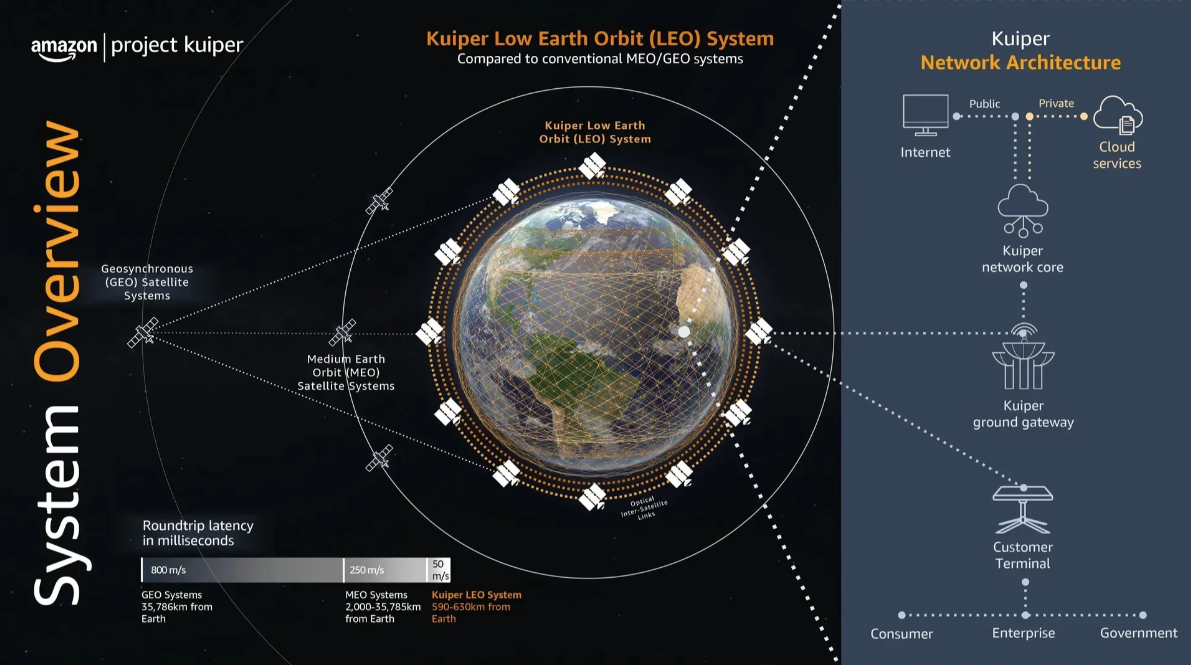
Amazon's satellite business is centered around Amazon Leo (previously known as Project Kuiper), which is currently in a limited commercial testing phase and has deployed about 200-240 satellites, aiming to build an initial constellation of over 3,000 satellites, eventually expanding into thousands. In comparison, SpaceX's Starlink has deployed about 10,000 satellites and serves over 10 million users globally.
After acquiring Globalstar, Amazon will directly obtain its existing LEO satellite fleet (including new satellites to be manufactured by MDA Space) as well as globally authorized MSS spectrum, particularly the Band 53/n53 band, which is critical to the D2D business.
D2D technology allows regular mobile phones to connect directly to satellites for voice, text, and data services without traditional base stations or additional hardware. Amazon plans to deploy the next-generation D2D system starting in 2028, which will provide higher spectral efficiency, faster speeds than traditional direct-connect cellular systems, and seamlessly integrate with existing Leo broadband systems, forming a unified network covering consumers, businesses, and government users. Amazon stated that this network will support hundreds of millions of endpoint devices, filling connectivity gaps in remote areas and disaster scenarios.
Emergency SOS services fully shifting to Leo network
This deal also includes a significant cooperation agreement between Amazon and Apple. The satellite features of devices such as the iPhone 14 and subsequent models, Apple Watch Ultra 3, etc. (including Emergency SOS via satellite, Messages via satellite, Find My, and Roadside Assistance) are currently supported by Globalstar. After the transaction is completed, Amazon Leo will take over powering these services and collaborate with Apple to develop future functionalities. Greg Joswiak, Apple's Senior Vice President of Global Product Marketing, stated: “Emergency SOS via satellite has saved countless lives, and we look forward to continuing our collaboration with Amazon Leo to ensure users have a safe connection when out of network.”
This arrangement not only guarantees a seamless transition of services for Apple users but also opens up a potential market of hundreds of millions of smartphone users for Amazon. Analysts point out that acquiring spectrum assets is far more strategically significant than merely increasing the number of satellites—it allows Amazon to rapidly enter the satellite direct-connect phone space without starting from scratch on new licensing applications.
FCC chair expresses support for competition
On the same day the deal was announced, Federal Communications Commission (FCC) Chairman Brendan Carr stated in an interview with CNBC that he is “very open-minded” about the Amazon-Globalstar transaction, believing it could introduce new competitive forces into the satellite communications market. Carr emphasized that this move aligns with the United States' long-term vision to maintain a leading position in next-generation direct-connect technology. The transaction still requires formal FCC review, but Carr's remarks have cleared some obstacles for regulatory approval.
Directly challenging Starlink, AST, and other competitors
The satellite internet and D2D markets are entering a heated competitive phase. Starlink has rapidly advanced direct-connect phone services through its partnership with T-Mobile and has a vast global user base. AST SpaceMobile is similarly deeply tied with traditional operators like AT&T and Verizon, aiming for D2D as well. Amazon's move is seen as a direct challenge to Elon Musk's SpaceX while also providing more options for mobile operators.
However, Amazon still faces practical challenges. Although the deal brings spectrum and existing satellites, it does not immediately resolve the rocket launch bottleneck. Currently, Amazon relies on launch providers such as Arianespace and Blue Origin, and deploying thousands of satellites requires massive launch capabilities. Unless the launch capacity issue is resolved, narrowing the gap with Starlink may be difficult in the short term.
Market response and valuation considerations
After the announcement, Globalstar's stock rose more than 10% intraday, and Amazon's stock also saw a slight increase. Some analysts believe that the acquisition is valued at roughly 40 times Globalstar's expected income in 2026, which is a high premium, but the strategic significance far exceeds short-term financial considerations. Amazon emphasizes that this move will create jobs, promote supply chain digitization, and aid disaster response and bridge the digital divide.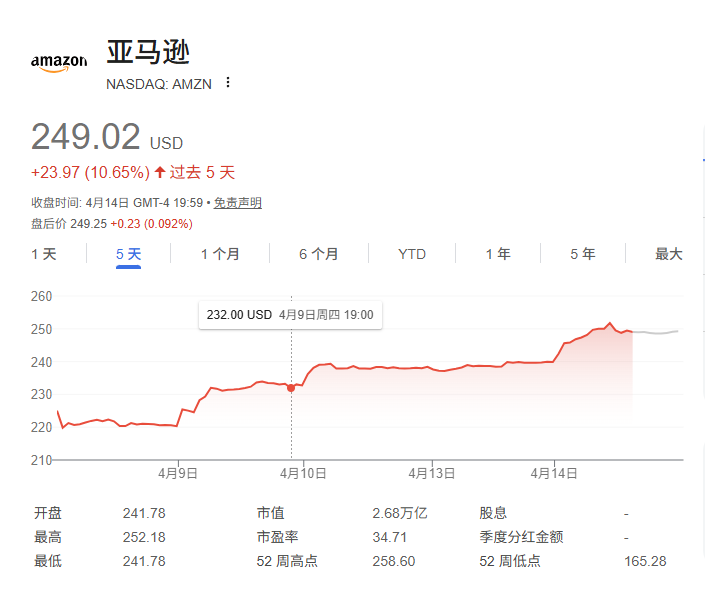
In the context of the booming global space economy, this acquisition highlights the evolutionary trend of low orbit satellites from “broadband access” to “full-scene connectivity.” The Amazon Leo network will serve not only consumers but also support enterprise IoT, fleet management, and government emergency communications. Combined with Amazon's cloud infrastructure (AWS), it may form a “satellite + edge computing + AI” closed-loop ecosystem in the future.
For ordinary users, after 2028, the satellite direct-connect phone service is expected to make “signal dead zones” a thing of the past—whether in remote mountainous areas, oceans, or disaster areas, basic communication will be guaranteed. This is not only a technological advance but also a global upgrade of infrastructure.
Of course, challenges remain: spectrum coordination, international regulation, controlling launch costs, and balancing interests with traditional telecom operators will be realistic issues Amazon must face moving forward. But as Amazon's consistent style shows—ranging from retail to cloud computing to space, this tech giant once again makes a bold bet on future connectivity.
From space economy to the frontier of digital assets
As Amazon makes substantial investments in space internet, satellite communications are transitioning from "niche technology" to "global infrastructure." In this wave of the space economy, the strategic layouts of tech giants often indicate new directions for capital flow. For investors focused on cutting-edge technology and macro trends, understanding these underlying infrastructure changes is helpful to better grasp the asset allocation logic in the digital economy era.
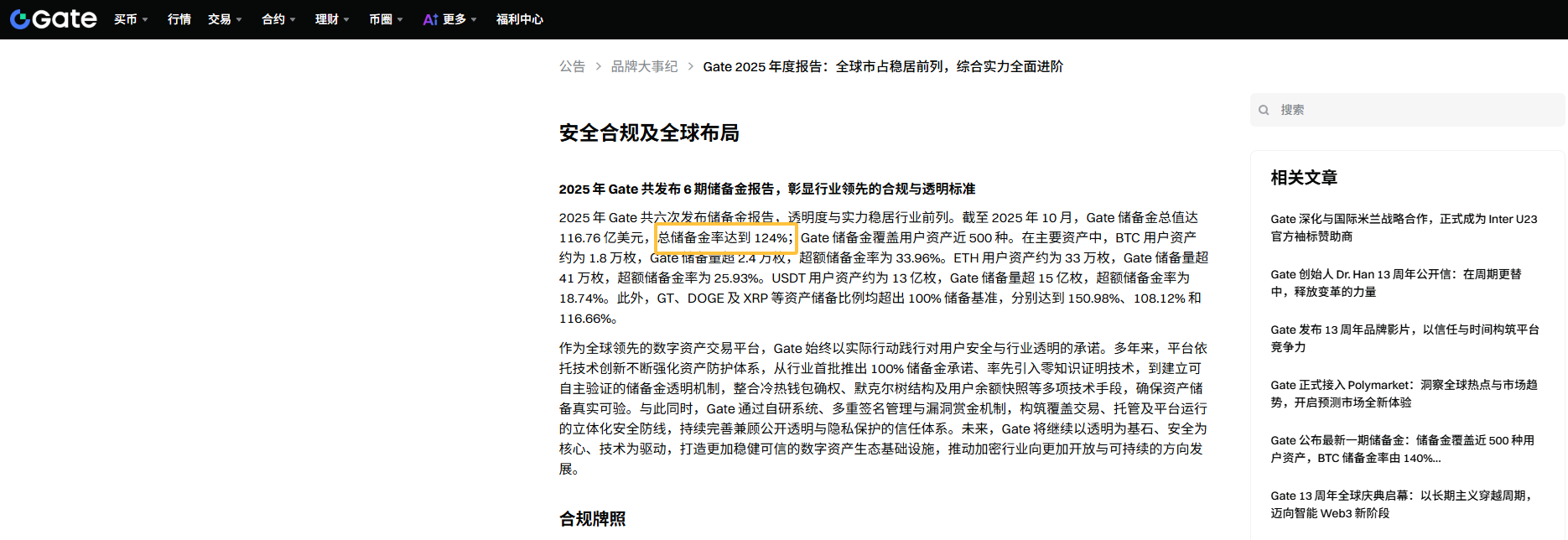
At the same time, another closely related field of “future connectivity”—blockchain and digital assets—is also accelerating its evolution. As one of the world's leading cryptocurrency exchanges, Gate.io has served over tens of millions of users since its inception, supporting the trading of thousands of digital assets, spot contracts, and financial products, and has been the first in the industry to commit to 100% reserve proof, enhancing asset transparency through technologies like Merkle trees and zero-knowledge proofs.
Fast registration:
https://jump.do/zh-Hans/xlink-proxy?id=5
Pre-IPO entry opens, speeding ahead for future unicorns
Gate has officially launched the “Digital Pre-IPOs” participation mechanism, opening a reservation entry to help you participate in early subscriptions for global quality projects with a single click. No complex processes or high capital thresholds are needed, stablecoins can easily be used for subscription, experiencing the convenience and efficiency close to primary markets, allowing individual investors to enjoy the “quasi-listing” dividends.
As an industry pioneer, Gate has taken the lead in laying out digital stock assets, integrating stocks, indices, foreign exchange, commodities, and other diverse assets in the TradFi section, covering various products from spot to contracts, bridging traditional finance and the crypto world.
For users wishing to systematically understand blockchain assets, DeFi protocols, and emerging token economic models, Gate.io can serve as a relatively mature and compliant entry for learning and small-scale practice.
Joining now means not only participating in Pre-IPO but also standing at the starting line of a new era of digital assets—early layout, early benefits, and early wins in the future of on-chain finance!
Register in advance:
https://jump.do/zh-Hans/xlink-proxy?id=5
Join our community, let's discuss and become stronger together!
Official Telegram group:
AiCoin Chinese Twitter:
https://x.com/AiCoinzh
Gate benefit group:
https://aicoin.com/link/chat?cid=de0QGAe7W
免责声明:本文章仅代表作者个人观点,不代表本平台的立场和观点。本文章仅供信息分享,不构成对任何人的任何投资建议。用户与作者之间的任何争议,与本平台无关。如网页中刊载的文章或图片涉及侵权,请提供相关的权利证明和身份证明发送邮件到support@aicoin.com,本平台相关工作人员将会进行核查。