Original Title: Trump's Ceasefire Still Leaves the US and Iran Mired in Quandary
Original Author: Catherine Lucey, Courtney Subramanian, Eric Martin, and Jennifer A Dlouhy, Bloomberg
Translation: Peggy, BlockBeats
Editor's Note: From the threat of the "Stone Age" to the rapid implementation of a two-week ceasefire, the conflict surrounding Iran has undergone a dramatic shift in a short period. On the surface, the situation seems to be cooling and the market rebounding, but deeper structural issues remain unresolved.
On one hand, Donald Trump chose to "step down" under political and economic pressure, temporarily easing market and ally anxieties through a ceasefire; on the other hand, Iran has instead strengthened its control over the Strait of Hormuz during the conflict and is attempting to turn this geopolitical advantage into a long-term bargaining chip. The so-called "ceasefire" is more like an arrangement of exchanging time for space, rather than a true end to the issues at hand.
Meanwhile, the divisions within the United States are also intensifying. There are clear fractures within the Republican Party over whether to cross the threshold into war and whether to accept an agreement that has not yet achieved its core objectives. From the market's violent fluctuations to the inconsistent policy statements, this crisis not only exposes the highly personalized nature of the decision-making process but also prompts a global reassessment of America's credibility and execution capability.
With no clear winner in sight, the conflict is entering a more complex phase: military deterrence, energy competition, and political negotiations are interwoven. The real issue is no longer "whether to ceasefire," but rather how this game will be repriced under the current circumstances where all parties' bottom lines remain firm.
The following is the original text:
US President Donald Trump has two weeks to determine whether he has resolved the knot he tied himself around the Iran issue or whether he has tightened it further.
He announced on Tuesday that he accepted a two-week ceasefire proposal regarding Iran, a news that relieved various capitals around the world and sent financial markets into a frenzy. At least for now, people momentarily set aside concerns that he would continue his attacks on civilian infrastructure and drag the region into deeper conflict with a bombing campaign that he once described as wanting to "bomb Iran back to the Stone Age."
However, beneath the celebratory atmosphere of another TACO Tuesday, the president, known for his last-minute retreats, once again approached the edge of a cliff. A more realistic understanding emerged: none of the core issues have been resolved.
Note: "TACO Tuesday" is a cultural reference. In the United States, many restaurants offer discounts on tacos on Tuesdays, and gradually, "Taco Tuesday" has become a saying that embodies a relaxed, celebratory, and even entertaining atmosphere.
One unresolved key issue is whether the Strait of Hormuz has genuinely restored passage for tankers. Despite Iran sending out vague signals indicating it would allow more ships to pass through this waterway, the reality remains unclear.
Iran has shown little willingness to accept the US's comprehensive demands, whether it's weakening the current regime or supporting a pro-US leadership like that of Venezuela. At the same time, Tehran has not publicly committed to meeting Trump's two core demands: permanently abandoning its nuclear program and fully retiring its ballistic missile system. Furthermore, prior to this, the US president threatened to "wipe out Iranian civilization," and if actually implemented, such statements might have already crossed the boundary of war crimes.
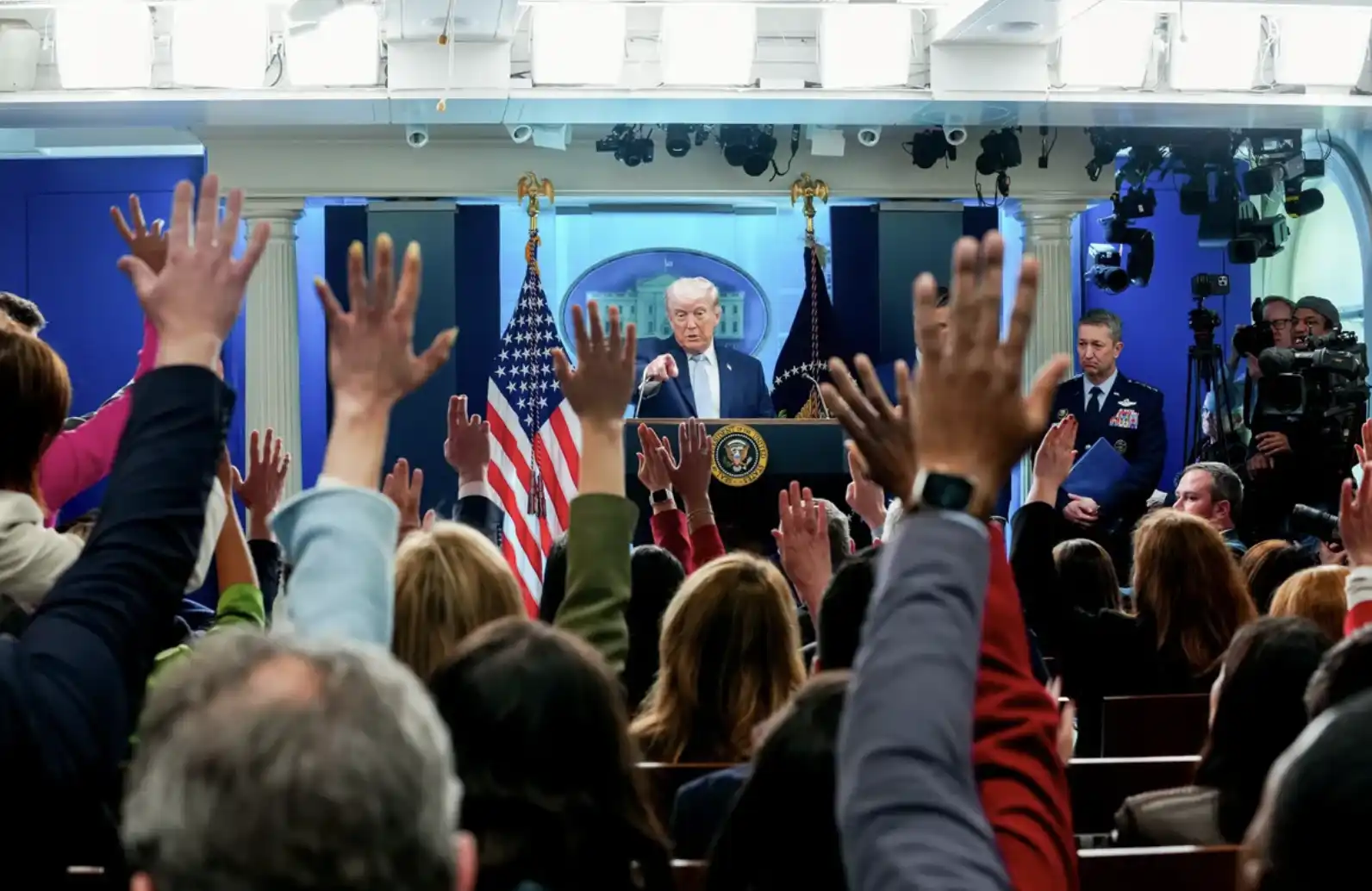
On April 6, US President Donald Trump held a press conference at the White House. (Photo: Aaron Schwartz / CNP / Bloomberg)
Meanwhile, Trump confirmed that a "ten-point plan" proposed by Iran would serve as the basis for future negotiations. Earlier, Tehran had demanded the lifting of sanctions and compensation for war damages. This might also mean the imposition of new fees on ships passing through the Strait of Hormuz, thereby keeping shipping costs and energy prices elevated for an extended period.
From a realistic perspective, for a president under evident political and economic pressure who urgently needs to find an "off-ramp," even if he cannot fully achieve these goals, he might have no choice but to accept.
"Trump clearly hopes to postpone the issue once again, which is not surprising," said Ian Bremmer, founder of the Eurasia Group.
According to an unnamed senior government official, as the 8 PM Tuesday deadline approached, the White House deliberately created an atmosphere of "hanging in the balance." Part of the reason was that the president himself requested the advisory team not to release any signals, allowing the outside world to speculate on his next moves. Meanwhile, the US has also intensified its strikes against Iranian military targets, including its key oil export hub Kharg Island, to enhance its bargaining position in negotiations and demonstrate its military capabilities.
One White House official revealed that despite being in Hungary meeting Viktor Orbán, US Vice President JD Vance played a core role in Tuesday's decision-making process. At one point, a scene unfolded where Vance, during an event with Orbán, connected Trump through a speakerphone; this official also said that the Vice President had privately communicated with a Pakistani official serving as a mediator.
The official further noted that Trump continued to consult with top US national security officials and Israeli Prime Minister Benjamin Netanyahu that day and ultimately spoke with a Pakistani army general to confirm the ceasefire proposal.
Meanwhile, there was much discussion in the White House West Wing due to the release of a report indicating that prior to the outbreak of war, senior officials in the Trump administration had deep skepticism regarding the Israeli assessment that military strikes could trigger a popular uprising in Iran and lead to a new secular government. The report also revealed Vance's initial opposition to launching strikes and the concerns expressed privately by other senior staff members.
Against this backdrop, much of the day on Tuesday, allies from Trump's political coalition repeatedly warned him not to follow through on his previous extreme threats to "end Persian civilization." Conservative podcast hosts even openly discussed whether the Cabinet should consider removing Donald Trump; even Republicans in Congress, who have traditionally supported him, stated that his threats to strike power plants and desalination facilities had crossed a line.
Despite Trump’s Republican Party winning a special election in Georgia that day, the victory margin in this traditionally regarded "safe seat" was significantly narrowed, seen as a potential signal of voter dissatisfaction.
Meanwhile, economic pressures have also been accumulating steadily. Since the conflict erupted in late February, West Texas Intermediate crude oil (WTI) prices have risen nearly 70%, pushing gas station prices above $4 per gallon for the first time in years.
Within an hour of Trump's announcement, oil prices dropped 11%, underscoring the market's prior anxieties about his policy direction. The S&P 500 Index has fallen about 5.2% from its all-time high and just recorded its worst quarterly performance since 2022.
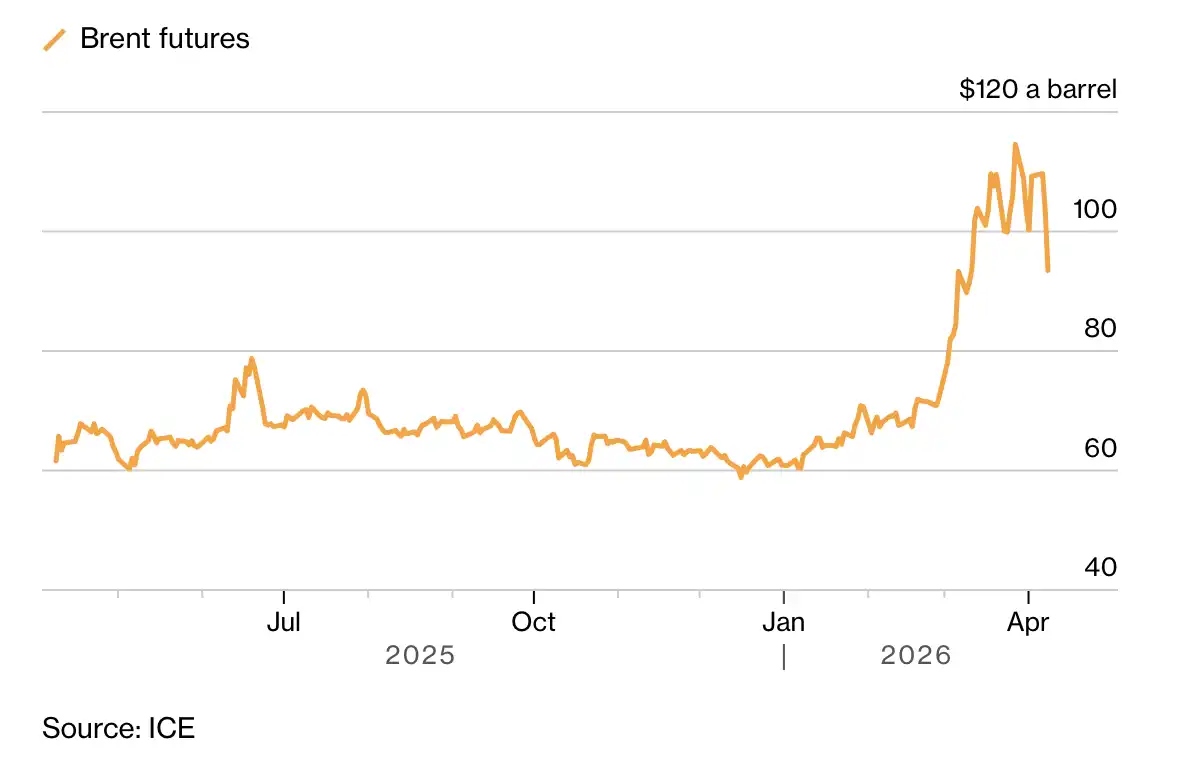
After the US and Iran agreed to a two-week ceasefire, oil prices plummeted. Brent crude dropped as much as 16% on Wednesday.
Trump's decision came at the last moment. According to a US official, it was not until late Tuesday afternoon—only about two hours before he posted on Truth Social announcing the ceasefire—that the president fully listened to the plan proposed by Pakistan. Whether to accept this proposal and whether it met his conditions ultimately depended entirely on Donald Trump himself.
Unknown Details
Although the president claimed in his statement that he had moved this "long-standing issue to a near resolution," there are almost no signs from publicly available information that this military and economic predicament, which poses a serious blow to his political standing, is moving towards genuine alleviation.
Jennifer Kavanagh, military analysis director at the libertarian think tank Defense Priorities, wrote on social media: "Tonight Trump’s decision to step down is indeed a relief. But if he was planning to back down all along, the manner in which he did it is arguably the worst, having raised the stakes repeatedly and severely damaging his own credibility as well as perceptions of US power. This is a clear strategic failure."
In the hours following Trump's announcement of the ceasefire, White House Press Secretary Karoline Leavitt urged caution regarding reports of face-to-face talks, stating that any substantial progress must wait for a formal announcement by the president.
Meanwhile, according to Al Jazeera, Iran’s proposed plan includes demanding the withdrawal of US military bases and deployment sites from the region and the unfreezing of Iran's frozen assets. The likelihood of either the US or Israel accepting these conditions appears quite slim.
Although Washington has generally taken a dismissive stance throughout the conflict regarding Iran, believing Tehran exhibits more flexibility in private negotiations, the stark contrast between public and private stances also highlights the deep divisions and mistrust that Trump must navigate.
Jonathan Panikoff pointed out that for a long-term resolution to be achieved, a series of core issues must be addressed: the future of Iran's nuclear and missile programs, the fate of high enriched uranium reserves, and the permanent assurance of shipping freedom. He stated: "If Iran is willing to open the Strait of Hormuz, the president's acceptance of a two-week ceasefire does indeed provide him with an 'off-ramp' and allows him to declare a phased victory."
Shortly after the ceasefire was announced, Trump stated in an interview with AFP that Iran's uranium reserves would be "adequately handled," but did not specify how, while still referring to the agreement as a "comprehensive victory" for the US.
Energy and the "Off-Ramp"
Throughout his public career, Trump has not been particularly fixated on aligning established goals with reality; under unresolved key issues, he has repeatedly paved the way for his own "withdrawal."
In the past, he has often retreated from the most radical policies and threats. For example, one year ago, after significant declines in the financial markets, he swiftly made concessions just days after implementing global tariffs.
The administration may be hoping that voters have short memories, that the economy gradually recovers after the conflict's shocks, and that the retaliation from Iran, something even Trump himself did not foresee, can be absorbed by time.
But if an agreement cannot be achieved that approaches the president's initial vision, the White House will inevitably face severe scrutiny. Jon Hoffman, a defense and foreign policy researcher at the Cato Institute, stated: "Overall, Trump’s original goals were extremely radical, including destroying the Iranian nuclear program and even pushing for regime change, but neither of these objectives has been achieved."
Connecticut Democratic Senator Chris Murphy warned that if a deal ultimately solidifies Iran's control over the Strait of Hormuz, it would have "catastrophic consequences" for the world. He said in an interview with CNN: "It doesn't even sound like we have genuinely reached an agreement, because Trump's statements are completely inconsistent with those from Iran. If Iran ends up permanently controlling the Strait, what a serious misjudgment that would be, and how failed this entire operation would appear."
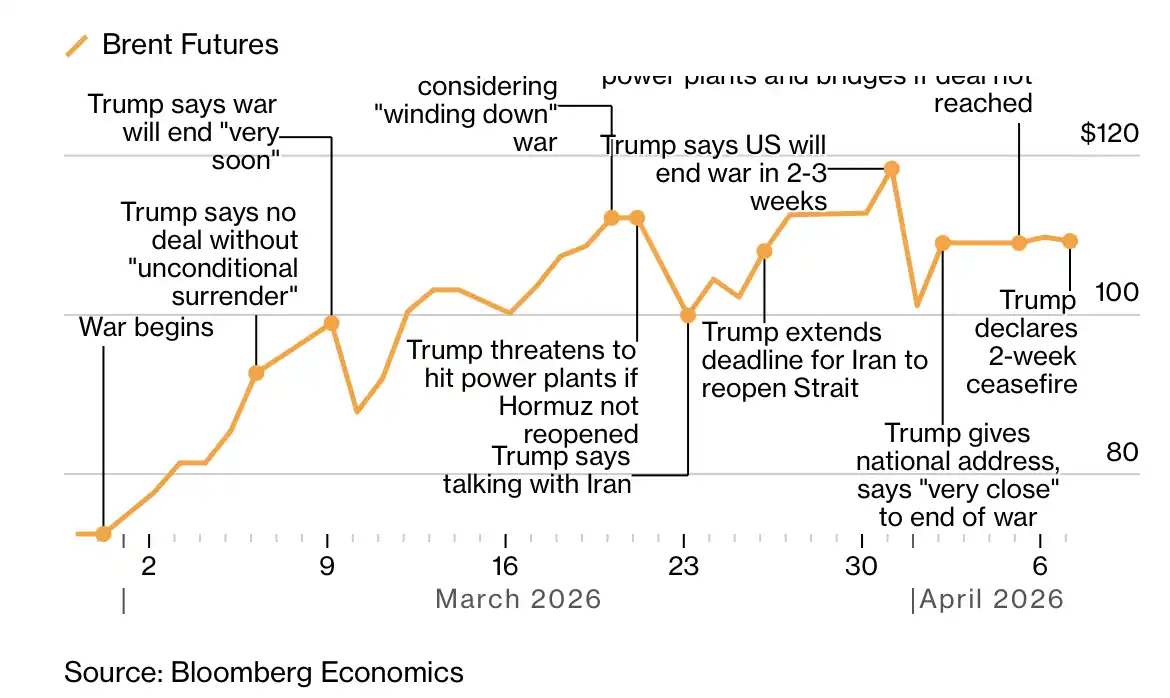
Trump's verbal fluctuations. Trump's public statements on the Iran war issue have repeatedly triggered volatile movements in oil prices.
For the United States, a rather ironic reality is that the prolonged five-week conflict may have actually increased Tehran's leverage in the global economy. During the conflict, Iran has in fact reinforced its control over the Strait of Hormuz, nearly closing passage to countries it deemed "hostile," and is currently advancing a plan to impose "tolls" on tankers passing through this waterway.
Clayton Seigle, a senior fellow at the Center for Strategic and International Studies based in Washington, stated: "Iran is almost impossible to relinquish its newly gained, or at least bolstered claims to control over the Strait."
Kevin Book, CEO of ClearView Energy Partners, noted that the market sees this ceasefire as an important signal largely because it includes a commitment to reopen the Strait of Hormuz.
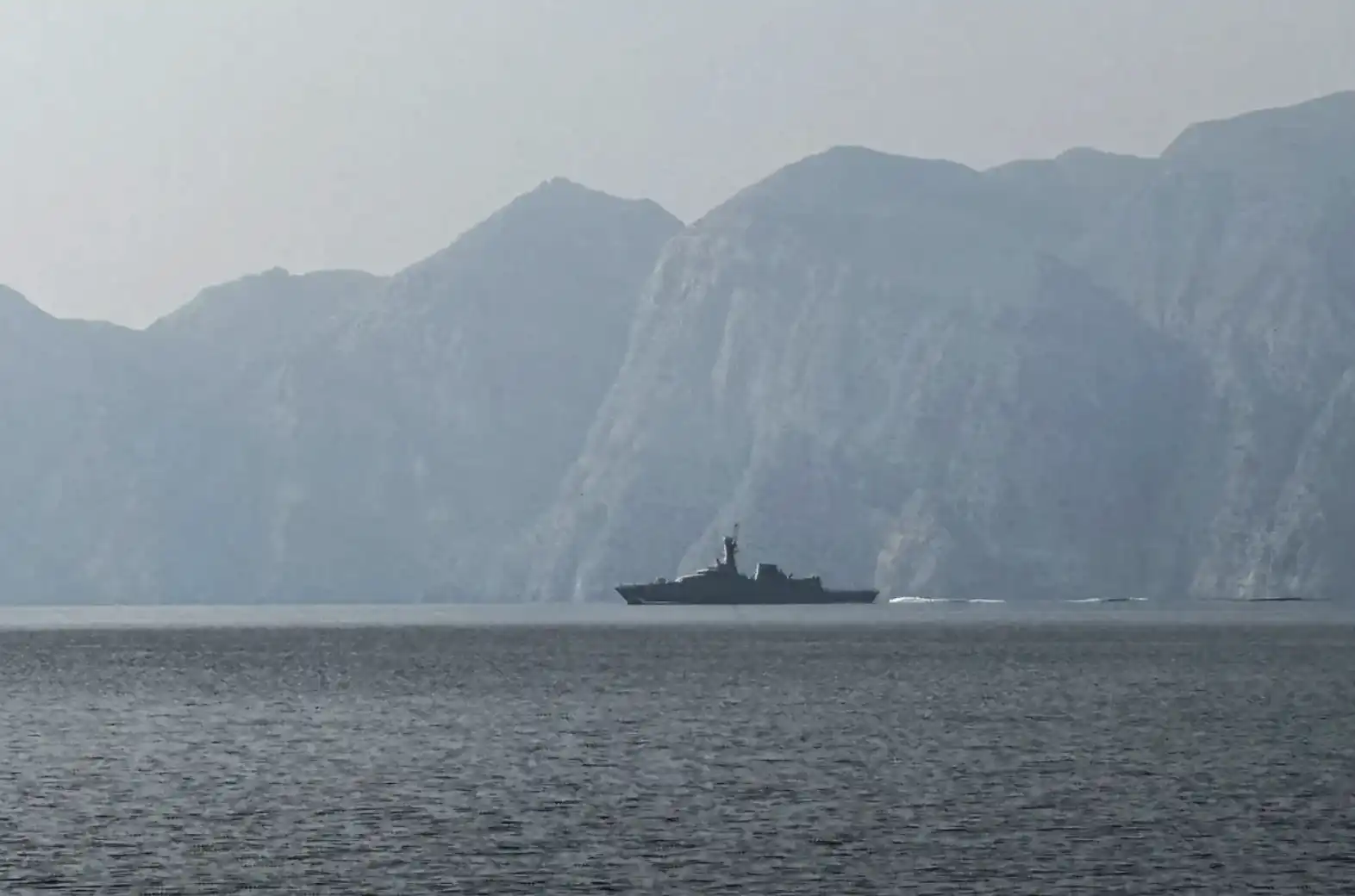
On March 1, 2026, a naval vessel navigates the Strait of Hormuz. (Photo: Sahar Al Attar / AFP / Getty Images)
Meanwhile, the likelihood of a significant decline in oil prices in the short term remains low.
Kevin Book remarked: "The lower limit for oil prices still hovers around $100 per barrel." He added that if Donald Trump had actually executed the threatened military actions and provoked retaliation from Iran, the world could have faced an "unlimited" surge in oil prices.
Divisions Within the GOP
Trump also needs to repair the divisions that have emerged within his party on this issue. On Tuesday, clear rifts appeared among Republicans regarding whether to take a tougher stance against Iran.
Before the ceasefire, Trump had warned that "a whole civilization will be heading towards destruction tonight." In response, Texas Congressman Nathaniel Moran, who was endorsed by Trump, expressed concern on social media, stating that the US is straying from the "national defense principles that have long guided America."
Wisconsin Republican Senator Ron Johnson stated that attacking civilian infrastructure would be "a huge mistake."
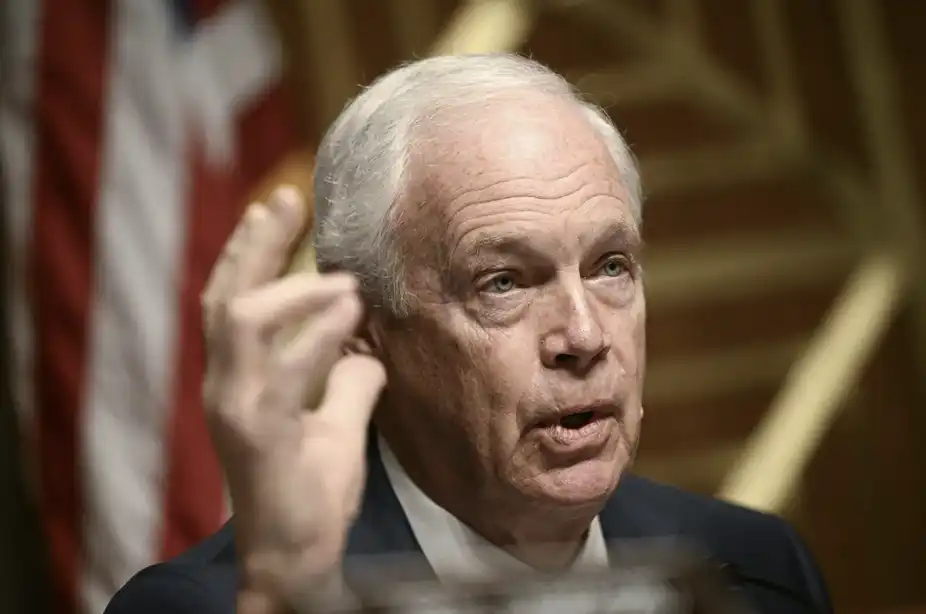
Wisconsin Senator Ron Johnson. (Photo: Brendan Smialowski / AFP / Getty Images)
"If he attacks civilian targets, I cannot support him anymore. Whatever action we take must adhere to the laws of war," Johnson said in an interview with The Wall Street Journal.
He also said in a podcast with host John Solomon: "I hope and pray that Trump is just bluffing. We are not against the Iranian people; our goal is to 'liberate' them." Some former Trump allies, including Tucker Carlson, former Congressman Marjorie Taylor Greene, and former White House official Anthony Scaramucci, have also joined the call for his resignation due to his previous threats.
After Trump shifted to de-escalate the situation, conservative opinion leaders Laura Loomer and Senator Lindsey Graham—who had initially been his main supporters for strong action against Iran—began to express concerns about the ceasefire agreement.
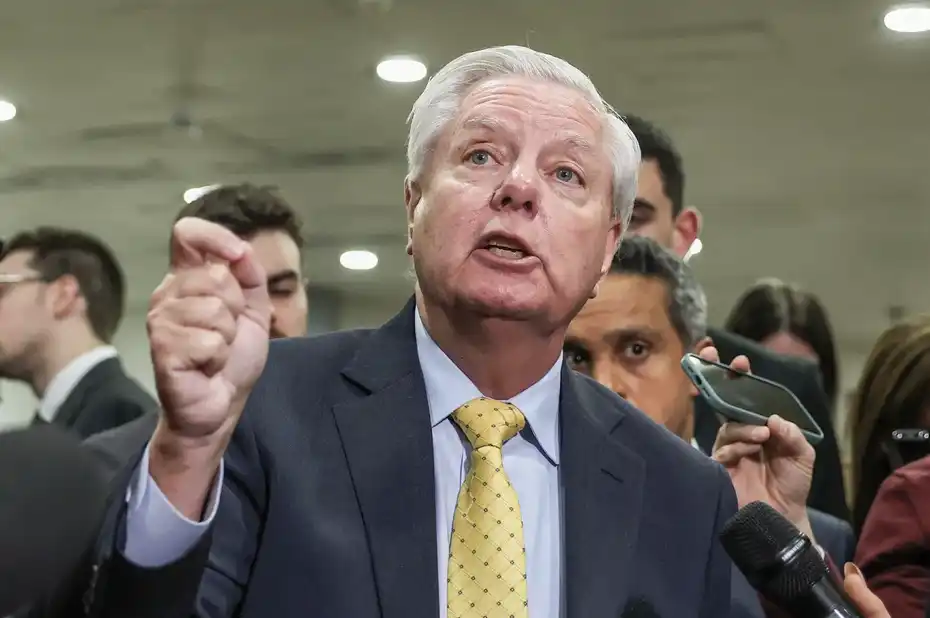
South Carolina Senator Lindsey Graham. (Photo: Anna Moneymaker / Getty Images)
"I don't understand why anyone considers this a victory," conservative opinion leader Laura Loomer wrote on social media, "The Muslim community, the so-called 'Woke Reich,' and the anti-Trump camp are attacking President Trump through this 'negotiation,' while praising Tucker Carlson's allies and calling for the use of the 25th amendment against Trump."
This Republican senator from South Carolina stated that Americans "must remember that after the outbreak of war, it was Iran that attacked the Strait of Hormuz, undermining freedom of navigation."
"Moving forward, it is critical not to allow Iran to reap any benefits from this hostile act against the globe," Graham wrote on social media. He also added that the US must ensure control over "every bit" of highly enriched uranium within Iran.
"Time will provide the answer," the senator stated.
免责声明:本文章仅代表作者个人观点,不代表本平台的立场和观点。本文章仅供信息分享,不构成对任何人的任何投资建议。用户与作者之间的任何争议,与本平台无关。如网页中刊载的文章或图片涉及侵权,请提供相关的权利证明和身份证明发送邮件到support@aicoin.com,本平台相关工作人员将会进行核查。


