On the morning of April 9, the most concentrated macro theme in the market is not "a ceasefire brings recovery", but rather a more troublesome matter: the ceasefire has not clarified the path ahead for the Federal Reserve. The Wall Street Journal directly titled its article "Why the Prospects for Federal Reserve Rate Cuts Look Dim Regardless of a Ceasefire"; Bloomberg, at the same time, provided another clue that was more straightforward, noting that gold remains elevated amid persistent risk aversion, and oil prices have not completely surrendered wartime gains. For the market, this is not simply a matter of risk perception rising or vanishing, but rather both growth concerns and inflation worries are on the rise.
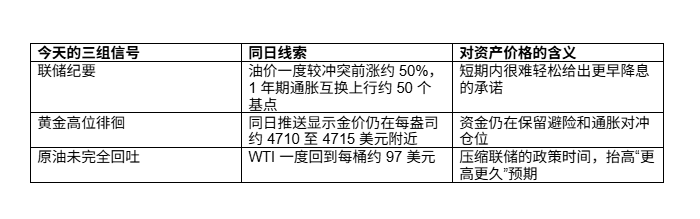
The real confirmation of this contradiction comes from the minutes of the Federal Reserve's meeting released on April 8, 2026, covering March 17 to 18. The minutes are written with restraint, but the market changes described within are significant: during the period leading up to the meeting, front-month crude oil futures had risen by about 50% compared to before the conflict, and one-year inflation swaps also increased by about 50 basis points. The so-called one-year inflation swaps, in simple terms, represent the market's rapid pricing of inflation compensation for the next year, reflecting changes in sentiment earlier than many lagging economic indicators. Meanwhile, broad stock prices fell by about 5%, and the interest rate market pushed back pricing for rate cuts in 2026.
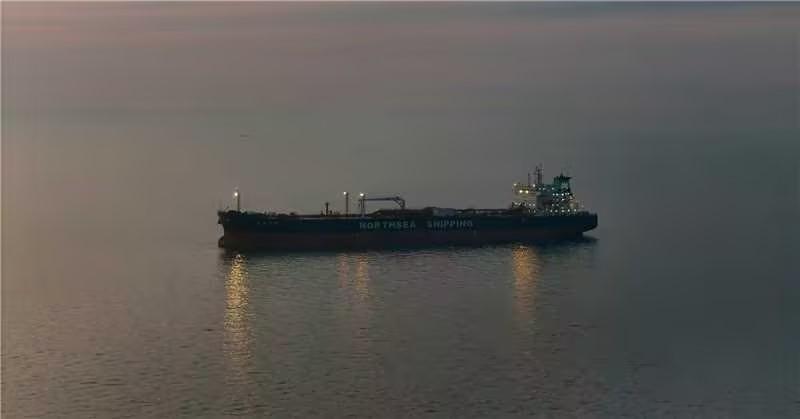
Figure 1: Cargo ships in transit
From a trading perspective, this combination is quite awkward. Rising oil prices and inflation compensation usually compress the space for the Federal Reserve to shift to an easing policy quickly; however, stock market pullbacks, declining growth expectations, and geopolitical conflicts may push safe-haven funds back into gold and U.S. Treasuries. It is precisely because these two forces are present simultaneously that the market becomes more cautious about whether "the next step is a rate cut or maintaining the current stance." A ceasefire can only mitigate the most extreme tail risks, but cannot immediately restore already damaged energy transportation, inventory arrangements, and corporate pricing expectations.
Why the Ceasefire Makes Judgments More Difficult
If the conflict escalates, the Federal Reserve at least knows it should address tightening financial conditions and declining employment first; if energy prices fall back quickly, policymakers can more easily classify this shock as a brief geopolitical noise. The trouble is that neither side has completely settled down now. The ceasefire is fragile, arrangements for transportation in the Strait of Hormuz have not fully recovered, but caution about fuel, transport, and insurance costs remains on the corporate side. What policymakers least want to face is this situation of "the worst case has not occurred, but the costs have already begun to transmit."
There is another detail in the minutes worth noting: the meeting record mentions that market participants were no longer fully betting on an earlier timeline for the first rate cut; some pricing was pushed back to December, and some began discussing the possibility of further rate hikes in early 2027. This does not mean the Federal Reserve is ready to raise rates again, but rather, as long as the energy shock has not completely receded, the market prefers to leave a layer of insurance for a higher and longer rate path. For the stock market and high-valuation assets, this layer of insurance itself is pressure.
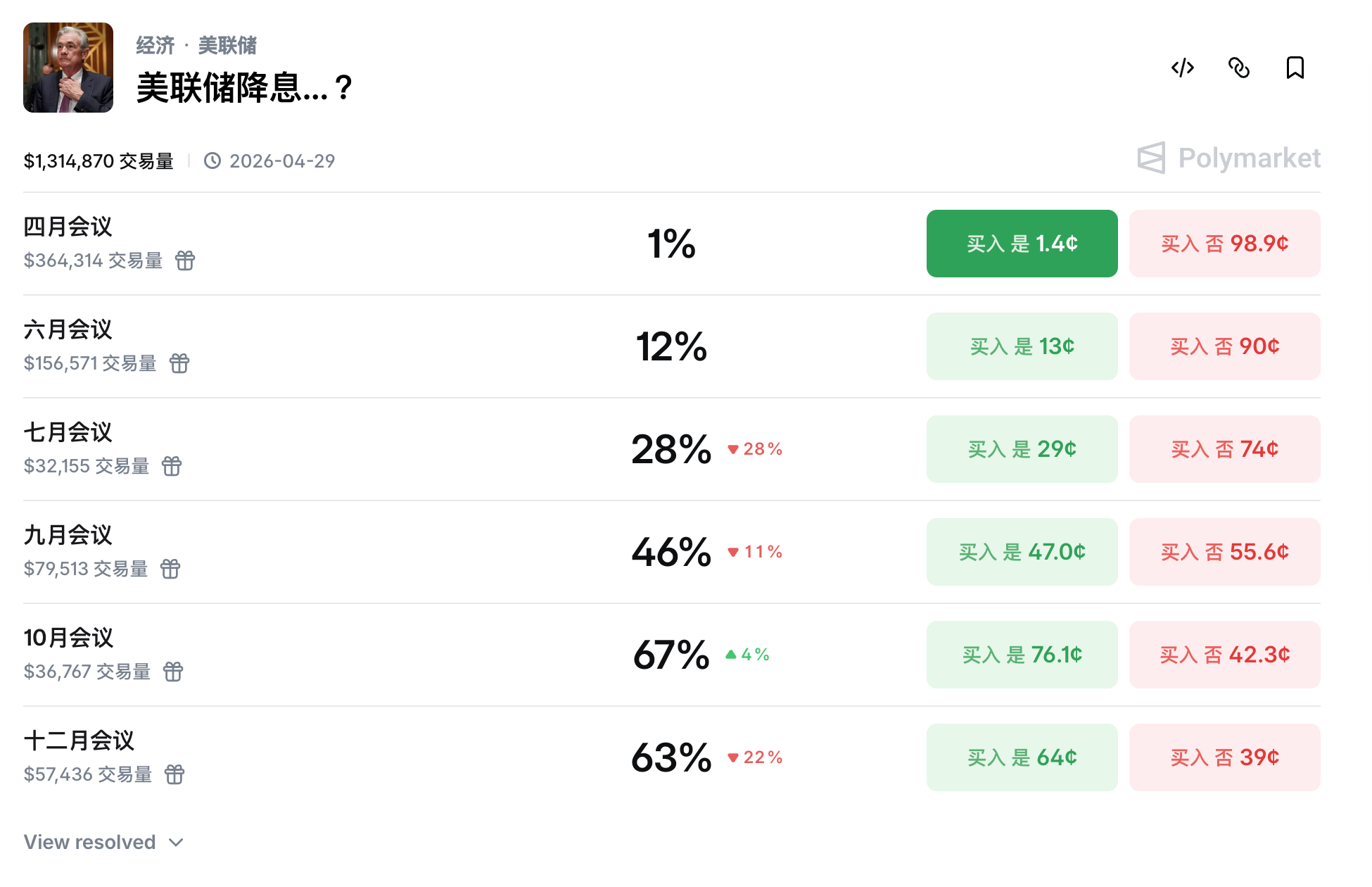
Figure 2: Polymarket's Market Implied Pricing for Rate Cuts in 2026, Indicating a Low Probability for Earlier Rate Cuts
Why Gold Has Not Significantly Weakened Due to the Ceasefire
By conventional understanding, a ceasefire should weaken the safe-haven demand for gold. However, today’s market does not conform to this logic exclusively. Gold is still hovering near $4710 to $4715 per ounce, indicating that buying interest has not fully retreated due to the tempering headlines. One reason is the weak dollar, and yields have not formed a one-sided rise; another more realistic reason is that the market is still leaving positions for potential fluctuations in the Middle East in the coming weeks.
In other words, gold at this moment is neither purely panic trading nor entirely a loose trading environment. It is more like the market hedging against a period of policy silence: inflation risks cannot easily be declared over, while growth risks also cannot be ignored. In such an environment, gold's stability itself is a signal, indicating that capital is not yet willing to completely smooth out this line.
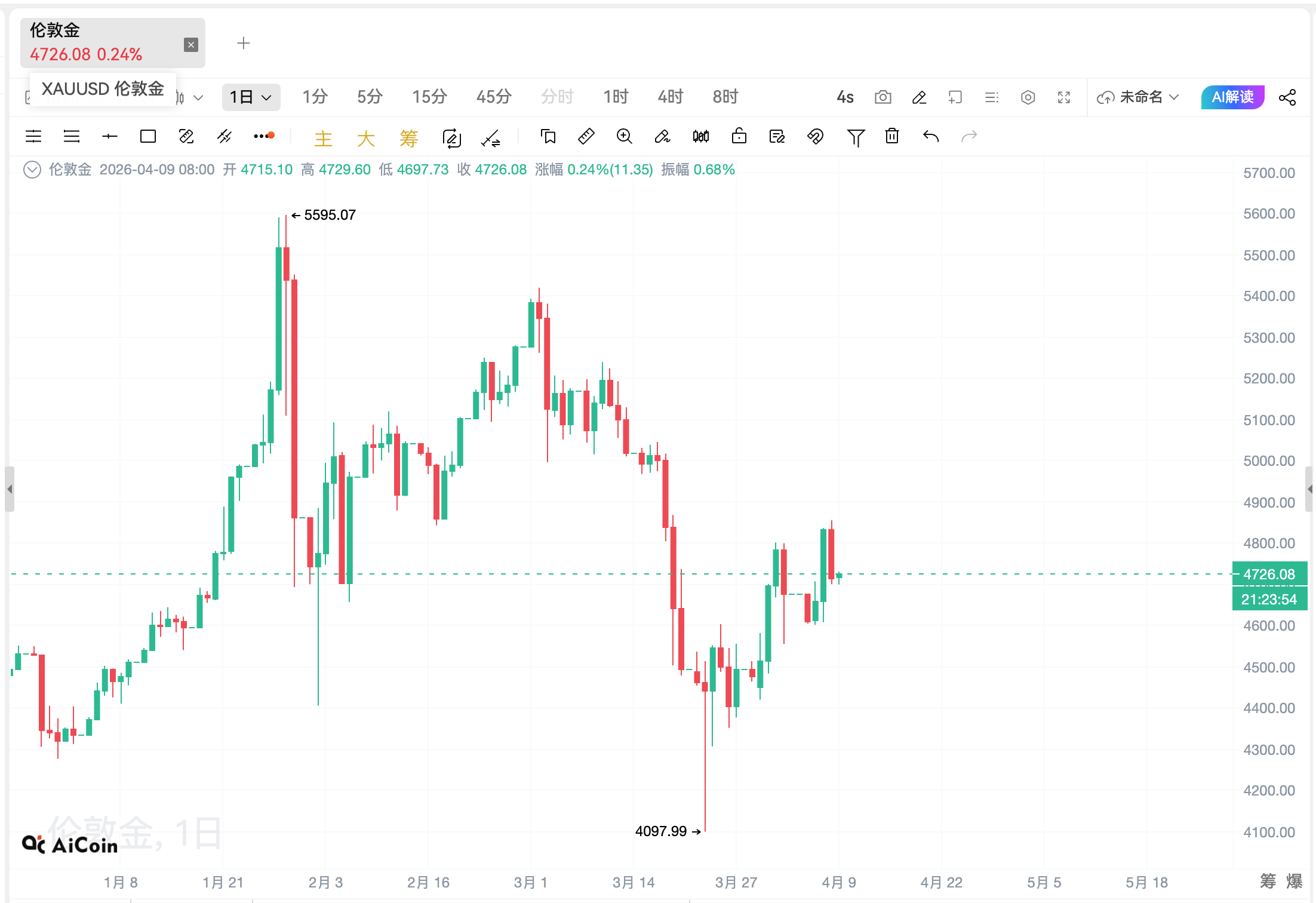
Figure 3: Polymarket's Market Implied Pricing for Rate Cuts in 2026, Indicating a Low Probability for Earlier Rate Cuts
Oil Prices Return to Around $97, What Really Affects the Fed's Timing
Today another hot topic is crude oil. According to the Wall Street Journal, WTI briefly returned to around $97 per barrel, with the market still concerned about transit through the strait and the speed of Middle Eastern supply recovery. The significance of this price level is not just whether consumers will pay a bit more at the pump, but whether it will deter the Federal Reserve from potentially opening a looser window earlier. Energy prices first raise inflation expectations, then squeeze household real purchasing power, and ultimately impede growth; this chain is familiar in past geopolitical shocks. The difference this time is that it appears simultaneously with the ceasefire news, making policy judgments more complicated.
Conclusion
What truly deserves to be written about today’s wave of hot topics is not the quick conclusion "a ceasefire is good for risk assets," but rather that the ceasefire has not rescued the market from its dilemma. The Federal Reserve is now confronted not with a singular directional macro signal but with a simultaneous intermingling of energy, inflation expectations, asset prices, and growth worries. As long as oil prices and gold remain in a high range, and as long as geopolitical risks may repeatedly arise, the matter of rate cuts is unlikely to be smoothly restored by the market as a primary trajectory.
A more accurate statement might be that the ceasefire has lowered the probability of the worst-case scenario, but has increased the length of the policy observation period. For traders, this means that direction may not be as important, while timing is more crucial. Whoever confirms first, whoever reverses first; for the next few weeks, the market will likely focus on these two questions.
If this macro trend continues to evolve, what truly needs to be prepared in advance is often not the viewpoint but the execution channel. Platforms like OKX are better suited for preparing accounts, deposits and withdrawals, and trading permissions in advance so that when market fluctuations amplify, one is not scrambling for an entrance. OKX account opening link:
https://jump.do/zh-Hans/xlink-proxy?id=2
Invitation code aicoin20, permanent commission of 20%
免责声明:本文章仅代表作者个人观点,不代表本平台的立场和观点。本文章仅供信息分享,不构成对任何人的任何投资建议。用户与作者之间的任何争议,与本平台无关。如网页中刊载的文章或图片涉及侵权,请提供相关的权利证明和身份证明发送邮件到support@aicoin.com,本平台相关工作人员将会进行核查。