Background
As the situation in the Middle East continues to escalate, the U.S. Bitcoin spot ETF has become the most direct channel for institutional funds to enter and exit Bitcoin, with its weekly flow becoming the most sensitive barometer of market risk appetite. Real-time tracking data from the AiCoin platform shows that in the recently concluded 115th week (corresponding to the core trading period from March 24 to 31), a total net outflow of 4,535 BTC from 14 Bitcoin spot ETFs in the entire market significantly widened from the 1,074 BTC net outflow in the 114th week, increasing more than threefold. This data aligns closely with the market's core judgment that the "war trend exceeded market expectations": Trump's narrative of "negotiating a solutions" has completely fallen through, the Iran conflict has lasted a full month and shows signs of spreading, leading to a significant rise in investor risk aversion. As an independent third-party data platform, AiCoin will provide professional and transparent in-depth interpretations for investors based on the platform's proprietary metrics for total market positions, flows, and macro link indicators.
1. Data Performance
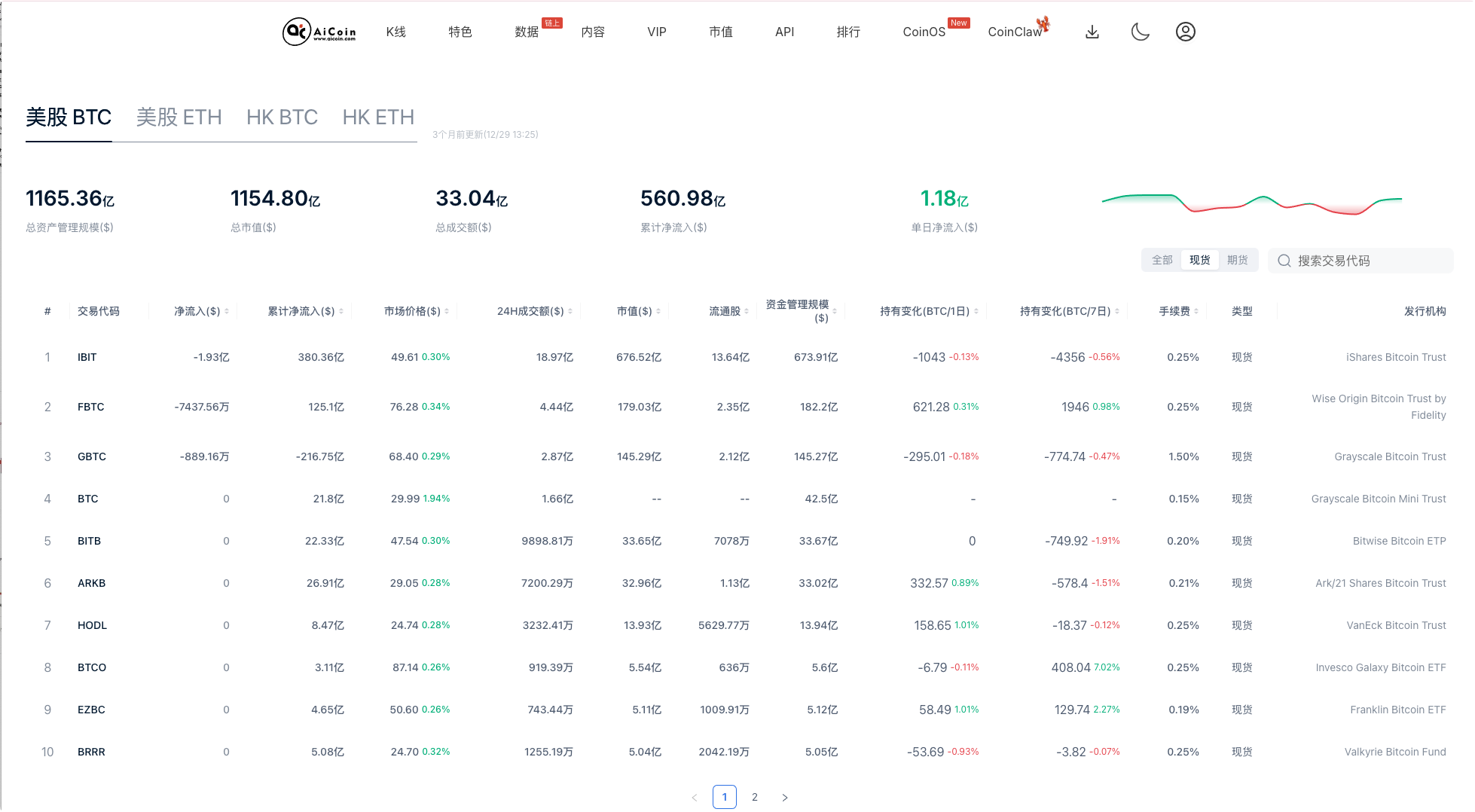
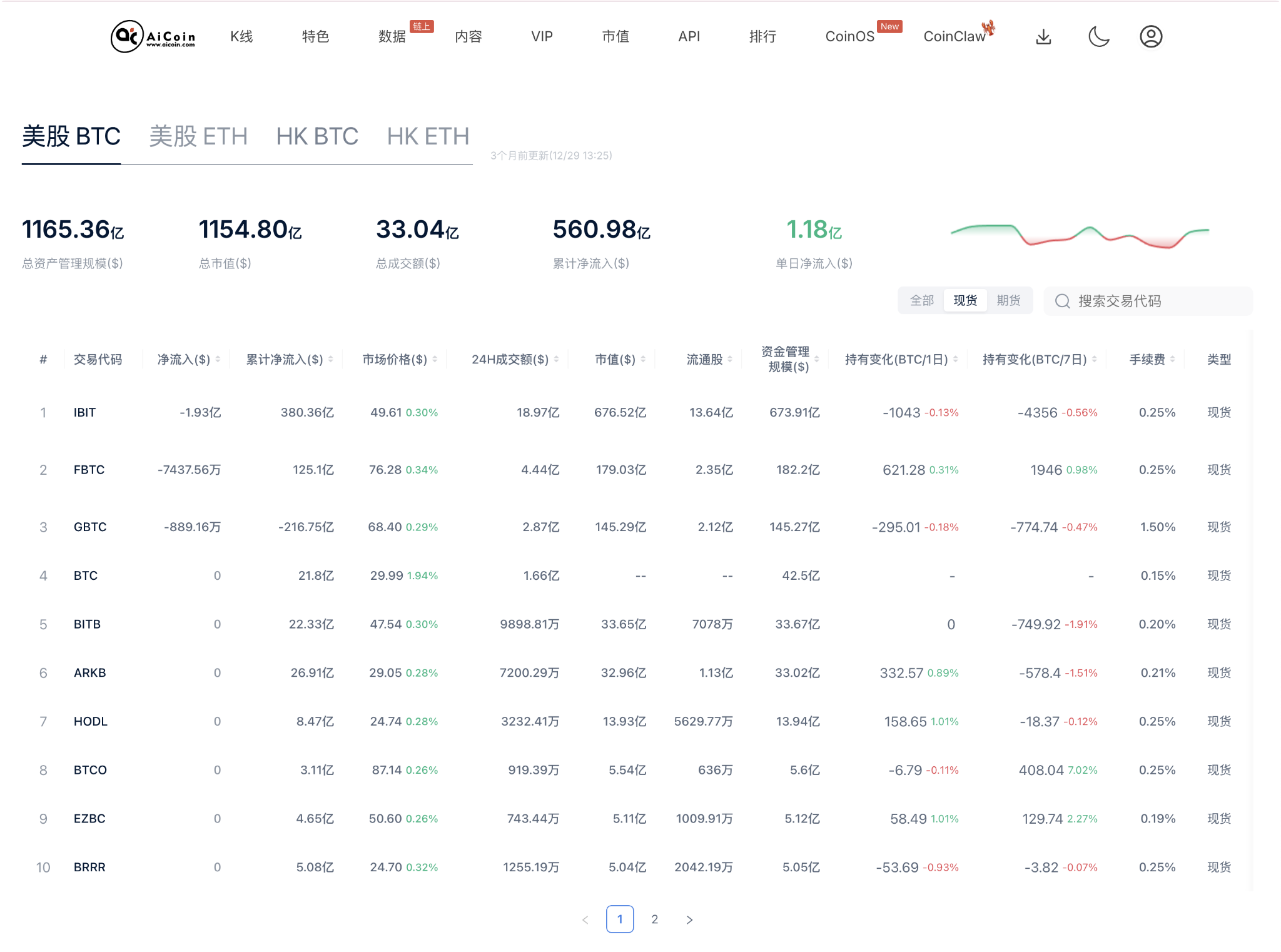
The latest statistics from the AiCoin platform (as of the market close on March 31, 2026) show that the overall operation of U.S. Bitcoin spot ETFs remains at historical highs, but weekly outflow pressure has sharply increased:
- Total Assets Under Management: $116.536 billion
- Total Market Value: $115.480 billion
- Total Transaction Amount: $3.304 billion
- Cumulative Net Inflow: $56.098 billion
- Single-Day Net Inflow (March 31): +$11.8 million (short-term technical recovery, but unable to reverse weekly trend)
Individual Stock 7-Day Position Changes:
- IBIT (iShares Bitcoin Trust): -4,356 BTC (-0.56%), single-day net inflow -$193 million
- FBTC (Fidelity Wise Origin Bitcoin Trust): +1,946 BTC (+0.98%), single-day net inflow -$74.375 million
- GBTC (Grayscale Bitcoin Trust): -774.74 BTC (-0.47%), cumulative net inflow still at -$21.675 billion
- Products like BITB, ARKB, and HODL showed negative values or zero inflows over the 7-day period, presenting an overall pattern of "main product differentiation, mainly net outflows."
Daily Flow Breakdown:
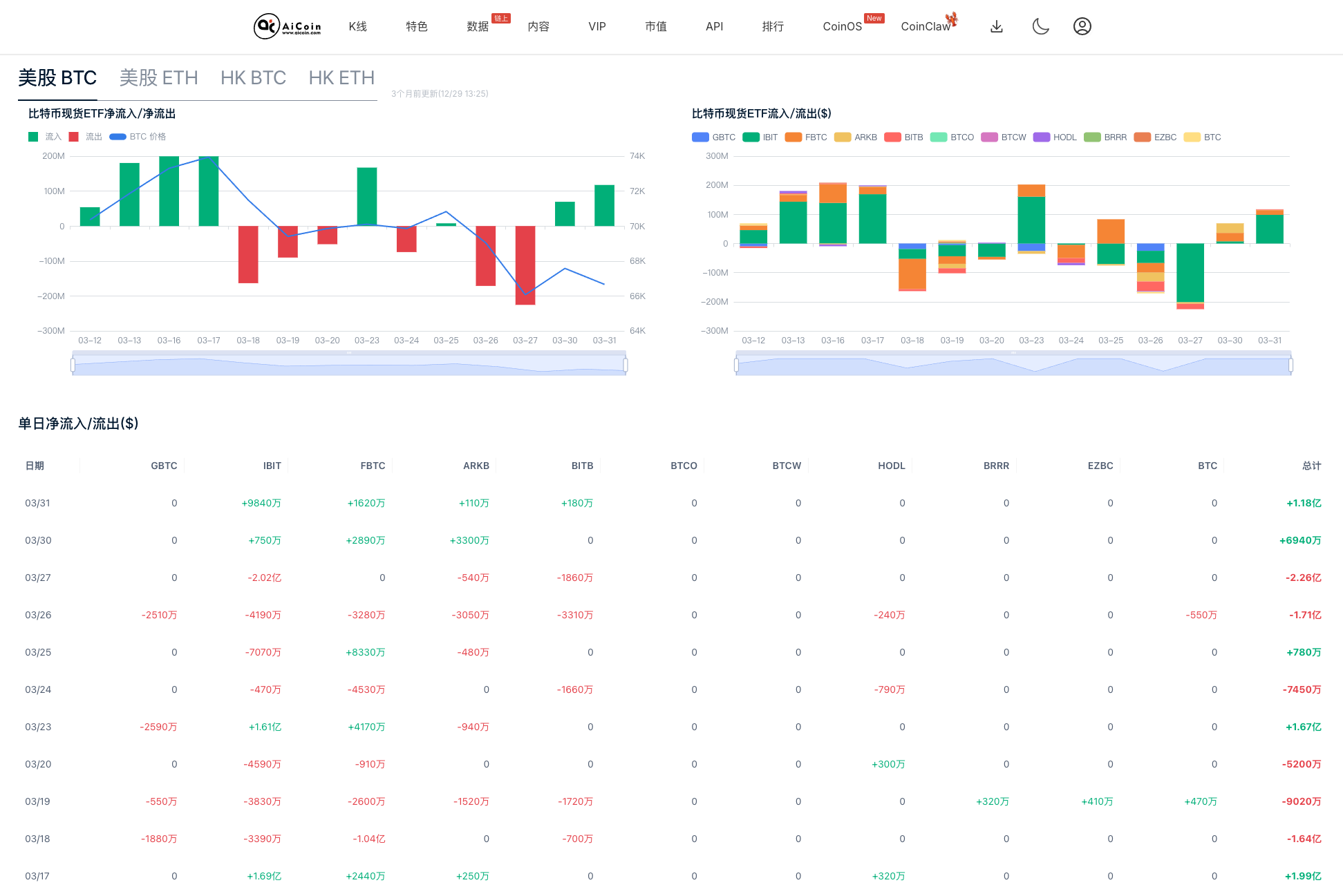
The left bar chart shows that the green inflow bar for late March has significantly shortened, with the red outflow bar peaking on March 26-27; the right stacked bar chart further breaks down that IBIT, FBTC, and other major ETFs contributed to most of the outflow pressure. The daily table below confirms: the continuous large outflows of -$226 million on March 27 and -$171 million on March 26 directly constitute the core reason for the net outflow of 4,535 BTC in the 115th week. The +$11.8 million recovery on March 31 was mainly driven by IBIT (+$98.4 million) and FBTC (+$16.2 million), but it represents an emotional repair rather than a trend reversal.
Exclusive Benefits for AiCoin Users
As market volatility intensifies, data analysis becomes crucial, and efficient trading tools are equally important.
Register for OKX Now, use the exclusive invitation channel to enjoy a permanent 20% fee rebate (applicable to both spot and contract trades, automatically settled).
Long-term trading saves more costs, helping you better grasp BTC ETF and spot opportunities.
Click to register and enjoy the benefits:
https://jump.do/zh-Hans/xlink?checkProxy=true&proxyId=2
2. Macroeconomic and News Aspects
The direct catalyst for the enlarged outflow in the 115th week is the rapid disproof of the geopolitical "expectation gap." Previously, the market generally believed that Trump's proclamation of being able to "negotiate solutions" was actionable and thought that the conflict would not escalate into systemic risk. However, entering the 115th week, reality quickly broke through expectations:
- Iran explicitly denied any possibility of negotiations;
- Iraq directly attacked Iranian industrial facilities during Trump's "negotiation window";
- Iran's retaliatory actions are imminent; the conflict has lasted a full month and shows signs of further escalation.
This unexpected deterioration directly translates into three macro shocks: a rapid rise in oil prices pushing up global inflation expectations, the market simultaneously raises the probability of a recession in the U.S. and the probability of the Federal Reserve raising interest rates; Bitcoin as a typical risk asset sees its beta coefficient amplified, and institutional funds shift from "wait-and-see" to "decisively hedging." Historical backtesting on the AiCoin platform shows that similar geopolitical black swan events often accompany a 20%-300% increase in the weekly outflow of BTC spot ETFs, and the threefold increase this week fully aligns with this historical pattern.
3. In-Depth Analysis
From the perspective of institutional behavior, the net outflow of 4,535 BTC in the 115th week is essentially a complete disproof of the market's core expectation regarding "whether Trump can effectively control the situation." Unlike the "controllable war narrative" of the previous two weeks, the current Middle East conflict has escalated from a short-term event to a source of medium-to-long-term uncertainty, compounded by the macro negative feedback loop of oil prices, inflation, and recession, leading to sustained pressure on risk assets.
The unique "Position Change (BTC/7 Days)" indicator from the AiCoin platform shows that the outflow pressure of leading products like IBIT and GBTC is concentratedly released, reflecting institutions' rapid pricing adjustments to "war premiums" in a high-position environment. Combined with the right stacked chart, it can be seen that the red outflow bars of several ETFs from March 18 to 27 declined in synchronization with the blue line of BTC prices, further validating the contagious nature of risk aversion sentiment.
Moreover, the small recovery of +$11.8 million on March 31 did not accompany a substantive improvement in position structure (most products still show 0 inflow or slight outflow), indicating that the current rebound is more likely a technical repair rather than a reversal of fund trends. AiCoin's historical data model shows that such geopolitically driven expansions in weekly outflows typically herald a phase of 1-4 weeks under pressure for risk assets, unless there are clear signs of diplomatic de-escalation (such as breakthroughs in multilateral negotiations); otherwise, institutional hedging behavior will remain elevated.
Summary
The net outflow of 4,535 BTC from U.S. Bitcoin spot ETFs in the 115th week, expanding more than threefold from the previous week, is a direct result of the deterioration of geopolitical conflicts beyond expectations and the repricing of institutional risk appetite. The AiCoin platform will continue to monitor changes in total market holdings, fund flows, and their linkage to BTC prices in real-time, providing investors with the most transparent third-party data references.
For more complete charts, historical comparisons, and real-time updates, please visit AiCoin's U.S. BTC Spot ETF section:
https://www.aicoin.com/zh-Hans/web3-etf/us-btc?lang=cn
免责声明:本文章仅代表作者个人观点,不代表本平台的立场和观点。本文章仅供信息分享,不构成对任何人的任何投资建议。用户与作者之间的任何争议,与本平台无关。如网页中刊载的文章或图片涉及侵权,请提供相关的权利证明和身份证明发送邮件到support@aicoin.com,本平台相关工作人员将会进行核查。