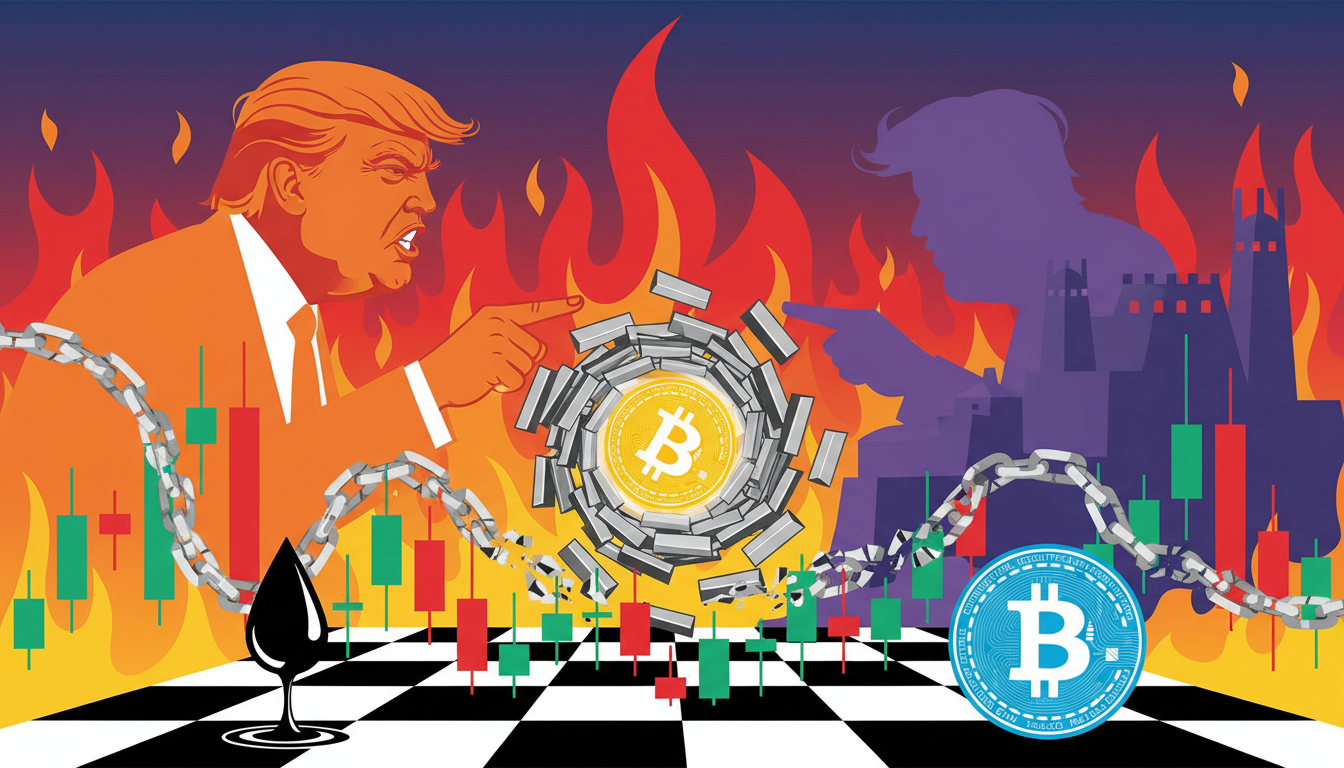
On March 31, 2026, Eastern Standard Time, the tension between the United States and Iran escalated further. U.S. Secretary of Defense Hegseth publicly warned that, “the coming days will be a decisive moment for war with Iran”, a statement that ignited the market's imagination about the escalation of war. In the wake of this tough stance, oil prices and volatility quickly increased, accompanied by a surge in the buying of safe-haven assets like gold and U.S. Treasuries, while the sentiment for high-beta risk assets noticeably shrank, with funds rapidly shifting between commodities, interest rate assets, and equity assets. Meanwhile, three distinctly different samples of capital surfaced: a mysterious whale made a one-time injection of nearly $20 million to heavily bet on oil; Berkshire Hathaway founder self-deprecatingly remarked, “I sold Apple too early,” while acquiring $17 billion worth of U.S. Treasury bonds (according to a single source); and Cross River Bank publicly stated that “the funds raised will be used to expand AI and cryptocurrency business” after completing a $50 million financing round, with a valuation slightly above $3 billion (according to a single source). Amid the intertwining shadows of war and volatility in asset prices, a core question is becoming increasingly sharp: when local geopolitical risks rise, where does global capital choose to hide, and where does it choose to attack?
Countdown to War and Bets on Oil Bull
Following Hegseth’s assertion that “the coming days will be a decisive moment for war with Iran,” the market quickly entered a war rehearsal mode. The reason this statement is so impactful is that it pins down a previously vague geopolitical friction to a specific time window—“the coming days.” For any market that relies on energy supply expectations for pricing, these days are no longer just a news cycle; they are a critical point for repricing the probability and magnitude of supply disruptions, with panic sentiments first manifesting in the oil market.
Against the backdrop of rising conflict, the typical movement for oil often involves price surges coupled with soaring volatility. On the price side, traders would preemptively factor in risk premiums for potential disruption to the Middle Eastern supply chain, pushing oil prices up in the short term; on the volatility side, both buying and hedging demands increase, causing implied volatility of options to rise swiftly, resulting in a tense market state of “prices rising but everyone feels nervous.” Market sentiment is often violently pulled between bulls and bears: on one side, the logic that “war will inevitably drive up oil prices” is rapidly internalized by the market, while on the other side, continuous worries persist about profit-taking at high levels and potential reversals of news events, meaning any minor hint of negotiations or de-escalation might trigger a significant pullback.
In this environment, a mysterious whale opted to directly heavily bet on oil bulls, moving about $19.6 million into a trading platform account in one go, and establishing an oil long position worth approximately $12 million (according to a single source). This combination means that the whale, while retaining some cash for buffers or margin calls, exposes over ten million dollars’ worth of nominal positions to extremely sensitive geopolitical risks. This is not a risk management approach that diversifies; rather, it is a typical directional gamble: either ride the trend in the amplified expectations of war or bear the consequences of being forced to liquidate positions if circumstances reverse.
For all high-leverage commodity bulls, geopolitical black swans represent both a coveted profit window and a time of maximum liquidation risk. If the conflict further intensifies, oil prices may continue to rise under tight liquidity, yet might also experience sudden severe pullbacks due to complex factors like regulatory interventions or coordinated statements from oil-producing countries; conversely, if the situation abruptly cools, the previously factored war risk premiums will be quickly squeezed out, causing prices to collapse in the short term. For leveraged bulls, the margin buffer is extremely limited, and once the price moves beyond the set tolerance range, it triggers passive liquidations, potentially cascading into further reactions in other similarly positioned trades. The structural vulnerabilities in the oil market tend to be concentrated and exposed under this “countdown to war” narrative.
Berkshire's Regret Over Selling Apple: Huge Profits...
On the other end of the spectrum of commodity bulls betting on war premiums, Berkshire Hathaway displays a distinctly different capital logic. Berkshire's early major investment in Apple has now yielded paper profits exceeding $100 billion (according to a single source), a number that alone represents a super successful “tech bet.” However, when discussing the decision to reduce its stake in Apple, Buffett humorously remarked, “I sold Apple too early.” This seemingly casual reflection hides a reevaluation of the superb bull market for tech stocks over the past few years and a warning sign regarding current valuations and the macro environment—despite having taken away hundreds of billions, he still considers himself to have been “conservative” in terms of timing.
Alongside this reflection of “selling too early,” Berkshire made another move this week: acquiring approximately $17 billion in U.S. Treasury bonds (according to a single source). In an environment marked by geopolitical tension and relatively high interest rates, allocating billions directly into sovereign bonds sends a very clear signal: this is a typical defensive positioning. On one hand, U.S. Treasuries offer a relatively certain nominal yield and high liquidity; on the other hand, in scenarios where risk assets may come under pressure due to economic slowdown or geopolitical shock, holding U.S. Treasuries themselves possesses a certain risk-averse quality.
When viewed together, the actions of reducing stakes in growth stocks and technology stocks, alongside increasing holdings in risk-free rate assets, can roughly extrapolate Buffett's implicit expectations for the economic and stock market outlook. He may not deny the long-term value of quality tech assets, but at the current point of layering valuation levels and macro uncertainties, he prefers to shift some chips from “high growth, high valuation” to “high certainty, high liquidity.” This is not a comprehensive bearish stance on the stock market, but rather a recalibrated weighting adjustment to the risk-reward ratio: when risk-free rates are sufficient, the demands on risk assets naturally rise.
In a landscape where geopolitical tensions and high interest rates coexist, the risk pricing methods of traditional value investing funds are undergoing subtle changes. On one hand, the shadow of war has elevated uncertainties regarding supply chains, costs, and corporate profits, compressing the optimistic imagination for long-term cash flows; on the other hand, the “high-level pause” in interest rates allows investors to lock in some returns without bearing additional risks. Under this dual impact, investors like Buffett, who are centered on safety margins, tend to first solidify base positions in stable assets like U.S. Treasuries before selectively deploying toward equity assets. In other words, in a world of high war and high interest rates, being “conservative” itself is also a form of active offensive strategy.
From Defense to Offense: Bank Financing Expands...
In contrast to Buffett's defensive stance of “stockpiling U.S. Treasuries”, Cross River Bank presents a “from defense to offense” traditional financial paradigm. According to publicly available information, this bank completed approximately $50 million in financing, with a total valuation slightly over $3 billion (according to a single source). In the mixed sector of regional banks and financial technology, this valuation level is not considered conservative. More importantly, the bank has explicitly stated, “the funds raised will be used to expand AI and cryptocurrency business”, signaling an official announcement: at this uncertain time, they choose to stake new capital on technology and the cryptocurrency ecosystem rather than simply expanding traditional credit or deposit businesses.
This shift in business focus reflects traditional banks' judgment on future financial infrastructure: even in the context of rising geopolitical risks and tightening regulatory environments, AI and cryptocurrency-related businesses are still seen as indispensable growth engines. On one hand, AI technologies are expected to reconstruct core processes such as risk control, compliance, and customer service, directly impacting cost structures and risk management capabilities; on the other hand, crypto assets, on-chain payments, and custody businesses are reshaping the technical foundation of value transfer—whoever first occupies this interface may be better positioned to master pricing power in the next iteration of financial infrastructure.
When viewed through the lens of U.S.-Iran conflict and macro uncertainty, this round of financing reflects a seemingly contradictory yet highly logical choice: as surface-level risks rise, banks are actually doubling down on long-term technological and crypto deployments. The reason is that short-term geopolitical volatility will not alter the long-term direction of financial digitization, asset tokenization, and intelligent services; rather, the more frequent the turbulence, the more clients will need efficient, transparent, and flexible financial tools. Therefore, for institutions like Cross River, utilizing the current window to enhance technological and crypto capabilities is both a defensive measure (improving their resilience to risks) and an offensive approach (seizing the next generation's financial market access).
As more traditional financial institutions enter the cryptocurrency and digital asset arena, the boundaries between the two worlds are continuously being blurred. On one end is the compliance and licensing system of traditional banks, while on the other is the global liquidity and programmability of on-chain assets; when these two ends are bridged, future flows of funds, payment pathways, and asset custody dynamics may all be rewritten: funds will no longer simply remain within bank sheets or off-market; instead, they will switch between on-chain and off-chain at higher frequencies, expanding the “homes” of assets from a single custodian to a multi-node collaborative network structure. This new landscape will be a game rule that all investors relying on cross-border capital movement and asset allocation need to relearn.
Stockpiling U.S. Bonds While Gearing Up on Oil:...
Superimposing the above three behaviors onto the same chart: Berkshire makes significant purchases of U.S. Treasuries, the mysterious whale heavily bets on oil, and Cross River Bank stakes on AI and the crypto ecosystem, you will see three pathways of risk trajectory that are almost mutually orthogonal. The former opts to build a safety net on sovereign credit and risk-free rates, a classic defensive positioning; the middle whale pushes funds onto the oil pathway, which is highly tied to war expectations, a typical high-risk, high-reward gamble; while the latter invests newly raised capital into technology and crypto infrastructure, a forward-looking bet on the reconstruction of the future financial landscape. These three risk preferences form a sample of capital differentiation across security, volatility, and growth under the current geopolitical turbulence.
From the types of funding entities, three diversion paths can also be identified: Institutional investors, represented by Buffett, focus more on the robustness of balance sheets and duration management, tending to increase the weight of safe assets like U.S. Treasuries amid the shadows of war and high interest rates; Banks and licensed institutions, while adhering to regulatory bottom lines, enhance their new business backgrounds in AI and crypto to embed future growth points; High-leverage traders and commodity whales view geopolitical conflict as a short-cycle profit opportunity, countering or amplifying this expectation through heavy positions or leveraging. The intertwining of these three paths forms a continuous spectrum from “hiding risk” to “betting on risk” within the current market.
The underlying logic common to these behaviors lies in differing judgments and weight allocations regarding inflation, interest rates, and the sustainability of war. Those betting on oil bull clearly believe that war premiums will significantly raise energy prices in the medium to short term, which will transmit through imported inflation to a broader array of assets; those stockpiling U.S. debt tend to think that in a high-interest-rate environment, future economic growth may face downward pressure, requiring the central bank to potentially be forced back to easing, with U.S. Treasuries offering coupon income and benefiting from capital gains as interest rates decline; meanwhile, banks investing in AI and crypto infrastructure pay more attention to long-term structural inflation and the trend of technology reshaping finance, believing that regardless of how short-term wars evolve, the fundamental logic of value transfer and computational capability will not change.
For the crypto market, all of this is not distant macro noise but real variables directly transmitted through liquidity and emotional channels. Once oil prices surge under the narrative of war, inflation expectations may reignite, thereby impacting the pricing of interest rate paths; fluctuations in U.S. Treasury yields become an anchor point for global funds' pricing of risk asset discount rates; when both U.S. debt and oil enter a state of intense fluctuations, the overall willingness of traditional institutions to allocate risk assets will adjust correspondingly, with some funds potentially withdrawing from highly volatile assets (including crypto assets) to meet margin requirements or return to safe assets. At the same time, traditional financial institutions like Cross River that are amplifying their crypto business are poised to introduce more stable compliant funds and infrastructure support to the crypto market, making this asset class have a more solid foothold in the next macro cycle.
After the Decisive Days: A Wave of Safe Havens...
Returning to Hegseth's mention of “the coming days will be a decisive moment for war with Iran,” we see that within this time window, different assets and participants have given their respective stress responses: oil experiences intense volatility propelled by war premium expectations, while high-leverage bulls traverse the tightrope between short-term opportunities and liquidation risks; long-term funds represented by Buffett increase their safety margin through purchases of approximately $17 billion in U.S. Treasuries, contrasting with their reduction of high-growth stocks; traditional banks like Cross River are pledging their newly raised capital for AI and crypto-related businesses after completing $50 million in financing, with a valuation slightly over $3 billion (according to a single source), synchronously transitioning from “defense” to “offense”. The rhythms of oil, bullish leverage, U.S. debt, and crypto-related businesses may differ, yet together they collectively outline the directional flow of capital in this geopolitical conflict.
It is crucial to emphasize that many of the key data cited in this article—including Berkshire’s profits exceeding $100 billion from its investment in Apple, the recent acquisition of $17 billion in U.S. Treasury bonds, as well as Cross River Bank's $50 million financing, with a valuation slightly above $3 billion, and the mysterious whale's $19.6 million injection, and approximately $12 million in long oil positions, all come from a single source and related public statements, which are difficult to fully cross-verify through multiple channels. In the current environment of highly fragmented information and rapidly changing geopolitical situations, any judgment based on these data necessitates that investors shoulder the risks of uncertainty themselves.
Looking ahead, at least two distinctly different scenarios could be envisioned. If the conflict quickly cools after the “decisive days”, the war risk premium embedded in oil prices will be gradually squeezed out, narrowing the excess return space for oil bulls, while high-leverage positions face the reality of “profit-taking at high levels”; U.S. Treasuries may see some price adjustment as safe-haven demand recedes, but if the market begins to reprice economic growth and interest rate expectations, long-term rates may still decline gradually; in this situation, some risk capital withdrawn from crypto assets may have the opportunity to flow back, augmented by traditional financial institutions' continued investment in crypto business, potentially leading to a structural repair for the crypto market amid marginal improvements in the macro environment. If the conflict escalates further or even evolves into a larger scale war, oil and other commodities will embed deeper into the inflation narrative, while U.S. debt may experience heightened volatility due to tussles between safe-haven buying and fiscal pressures, with capital rebalancing between commodities, U.S. debt, and crypto becoming more frequent and intense, resulting in a first reaction of survival and defense, and subsequently a pursuit of excess returns.
For investors, a more practical approach is not to bet on which geopolitical direction is inevitable but to establish an observation and response framework: continuously track the evolving rhythm of geopolitical events, pay attention to how they transform market expectations for inflation and interest rate paths; observe how “slow capital” like Buffett adjusts its weighting relative to U.S. debt, equities, and other assets; while also keeping up with the rhythm of traditional financial institutions like Cross River as they invest in crypto and technology sectors to see if the channels for compliant capital entering the crypto world are gradually widening. Within this framework, emotional fluctuations are no longer operational bases; what deserves real attention is the reallocation direction of the global capital structure across security, growth, and volatility after each “decisive day.”
Join our community to discuss and grow stronger together!
Official Telegram community: https://t.me/aicoincn
AiCoin Chinese Twitter: https://x.com/AiCoinzh
OKX benefits group: https://aicoin.com/link/chat?cid=l61eM4owQ
Binance benefits group: https://aicoin.com/link/chat?cid=ynr7d1P6Z
免责声明:本文章仅代表作者个人观点,不代表本平台的立场和观点。本文章仅供信息分享,不构成对任何人的任何投资建议。用户与作者之间的任何争议,与本平台无关。如网页中刊载的文章或图片涉及侵权,请提供相关的权利证明和身份证明发送邮件到support@aicoin.com,本平台相关工作人员将会进行核查。