On March 27, 2026, East Eight Zone Time, the same timeline was torn open in two places: on one end, LayerZero announced access to the institutional Canton network, connecting about 165 public blockchain routes, allowing regulated assets a real opportunity to truly step into a multi-chain world; on the other end, a contract related to Stake on BSC encountered a price manipulation attack, with losses estimated at about $133,000 according to various security sources, exposing the weaknesses of the underlying security architecture once again. Meanwhile, U.S. regulators in Washington made frequent remarks about Kraken account permissions and on-chain innovations, bringing the friction between crypto and traditional finance to the forefront as a public issue. This article attempts to weave together cross-chain integration, security incidents, and regulatory voices, outlining the bifurcated paths facing the crypto market in Spring 2026: one side is institutional interoperability accelerating web formation, while the other side is the lurking rocks of security and policy still waiting in place.
LayerZero Connects the Institutional Path Behind Canton
In the integration announced on March 27, LayerZero became the first interoperability protocol to connect to Canton, with official claims showing its routing capability covering approximately 165 public chains. For institutional assets trapped for years in the fragmented structure of “private chain - consortium chain - public chain,” this feels more like a door that has truly been pushed open: regulated assets now have the opportunity for the first time to reach a broad public blockchain landscape through a standardized interoperability layer, rather than being confined to a closed experimental field.
Canton’s design focus is on serving institutions and regulated assets, with participants primarily consisting of banks, brokerages, and market infrastructure providers. The access provided by LayerZero means that these traditional financial entities can, in theory, within a compliant fence, schedule on-chain bonds, custody assets, fund shares, etc., to a broader public blockchain environment through interoperability protocols for settlements, staking, or collateral operations. This is not just an upgrade of “multi-chain visualization,” but also connects the originally isolated institutional chains to a more liquid and application-rich external world.
The direct imagination space of this interoperability is the future cross-chain flow of on-chain bonds, fund shares, and settlement assets: an asset registered on the Canton chain can be mapped to mainstream public chains to participate in lending, market-making or structured product design without needing a centralized bridge. However, at the same time, institutions are also more directly exposed to the technical and governance risks of the public chain world; from contract vulnerabilities to oracle failures, they are no longer “bystanders” faced with these issues. For readers, what deserves more attention is not whether "it can connect," but who will be the first to put real-scale assets on this new "highway", and how they will absorb the new costs and uncertainties brought about by interoperability in security audits, risk models, and compliance reports.
The On-Chain Sample of $133,000 Price Manipulation
Coinciding with the narrative of institutional interoperability is an attack on-chain that seems “insignificant.” According to various security monitoring sources, a contract related to Stake on BSC faced a price manipulation attack, resulting in a loss of approximately $133,000, and the security agency BlockSec Phalcon categorized it as a state manipulation attack. In these types of attacks, the core is not a traditional logical flaw, but rather the use of the contract's high trust and reliance on a single spot price source to distort the “real world” perceived by the contract in a short time frame.
In absolute terms, $133,000 would not make it to the annual “major hacking incidents” list. What truly alarms security researchers is the replicability of the attack path: attackers do not need to control large computing power or complex zero-day vulnerabilities; they simply need to create extreme price fluctuations in a low liquidity market or specific trading environment to lead the staking or derivative contracts reliant on that price source into erroneous states. This means that all protocols relying on spot price sources for settling profits, liquidating positions, or updating staking states are put in the same sniper scope.
Because of this, the timing overlap of this BSC attack with LayerZero-Canton integration forms a stark contrast: on one side, institutional assets are ready to step onto the cross-chain highway; on the other side, the foundational security shortcomings of public chains are still being repeatedly highlighted. The former expands the boundary of where assets can go, while the latter reminds everyone—before you go to those places, is the foundation solid enough?—there is still no standard answer.
The Invisible Minefield of Price Dependence is Expanding
This state manipulation attack highlights an industry commonality that has long existed but is often overlooked: a large number of DeFi contracts treat “price” as an absolutely trustworthy external truth, yet lack multi-source verification, time-weighted calculations, and extreme volatility protection. Oracles are seen as "bridges between on-chain and off-chain," but for many protocols, they function more like a single-line powered cable — once the voltage is artificially raised or lowered, the whole system can become unstable without any defenses.
When attackers can distort price curves in a very short time through low liquidity markets, internal liquidity pools, or pre-scripted trading queues, state manipulation becomes a “back door” that bypasses traditional audits. The contract logic may be airtight, but if the design allows for a single price read to rewrite the collateral rate or yield parameters within one block or a very short window, attackers only need to “create that one erroneous read” without directly confronting the audited functions.
This model is not unique to BSC and goes far beyond individual Stake protocols. Any protocol relying on a single price source, lacking time-weighted average price (TWAP) and deep inspections, or without a fuse mechanism for extreme volatility, could expose gaps in similar scenarios. As the interoperability layer unfolds, such design patterns will be replicated across more chains and more asset forms, and vulnerabilities will scale accordingly.
If future interoperability expansion mainly serves institutional assets on-chain, while the security architecture remains stuck in the era of “price is truth,” then the attack surface for hackers will expand in a leveraged manner as asset scale grows. This will not only reshape DeFi risk premiums but will also directly affect how regulators and institutions assess “on-chain security,” potentially providing opponents with "real-world cases" to question the feasibility of cross-chain and multi-chain asset management.
The Tug-of-War in Washington and the Port of Entry Dispute
The advancement of technological interoperability has not achieved resonant effects at the institutional level in the real world. U.S. regulators have recently continued to challenge the access permissions of crypto institutions versus the traditional financial system, with one focus being the inquiry into Kraken account permissions. Although the specific regulatory considerations and terms have yet to be publicly disclosed, the controversy itself reflects a persistent vigilance from regulators regarding the boundaries of exchanges reaching banks and payment systems: crypto assets can exist, but how they access the U.S. dollar system and through what channels remains an ongoing battle.
Market institution TD Securities raised a more long-term concern: if regulators choose to respond to risks with “over-tightening,” a sort of “dual market structure of on-chain and offshore” might form in the U.S. On one hand, domestically regulated institutions face difficulties accessing on-chain liquidity and innovative products; on the other hand, more lenient or ambiguous jurisdictions attract the main liquidity and high-risk innovations, pushing the truly active market offshore.
In this structure, technical integrations like LayerZero-Canton find themselves caught in the middle: from a technical standpoint, they are ready to connect regulated assets with the world of public chains; however, from a policy perspective, the regulators' definition and attitude towards “ports of entry” may determine whether the majority of funds ultimately choose to enter and exit through compliant channels at the “front door” or continue to “scale the wall” in the gray area. The denser the technical network, the more sensitive the regulatory boundaries become, and this tension is particularly evident in the spring of 2026.
Another Meaning Behind “No Blockchain, No AI”
Simultaneously occurring with the tight control over ports of entry like Kraken is the internal repositioning of blockchain's role by regulators. CFTC Chairman Michael Selig publicly stated, “No Blockchain, No AI,” elevating blockchain from a mere financial asset carrier to an integral part of data and computing power infrastructure. Under this definition, on-chain is not only a ledger for asset transfer but also a potential foundation for future AI model training data rights, usage authorizations, and audits.
This statement marks a clear distance from the past narrative of “crypto is merely an asset class” in regulatory discussions. It reserves policy imagination for new directions such as on-chain data rights, auditable model training, and transparency in computing power distribution, providing answers to “why do this on-chain” beyond speculative logic. When there are questions about the permissions for institutions like Kraken on one side, yet public acknowledgment of blockchain's foundational role in the context of AI on the other, U.S. regulators present a complex posture of tightening and embracing.
For the crypto industry, both opportunities and challenges lie here: whether it can combine cross-chain interoperability, verifiable security, and AI demand into a compliance-friendly, infrastructure story that serves the real economy and data economy, rather than remains caught in the narrative of “high-volatility speculative assets.” If the industry continues to primarily identify itself as a “speculative container,” then regulatory disputes about access permissions will increasingly focus on “risk output”; conversely, if the on-chain systems can provide irreplaceable transparency and auditability in AI and data governance, the chips on the regulatory negotiation table will change accordingly.
The Fork and Choices on the Same Timeline
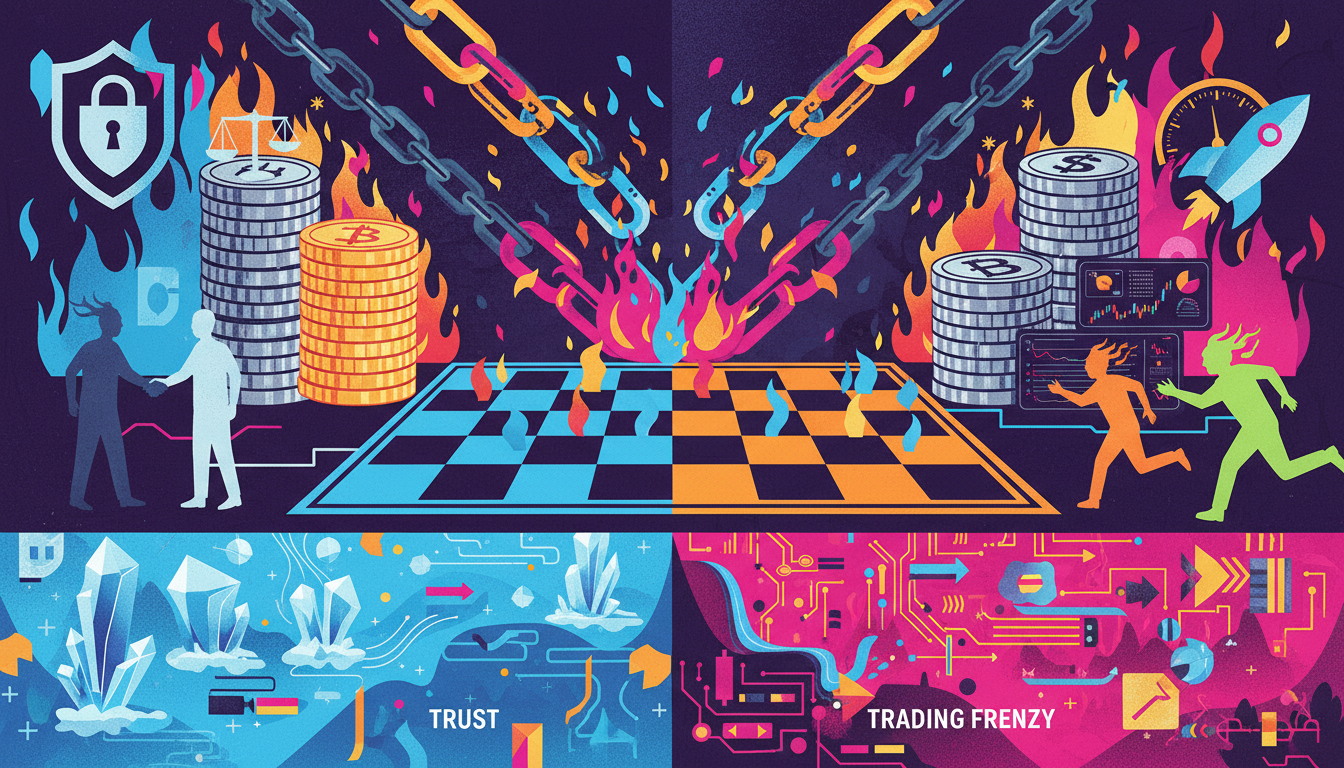
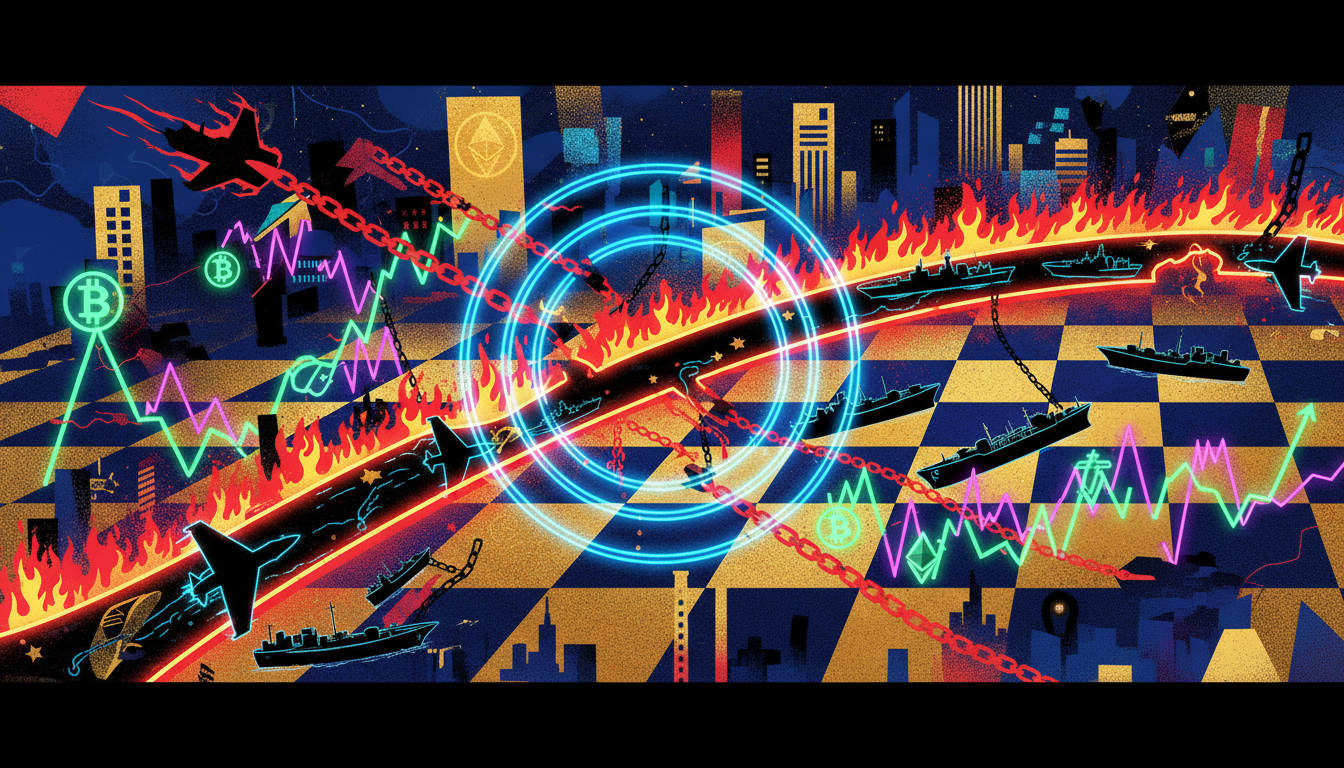
When we juxtapose several news pieces from March 27, 2026, the picture becomes clear: on one side is LayerZero connecting to Canton, symbolizing the acceleration of institutional assets going on-chain and the quick formation of interoperability networks; on the other side is the $133,000 price manipulation attack on BSC, reminding everyone of the ongoing fragility of foundational security. These two realities exist in parallel, forming the most tension-filled cross-section of the current crypto market—“the superstructure” is building bridges, while the foundation continually reveals cracks.
On top of this, U.S. regulators are closely monitoring ports of entry like Kraken, layering defenses around the connection between crypto and the U.S. dollar system; yet, on the other hand, within the narrative of AI, they are beginning to reassess the strategic position of blockchain as foundational infrastructure. The policy path has yet to take shape, neither providing a comprehensive green light for embrace nor firmly pressing the brakes, but instead drawing red lines while navigating through events, case responsibilities, and public statements.
The critical variables for the upcoming year will roughly fall along three lines: first, whether institutions dare to invest genuinely scaled assets in the interoperability network, not just remaining in pilot projects and sandboxes; second, whether DeFi can address its vulnerability regarding price dependence, compressing the attack surface of state manipulation into a manageable range through multi-source oracles, time-weighting, and extreme event fuses; third, whether regulators can avoid excessively tightening, pushing the most vibrant innovations and liquidity out of the domestic market, making the “offshore dual market” a reality.
For all participants, this is not a day of “single good or bad news,” but rather a cross-section where multiple narratives converge, noise gathering before the formation of a new order. Going on-chain, interoperability, security, compliance, AI—these keywords are no longer warring in isolation but begin to intertwine in a tighter and more complex manner through several news items on the same day.
Join our community, discuss together, and let's become stronger!
Official Telegram community: https://t.me/aicoincn
AiCoin Chinese Twitter: https://x.com/AiCoinzh
OKX Welfare Group: https://aicoin.com/link/chat?cid=l61eM4owQ
Binance Welfare Group: https://aicoin.com/link/chat?cid=ynr7d1P6Z
免责声明:本文章仅代表作者个人观点,不代表本平台的立场和观点。本文章仅供信息分享,不构成对任何人的任何投资建议。用户与作者之间的任何争议,与本平台无关。如网页中刊载的文章或图片涉及侵权,请提供相关的权利证明和身份证明发送邮件到support@aicoin.com,本平台相关工作人员将会进行核查。