In the first quarter of 2026 Eastern Standard Time, the market began to intensively discuss the news that SpaceX is in the preparation stage for an IPO—this company is rumored to plan one of the largest public offerings in history, fundraising possibly up to 40 to 80 billion dollars, with a peak valuation pointed to as high as 1.75 trillion dollars (all from a single source rumor). Beyond the scale of fundraising, what is more disruptive to the traditional model is its consideration to offer retail investors up to a 30% allocation, far exceeding the common 5%-10% seen in large U.S. IPOs. At a time when the overall U.S. stock market is weak and risk appetite is retreating, the choice of a trillion-dollar valued star company to boldly impact the secondary market raises the real question: in a tightened financial environment, do Wall Street and global retail investors have the capacity and willingness to pay for this super pricing?
Trillion-dollar valuation shockwave: SpaceX's unique scale
The key figures surrounding the SpaceX IPO currently mainly come from rumors from a single source: one is the fundraising target range of 40 to 80 billion dollars, and the other is a potential listing valuation of about 1.75 trillion dollars. Even when compared to the most exaggerated tech IPO sequences in U.S. stock market history, these two figures occupy an extreme position—many leading tech companies had fundraising scales and corresponding valuations far below this level at the time of their IPOs. Even when compared to a typical "super unicorn," if SpaceX proceeds according to rumors, it seems more like completing a round of refinancing close to "sovereign fund-level" volumes using the secondary market as a platform.
In contrast to traditional large tech IPO paths, which usually start at several hundred billion dollars in valuation and have a fundraising scale of several billion dollars, a few top projects breaking the 10 billion mark are already considered "historically rare." Using this as a reference, the rumored upper limit of SpaceX's fundraising target of 80 billion dollars is almost equivalent to extracting the combined scale of several leading IPOs at once; while 1.75 trillion dollars valuation attempts to position itself alongside the top of the global market capitalization pyramid from the outset. This pricing logic that "crosses level jumps" between primary and secondary markets itself creates a strong impact on market risk tolerance and pricing systems.
Against the backdrop of the overall weak performance of U.S. stocks and a valuation correction in tech stocks, such a giant IPO's financial effect goes beyond being merely a "structural opportunity," instead resembling a pressure test on the limits of market liquidity. Whether the final fundraising falls in the range of 40 billion or nearly 80 billion dollars, it signifies a need to shift a considerable amount of funds from other assets in the short term—public funds, hedge funds, sovereign funds, and even retail investors may be forced to "sell old to welcome new." For the U.S. stock market already bearing high-interest rates and profit revision pressures, if SpaceX lands at the rumored scale, it could likely cause a phased "liquidity drain effect," compressing the valuation space of existing targets.
Retail investors take 30% of the chips: Musk's allocation experiment
In traditional U.S. IPO practices, the allocation ratio that retail investors can directly obtain during the issuance phase typically ranges between 5%-10%, and most participate indirectly through broker channels or lottery distributions. However, according to current rumors, SpaceX is considering offering retail investors a plan for up to 30% share allocation, which, if realized, would almost be a "system-level" experiment on the current IPO ecology. A higher retail allocation means that, during the trading in the first day or even the first few weeks, the actors in the game will shift partly from the traditionally dominant institutional funds to the cluster of individual investors with more emotional elasticity.
Another key information surrounding the allocation plan is the consideration of providing preferential treatment to investors of other companies under Musk. This means that current shareholders of companies like Tesla are likely to enjoy rights in the allocation phase, such as priority in purchase, discounted prices, or skewed allocation (the specifics have not been announced). From the perspective of capital relationships, this is Musk actively integrating the dispersed shareholder bases of multiple companies into a closer "Musk capital ecosystem": investors who hold assets on any chain of this ecosystem will have the opportunity to gain "insider passes" when the next star target goes public, thereby reinforcing the motivation for long-term holding and cross-target support.
However, a 30% retail allocation has its downsides. A higher retail proportion generally means: first, more significant price fluctuations; second, the order book is more easily driven by emotions in the short term. While institutional funds still play a crucial role in providing liquidity and market-making, if the initial stakes are more in the hands of retail investors, it may intensify the "roller coaster" scenario in the first few days after the opening. In addition, the high allocation alongside widespread emotional participation may also reshape the discourse power at the public opinion level—from the legitimacy of pricing to the company's strategic direction, retail investors will appear with a higher weight in public discussions, which continues Musk's consistent "crowd-mobilizing" capital operation and constitutes a direct impact on Wall Street's traditional power structure.
Chip rebalancing: Tesla and Musk's asset map
From a market sentiment perspective, a fairly representative judgment has emerged: The SpaceX IPO may exert short-term pressure on Tesla's stock price, but it will be beneficial in the long run—this viewpoint remains to be verified, but its logical structure is worth dissecting. In the short term, in an already tight financial environment, a giant IPO is likely to create a "competitive squeeze" effect between Musk's assets: some institutions may reduce their holdings in Tesla to free up funds for SpaceX; retail investors may also choose to trade in their existing Musk-themed stocks for a new story and new valuation targets.
From the perspective of asset portfolios, Musk controls multiple companies with huge market capitalizations; if SpaceX lists with a valuation of 1.75 trillion dollars, it will significantly reshape his personal wealth structure and the market's perception of his "core assets." Over the past few years, Tesla has been the absolute protagonist of Musk in the secondary market and the main window through which investors price his personal influence; once SpaceX goes public and gains a high market valuation, the focus of capital narratives may shift toward "space and infrastructure platforms," rather than merely "the electric vehicle and energy transition story."
For investors within Musk's ecosystem, such a shift in focus will directly reflect in their asset allocation: some long-term bullish funds on Musk's personal abilities may no longer be fixated on a single asset but instead make more dynamic movements between Tesla, SpaceX, and his other projects. For instance, during a high volatility phase in Tesla, some positions may be adjusted to increase holdings in SpaceX, regarded as "long-term strategic assets"; conversely, after SpaceX’s valuation is temporarily pushed up, it may be treated as a trading tool carrying "Musk exposure," intertwining short-term swings with long-term allocations. This cross-target rebalancing may not only disperse the risk of individual stocks but also amplify sell pressure in extreme market conditions.
Liquidity extraction effect: U.S. stocks' weakness and the chain reaction in the crypto sector
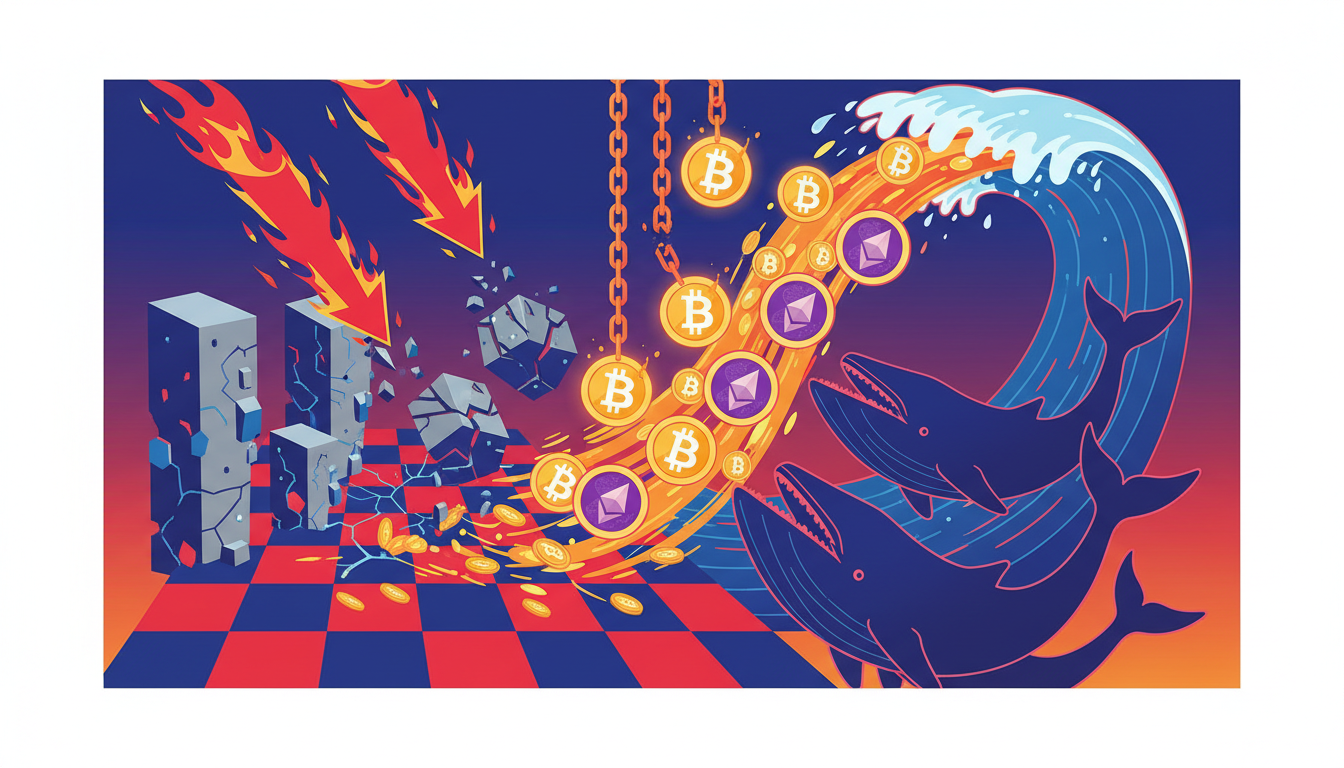
The current backdrop is: The overall performance of U.S. stocks is weak, and crypto-related stocks are generally retreating. In this environment, an IPO targeting to raise 40 to 80 billion dollars with a valuation of 1.75 trillion dollars will be regarded as a strong "taxation" on global liquidity, regardless of the final pricing. The pressure faced by traditional tech stocks lies in the difficulty for actively managed funds to maintain high allocation weights for both established leading tech companies and the new trillion-dollar targets in a limited fund pool; some overvalued growth stocks are likely to be the first to be reduced as a "source of funds."
For Tesla and crypto-related stocks, this pressure is more pronounced: they share a high overlap in investor profiles, risk preferences, and narrative labels with SpaceX, being part of the same group of funds attracted by the "Musk story" or "high beta growth." Once the window for SpaceX's IPO approaches, the expectation in the market of "shifting positions to welcome new targets" will spontaneously heat up, causing related stocks to exhibit supernormal volatility in the early phase—first adjusting in advance, then deciding whether to flow back or further exit based on the IPO pricing and trading performance.
For the broader crypto ecosystem, the risk lies in the potential shift of fund preferences from high volatility on-chain assets to "star IPOs" with clearer narratives and sovereign backing. When a potential trillion-dollar space company presents its prospect story, some funds already vacillating between "tech growth stocks—crypto assets—thematic ETFs" may choose to allocate less to on-chain assets and place the new risk budget on traditional market newcomers like SpaceX. The result will be that the crypto sector, before macro interest rates show a notable decline, must face not only policy and regulatory uncertainties but also bear the competition from the "new favorites" of traditional equity markets.
Emotional battlefield spillover: A comparison from WorldCoin to OKX
In the details of changing risk preferences, some seemingly scattered yet representative signals can be observed. One is that the WorldCoin team recently transferred 89.65 million WLD to exchanges (according to a single source), which the market widely interprets as a prelude to team cashing out or liquidity management. Regardless of internal motivations, such a large-scale chip transfer emotionally reinforces investor concerns that "the project team is also reducing positions at a high point," resonating with the macro weakening of risk preferences. Compared to the IPO SpaceX is preparing, this on-chain "dumping" to exchanges appears more like a reflection of Web3 projects being forced to chase liquidity in a capital winter.
Another point is that OKX currently has a valuation of about 25 billion dollars and has publicly stated a cautious stance on IPOs (according to a single source). A globally leading trading platform with a substantial size, still chooses to watch and postpone entering the public capital market despite its valuation being far below the trillion-dollar level; while on the other hand, SpaceX boldly pushes forward IPO discussions amid rumors of 40 to 80 billion dollars fundraising and a 1.75 trillion-dollar valuation. The contrast between the two highlights the significant differences in capital market routes and timing choices between traditional aerospace tech giants and Web3 platforms: the former attempts to suppress all uncertainties with scale in a macro-unreliable environment, competing for remaining risk budgets with "unique narratives"; whereas the latter tends to maintain flexibility rather than lock in long-term valuation anchors before regulatory and business uncertainties are clarified.
In terms of path selection, Web3 projects often rely on token issuance, private rounds, and exchange liquidity for rolling financing, with their capital structures continuously switching between on-chain and off-chain equity; while aerospace tech giants like SpaceX rely more on traditional equity financing and long-term contract cash flows, completing a "settlement" of years of accumulated private equity valuation in the secondary market through a heavyweight IPO. Under the current environment, the former is more susceptible to emotions, regulatory actions, and singular events (like large WLD transfers) causing significant volatility; the latter, with massive financing amounts and high industrial strategic significance, aims to attract more stable institutional buying—which also explains why at the same point in time, one side is Web3 teams accelerating the delivery of chips to exchanges, while on the other side, SpaceX prepares to issue an unprecedented heavy check to the global capital market.
The largest chip game in history: Who will pay for the trillion-dollar story?
Returning to the starting point, the core conflict surrounding SpaceX's IPO preparation remains: In a weak cycle where both U.S. stocks and crypto assets are under pressure, does the market have enough capacity to simultaneously digest the combination of "super high valuation + up to 30% retail allocation"? On one hand, the 1.75 trillion-dollar valuation and 40 to 80 billion dollars fundraising scale (both from a single source rumor) inherently possess significant extraction effects; on the other hand, handing over a high proportion of chips to retail investors significantly elevates the emotional weight in the price discovery process, making this pricing experiment more akin to a "collective vote" on a global scale.
Surrounding this IPO, the outline of multi-party games has become quite clear: Musk hopes to reshape his asset map through the SpaceX listing and further consolidate his central position in the narrative of tech and capital; Wall Street institutions weigh the balance between allocation and pricing power, eager to participate in top assets while wary of being swept up by high valuations and retail emotions; retail investors face the high thresholds, strong narratives, and historic allocation ratios, needing to make a difficult choice between "believing in Musk" and "respecting the realities of the cycle"; while crypto capital is forced to evaluate whether to continue pursuing high volatility returns on-chain or extract some chips to bet on this traditional market century play.
Future scenarios generally follow two main lines: if SpaceX IPO ultimately succeeds in a large volume, completes 40 to 80 billion dollars level fundraising, and maintains a high valuation, Musk-related assets like Tesla may experience short-term pressure due to fund shifts but could benefit in the long term from the overall uplift of the "Musk ecosystem," while the crypto sector must adapt to a new environment where a portion of the risk budget is squeezed and risk preferences trend more "top-heavy." Conversely, if this IPO encounters a chill in pricing or subsequent performance, not only will SpaceX's own valuation logic face scrutiny, but Tesla's stock price could be magnified by a "Musk discount" as the market responds, and the financing environment for crypto and other emerging tech tracks will also be affected—investors' tolerance for "high valuation growth stories" will narrow, with funds increasingly favoring cash flow certainty and policy-friendly assets. In this unprecedented chip game, no party can stand aside.
Join our community, let's discuss and become stronger together!
Official Telegram community: https://t.me/aicoincn
AiCoin Chinese Twitter: https://x.com/AiCoinzh
OKX welfare group: https://aicoin.com/link/chat?cid=l61eM4owQ
Binance welfare group: https://aicoin.com/link/chat?cid=ynr7d1P6Z
免责声明:本文章仅代表作者个人观点,不代表本平台的立场和观点。本文章仅供信息分享,不构成对任何人的任何投资建议。用户与作者之间的任何争议,与本平台无关。如网页中刊载的文章或图片涉及侵权,请提供相关的权利证明和身份证明发送邮件到support@aicoin.com,本平台相关工作人员将会进行核查。