In March 2026, Haider Rafique, Global Managing Partner and CMO of OKX, publicly announced that the IPO plan for the U.S., which had been in preparation, would be put on hold. This platform, which ranks among the top in global cryptocurrency exchanges, was recently reported by the market to have an estimated valuation of approximately $25 billion after receiving a strategic investment from Intercontinental Exchange (ICE), seemingly qualifying it for a "ticket" to impact Wall Street’s capital markets. However, amid stringent regulatory pressures and shifting cycles, OKX chose to proactively hit the brakes, placing the conflict between the impulse for short-term IPO liquidity and long-term value building on the table. The decision was framed by the management's statement that "we cannot let the IPO repeat the negative cycle of ICO", the involvement of Wall Street giants, and the overall reassessment of the listing paths for cryptocurrency companies, forming the narrative arc of this shift: from Haider's public statement, to ICE's endorsement, and then a broader reconsideration within the industry of “whether and when to go public.”
OKX's Temporary Emergency Brake: From Sprinting to Self-Arrest
Previously, the market widely anticipated that OKX would capitalize on the U.S. capital market's repricing window for growth stocks, accelerating its IPO process. With the advancement of global business and the expansion of derivatives and spot trading volumes, rumors of "OKX preparing to enter the U.S. stock market" have been amplified over the past year, perceived alongside potential listing rhythms of peers as a starting point for a new round of valuation re-evaluation in the cryptocurrency industry. A turning point occurred in March 2026, when Haider Rafique clearly stated that the U.S. IPO plan would be delayed, hitting the pause button on this high-speed sprint story.
In his public statement, Haider mentioned that if the IPO is viewed as a short-term cash-out tool, it is likely to repeat the negative cycle of the previous ICO boom. The implication here is to reposition the IPO from being merely an "exit channel" back into the context of "long-term governance and value co-creation mechanisms". For the cryptocurrency industry that experienced the token financing bubble of 2017-2018, the memory of "going public means cashing out" remains vivid, and he is evidently cautious: once an IPO is overemphasized as a liquidity event by the team or early shareholders, the market will assess the entire company with a shortsighted perspective.
Complementing this cautious attitude, OKX's management mentioned that the $25 billion valuation is a deliberately conservative pricing. In the context of warming sentiments in the cryptocurrency cycle, with peer valuations frequently being driven higher, intentionally keeping the pricing low sends a signal: on one hand, it communicates to institutional investors that "we are not over-inflating valuations," avoiding a repeat of the teased bubble premiums from the last round; on the other hand, it reflects the management's calm understanding of its own profit quality, regulatory environment, and industry volatility—preferring to let valuation growth follow business and compliance progress rather than relying on short-term sentiments to inflate and then deflate.
This temporary "emergency brake" has complex ramifications for the feelings of all parties involved. For some early shareholders and employees eager for liquidity through an IPO, the delay means an extended period of realization, inevitably causing psychological discrepancies. However, from another perspective, hastily going public in a high-volatility industry often leads to more severe sell-offs and reputation risks when lock-up periods expire and performances briefly face pressure. For potential institutional investors, OKX's action could be interpreted as a "missed window" or as a form of risk management: trading longer timeframes for clearer compliance paths, more sustainable profit curves, and more stable governance structures.
Wall Street Giants Joining In: The Symbolic Significance of ICE's Bet
Another key thread surrounding OKX's valuation is the strategic investment from Intercontinental Exchange (ICE). According to numerous Chinese media reports, after the completion of this deal, the market valued OKX at about $25 billion, while the exact investment amount and terms from ICE remain undisclosed. This figure alone is enough to place OKX in the first tier of global cryptocurrency platforms; more importantly, it indicates who is backing this valuation—ICE is the parent company of the New York Stock Exchange and one of the most significant traditional financial infrastructure giants globally.
When a giant deeply rooted in traditional exchange operations chooses to bet on a cryptocurrency exchange amid increasingly stringent regulatory scrutiny, the symbolic meaning conveyed exceeds mere financial investment. On one hand, ICE's shareholder structure, regulatory relationships, and compliance experience provide OKX with a bridge to mainstream financial discourse; on the other hand, it sends an external signal: crypto exchanges are no longer merely "high-leverage, high-risk fringe platforms," but potential pieces that can be integrated into the existing financial infrastructure landscape.
In terms of collaborative vision, external reports have mentioned the idea of “connecting over 120 million user products,” indicating the possibility of achieving large-scale interoperability between ICE's ecosystem and OKX's products in the future. However, these figures and specific models still require further validation as current public materials have not provided detailed breakdowns. It is certain that if such large-scale potential synergies are realized, it will reshape the relationship between both sides in terms of traffic, liquidity, and brand recognition, but for now, all this remains conceptual.
Another point persistently discussed in the market is whether ICE will gain board seats at OKX through this investment. Research briefs regard this as a pending verification piece, with no authoritative disclosures yet. However, even the mere possibility is enough to trigger imaginations about "traditional compliant discourse permeating crypto platforms": if the parent company of the NYSE holds a position on the board of a cryptocurrency exchange, then in the future, traditional regulatory logic may more directly embed itself into the platform's governance in matters such as anti-money laundering, transparency, risk control, and even product listing standards, thus accelerating the evolution of crypto infrastructure toward a "regulatory-friendly" model.
Comparative IPO Waves: Contrasts Between SpaceX, Anthropic, and Crypto Platforms
Placing OKX's halt in a larger capital market context makes the contrast even more striking. The traditional tech equity market is still immersed in an atmosphere of soaring valuations. According to reports, SpaceX is planning to raise about $75 billion at an estimated valuation of around $1.75 trillion, which means a space technology company that has not yet gone public is already being assigned a market value close to some large tech stocks. In an environment of high interest rates and macro uncertainty, capital is still willing to pay a premium for such "long-term tech narratives + strong cash flow expectations."
The AI sector is equally vibrant. Prominent AI unicorns like Anthropic have rapidly elevated their valuations across recent funding rounds and are seen as the next wave of IPO hotspots by capital markets. Although the details of each valuation structure and participating institutions are deliberately downplayed in reports, the sentiment of "AI unicorns queuing to enter" is powerful enough to create a backdrop: traditional tech and emerging AI companies are poised at the threshold of the secondary market, with capital expectations for these types of assets generally leaning towards optimism, at least showing no clear signs of hitting the brakes.
In contrast, there is another aggressive posture emerging in the cryptocurrency ecosystem—MicroStrategy's heavy holding of approximately 762,000 BTC, now valued at hundreds of billions based on current prices. This company has effectively transformed itself into a "like-BTC spot ETF + leverage vehicle," with its stock price heavily anchored to Bitcoin's performance, choosing to take on immense risks for elastic returns amid a bullish crypto market. This high-leverage bet sharply contrasts with OKX's conservativeness regarding the timing of its IPO: though both are under the same crypto narrative, the tolerance towards price volatility and liquidity risks varies significantly among different players.
Thus, the question sharpens: as SpaceX, Anthropic, and others revel in valuation exuberance, while MicroStrategy stages a “Bitcoin leveraged gamble” in the secondary market, has OKX's decision to slow its IPO timing placed it in a position of missing the window or is it a more astute timing choice? If we extend the timeline, hastily listing crypto platforms during a phase of regulatory uncertainty and profit model adjustment could mean enduring more frequent policy and sentiment discounts throughout their lifecycle; conversely, delaying the IPO may involve the active sacrifice of short-term valuation imaginings to gain space to catch up on compliance and business maturity.
From ICO Shadows to IPO Anxiety: Echoes of Cryptocurrency Financing Models
To understand Haider's vigilance regarding "short-term IPO cash-outs," it is necessary to revisit the previous ICO bubble. Around 2017, numerous projects rapidly raised funds through token financing, with teams and early participants quickly cashing out through exchanges, but under the dual impact of regulatory catch-ups and project delivery failures, the market paid the price of a prolonged bear market and collapsed trust. The lesson from that round is: when financing tools become simplified into "cash-out channels," long-term construction almost inevitably devolves into mere slogans.
Haider has been direct this time—if IPOs repeat the negative cycle of ICOs, it is essentially replacing one vehicle to continue telling the same short-term speculative story. The difference lies in that IPOs entail higher thresholds for public oversight, stricter responsibilities for information disclosure, and deeper ties to the mainstream financial system. Once, under this institutional framework, the well-trodden path of "going public means cashing out" is followed again, the damages will not just affect individual projects but will tarnish the reputation of the entire cryptocurrency industry, and the related listed companies will likely face broader valuation discounts.
The current profit models and regulatory environment for cryptocurrency exchanges exacerbate this anxiety: on one hand, trading revenue is highly dependent on market volatility and leverage demands, with evident cyclical performance characteristics; on the other hand, regulatory discussions addressing platform compliance obligations, asset safety standards, and derivatives leverage limits are still ongoing. In this context, if an exchange chooses to rush into an IPO before its narrative is fully "written into regulations," it is likely to be priced according to a shortsighted valuation system by the market—hedge funds and rapid capital would focus more on the next quarter's trading volume fluctuations rather than foundational infrastructure building over three to five years.
From this perspective, postponing the IPO may not necessarily be a passive defense; it may also represent a form of strategic patience: using the waiting period for clearer regulatory environments, more robust profit curves, and more mature institutional understandings to exchange for future opportunities for revaluation in both primary and secondary markets. For OKX, which has already gained the backing of ICE, this patience rests on a logic—when its governance structure, compliance system, and synergy with traditional finance are further polished and perfected, any future choice to go public in the U.S., Hong Kong, or other markets will have better conditions to lead the rhythm and negotiate terms, rather than being swept away by short-term sentiments.
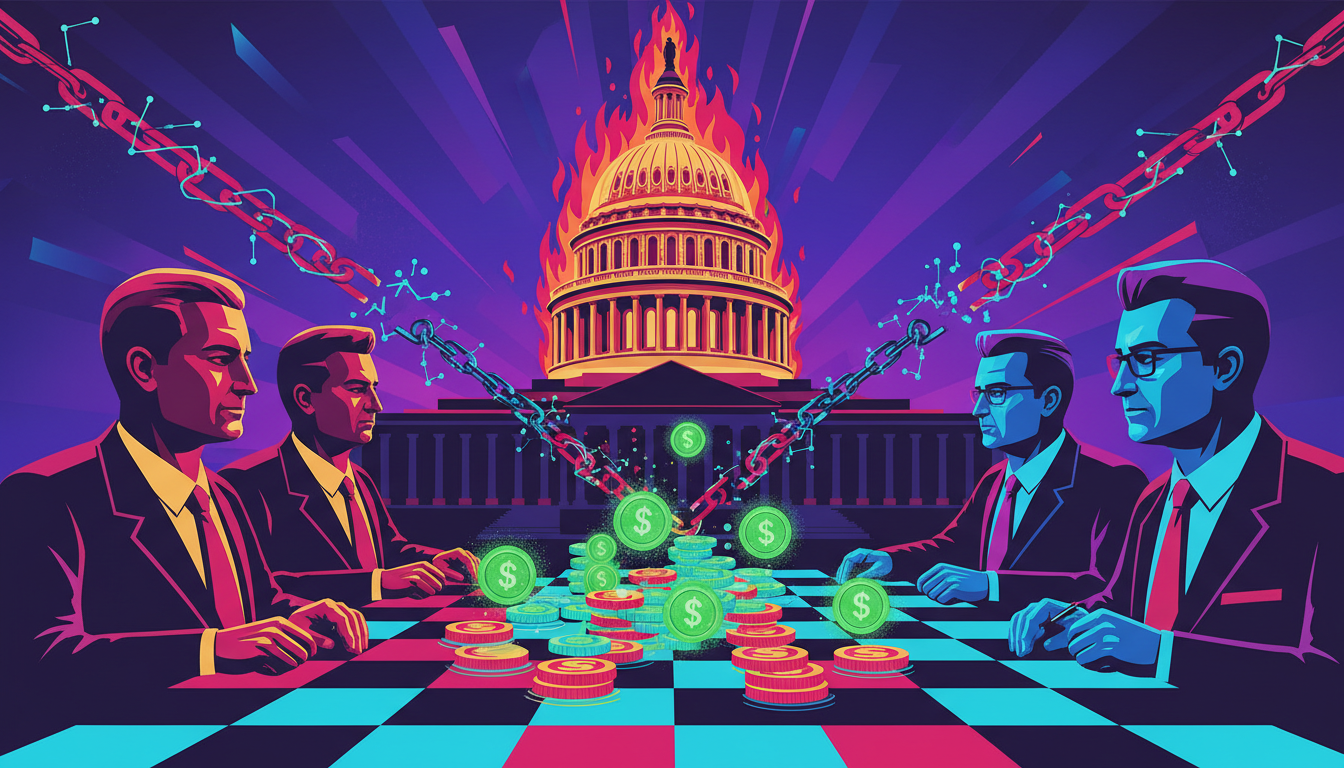
The New Chessboard After ICE's Endorsement: The Dual-Track Game of Compliance and Synergy
After ICE's investment, the primary asset that OKX gains on the path to global compliance is its brand endorsement. As the parent company of the New York Stock Exchange, ICE has long established trust relationships with regulatory bodies across various countries, giving it mature discourse power in areas such as anti-money laundering, risk management, and market manipulation prevention. Once OKX is linked to it, it no longer stands alone as a cryptocurrency platform in dialogue with regulators but can partially leverage the credibility and experience of traditional financial giants, which serves as a substantive bargaining chip for jurisdictions still exploring regulatory frameworks.
From a business perspective, there are high expectations for their cooperation. Whether it is the previously mentioned concept of "connecting over 120 million user products" or potential directions in clearing, custody, and data services, there exists considerable synergy between ICE and OKX. However, current public information is extremely limited regarding specific interconnection models, and whether they will land through joint branded products, underlying technology exports, or more covert liquidity sharing and data exchanges remains to be confirmed. In this uncertainty, one certainty is: once synergies deepen, OKX will inevitably engage more with traditional institutional funds in terms of both user structure and asset structure.
Deeper changes will occur in the company governance and information disclosure standards. Traditional exchanges commonly emphasize board diversity, strict internal control systems, and high-frequency information disclosure rhythms, contrasting significantly with many early "founder-centered + weak disclosure" models of cryptocurrency platforms. If ICE intervenes in OKX through equity relationships, potential board seats, or other governance participatory forms, the demands it presents for internal control, auditing, risk management, and data transparency will undoubtedly force the platform to undergo internal upgrades. Such upgrades may sacrifice some decision-making flexibility, but they could bring about higher institutional investability and lower regulatory uncertainty discounts.
In this chess game, one can imagine a hypothetical scenario: OKX chooses to postpone its IPO, but during this time deepens collaboration with ICE in terms of products, governance, and brand synergy, entering the mainstream U.S. financial system through a "curved approach". In other words, even before its stock code appears on the NYSE or NASDAQ plaques, some of OKX's services and asset forms could already indirectly reach U.S. institutional investors through ICE's infrastructure and client networks. When the regulatory environment becomes clearer and corporate governance more mature at some future point, the actual IPO may no longer be a risky leap, but rather a natural confirmation of form.
Long-Distance Betting or Missing the Window: OKX's Multiple Choice Question
Considering the timelines, valuation benchmarks, and shareholder structures, OKX's decision to delay its U.S. IPO resembles a meticulously calculated trade-off. Timing-wise, the brake pulled in March 2026 occurs during a narrow window where the traditional tech IPO frenzy has not yet receded while cryptocurrency regulation continues to tighten; valuation-wise, the $25 billion and “deliberately conservative” pricing retains growth potential and avoids being labeled as a bubble; in terms of shareholder structure, ICE's strategic investment adds a trump card of traditional finance to the future listing negotiation table. These cumulative factors suggest that "not proceeding now" constitutes an active choice rather than a mere passive delay.
In the current landscape of pressing regulation and exuberant tech IPOs, whether being "a beat slow" is conservative or wise might be something time will answer. If regulatory risks ultimately prove to be structural rather than short-term fluctuations, those cryptocurrency platforms eager to rush into IPOs might face repeated pressures during subsequent compliance catch-ups and business adjustments; conversely, if the regulatory path clarifies in a short time but capital market sentiments quickly retreat, patient companies may also miss out on a golden opportunity for premium realization. At present, OKX's bet is that, in the long run, the dividends of compliance, institutionalization, and deep integration with traditional finance will outweigh the price premiums that can be offered by short-term emotional windows.
Looking ahead to the next three to five years, the IPO rhythm of cryptocurrency exchanges is likely to show significant differentiation: one class of players may seize the window at emotional peaks to secure dollar equity liquidity quickly and feed business expansion with capital narratives; another class may actively moderate their rhythm, prioritizing compliance upgrades and governance improvements while waiting for reexamination under more stable regulatory and revenue environments. Currently, OKX clearly leans towards the latter path.
From an investor's perspective, the more crucial question is: how to choose between "short-term financial engineering stories" and "long-term underlying infrastructure". The former may lead to astonishing price elasticity within a cycle but also face valuation "flash crashes" more easily under macro headwinds and tightening regulation; the latter often lacks stimulating narratives in the early stages but could gain sustained valuation premiums post realization of institutional dividends and completion of infrastructure penetration. OKX's decision to postpone its IPO, embrace ICE, and emphasize prudence regarding IPO timing is signaling the market—it prefers to be seen as the latter. If this positioning can be realized progressively through performance, compliance, and product synergies over the next few years, then when it truly steps onto the capital market, investors might see not just another “cryptocurrency concept stock,” but a piece already embedded in the global financial system's underlying puzzle.
Join our community, let’s discuss and become stronger together!
Official Telegram community: https://t.me/aicoincn
AiCoin Chinese Twitter: https://x.com/AiCoinzh
OKX Benefit Group: https://aicoin.com/link/chat?cid=l61eM4owQ
Binance Benefit Group: https://aicoin.com/link/chat?cid=ynr7d1P6Z
免责声明:本文章仅代表作者个人观点,不代表本平台的立场和观点。本文章仅供信息分享,不构成对任何人的任何投资建议。用户与作者之间的任何争议,与本平台无关。如网页中刊载的文章或图片涉及侵权,请提供相关的权利证明和身份证明发送邮件到support@aicoin.com,本平台相关工作人员将会进行核查。