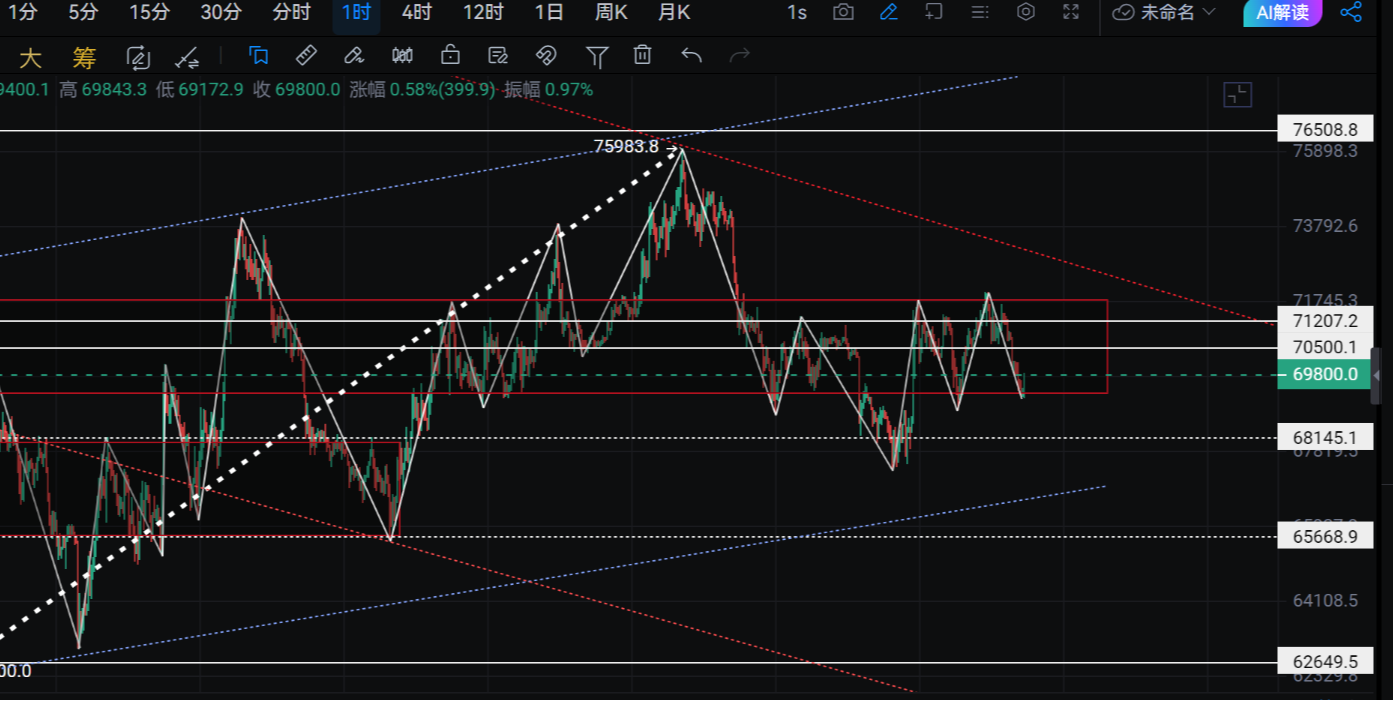
This week, the debate surrounding the future rate-cutting path of the Federal Reserve has heated up again, with expectations for the number of rate cuts and the terminal rate becoming the main axis of global asset pricing. On one hand, in the latest survey, a majority of scholars still bet on a "one to two" moderate rate cut, while on the other hand, the dot plot presents a hawkish rate trajectory from officials, creating a clear rift in the market between the two paths. Meanwhile, the rising war risks related to Iran have suddenly intensified risk aversion: funds are retreating from the stock and bond markets and quickly flowing into cash and traditional safe-haven assets like precious metals, with the pace of asset rotation noticeably accelerating. Amidst this split in expectations and the intertwining of geopolitical shocks, stocks, bonds, and even commodities and cryptocurrencies are experiencing a repricing process centered around "rate path + geopolitical premium."
To Cut or Not: The Misalignment of Economists and Officials
The latest Reuters survey shows that among 82 surveyed economists, 65, accounting for approximately 79%, expect the Fed to only implement one to two rate cuts in the future. This proportion outlines a mainstream consensus of "mild dovishness": although inflation has only fallen modestly, it is sufficient to support a limited attempt at easing, while avoiding a resurgence of inflation. In other words, most professionals depict the Fed as a cautious central bank that will ultimately "ease up" slightly, rather than continuing to maintain high rates until the end of the cycle.
In stark contrast is the internal guidance provided by the latest FOMC dot plot. The dot plot indicates that by the end of 2026, the median federal funds rate will still be at 3.4%, far higher than the "zero interest rate world" that the market was accustomed to during the last cycle. More concretely, of the 19 officials, 7 have directly suggested a scenario where "there will be no more rate cuts in 2026," implying that within the decision-making body, a considerable portion prefers to maintain rates at relatively high levels rather than relax vigilance against inflation for the sake of growth. The "gradual decline" envisioned by economists appears more as a "high plateau + limited reduction" in the hand of officials.
This misalignment between "external expectations and internal guidance" directly increases the uncertainty of the policy path: once macro data slightly deviates, the market must quickly switch pricing between the two scripts, leading to amplified volatility in interest rate futures, bond yields, and exchange rates. Additionally, since we do not have specific publication dates for the latest dot plot and survey, we can only refer to the relevant information as "latest survey" and "latest dot plot"; the uncertainty of the timeline itself becomes a breeding ground for amplified emotions—making it more difficult for investors to determine whether the divergence between officials and economists has just emerged or has existed for a while and suddenly become traded.
Under the Shadow of Iranian Conflict: Stocks and Bonds Are Abandoned, Cash Emerges
While the controversy over the rate path has yet to settle, rising war risks related to Iran add another layer of shadow to the market. According to public reports, "to avoid risks brought by the Iran war, investors are selling stocks and bonds, and are reallocating to cash," which almost accurately depicts the current positioning switch: the traditionally hedged combination of stocks and bonds is being sold off along with geopolitical uncertainty, while the positions truly viewed as "margin of safety" have instead turned into the most flexible cash positions.
This month, Bank of America's survey of fund managers further confirms this shift: fund managers' cash holdings have seen the largest increase in six years. In the world of professional funds, such a level of cash return is not common; it signifies a defensive posture at the institutional level has shifted from a few cautious individuals to a nearly consensus stance of "retreating to safety first." The elevation in cash ratio reflects a dual distrust in the profit outlook of the stock market and the duration risk of bonds—when the uncertainty of the Iranian conflict overlays with the rate path dispute, the traditional "balance in stocks and bonds" approach is less likely to provide sufficient psychological comfort.
J.P. Morgan strategists' judgments are also "extending the life" of this position shift. Some viewpoints suggest that the adjustments in positions in response to the conflict may still be far from over, indicating that the current risk reduction is more of a gradual process rather than a one-off panic sell-off. The interplay of geopolitical and monetary policy expectations makes the classic macro combination of "stocks down, bonds up" frequently ineffective, forcing investors to seek new safe anchor points in cash and ultra-short duration assets, thus making the structural divide in the market even more pronounced.
Precious Metals Shock: Silver's Plunge Reflects Leverage and Liquidity
At the same time aversion intensifies, the precious metal market has played out a reverse scene. Data shows that spot silver fell about 5% in a day, reporting $67.60 per ounce, and New York silver futures dropped about 7% in a day, reporting $67.55 per ounce, with such a single-day decline being severe among commodities. Theoretically, precious metals should enjoy a degree of safe-haven premium under the shadow of war, yet this flash crash in silver has revealed another underlying risk chain.
On one hand, when the risk aversion sentiment quickly fermented earlier, the commodity market often accumulated a large number of leveraged long positions—if prices do not rise but fall instead, margin compression will trigger forced liquidations, further igniting price declines and a rush out of long positions. On the other hand, with funds typically moving toward a conservative stance under macro and geopolitical pressures, part of the liquidity has withdrawn from futures and leveraged trading, leading to a rapid decline in the market’s absorptive capacity. Precious metals like silver, which has less liquidity than gold, are more susceptible to “overdone” shocks in a short time under this dual assault.
Coinciding with this is a shift in thinking regarding "safe-haven methods." For some investors, switching from "buying safe-haven assets" to "holding cash directly and waiting" becomes a more controllable option concerning risk-reward ratio: rather than enduring the leverage and liquidity risks associated with precious metals and commodities, it is better to temporarily stay in cash and wait for clearer macro and geopolitical cues before re-entering the market. Silver’s dramatic fall thus provides an important signal: in the current environment, "safe-haven" does not automatically equate to comprehensive premiums for all traditional safe-haven assets; what truly determines prices is still the balance of liquidity and leverage structure.
Bets on Two Rate Cuts Are Being Quietly Reassessed
Nevertheless, there remains a stubborn thread of expectations within the market: some participants continue to bet on the Fed making at least two rate cuts by 2026. This judgment logically relies more on mid- to long-term concerns about economic downturn and falling inflation, believing that the currently high policy rates are difficult to match to future growth environments in the long run. However, as highlighted by the latest dot plot, several FOMC officials' expectations for fewer or no rate cuts by 2026 directly conflict with this bet of "at least two cuts," and the gap between the two has become the main battleground for pricing games.
Without fabricating exact probabilities, we can observe a gradual process: the market is sliding from a previous optimistic consensus closer to "there will definitely be multiple rate cuts" toward a repicing track of "doubts over the number of cuts and the pace." Some signs indicate that sentiment regarding bets on "two or more cuts" is being quietly weakened, with more trades starting to embed a scenario of "zero to one rate cut." While these judgments still belong to a wait-and-see category, the changes in the futures curve and yield curve indeed provide evidence for this reassessment of expectations.
In the correction of rate expectations, capital strategies have also shown discernible migration paths: shifting from concentrated allocations in long-duration bonds toward those with short durations and floating-rate instruments, moving away from aggressive pursuits of high-beta growth stocks and high-valuation sectors, toward defensive industries and high-dividend assets. Meanwhile, the configuration ratio of cash and cash-like instruments has increased, providing more "exit at any time" space for portfolios. All of this points to the same reality—when the rate-cut path becomes ambiguous, the market is willing to pay a certain yield cost for greater flexibility and lower tail risk exposure.
The Game of Expectations: Who Pays for Whom
In this asset pricing game surrounding rate cuts and war risks, three main participants can be clearly identified. The first group is the “mild dovish” who believe in the latest survey results; they think the consensus among economists is closer to reality and are betting that one to two rate cuts will happen, thus maintaining a certain risk exposure to stocks and credit varieties. The second group is the “official path faction” who adhere to the path shown in the dot plot; they place more importance on the FOMC’s own interest rate guidance and tend to lower expectations for future easing strength, adopting more defensive positions in bonds and interest rate futures. The third group is the "cash is king" faction, deterred by geopolitical uncertainty and market volatility, hedging against all unknowns with a high proportion of cash and short-term tools.
The interplay among these groups concerning stocks, bonds, precious metals, and cash forms a complex web of opposing positions. When stocks and long-duration bonds are sold off in panic, those in the official path faction with a longer-term view might seize the opportunity to buy at low valuations, trying to hedge the adverse effects of high interest rates with a higher risk premium; meanwhile, the mild dovish faction often has partially realized gains during earlier high phases, now bearing more of a floating loss from "long-term lockup." In the turmoil of precious metals, leveraged longs are forced to stop-loss and exit, with the released chips being picked up by the more aggressive segments of the cash is king faction, aiming for rebounds. The true "passive payers" are often those traders who react the slowest to switching inflection points and hold the highest leverage.
As the rate hike cycle approaches its end, while geopolitical uncertainties are rising, the clear causal relationships often seen in traditional macro models begin to frequently break down: thematic analyses of inflation, interest rates, and growth no longer suffice to explain the market's massive fluctuations within a single day—the speed of narrative switches far exceeds changes in economic data itself. For high-risk assets like cryptocurrencies, this intertwined macro and geopolitical game sends a clear signal: the window for risk appetite to rise has been pushed back further, and the focus on a "liquidity safety cushion" temporarily outweighs the pursuit of single industry stories. Only when the overall rate path becomes clearer and the war premium recedes may the market reopen valuation recovery opportunities for these high-beta assets.
From the Dot Plot to Asset Prices: What to Look for Next
Returning to the big picture, the current core conflict in the market can be summarized in two layers: first, the divergence between economists and FOMC officials over the number of rate cuts and the terminal rate leads to significant volatility in asset prices driven by the "war of expectations;" second, rising geopolitical variables like war risks related to Iran require this expectation struggle to unfold under the magnifying glass of "event shocks." The result is that the same data and the same dot plot are assigned completely different pricing meanings under different narratives.
Looking ahead, the paths seem to diverge into two scenarios. If upcoming inflation and growth data force the Federal Reserve into actions that more quickly align with the mild rate-cutting path outlined by economists, the current defensive positions and high cash ratios may be rapidly reversed at some point, allowing risk assets the chance to undergo a "repricing." Conversely, if the data and geopolitical situation lend support to officials' depiction of a more hawkish path in the dot plot—sustained high rates and fewer rate cuts—then the current valuation compression and suppressed risk appetite will likely remain the norm for a longer time.
In such an uncertain environment, the market needs to closely monitor three main observation lines. The first is subsequent changes in the dot plot and policy language, as slight adjustments by officials to the terminal rate and rate-cutting pace will directly influence the repricing of interest and exchange rate curves. The second is the evolution of geopolitical situations such as the Iranian conflict, which determines the baseline for risk aversion sentiment and the stability of stock-bond correlations. The third is the trajectory of fund migration between cash and risk assets—the timing of cash ratios peaking and when they begin to flow back into stocks, bonds, and higher-risk assets will be key to judging the actual turning points in market sentiment.
Join our community to discuss and become stronger together!
Official Telegram group: https://t.me/aicoincn
AiCoin's Chinese Twitter: https://x.com/AiCoinzh
OKX Benefits Group: https://aicoin.com/link/chat?cid=l61eM4owQ
Binance Benefits Group: https://aicoin.com/link/chat?cid=ynr7d1P6Z
免责声明:本文章仅代表作者个人观点,不代表本平台的立场和观点。本文章仅供信息分享,不构成对任何人的任何投资建议。用户与作者之间的任何争议,与本平台无关。如网页中刊载的文章或图片涉及侵权,请提供相关的权利证明和身份证明发送邮件到support@aicoin.com,本平台相关工作人员将会进行核查。