
Author: Zen, PANews
In the United States financial regulatory system, the Comptroller of the Currency (OCC) is not the most frequently appearing position in the public media headlines, but it is almost always at the forefront of changes in the banking industry's regulations.
The OCC currently regulates over a thousand banks and related institutions, and the Comptroller himself is also a board member of the FDIC (Federal Deposit Insurance Corporation) and a member of the Financial Stability Oversight Council. His judgment affects not only a few banks but also how the entire U.S. banking system faces risks, innovation, and new technologies.
The current head of this key department that oversees national banks and federal savings institutions, Jonathan V. Gould, has sparked significant interest from Wall Street, Silicon Valley, and the cryptocurrency industry with his distinctive regulatory orientation over the past year.
Gould does not believe that the banking system should maintain safety by excluding new things, nor does he think that cryptocurrencies should inherently be pushed out of the regulated financial system. His core idea is that any activity allowed by law and conducted under safe and sound conditions should ideally be carried out within the banking system, as only in this way can regulators effectively constrain and utilize it.
This makes him one of the most noteworthy and controversial figures in the financial regulatory landscape during Trump's second term.
From Financial Legal Elite to Regulator
From Jonathan V. Gould's career path, it is clear that he is not a technocrat focused on any single area, but rather a Washington financial legal elite who frequently moves between Congress, regulatory agencies, law firms, consulting firms, and financial institutions.
Gould graduated from Princeton University and later earned a law degree from Washington and Lee University. Early in his career, he worked on banking regulatory law at the law firm Alston & Bird, dealing with banking regulatory matters. From 2005 to 2008, he began working for the government as a legal advisor for the U.S. Senate Committee on Banking, Housing, and Urban Affairs, participating in financial regulatory legislation.
In the wake of the 2008 financial crisis, Gould joined Promontory Financial Group and served as a director. At this regulatory consulting firm, Gould began to face the survival dilemmas of the banking industry after the crisis, exploring ways to help financial institutions adapt to new regulatory requirements. In 2014, he joined the asset management giant BlackRock's subsidiary BlackRock Solutions as an executive, further expanding his knowledge of risk management and financial modeling.
Years later, in 2018, Gould returned to the Senate Banking Committee as the chief legal advisor, participating in the drafting of financial legislation such as the Economic Growth Act. In December of that year, he joined the OCC as Senior Deputy Comptroller and Chief Counsel. The OCC is one of the core regulatory agencies of the U.S. federal banking system, responsible for overseeing national banks, federal savings associations, and certain foreign bank branches in the U.S.
His first experience at the OCC truly catapulted Gould into the spotlight and made him known in the cryptocurrency industry. During this time, he was responsible for the agency's legal and licensing functions, supporting the issuance of licenses for new banking business models and providing formal legal opinions on the regulatory compliance of digital asset-related activities. During this period, under his leadership, the OCC also began issuing licenses to innovative banks and released compliance guidelines for certain crypto businesses, such as confirming activities that could be allowed "under safe and sound conditions".
After leaving the OCC, Gould further embraced the cryptocurrency industry. He served as Chief Legal Officer at the well-known crypto mining company Bitfury in 2022 and then joined the law firm Jones Day as a partner in the financial markets practice six months later. In February 2025, Trump nominated Gould to serve as the Comptroller of the Currency, and he officially took office on July 15, becoming the 32nd Comptroller of the Currency.

A More Crypto-Friendly Regulator
Gould is often perceived as a regulator who is more lenient towards banks and more friendly towards crypto. However, this is not entirely accurate; in fact, he opposes ambiguous, overreaching, politicized regulation, not regulation itself.
During his Senate nomination hearing for the Comptroller of the Currency, two of Gould's statements were particularly representative: one was that banks must be allowed to engage in "prudent risk-taking"; the other was that since the 2008 crisis, regulators have often tried to eliminate risk instead of managing it, and this shortsightedness affects credit supply, the system's ability to absorb shocks, and the adoption of new technologies and innovations.
Once officially taking the helm of the OCC, Gould's line of thinking was further institutionalized. He made it clear that the OCC should return to a risk-oriented regulation based on law, significance, and examiner judgment. The focus of its examinations should be on issues that genuinely affect safety and soundness, not arbitrary checklist tools. He also advocated for making regulatory tools more predictable and proportionate, while promoting the reintroduction of Basel capital rules, modernizing BSA/AML, and targeted easing of regulations for community banks.
In March 2025, the OCC issued an explanatory letter reiterating that national banks and federal savings institutions could engage in certain crypto-related activities, including digital asset custody, certain stablecoin activities, and participation in distributed ledger networks, while removing the previous, stricter pre-approval "non-objection" requirements. This move was widely viewed as an important signal that federal banking regulation was reopening avenues for crypto businesses.
Gould is clearly not content with merely allowing traditional banks limited contact with crypto businesses. His further ambition is to provide a pathway for digital asset companies themselves to enter the federal banking system. During his tenure, the OCC has conditionally approved applications from companies like Circle and Ripple to establish or convert into national trust banks. Although these licenses do not allow for deposit-taking or lending, they enable firms to conduct asset custody, settlement, and some payment-related activities under a federal framework.
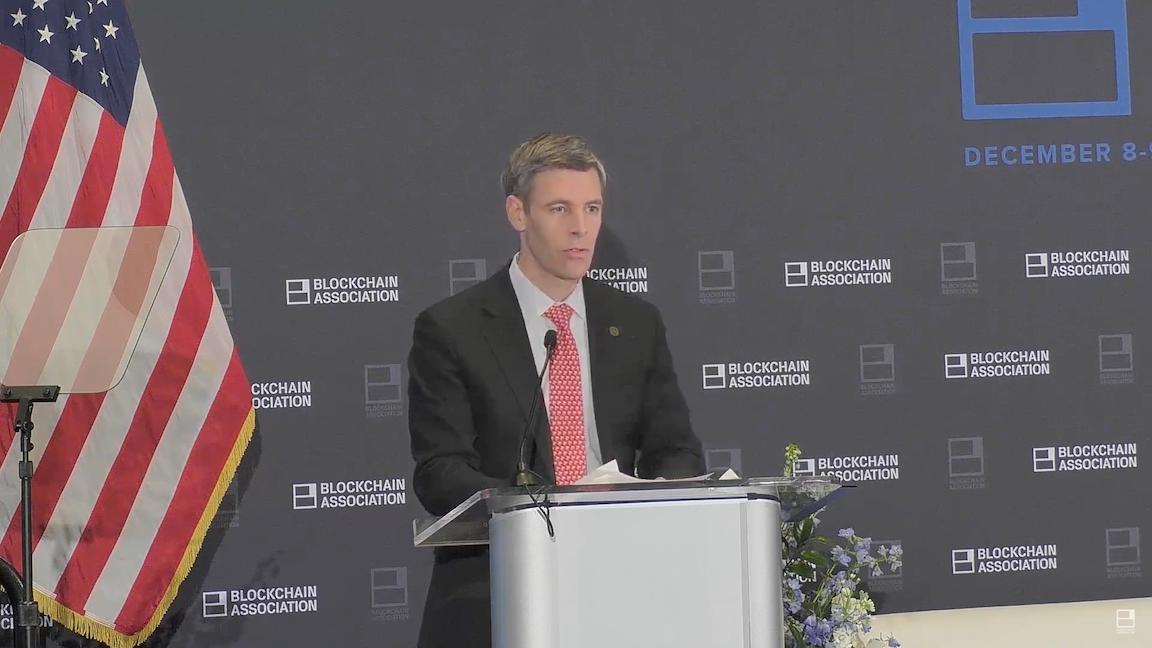
Regarding the intention behind these policies, Gould expressed it very clearly at the Blockchain Association Policy Summit at the end of last year. He pointed out that entities engaged in digital assets and other new technology activities should have a path to become federally regulated banks, as long as they are willing and meet the OCC's licensing requirements. He also emphasized that digital custody should not be treated differently from traditional electronic custody simply because the assets are in digital form; otherwise, the banking system would fall into irrelevant technological discrimination, ultimately leading to a loss of relevance for the system.
In February of this year, when the OCC released proposed rules implementing the GENIUS Act, Gould further indicated that the OCC had seriously considered a regulatory framework that could allow the stablecoin industry to "prosper in a safe and sound manner." The core of the proposed rules is to officially bring certain payment stablecoin issuers into the OCC's regulatory and enforcement scope, covering bank subsidiaries, federally licensed non-bank issuers, and certain state-licensed issuers, along with provisions on reserves, capital, reporting, and examination frameworks.
The significance behind this is substantial. It indicates that Gould does not view stablecoins as wild businesses that should be permanently blocked from the financial mainstream, but rather sees them as a type of payment tool that can be institutionalized and prudentialized. More importantly, the OCC's rule design is not intended solely for traditional banks, but also clearly considers non-banks that wish to transition to federally regulated entities as stablecoin issuers. This shows that Gould's openness is not just a verbal commitment but is reflected in the regulatory framework design.
However, the OCC proposal also clearly states that there will be reserve requirements, examination authority, capital assessments, information reporting, and, when necessary, temporary or periodic checks, and the OCC reserves the right to deviate from regular examination cycles in emergency or financial stability risk situations. This means that what Gould supports is the inclusion of licensed, ongoing supervision, and verifiable stablecoin ecosystems, not regulatory vacuums.
Questioned for Overly Open Regulation
Because of his more open regulatory model, Gould himself has also faced controversy. Critics primarily question one issue—whether he is rebuilding a more modern regulatory framework or excessively opening the door for the crypto industry and certain political capital?
Criticism mainly comes from two directions. The first is from traditional banking. Some banking organizations oppose the OCC issuing national trust bank licenses to crypto companies, arguing that this could allow the latter to conduct quasi-banking activities under lighter regulations and increase systemic risks. Critics are concerned that Gould's so-called "innovative access" may ultimately lead to regulatory arbitrage.
The second is from the Democratic side, questioning potential conflicts of interest. In February 2026, Elizabeth Warren attacked Gould during a Senate hearing over the application for a bank license by a crypto project supported by the Trump family, World Liberty Financial.
Although Gould expressed a willingness to allow high-level congressional officials to review the application documents confidentially, he emphasized that license approvals would follow existing procedures and be handled by OCC professionals according to public manuals. Faced with doubts, Gould, grounded in law, adeptly navigates the issue. He generally avoids direct engagement in mudslinging and repeatedly emphasizes procedures and rules. However, in the current American political environment, this is not enough to dispel concerns about the regulatory independence.
This skepticism also reflects a new divergence in the U.S. financial regulatory system. In the face of digital assets, stablecoins, and financial technology, should regulation lean more towards exclusion or access? Gould's answer is clearly the latter. He believes that the banking system should not maintain safety by being insulated from reality, but rather through clearer legal boundaries, more targeted risk management, and a more technology-neutral regulatory philosophy, incorporating those new financial activities that already exist into the system.
In this sense, Gould is not just a simple "crypto-friendly faction"; he is more like someone who wants to rewrite the relationship between banks and new financial technologies. It is not about giving up regulation, but changing the starting point of regulation; it is not about keeping banks away from crypto, but about allowing crypto into banks; it is not about pretending that risks do not exist, but acknowledging their existence and deciding who will manage them.
In the coming years, regardless of where U.S. cryptocurrency policy leads, Jonathan V. Gould is likely to be that person who cannot be overlooked.
免责声明:本文章仅代表作者个人观点,不代表本平台的立场和观点。本文章仅供信息分享,不构成对任何人的任何投资建议。用户与作者之间的任何争议,与本平台无关。如网页中刊载的文章或图片涉及侵权,请提供相关的权利证明和身份证明发送邮件到support@aicoin.com,本平台相关工作人员将会进行核查。


