BlackRock CEO Larry Fink, who manages $14 trillion in assets, released the 2026 shareholder letter on March 23. In the letter, he warned that AI is creating a "K-shaped outcome," with leading companies accelerating away from the rest. He wrote, "As market values rise while ownership remains narrow, prosperity can feel increasingly distant."
This is not an empty statement. Over the past 20 years, the S&P 500 has increased by eight times. However, according to the Fed's 2022 Survey of Consumer Finances (SCF), the destination of this eightfold increase is extremely concentrated.
The richest 1% of American households captured 54% of all stock market wealth, compared to 40% 20 years ago. The next 2-10% took 39%. The bottom 90% of Americans collectively own only 7% of stocks, and the bottom 50% hold just 1%. According to Gallup data, households with an annual income above $100,000 have an ownership rate of 87%, while those below $50,000 have only 28%.
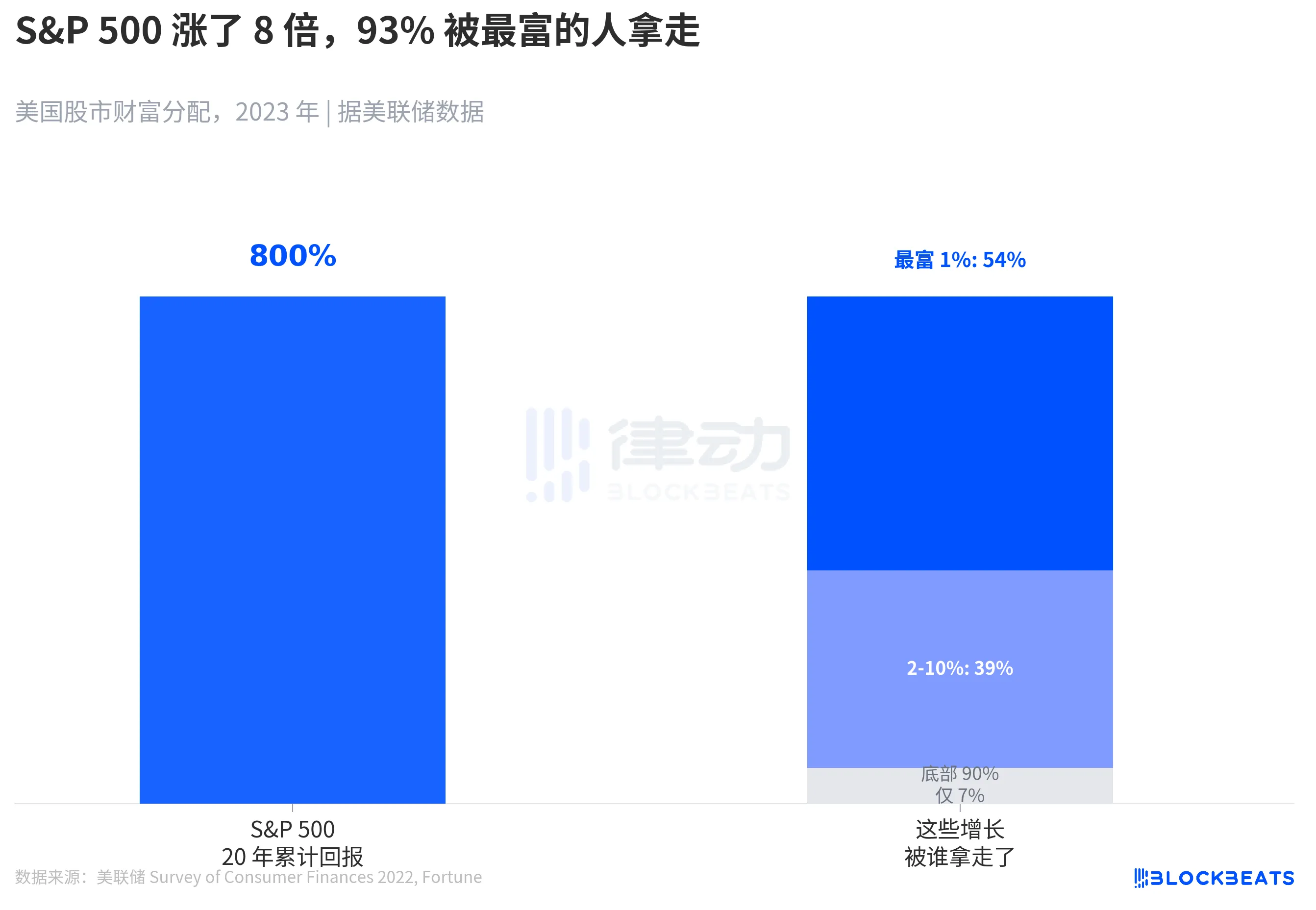
Fink used an apt analogy in his letter. "Since 1989, a dollar invested in the U.S. stock market has appreciated over 15 times more than a dollar linked to the median wage." In other words, the gap between people who can invest and those who rely solely on wages has widened 15 times over the past 35 years. He is concerned that AI will "replicate this pattern on a larger scale, concentrating wealth in the hands of companies and investors capable of capturing it."
This diagnosis is sound. The prescription that follows is the part of the letter that truly deserves dissection.
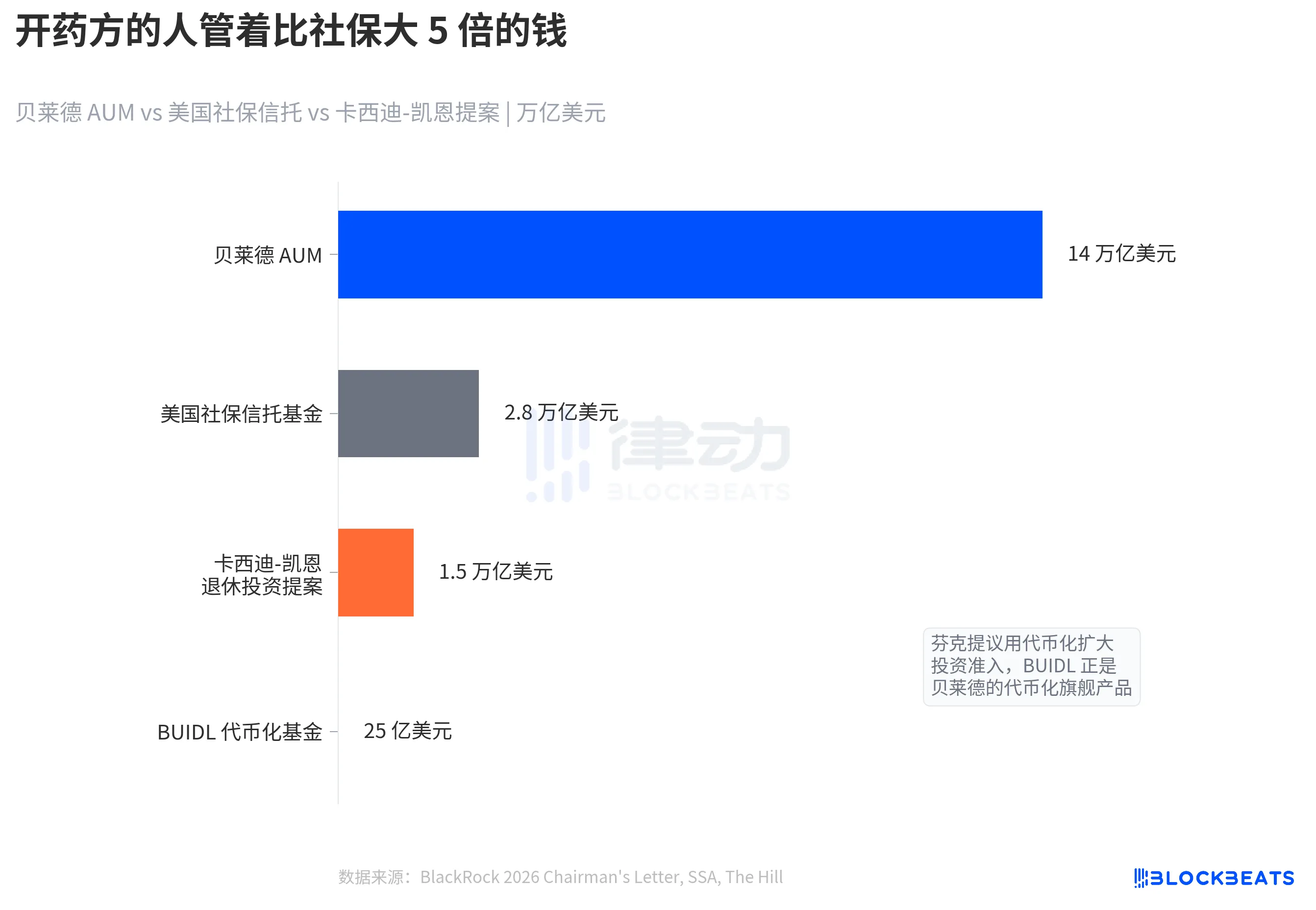
Fink referenced a bipartisan proposal from Senators Bill Cassidy and Tim Kaine. The plan involves the federal government borrowing $1.5 trillion over five years to inject into an investment fund independent of the current Social Security system, purchasing stocks, private equity, and other assets, locked for 75 years, to supplement Social Security shortfalls with long-term returns. The U.S. Social Security trust fund is expected to be depleted by 2033, at which point beneficiaries will receive only 83% of promised benefits.
Compare the figures. The U.S. Social Security trust fund is approximately $2.8 trillion, while the Cassidy-Kaine proposal seeks to inject $1.5 trillion. Meanwhile, BlackRock manages $14 trillion, five times the size of Social Security. If the government really establishes a $1.5 trillion investment fund, who will manage it? Fink did not say directly, but BlackRock is the world's largest asset management company.
More intriguingly is Fink's second prescription. He positioned tokenization as "roughly equivalent to the internet in 1996," proposing the establishment of "a regulated digital wallet" that allows ordinary investors to hold ETFs, bonds, stablecoins, and infrastructure shares. This lowers the investment threshold and encourages more people to participate in the market.
This vision aligns perfectly with BlackRock's largest business bet over the past two years. BlackRock's BUIDL fund (on-chain tokenized U.S. Treasury fund) surpassed $1 billion in AUM in March 2025, peaking at nearly $2.9 billion by mid-year, accounting for over 40% of the tokenized Treasury market. In February 2026, BUIDL launched on Uniswap, allowing whitelisted investors to trade around the clock using stablecoins. According to CCN, BUIDL has become one of the largest tokenized cash products globally.
Fink's statements of interest and policy suggestions align perfectly. He calls for letting more people enter the investment market through tokenization, while BlackRock's flagship tokenized product is already waiting to acquire clients. He proposes that the government establish a large investment fund, and BlackRock is the most qualified institution to manage that money. This is not an accusation that he is lying; it points out a structural fact. When the CEO of the world's largest asset management company calls for expanding investment access, he is also calling for expanding his own client base.
On the same day, another signal came from Wall Street.
According to Bloomberg, JPMorgan launched a CDS (credit default swap) basket targeting five mega-cap companies (Alphabet, Amazon, Meta, Microsoft, Oracle) in February 2026, with a trading unit of $25 million. These five companies issued approximately $121 billion in bonds in 2025, which is 4.3 times the average issuance of $28 billion from 2020-2024. Bank of America predicts that the issuance will further rise to $175 billion in 2026.
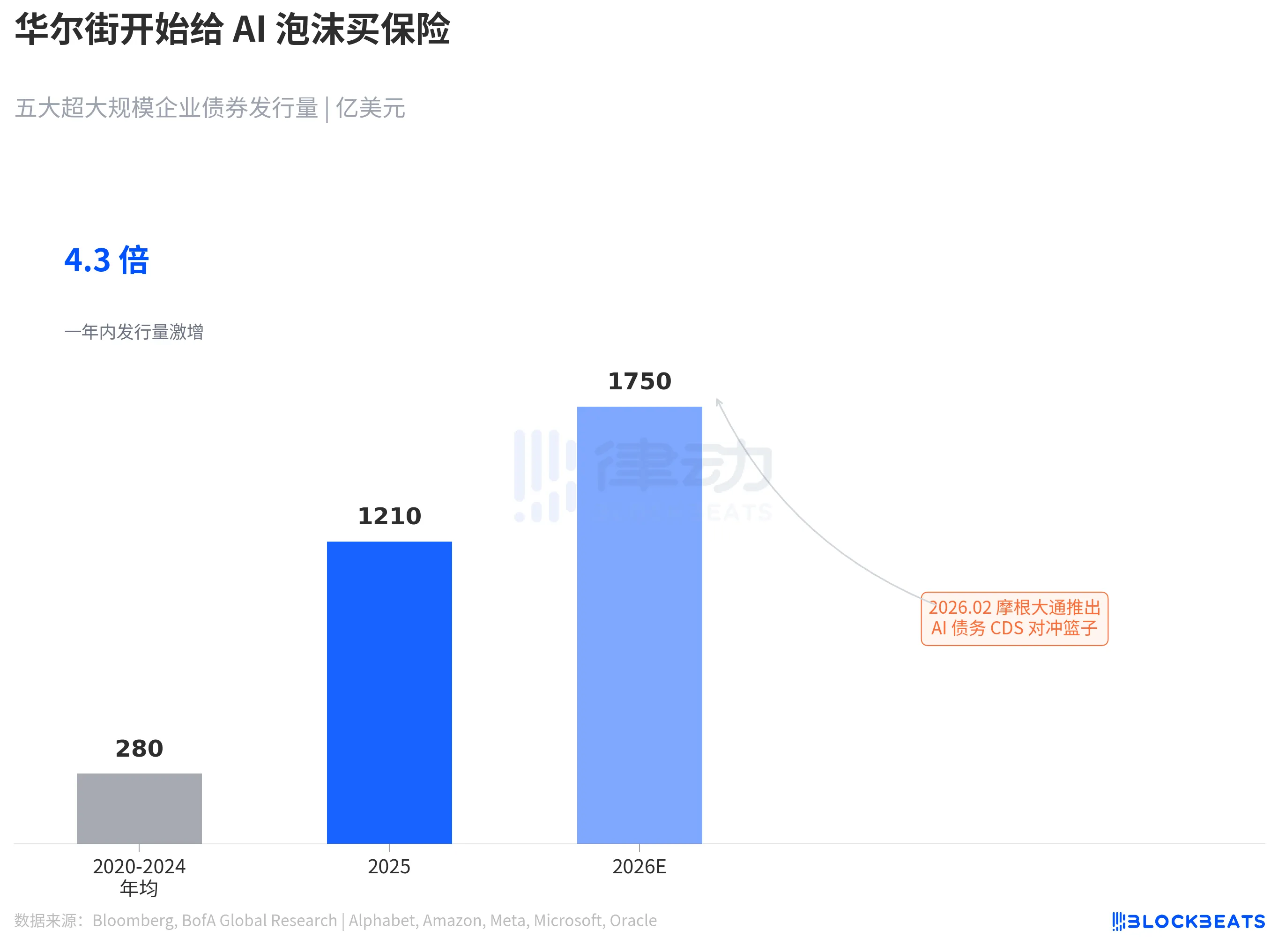
When Wall Street begins designing hedging tools for AI infrastructure debt, it indicates that institutional investors are preparing for a potential bubble burst. Fink says AI will exacerbate inequality; JPMorgan says the debt risks associated with AI have become significant enough to warrant selling insurance. Both signals point to the same fact. The AI boom is creating vast wealth, but the distribution of that wealth and risk exposure is repeating in a familiar pattern from the last cycle.
Fink manages $14 trillion. His diagnosis of inequality is accurate. But his prescribed remedy happens to be his own product.
免责声明:本文章仅代表作者个人观点,不代表本平台的立场和观点。本文章仅供信息分享,不构成对任何人的任何投资建议。用户与作者之间的任何争议,与本平台无关。如网页中刊载的文章或图片涉及侵权,请提供相关的权利证明和身份证明发送邮件到support@aicoin.com,本平台相关工作人员将会进行核查。


