Recently, gold prices have dropped by more than 5.7%, and the A-share market has evaporated over 3.2 trillion yuan in market value within a week, while international crude oil prices have unusually approached a nearly one-year high, with Brent crude oil prices climbing to 96 dollars/barrel (as of the latest data). A series of market fluctuations have drawn the attention of investors and the general public to the forefront of global financial hotspots. What deep logic is hidden behind this?
How do these changes affect your investment decisions and daily life? Here, we will organize hot issues in a more "down-to-earth" manner and incorporate the latest market data to uncover the core impact of each topic.
Geopolitics: The Driving Force Behind the Oil Surge
The rapid rise in oil prices is largely due to the tense global geopolitical situation. For example, OPEC+ countries have announced a plan to cut production by 1.3 million barrels per day. As of now, global oil supply may further tighten. At the same time, the escalating situation in the Middle East has also increased concerns about oil supply disruptions.
Why does oil price affect global markets?
Oil is referred to as the "blood of industry," and its price increase will lead to a comprehensive rise in costs across the transportation, manufacturing, agriculture, and energy industries, thereby directly impacting global economic inflation. Data shows that in 2023, global shipping costs have risen by an average of 12% due to higher oil prices, and this may continue to rise, directly affecting food and daily necessities prices.
Accelerated Inflation: What Does the Surge in Oil Prices Mean for Your Life?
The biggest direct victims of rising oil prices are the global supply chain and ordinary consumers. Oil is a major source of cost for logistics and goods manufacturing, and when prices soar, these costs are quickly passed on to end products.
For example:
In September 2023, gasoline prices in first-tier cities in China have once again exceeded 8 yuan per liter, rising about 4.2% month-on-month.
In the food sector, prices of heavier logistics categories (such as meat and vegetables) have risen significantly, with some categories seeing cumulative increases of over 8%-10% since summer.
Simply put: rising oil prices make our daily lives "more expensive"—the costs of commuting, delivering goods, and buying groceries are all increasing, and even airfares and delivery fees will be affected.
A-share Plunge: Why Is Investor Sentiment at an "Ice Point"?
Since September, multiple sectors in the A-share market have significantly pulled back, with the CSI 300 Index down 2.6% overall, and consumer and resource sectors becoming hard-hit areas. This week alone, the technology sector has seen a market value evaporation of over 600 billion yuan.
The reasons behind this:
Internal and external pressures: On one hand, domestic consumption recovery in China is slow, and profit expectations for some small and medium enterprises are being continuously downgraded; on the other hand, international capital is flowing out, with risk-averse funds pouring into dollar-denominated assets.
Psychological factors fermenting: When the market sees surging crude oil prices and tightening signals from the Fed, investors are more inclined to exit the stock market and turn to low-risk assets.
If you have already entered the investment market, especially holding stocks in sectors with damaged performance growth, you might consider diversifying your investments to reduce exposure to a single market.
Has Gold Lost Its Safe-Haven Attribute?
In public perception, gold has always been regarded as a safe-haven asset. However, recently, gold prices have continuously fallen, with a decline of over 7% from this year's high.
The truth behind:
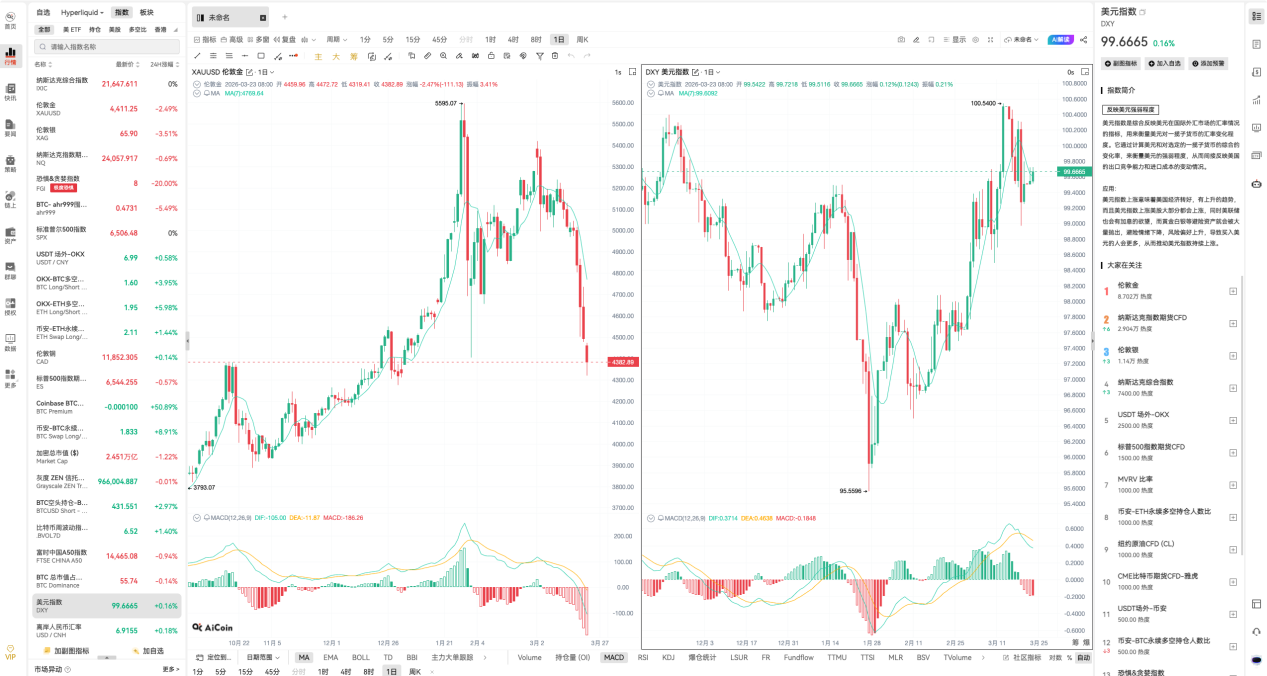
Strong dollar index: Currently, the dollar index hit a peak of over 110 in January, reaching a nearly 10-month high, which directly suppresses the demand for gold as a safe-haven asset.
Market liquidity demand: Some funds have begun to withdraw from gold due to inflation pressures caused by surging oil prices in order to meet short-term cash flow needs in other areas.
For small investors, is it now a "low point" for gold or a high-risk area? Please pay attention to one key indicator: If the Fed continues to maintain high interest rates in the future, the potential for gold to rise may still be limited.
Ask AI: With the stock market down and oil prices surging, where is the risk asset withdrawal likely flowing to?
AI's Response:
1. Cryptocurrency Market: A New Safe-Haven Choice Amidst Divergence
Although the cryptocurrency market is generally seen as a high-risk asset, some funds (especially young investors and technology-oriented institutional funds) may turn to cryptocurrencies like Bitcoin, especially in the case of losing trust in traditional financial markets.
Reasons:
Limited supply and decentralization: For example, Bitcoin is known as "digital gold," and its limited supply attracts some funds.
Avoiding traditional financial controls: Given worries about inadequate hedging against fiat assets, cryptocurrencies are favored by a specific group of funds.
Opportunities amid high volatility: In the short term, the high volatility of cryptocurrencies has instead attracted short-term speculative fund inflows.
🛡️Wealth Hedge Directive: Join Binance now to start your hedging strategy
Before real-world assets are completely "eaten up" by inflation, you must have a digital safe haven.
Exclusive AiCoin Registration Link:
https://jump.do/zh-Hans/xlink-proxy?id=3
Complete the novice tasks, receive 500 USDT rewards instantly + 10% commission
Global Top Liquidity: Leverage Binance to anchor your assets in the more scarce "digital gold" amidst the wave of fiat currency devaluation.
2. Treasury Market: Traditional Safe-Haven Choice
After funds withdraw from risk assets, they usually flow into the bond market, especially high-credit-rated bonds like U.S. Treasuries.
Reasons:
Stable returns: The bond market provides more stable returns, especially during times of high uncertainty in financial markets.
Significant hedging function: Short-term and long-term government bonds are seen as low-risk investment tools and are the preferred safe-haven assets for global funds. For example, the yield on U.S. 10-year Treasury bonds has recently risen to 4.3%, creating allure in a high-interest-rate environment.
Strong global purchasing power: Foreign investors particularly favor U.S. Treasuries because the dollar, as the global reserve currency, provides additional safety.
Market trends:
Data shows that in the past month (as of the latest market data), there has been a significant inflow of funds into the bond markets of major global economies, especially U.S. Treasuries and German government bonds. In the short term, this market may continue to maintain a trend of fund inflow.
3. Dollar Assets: A Magnet for Risk-Averse Funds
The dollar index surpassed the 110 mark in January, reaching a nearly one-year high. After funds withdraw from risk assets, another major flow is toward dollar-related assets, such as dollar cash and dollar-denominated reserves.
Reasons:
Strong dollar appreciation: The rise in oil prices and geopolitical risks often drive demand for the dollar.
Strong liquidity: Dollar assets possess global circulation, making them the quickest and safest target for risk-averse funds.
Safe-haven property: The dollar's position in the global financial system is solid, as funds often shift from high-risk assets like stocks to the dollar during systemic risks.
Market performance:
According to the latest data, the dollar index that global funds have previously flowed into has risen by over 4% in annual accumulation, reflecting the market's risk-averse sentiment and indicating relative pressure on other currencies (such as the euro and yuan).
4. Gold: A Traditional Safe-Haven Asset, But Affected By The Dollar
Despite the recent drop in gold prices, it remains one of the important safe-haven destinations for global investors. Typically, when the stock market is volatile and oil prices rise, gold attracts attention, though it is important to note that its short-term performance may be suppressed by a strong dollar.
Situations where gold still attracts risk-averse funds:
Long-term value preservation: Gold has long been seen as the ultimate choice for currency and geopolitical uncertainty.
Hedging against inflation: Rising oil prices may exacerbate imported inflation, and gold can provide some preservation function in an inflationary environment.
Medium-to-long term investment preference: Institutional investors often consider gold as part of a diversified investment due to its historical performance.
Current challenges:
However, due to the strengthening dollar, gold prices have shown continuous correction recently. Data shows that gold prices have dropped from nearly 5590 dollars/ounce to around 4300 dollars/ounce, with ongoing short-term outflow pressures on funds.
5. Oil and Energy Commodity Markets: Direct Beneficiaries
In the backdrop of continuously soaring oil prices, investors may also shift more funds to the oil and energy commodity markets, such as oil-related commodity futures and energy stocks.
Reasons:
Strengthened resource scarcity: Due to geopolitical tensions and production cuts, oil is currently a scarce resource, and funds flowing into the energy sector can benefit from rising prices.
Upward revision of profit expectations: For oil companies and natural gas enterprises, when oil prices remain high, they often achieve stronger performance.
Related market performance:
Data shows energy sector stocks have risen by 8-12% in the past month, with international oil giants like ExxonMobil and Chevron continuously setting new highs. Moreover, trading volumes in the oil futures market have also significantly increased, with Brent crude futures reaching a new high for the year at 96 dollars/barrel.
6. Other Alternative Investment Markets: Artwork, Real Industry, and Hedge Funds
In times of global economic turmoil, some high-net-worth investors may choose to direct funds into the following areas:
The art and collectibles market: Asset physicalization is an alternative way of hedging, with a significant increase in trading volumes of high-end artworks and jewelry currently.
Investment in real industries: For example, investing in natural resource companies or infrastructure funds flows funds into industries that are relatively robust against economic fluctuations.
Multi-strategy hedge funds: Especially during periods of high volatility, hedge funds typically adopt flexible strategies to respond to market changes, attracting funds to flow in.
Fossil Energy vs. New Energy: Who Are The Potential Winners?
In recent years, although green energy is a long-term investment hotspot, the rise in oil prices is bringing a dual impact on the new energy industry:
From the perspective of related companies' profits, some new energy vehicle manufacturers like Tesla have seen their stock prices fluctuate recently, with market values evaporating 4% in a week, indicating that high oil prices have not immediately propelled such sectors into a strong rebound.
However, in the long run, high oil prices may further accelerate the trend of traditional car owners switching to new energy vehicles. According to statistics, electric vehicle sales in the European market have increased by 26% year-on-year.
Background Knowledge:
New energy is not a short-term safe-haven investment, but more like a "leverage of time." Long-term investors can consider whether to position related sectors at low points based on their risk preferences.
How Can Ordinary Families Face Rising Living Costs?
What kind of butterfly effect will soaring oil prices bring to family finances? The following sets of data may closely relate to everyone's life:
Transportation expenses: The average monthly transportation expenditure of a typical Chinese family accounts for about 10%-15% of total expenditures. If fuel prices remain high, it means transportation costs for the year may rise by 6%-8%.
Daily shopping expenses: Many food prices are indirectly affected by transportation costs, such as rice and milk prices having risen by 2.5% and 3.1%, respectively, over the past 3 months.
Tips (smart moves to alleviate rising living costs):
Plan your travel wisely: Choose public transport or ridesharing to reduce travel costs;
Pay attention to price fluctuations: Stock up on some long-storable daily necessities;
Flexibly formulate a family budget: Appropriately cut down large unnecessary spending.
Will This Uncertain Global Market Evolve Into a Crisis?
Many have mentioned the stagflation crisis of the 1970s. Current similar signs include:
Soaring oil prices: During the oil crisis of the 1970s, crude oil prices doubled in a short period. Currently, some experts predict that oil prices may surpass 100 dollars/barrel.
Reigniting inflation: In August, inflation rates in major global economies returned to 4%-6% levels. The chairman of the Fed recently hinted that high interest rate policies will continue at least into 2024.
Simply put:
The combination of high oil prices + high inflation + economic downturn is the main feature of the stagflation crisis in the last century. Although central banks in various countries are trying to avoid a hard landing for the economy, investors must remain particularly vigilant.
How Should Investors Position Themselves to Respond?
In the current complex situation, we recommend that most ordinary investors choose the following strategies:
Diversified investments: Properly diversify asset allocation, allowing funds to span gold, dollar cash, government bonds, and some oil commodity funds, which can mitigate the impact of overall market volatility on your investment portfolio;
Regularly invest in new energy funds: Despite short-term pressures on new energy, from long-term market trends and policy drives, it is still a direction worth关注ing;
Learn the "cash is king" concept: When there is significant uncertainty in the market, ensure you have enough liquid assets to capture quality investment opportunities during downturns.
Conclusion: Facing Market Fluctuations Together, Rationally Viewing Wealth Management
The dramatic fluctuations in the current global market reveal that every crisis may孕育新的机会. Whether it's the surge in oil prices, the correction in gold prices, or the volatility of the A-share market, it requires everyone to remain calm and rational, responding to the complex and changing situation with more scientific and comprehensive financial knowledge.
Remember one thing: Market fluctuations are the norm, and what choices you have are within your control!
免责声明:本文章仅代表作者个人观点,不代表本平台的立场和观点。本文章仅供信息分享,不构成对任何人的任何投资建议。用户与作者之间的任何争议,与本平台无关。如网页中刊载的文章或图片涉及侵权,请提供相关的权利证明和身份证明发送邮件到support@aicoin.com,本平台相关工作人员将会进行核查。