Written by: Deep Reflection Circle
Have you ever thought about a question: why is OpenClaw so popular, yet after using it, most people's feeling is—it's very smart, but seems to be missing something?
It's not that the model is not strong enough or the functions are not numerous enough. Rather, it has solved the problem of "thinking," but has not solved the problem of "doing."
You tell it to perform a task, it runs in the terminal, writes in the IDE, reasons in the dialog box. But every step from "judgment complete" to "truly finished" still requires some work—switching windows, finding systems, copying and pasting, clicking confirmation—that part you still have to do yourself.
This is not a design flaw of OpenClaw, but rather a structural issue facing the entire AI Agent ecosystem currently: the perception and reasoning layers are already quite mature, but the execution layer is almost empty.
The variable that everyone underestimates
For the past two years, discussions on AI infrastructure have focused on two directions:
First, model capabilities—parameter scale, reasoning speed, context window. The progress in this area is quite evident.
Second, Agent frameworks—task orchestration and scheduling capabilities represented by LangChain, AutoGPT, and OpenClaw, which have also seen significant investment.
However, there is a variable that almost no one is systematically addressing: the execution infrastructure at the workspace level.
What is the execution infrastructure at the workspace level?
Simply put, it is what allows the Agent to truly "get hands-on" in your specific work environment—not in a sandbox environment, not in its own container, but on your actual screen, in your actual tools, in your actual system.
Why is this difficult?
Because the complexity of the real work environment far exceeds any sandbox simulation. Many enterprises operate legacy systems that lack APIs, numerous workflows need to cross five or six different tools, and a lot of task context is scattered across multiple windows with no standardized interfaces to call upon.
This complexity cannot be solved simply by making the model smarter. It requires a more fundamental perception and execution capability—able to see the real screen, understand cross-window states, and directly manipulate real mouse and keyboard.
This is precisely where the true bottleneck of Agent deployment lies, and it is the variable that many people systematically underestimate when discussing AI Agents.
Violoop is doing what
Recently, a project has come to my attention, called Violoop.
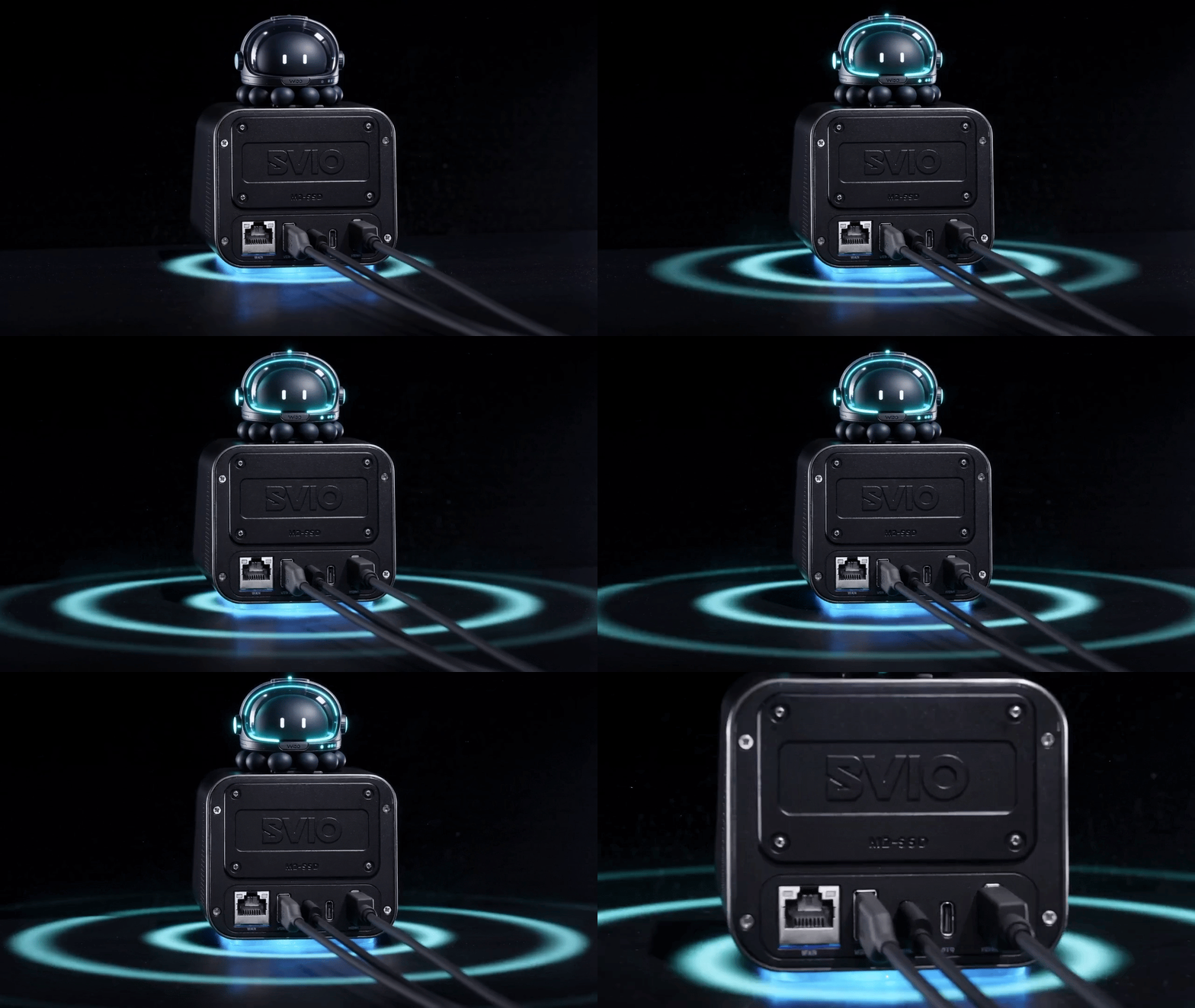
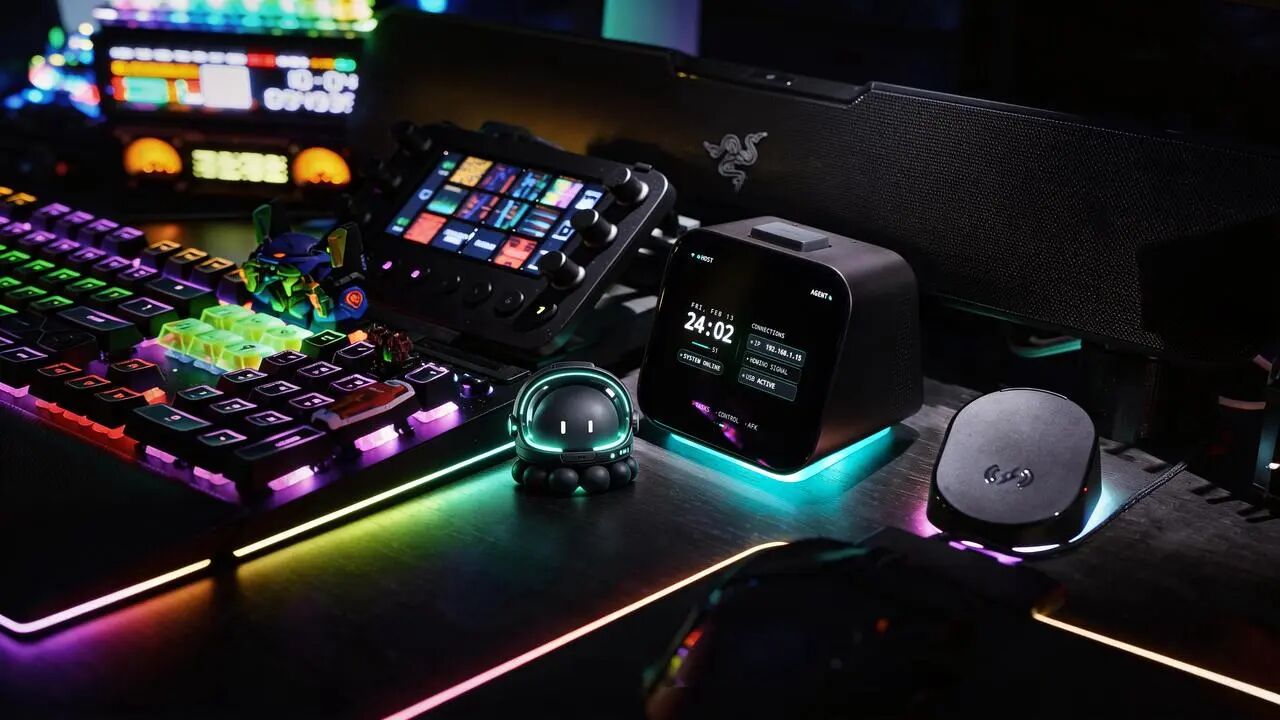
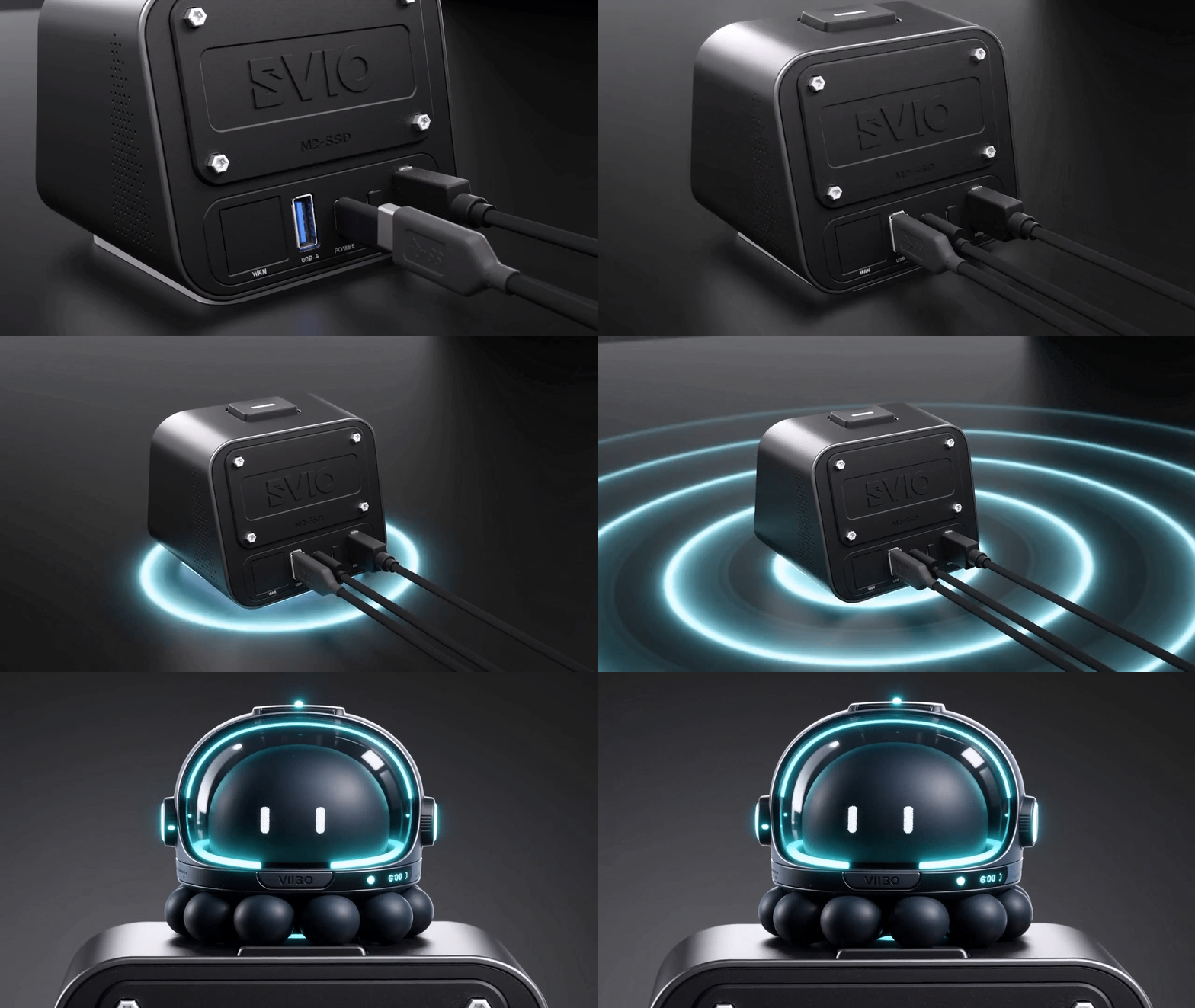
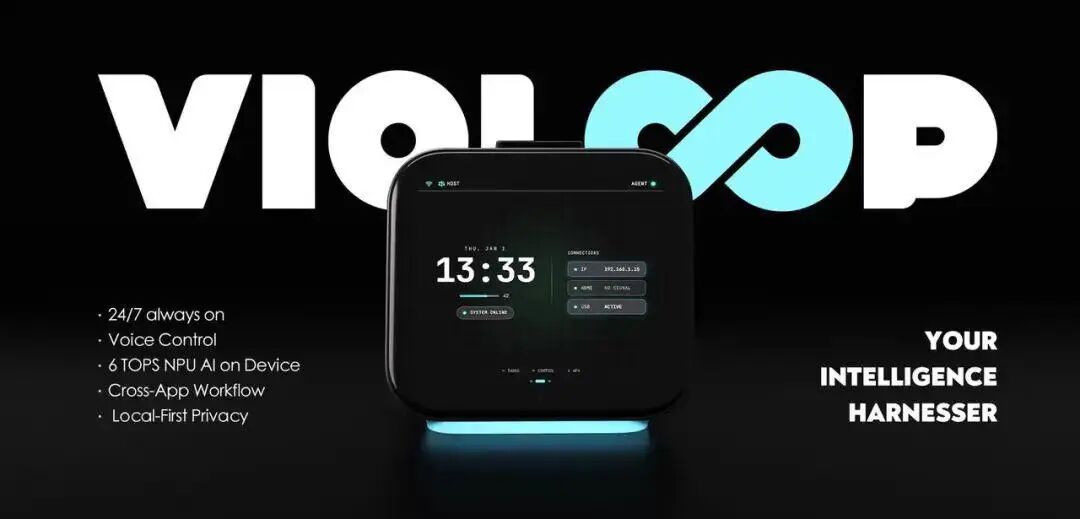
Its form is a bedside touchscreen native AI hardware, connected to a computer via HDMI + Type-C, supporting both Mac and Windows. From its appearance, it seems unremarkable. But what it is doing points directly to the underestimated position mentioned above.
It acquires three types of data: video stream (global visual perception of the screen), system API (operating system status signals), and HID control permissions (underlying control of mouse and keyboard). These three layers together form a workspace-level perception-judgment-execution runtime.
More critically, its working mode: it is not a passive executor waiting for instructions, but a proactive runtime that continuously perceives work status and actively judges the timing to intervene.
It observes which window you switch to, how long you stay on a page, and the rhythm of task progression—then it decides for itself whether it should intervene at that moment. This design logic is fundamentally different from the "passive response" mode of all current AI tools.
Structural value of the execution layer
I would like to elaborate a bit on why the absence of the execution layer is a structural problem, and not just a functional gap.
The current layered AI Agent toolchain can be roughly understood as:
Model layer: responsible for reasoning, which is already quite mature.
Framework layer: responsible for task orchestration, which is rapidly converging.
Tool layer: responsible for scene-specific enhancements, which are highly homogenized.
Execution layer: responsible for workspace-level perception and cross-tool execution, which is almost blank.
The absence of the execution layer does not just make Agents feel "incomplete." The deeper issue it causes is: the boundaries of the Agent's capabilities are artificially constrained by the context.
Cursor's capability boundary is the IDE. Claude Code's capability boundary is the terminal. They can be strong within their own containers, but everything happening outside their containers is unknown to them, and they cannot respond.
This means that today's AI Agents are essentially a form of "localized enhancement"—they enhance your capabilities within a specific tool, but do not enhance your capabilities across the entire workflow.
True deployment of Agents requires perception and execution capabilities that cross these container boundaries. This needs an AI system that can see the global context and control it.
Violoop's entry point is right here.
Several design decisions worth deep thought
There are several designs in Violoop's architecture that I believe reflect an understanding of this issue, not just functional choices.
Screen recording learning mode: a direct response to the "API-less reality"
Currently, many enterprises operate legacy systems that lack any APIs. This is not a technical debt issue; it is a reality constraint—these systems will not disappear in the short term, nor will they suddenly open up interfaces.
Violoop's screen recording learning mode establishes task structure models through reinforcement learning instead of recording fixed coordinates for playback. The judgment behind this design choice is that: the real work environment is dynamic, and any automation based on fixed paths will collapse when the UI changes. Only by understanding task intent can high stability be maintained amidst changes.
This judgment is correct and is also the fundamental reason traditional RPA tools repeatedly encounter ceilings when scaling.

Edge-side + cloud-side division of labor: a simultaneous response to reasoning cost and privacy boundaries
High-frequency multimodal processing (screen perception, visual understanding, sensitive data cleansing) is completed on local chips, with complex reasoning handled in the cloud.
This division of labor simultaneously addresses two issues: first, cost—multimodal reasoning is a primary source of current Agent operating costs, and localization can significantly reduce the cost per execution; second, privacy—sensitive data is filtered before going to the cloud, meeting corporate data governance requirements.
More importantly, this architecture allows Violoop to truly achieve 24/7 standby—coupled with the Wake-on-LAN mechanism, it can automatically wake the host machine at specified times, perform tasks, and then return the machine to sleep. This is something pure software Agents cannot do.
Hardware-level permission isolation: an engineering response to "self-execution risks"
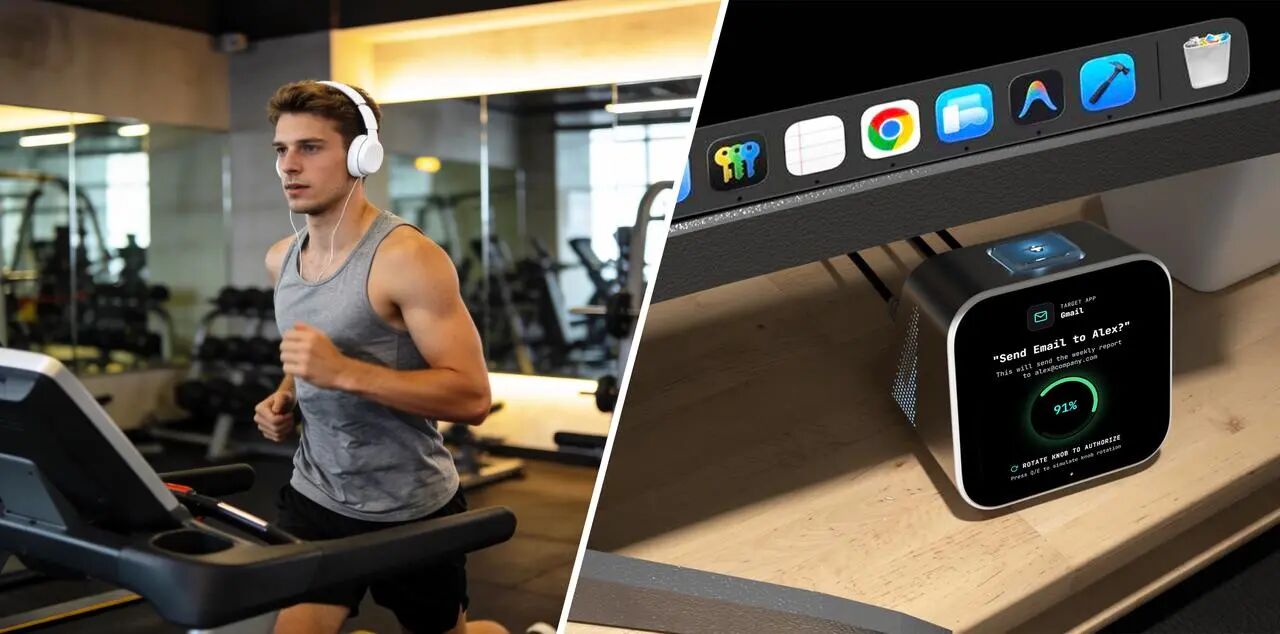
An independent secure chip is responsible for permission validation, physically isolated from the main computation chip. High-risk operations must go through hardware confirmation processes and cannot be bypassed at software levels; physical disconnection results in complete shutdown.
I particularly noticed this design because it indicates the team's sober understanding of "proactive execution": the risks of self-execution cannot be maintained only through prompt constraints and system prompts; hard constraints are required at the runtime level. This is a judgment that only a team with real production environment Agent deployments would have.
Why this direction is emerging now
One question worth considering is: the absence of the execution layer is not a new problem; why are projects like Violoop emerging now?
My judgment is that several conditions have simultaneously matured recently:
First, the edge's multimodal reasoning capability has reached the level of being able to process visual signals from the screen in real time. Earlier hardware could not do this.
Second, the task understanding capability of large models is strong enough that "understanding task intent" rather than just "recording operational sequences" has become feasible. This is the prerequisite for the screen recording learning mode to work.
Third, the recent hype around OpenClaw has exposed the issue of the execution layer's absence, making the market demand for this direction visible.
The simultaneous maturity of these three conditions has opened a window that did not exist before.
The background of Violoop's team also somewhat validates this judgment—CEO Jaylen He is a serial entrepreneur who previously led a team into YC, while CTO King Zhu is an MIT EECS graduate who completed his master’s and bachelor's degrees in 3.5 years, with engineering backgrounds from Microsoft Xbox, HoloLens, and Surface. Since 2023, he has been involved in edge-side deployments in Fortune 500 companies. This is not a team that suddenly switched to AI hardware because OpenClaw became popular; they have been validating this direction before the conditions matured.
At the same time, Violoop completed two rounds of financing within a month, with the second round from meeting to signing taking one week, and a third round of financing is also in progress—this pace indicates that capital is also affirming this direction.
Signals that are truly worth paying attention to
The product will officially launch on Kickstarter in April, and this project has not yet reached mass production; many capabilities still need to be validated in real production environments. The generalization boundaries of the screen recording learning mode, the long-term maintainability of the Skill system, and the stability of mass-produced hardware—these are all questions that require time and real user data to answer.
However, there is one thing I believe can already be judged:
The execution layer is infrastructure that the Agent ecosystem must supplement in the next two or three years. Not because a certain product has become popular, but because without filling this layer, all investments in the perception layer and reasoning layer cannot be truly converted into efficiency changes that users can feel in real work.
Someone will inevitably come to fill this position sooner or later.
The current question is not "Is the execution layer important?" but "Who will do it, how will it be done, and when is the right time to do it?"
Violoop is currently one of the few projects that has thought this issue through and has its own judgments in architectural design.
The explosive popularity of OpenClaw has made everyone see the possibilities of Agents. However, the true turning point for Agent deployment may not occur on the day a new model is released but rather on the day the execution layer's infrastructure is supplemented.
This is the signal that is truly worth paying attention to behind this wave of enthusiasm.
免责声明:本文章仅代表作者个人观点,不代表本平台的立场和观点。本文章仅供信息分享,不构成对任何人的任何投资建议。用户与作者之间的任何争议,与本平台无关。如网页中刊载的文章或图片涉及侵权,请提供相关的权利证明和身份证明发送邮件到support@aicoin.com,本平台相关工作人员将会进行核查。


