Just now, MiniMax released its first earnings report after going public! Revenue skyrocketed by 158%, with 70% coming from overseas; MiniMax's global blueprint is fully unfolding. The AI Agent revolution, Chinese players are already positioned.
On the eve of the Lantern Festival, MiniMax submitted its first annual report to the Hong Kong Stock Exchange since going public.
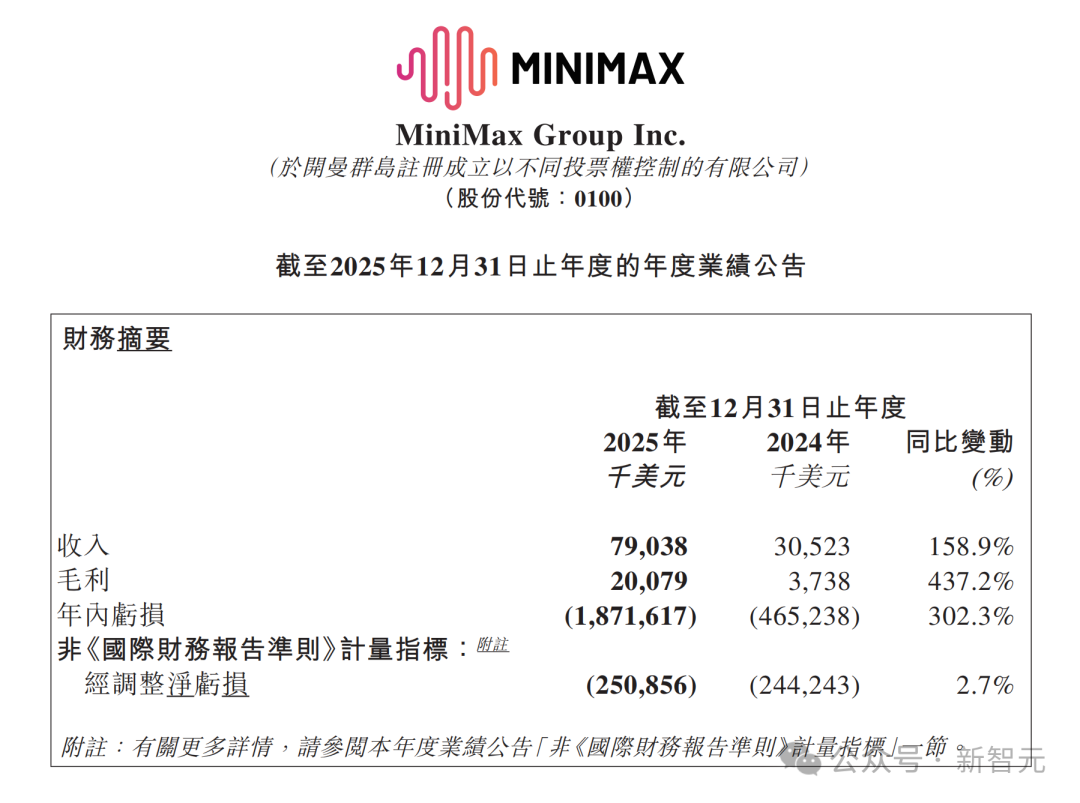
While OpenAI is still burning cash, MiniMax has directly faced market challenges, presenting an astonishing growth curve—
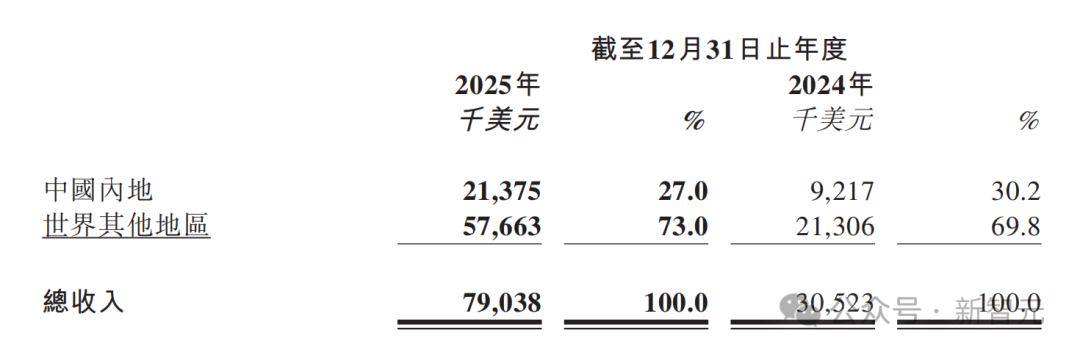
During the reporting period, the company achieved a total revenue of $79.038 million, a year-on-year increase of 158.9%, with 73% of revenue derived from international markets.
Gross profit reached $20.079 million, a staggering increase of 437.2% compared to the same period last year, with a gross margin enhancing to 25.4%, significantly improving profitability.
At the same time, the company has cumulatively served over 236 million users, covering more than 200 countries and regions, with 214,000 enterprise clients and developers.
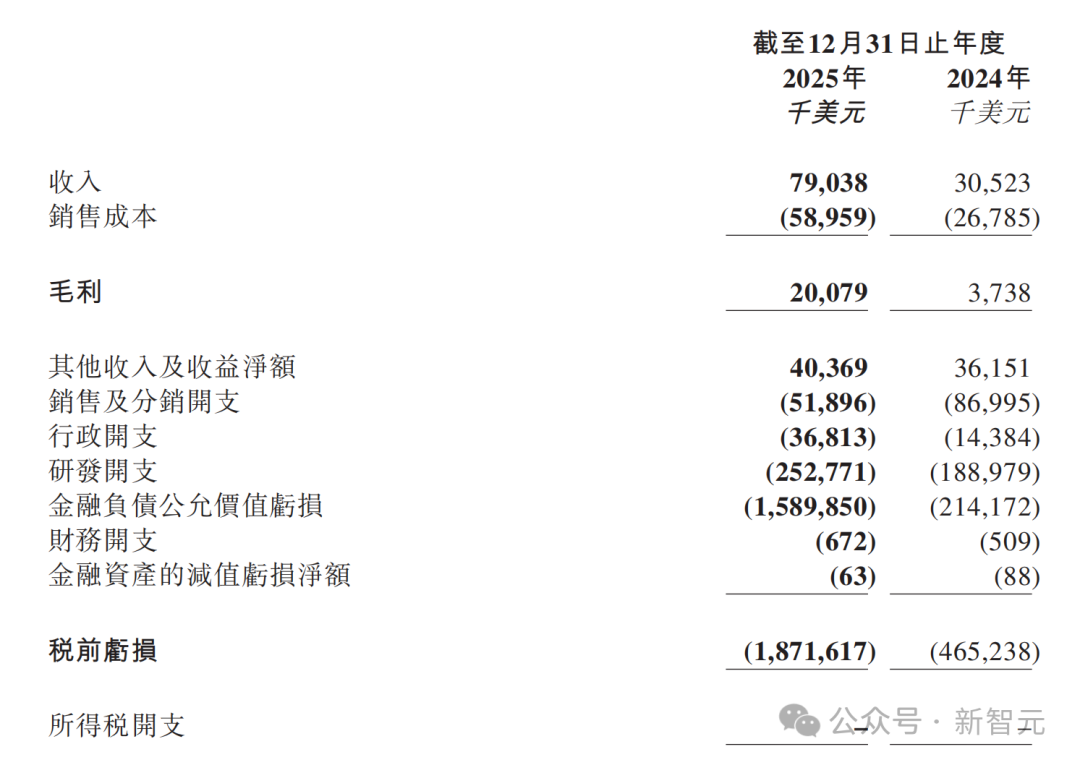
The growth curve has finally allowed us to see MiniMax's rare value.
First, MiniMax is transitioning from a large model company to a platform company in the AI era.
MiniMax's founder and CEO Yan Junjie systematically stated for the first time: "AI platform value = intelligent density × Token throughput."
He pointed out that the core of competition in the future AI industry lies in whether one can define the boundaries of intelligence. When these boundaries are broken, a multitude of new scenarios and users will emerge, further forming new ecosystems and commercial dividends.
The second point is the improvement in reasoning efficiency. The reasoning computing cost of the M2 series text models dropped by over 50% per million tokens compared to December of last year, and the reasoning latency of the Hailuo video generation model decreased by over 30% during the same period!
Additionally, MiniMax has established all-modal R&D capabilities, boasting globally competitive models across major modalities such as language, video, speech, and music.
Their global layout is also impressive, with MiniMax Agent, HailuoAI, Talkie/Hoshino, among others, having a substantial number of loyal users both domestically and internationally.
No wonder MiniMax's performance is so remarkable.
Three model iterations in 108 days, the fastest programming advancement in the industry
Why has such significant performance been achieved? Clearly, it is inseparable from MiniMax's hardcore technical advantages.
The super-fast iteration of MiniMax's models over the past year is the best testament to the company's technological dominance.
At the beginning of 2026, MiniMax launched the blockbuster product MaxClaw, directly tossing a heavy bomb into the market.
Today, MaxClaw has launched on mobile.

MaxClaw is now available globally on the MiniMax App mobile platform (iOS & Android), allowing users to directly run OpenClaw on their phones, achieving multi-end collaboration
This "cloud AI claw" ripped apart the calm of the market overnight. It is not a gradual iteration, but a blatant disruption.
Based on the open-source OpenClaw framework, MaxClaw is equipped with the M2.5 model, capable of one-click deployment and going live in 10 seconds, a true "intelligent agent usable by everyone."
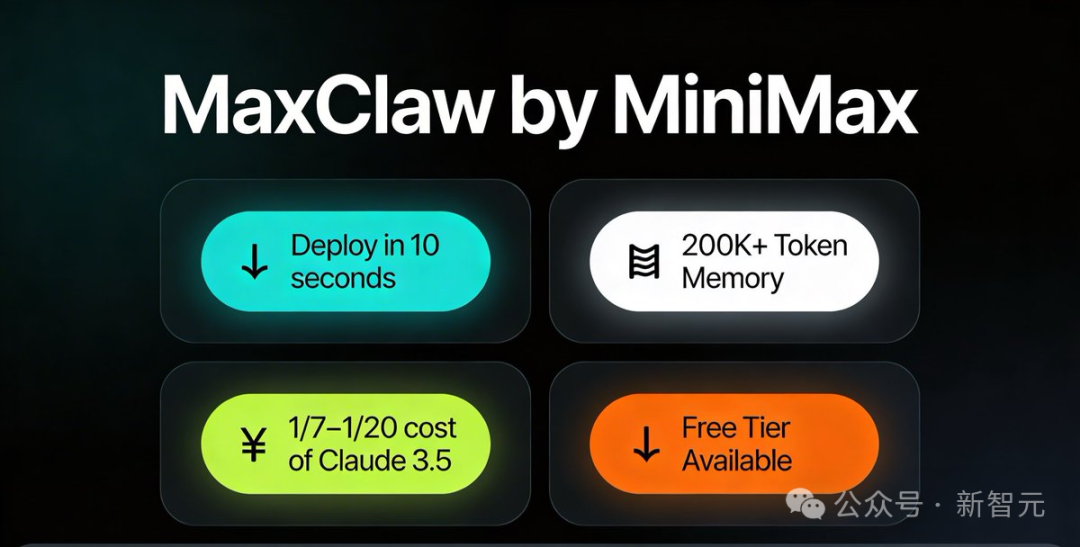
In just a few days, it went viral, receiving a flood of positive reviews.
At the moment when the "farming lobster" craze swept the AI circle, MiniMax seized the pain point and encapsulated the high-threshold open-source framework into a "zero-threshold revolution," transforming from a developer's toy into a consumer product.
But the story doesn't end here; the popularity of MaxClaw is just the overture to the upgrade of the Agent.
At the same time as the launch of MaxClaw, MiniMax Agent Expert 2.0 made a powerful debut, eliminating the need for users to worry about the configuration of Skills, SubAgents, and MCP, completely restructuring the AI intelligent agent!
MiniMax has not paused, knowing that the foundational model is the cornerstone of the intelligent agent, and the popularity of MaxClaw is underpinned by the capabilities brought by model iteration.
Within 108 days, MiniMax updated three models: M2, M2.1, and M2-her, achieving the fastest rate of progress in the industry.
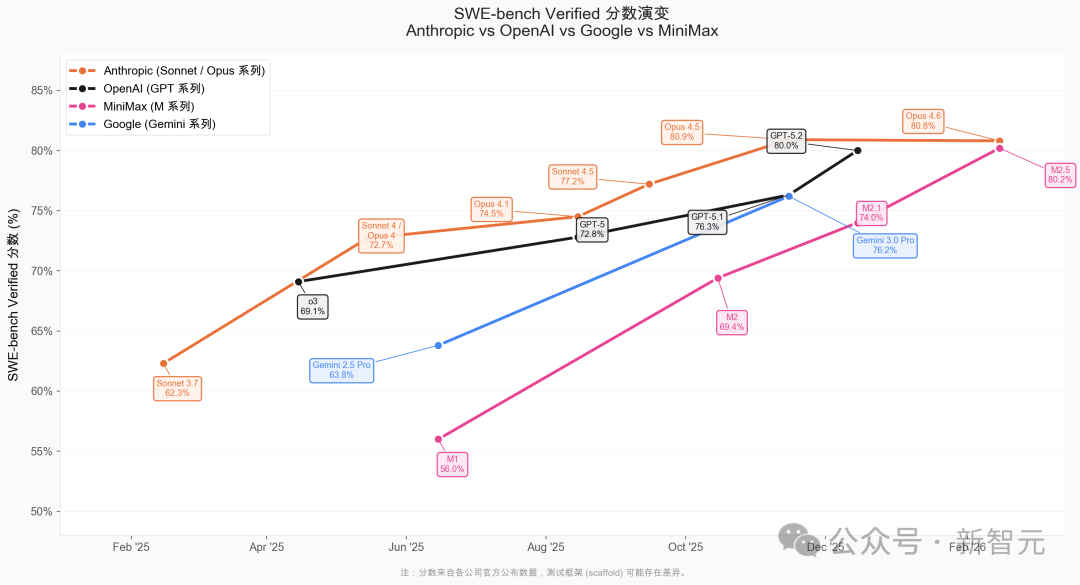
On the most representative SWE-Bench Verified benchmark in the programming field, the M2 series models maintained the fastest rate of improvement in the industry
M2 has also become the first Chinese model on OpenRouter with a daily token consumption exceeding 50 billion!
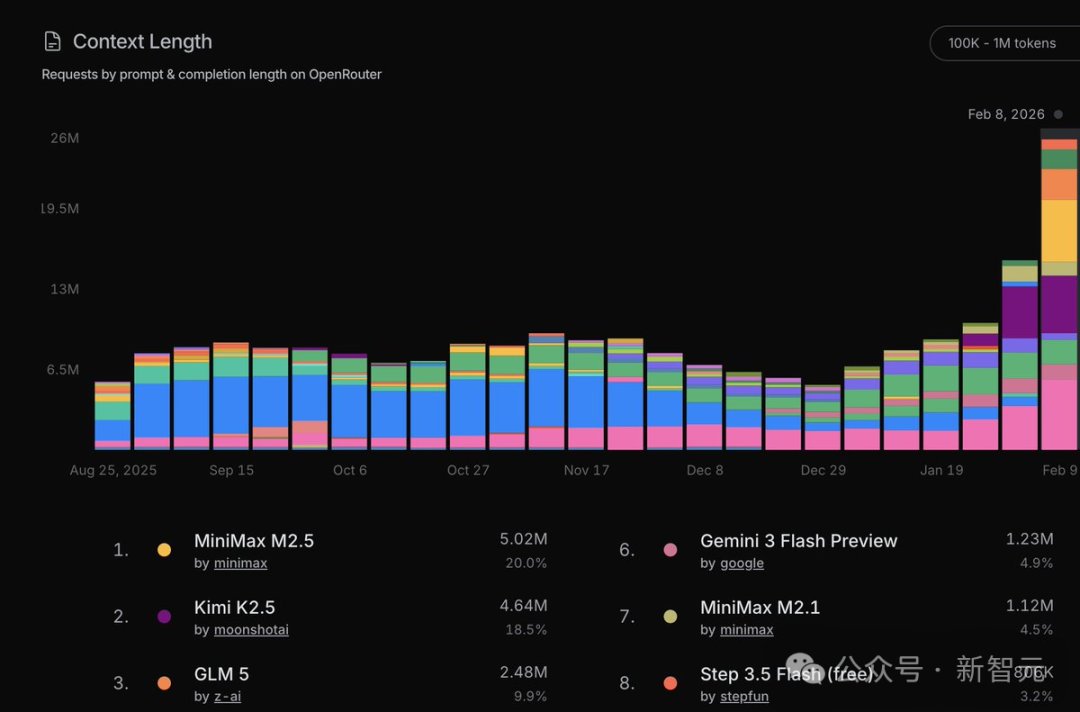
M2 redefined the balance of effectiveness, price, and speed, possessing three key capabilities: programming, tool calling, and deep search, leading the token consumption ranking
Shortly, M2.1 arrived, significantly enhancing performance on complex tasks in the real world.
Additionally, the underlying models of the AI interactive products Hoshino and Talkie, M2-her, ranked first globally in comprehensive performance in 100 rounds of long-range dialogue testing.
The latest M2.5 model adopts the MoE architecture with a total of 22.9 billion parameters, activating 10 billion parameters per token, achieving a reasoning speed of 100 tokens/second, with a context window ranging from 200,000 to 1 million!
In code, tool calling, and logical reasoning, the M2.5 model exhibits clear advantages.
Behind the training of the M2.5 model, the team designed an asynchronous native Agent RL system—Forge, accelerating training by 40 times, breaking the "impossible triangle."
In programming, tool calling, and productivity scenarios such as office work, it has entered the world's top tier, on par with Claude Opus 4.6, Gemini 3 Pro, GPT-5.2, and others.
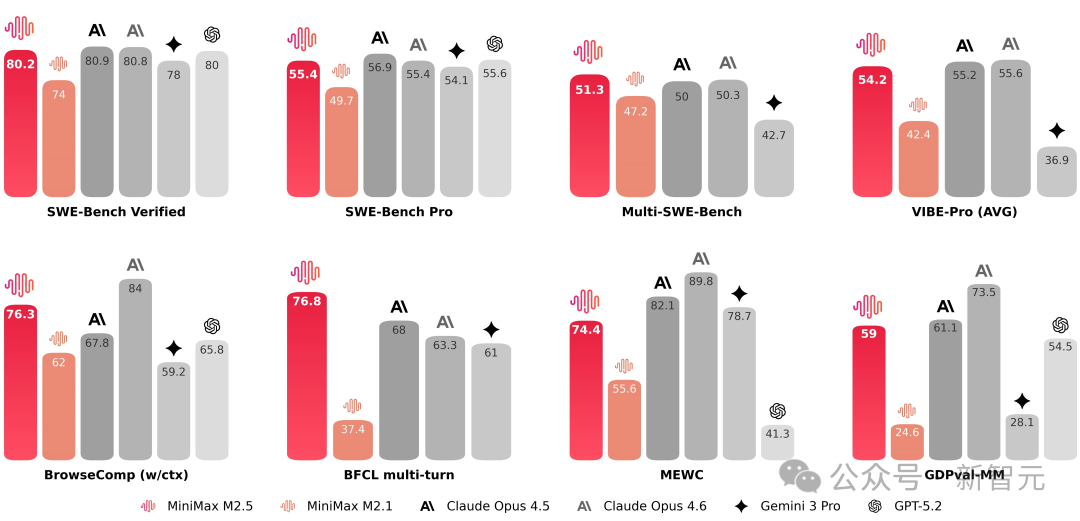
Not only does it offer powerful performance, but it is also crucially cost-effective.
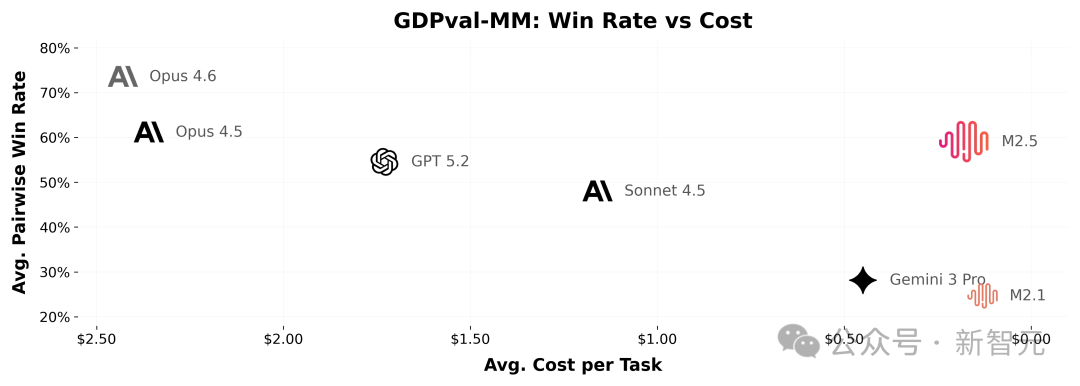
Running complex agents without cost constraints has been the MiniMax team's initial intention, and M2.5 is close to realizing this goal.
The output price of the 50 TPS version of M2.5 is only 5%-10% of similar models like Opus, Gemini 3 Pro, and GPT-5.
From performance figures, where is MiniMax's rare value?
Breakthroughs at the technical level must ultimately translate into value on a commercial level.
With the enhancement of model capabilities and decreasing running costs for agents, MiniMax's commercial growth now has a foundational engine.
From the latest performance data, the "all-modal + model-product integration + globalization" strategy constructed by MiniMax is unleashing unique commercial value.
First, the company has presented a robust growth report: total revenue reached $79.038 million in 2026, a year-on-year increase of 158.9%.
In terms of revenue structure, two major engines drove this growth.
On one hand, revenue from AI-native products reached $53.075 million, up 143.4% year-on-year, demonstrating the market appeal of C-end applications.
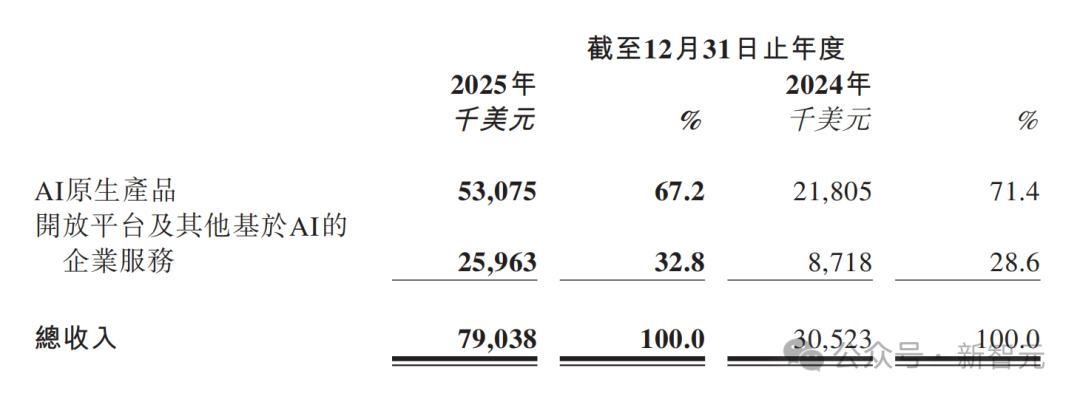
On the other hand, revenue from the developer-facing open platform business grew even more rapidly, reaching $25.963 million, a year-on-year surge of 197.8%, showcasing the immense potential of B-end technology empowerment.
Improvements in commercialization efficiency are equally significant. Thanks to substantial enhancements in model and system efficiency, along with deep optimizations of infrastructure configurations, the company's gross margin increased from 12.2% in 2024 to 25.4%, optimizing by 13 percentage points.
At the same time, the adjusted net loss rate significantly narrowed year-on-year, indicating that the company is gradually moving toward a healthier financial model while rapidly expanding.
Furthermore, the accumulation of users and ecosystems lays the groundwork for sustained future growth.
As of now, MiniMax has cumulatively served over 236 million users, with the number of enterprise clients and developers reaching 214,000.
Notably, the number of new registered users for the open platform products in February 2026 has reached over four times the level of December 2025, demonstrating strong growth inertia.
Behind these strong figures are MiniMax's technical all-modal capabilities, model-product integration strategy, and global commercial loop.
All-modal: the efficiency truth behind costs
Currently, MiniMax has excelled in the all-modal aspect.
Under the structure of AI native organization, MiniMax has global competitiveness in key modalities such as language, video, speech, and music.
It is widely believed that achieving all-modal international leadership requires at least ten billion dollars. However, MiniMax achieved this with only about $500 million.
In February 2026, MiniMax launched M2.5. It can work continuously for one hour at an output speed of 100 tokens per second and costs only $1.
This means that $10,000 can keep four agents working continuously for a year, making the operation of complex agents economically scalable!
Why is it essential to firmly pursue all-modal technology?
From day one, MiniMax has been convinced of the feasibility of this route.
Recent trends have also validated their judgment: over the past six months, intelligence boundary changes have come from modal fusion, as exemplified by the viral Nano Banana Pro.
This industry trend is evident: future AGI will undoubtedly be all-modal models. Multimodal integration is the essential pathway to elevate intelligence ceilings.
Today, this all-modal technological reserve has translated into tremendous competitive advantages.
MiniMax is one of the only three companies in the country that have achieved leadership in every modality, and it is the only independent startup.
Model-Product Integration as a Moat
The integration of model and product has also become MiniMax's significant moat.
Current companies easily fall into two extremes: either focusing solely on models or only on applications. Consequently, they either lack commercial monetization capabilities or have no technical barriers.
MiniMax is continuously investing in foundational models while scaling applications from the product side. This means they are well-positioned for sustained growth in the future.
A set of data in the financial report strongly supports this: gross margin increased to 25.4%, up 13 percentage points from 12.2% in 2024.
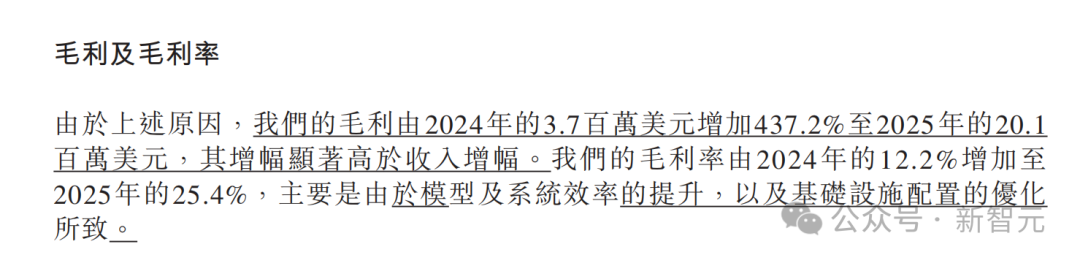
The main reasons are the improvements in model and system efficiency and optimization of infrastructure configurations—
At MiniMax, the effects of economies of scale have begun to show.
In other words, the cost of delivering intelligence per unit has decreased.
Looking from the expense side, the signals released are increasingly clearer.
First, sales and distribution expenses decreased by 40.3% year-on-year, from $86.995 million down to $51.896 million—simple reason: good AI native products primarily drive natural growth and word-of-mouth marketing, leading to naturally lower promotional expenses.
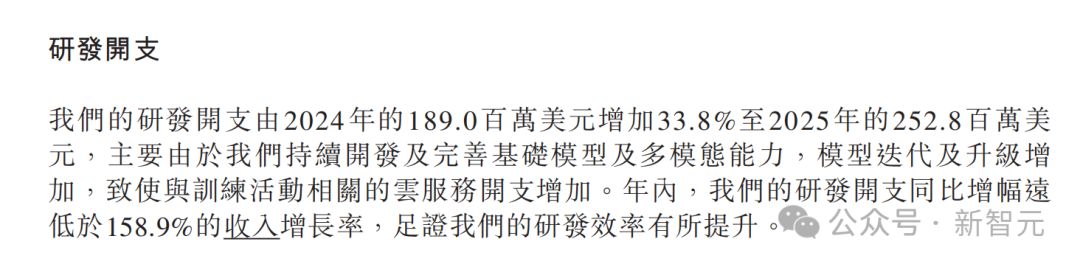
Secondly, research and development expenses rose by only 33.8% year-on-year (from $189 million to $253 million), significantly less than the revenue growth rate of 158.9%, evidencing great improvements in R&D efficiency.
This is the R&D efficiency improvement emphasized in the annual report.
In the entire market, few companies can concurrently achieve these points—rapid revenue growth, rising gross profits, easier customer acquisition, and sustained increases in R&D investment.
Overseas Market: A game-changing ceiling
Moreover, MiniMax's globalization strategy is already well laid out.
In 2025, income from outside mainland China accounted for about 73%, truly realizing a revenue structure dominated by overseas sources.
At the same time, MiniMax's business covers over 200 countries and regions, serving 236 million users and attracting 214,000 enterprise clients and developers from over 100 countries and regions.
It can be said that amidst the "strangulation" by AI giants like OpenAI, Anthropic, Google, and xAI, MiniMax has carved out a genuinely profitable path for going global.
Since its release, M2.5 has garnered significant attention in the international market, with numerous reports of success: leading global cloud vendors and AI-native cloud platforms have deployed MiniMax models, including Google Vertex AI, Microsoft Azure AI Foundry, Fireworks AI, Nebius AI, and others.
On leading coding platforms like OpenCode and Kilo Code, MiniMax has become the default choice for developers!
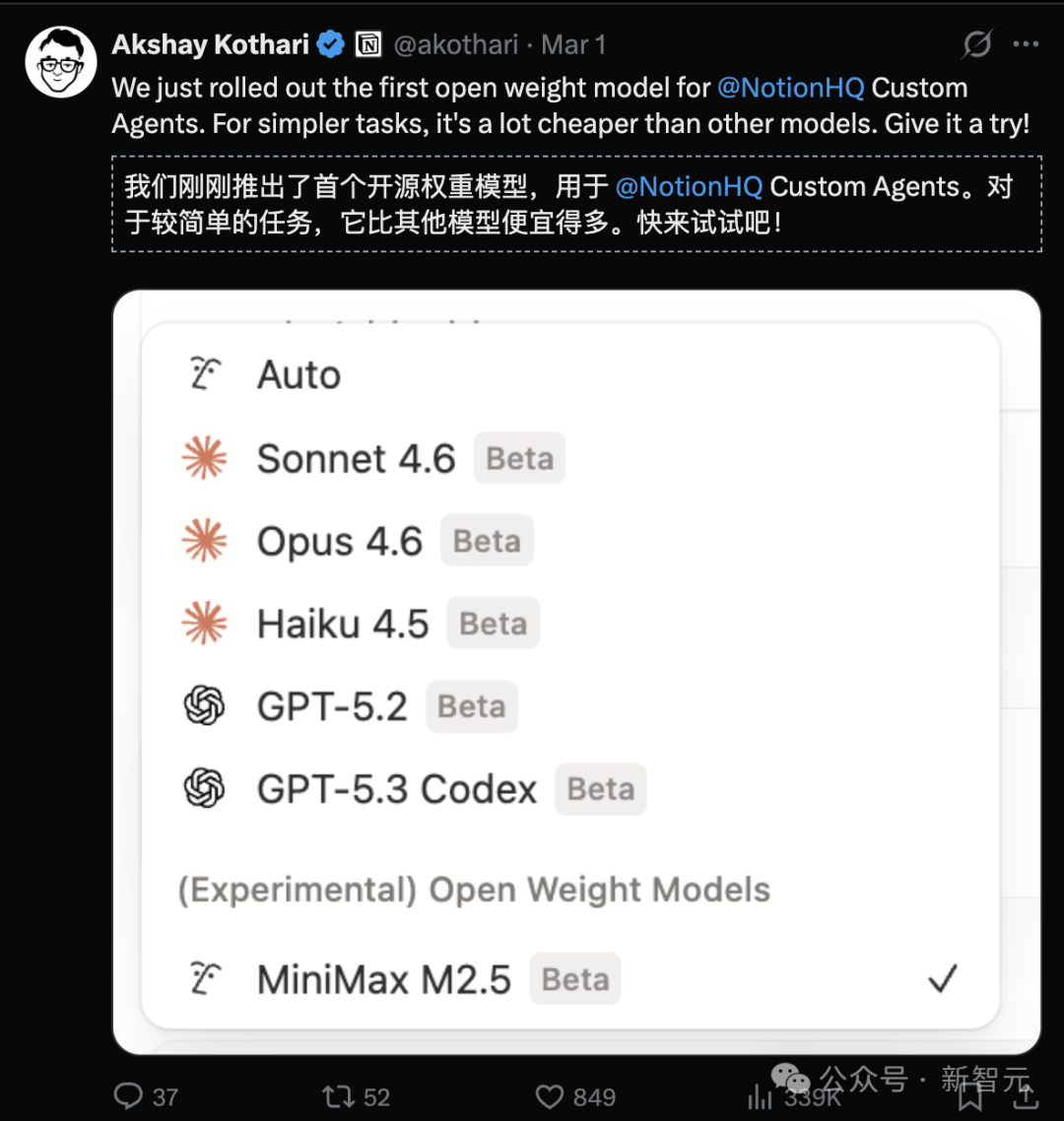
Recently, Notion also launched M2.5, marking it as Notion's first and only open-source model.
This step is what has determined the flexibility of the valuation.
Many domestic AI companies also claim to "go global," but most stop at "product localization"—the original product is merely sold in a different market.
In contrast, MiniMax appears to have overseas users willingly purchasing with real money.
Clearly, MiniMax has genuinely begun to transition to an "AI platform company," starting to enjoy the commercial dividends of innovation and uniqueness.
Global AI competition enters the second phase
As MiniMax's products are validated by global users, it faces not just regional competition but stands on the main stage of global AI competition.
Today's global AI competition has entered the second phase.
From Claude Code's explosion to OpenClaw's popularity, intelligent agents have entered a golden age.
The surge of Claude Code has completely ended the "handwritten code" era. OpenClaw has ignited the spark of personalized agents.
When AI shifts from passive invocation to active work, the genuine agent revolution erupts.
YC believes that a new economic form driven by intelligent agents is being formed.
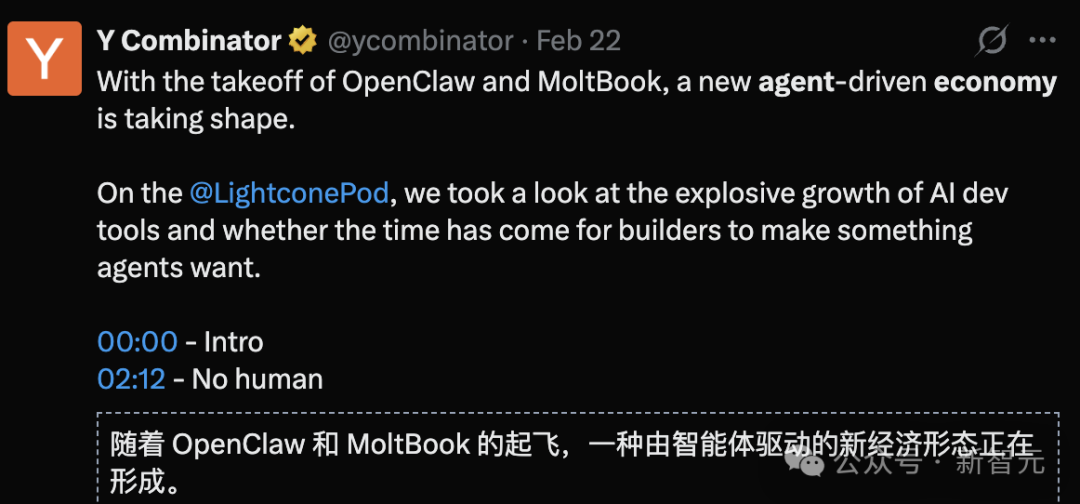
Now, AI competition has officially entered the second phase: from Coding to Agent, token volumes and usage scenarios will experience further explosions.
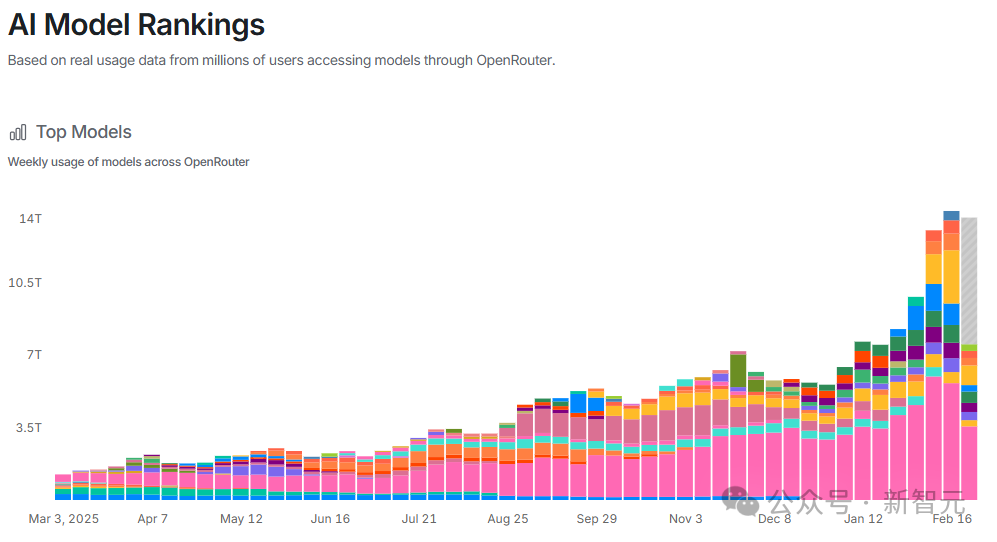
This trend is also evident in MiniMax's financial report:
In February 2026, the average daily token consumption of the M2 series text models has grown to over six times the level of December 2025, with token consumption from CodingPlan increasing by more than 10 times.
Internally at MiniMax, agent interns have covered nearly 90% of positions, including programming development, data analysis, operations management, human resources recruitment, and marketing sales.
MiniMax believes that in the coming year, the level of model intelligence will further improve.
This time, they are betting on three major tracks: programming, office work, and multimodal creation:
The programming field will witness the emergence of L4 to L5 level intelligence, moving from "tool" to "colleague-level" collaboration;
The office field will replicate last year's rapid progress in programming;
Multimodal creation will also transition to "direct deliverable" mid- to long-form content, even emerging in a new form of streaming and real-time output.
The combination of these three aspects means that humanity will encounter a larger-scale explosion of intelligent supply and an unprecedented innovative window period at the application level.
In light of this, MiniMax predicts that this year's token consumption may experience a growth of 10-100 times.
In response to these challenges, they have laid out plans, and targeted R&D for the M3 and Hailuo3 series models has begun.
But more importantly, MiniMax has shared their internal thoughts on the future and their larger goals—
MiniMax: Transitioning from a large model company to an AI platform company
At the strategic level, MiniMax aims to transition from a large model company to a platform company in the AI era.
Why does MiniMax have the opportunity to become a platform company?
First, the AI market is not yet a game of stock competition; the annual incremental growth exceeds the stock; the "winner takes all" scenario has not yet emerged.
As long as there is innovation and uniqueness, there will be opportunities.
MiniMax has already seized the initiative on the model, product, and ecosystem levels.
Going forward, MiniMax has made two preparations:
Breaking through intelligence boundaries with next-generation all-modal models to create model uniqueness;
Building unique products and ecosystems around the models.
Besides the large corporations, MiniMax is one of the few companies that can accomplish both tasks simultaneously and may even be the only startup in Asia to do so.
They have this confidence—
In the past few months, MiniMax's model iteration speed, revenue growth, user service capability, and token throughput capability have all continued to improve.
This has enabled them to define new model goals more rapidly, as internally they fully leverage the value of AI. Therefore, each model iteration significantly enhances and improves the company's overall capabilities, including research and development and external service capabilities.
This has formed a positive feedback loop, which is also MiniMax's core competitive advantage.
Furthermore, MiniMax will deepen its commercialization layout and delve into global market opportunities.
The astonishing report from the Hong Kong Stock Exchange is just the first step.
免责声明:本文章仅代表作者个人观点,不代表本平台的立场和观点。本文章仅供信息分享,不构成对任何人的任何投资建议。用户与作者之间的任何争议,与本平台无关。如网页中刊载的文章或图片涉及侵权,请提供相关的权利证明和身份证明发送邮件到support@aicoin.com,本平台相关工作人员将会进行核查。


