Human civilization originated from a violent event. Some places are destined to be focal points of war.
The Strait of Hormuz is one of them. If this narrow waterway, which carries one-fifth of the world’s oil transportation, were to close, what effects would that have on assets including Bitcoin?
And if this is indeed the beginning of World War III, how should we respond?
Impact of Closing the Strait of Hormuz
Over the past few decades, the Strait of Hormuz has repeatedly been at the center of geopolitical storms. The closest moment to a "closure" occurred during the covert naval conflicts of the 1980s, known as the "tanker war," during the Iran-Iraq War.
During the Iran-Iraq War from 1980 to 1988, Iran threatened to block the Strait of Hormuz multiple times and, in 1987, laid mines in the area and attacked oil tankers. At that time, some tanker crew members referred to the strait as the "Death Corridor." Iran's threats caused oil prices to rise from over $30 per barrel to above $45 per barrel. At the same time, tanker freight rates soared due to the tense situation in the strait, doubling at one point.
In 2018, the U.S. government withdrew from the Iran nuclear deal and reinstated sanctions against Iran. Iranian officials stated at that time they were capable of disrupting oil transportation through the Strait of Hormuz. In July of that year, Iran detained a British tanker in the strait. This escalation of tensions led to a slight increase in crude oil prices.
In June 2025, the U.S. claimed to have launched a "successful strike" on Iran's Fordow, Natanz, and Isfahan nuclear facilities. Subsequently, Iranian officials stated that the Iranian parliament had reached a consensus on the "need to close the Strait of Hormuz." After the news broke, Brent crude oil prices surged by 6% at one point.
Those were the years when Iran and Iraq choked each other’s economic throats. Iran also depended on this waterway to export oil; blocking it would mean cutting off its war funding. Thus, threats, harassment, and localized conflicts rose and fell, yet a certain dangerous but restrained balance was maintained.
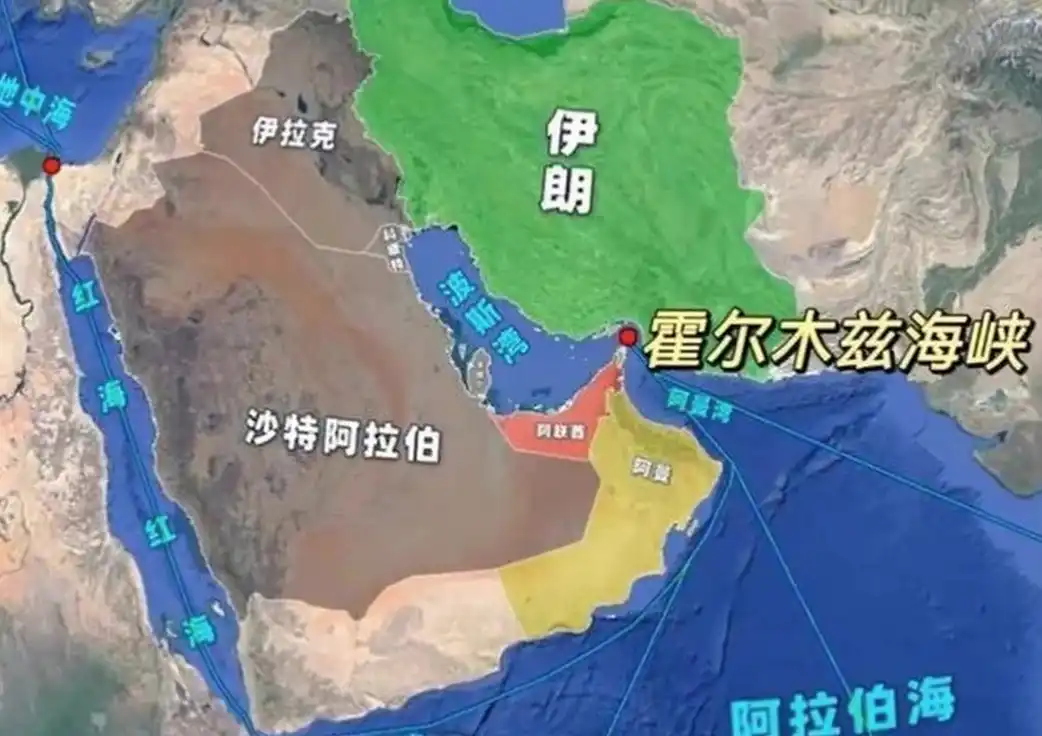
Today, Iran continues to express its toughness regarding the "Strait of Hormuz." On March 2, a senior advisor of Iran's Islamic Revolutionary Guard Corps publicly declared that "the Strait of Hormuz has been closed" and warned that any ships attempting to force passage would face attacks. Meanwhile, international maritime security agencies are more cautious— the UK Maritime Trade Operations office stated it has intercepted "blockade orders" issued by Iran via radio channels but has yet to receive a formal announcement of legal effect. From an international law perspective, the blockade has not been completed; from a practical shipping standpoint, the strait is nearly at a standstill.
After several tankers were attacked near the strait, war risk premiums skyrocketed to unbearable levels, with some insurance companies halting coverage entirely. Without insurance, few legitimate shipowners dare to send their vessels into these waters. Additionally, there is the issue of electronic interference. Large-scale GPS spoofing and signal jamming make ships' navigation systems show they are "anchored on land" or severely off-course. The sea remains, but the coordinates have lost their significance. Coupled with shipping giants like Maersk and Hapag-Lloyd announcing the suspension of related routes, this world’s busiest energy artery suddenly fell into an unprecedented silence.
As the global energy hub, around 50 large oil tankers usually pass through the Strait of Hormuz each day, but on March 1 and 2, real-time tracking data (AIS) showed that the number of passing tankers was nearly zero, with no liquefied natural gas ships crossing the strait, something unprecedented in recent years.
What retaliatory effects could Iran’s closure of the Strait of Hormuz have on the U.S. and Israel?
Firstly, although the U.S. has achieved energy self-sufficiency in recent years, global oil prices are interconnected, meaning the U.S. cannot isolate itself. As of March 3, Brent crude had soared to $82 per barrel. Institutions like Goldman Sachs predict that if the blockade continues, oil prices will surpass $100. This would directly lead to a spike in gasoline prices within the U.S., negating the previous anti-inflation achievements of the Federal Reserve, forcing interest rates to remain high, and possibly triggering an economic recession.
Secondly, U.S. allies in Asia (Japan and South Korea) and Europe heavily rely on energy from the strait. Iran's action essentially pressures these allies to exert pressure on Washington to restrain Israel or halt military operations, thereby diplomatically isolating the U.S.
Moreover, 2026 is a politically sensitive period in the U.S., and price increases triggered by an energy crisis are the most troublesome political poison for the ruling party, as Iran directly intervenes in U.S. internal political stability.
Although Israel does not directly import oil from the strait (mainly from countries like Azerbaijan), the indirect impact can also be lethal. The "de facto closure" of the Strait of Hormuz coincides with a comprehensive risk escalation in the Red Sea shipping routes. The costs of global trade that Israel relies on (including electronic products, raw materials, and imported food) are rising sharply, with insurance companies starting to refuse coverage for vessels heading to Israeli ports. Meanwhile, the costs of war are also highly unsustainable; the global economic turmoil caused by the blockade could weaken Western countries' financial support for Israel's long-term military actions.
What if this is World War III?
We often mistakenly believe that world wars begin on a certain day.
Indeed, Archduke Franz Ferdinand was assassinated in one day, and the gunfire echoed in the streets of Sarajevo. Yet, that political house of cards had been built up over decades or even centuries. Its collapse took only weeks, while people spent months recognizing that they were in an abyss.
World War I had not yet ended, and people were already predicting the next conflict. By the 1930s, Japan was expanding in Asia, Germany was rearming, and annexations and provocations were layered and advancing. After the invasion occurred, there was a long "phony war." Even when the flames of Pearl Harbor soared, many still couldn’t understand that the world had changed completely.
So if this is indeed World War III, how should we prepare for this war in advance?
Gold is the symbol of safe-haven assets, while silver is more complex. It is both a precious metal and an industrial metal. In an environment where war expectations are heightened, silver often initially follows gold upward but later exhibits volatility due to collapsing industrial demand. Historical experience tells us that silver might have more significant gains in the early stages of wars but will have more unstable trends in the medium term. It acts as an amplifier, magnifying panic rather than certainty.
As for oil, it is the core chip in this game. The Strait of Hormuz carries approximately one-fifth of global oil flow daily. Once flow is truly cut off, oil prices will break through whole numbers not needing emotional push but only physical facts. Due to a daily supply gap of 20 million barrels, analysts predict Brent crude prices will rapidly exceed $100 per barrel.
Rising energy prices mean a second ignition of global inflation, signaling a tear between central banks' efforts to "fight inflation" and "maintain growth," complicating the liquidity environment, which has never been friendly to risk assets.
Compared to gold, silver, and oil, the cryptocurrency community is most concerned about the trend of Bitcoin.
In the early stages of conflict, Bitcoin often resembles high-volatility tech stocks rather than gold. When global risk appetite sharply declines, investors first sell the most volatile assets. Margin calls, stablecoin runs, and exchange liquidity contractions could lead to short-term drops. The Oxford Economics Institute predicts that if the conflict continues for more than two months, global stock markets could face a 15% to 20% deep correction. This indicates that Bitcoin is also likely to correct alongside the global stock market.
Furthermore, should the conflict escalate into a global war and the traditional financial system partially falters, the role of crypto assets will undergo a qualitative change.
In an environment of tightening capital controls and constrained cross-border settlements, the ability to transfer value on-chain will be revaluated. The distribution of mining sites, electricity, and computational power will become geopolitical variables. The reserve structure of stablecoins will be scrutinized, and the judicial affiliation of trading platforms will become risk points.
At that point, the question will no longer be "bull market or bear market," but who will still be able to settle freely and who will still be able to exchange freely.
Many renowned investors and institutions have expressed views on "what to do in the event of a third world war."
J.P. Morgan believes it is necessary to reassess previous optimistic predictions, with the probability of a global recession rising to over 35%. It suggests preparing some defensive allocations, such as increasing cash holdings and shortening bond durations.
Just a month ago, when the Trump administration publicly discussed the possibility of incorporating Greenland into Washington’s territory, Ray Dalio, founder of Bridgewater Associates, issued a warning. He bluntly stated that in the context of persistent geopolitical tensions and severe fluctuations in capital markets, the world is edging toward a "capital war."
Although a capital war involves a contest of currency, debt, tariffs, and asset prices, it usually revolves around "major conflicts." For instance, before the U.S. entered World War II, it imposed sanctions on Japan, escalating tensions between the two nations.
Amid ongoing rising tensions, Ray Dalio emphasizes a viewpoint that seems almost "classical": the value of gold should not be defined by daily price fluctuations. "Gold is up about 65% compared to the same time last year, having dropped about 16% from its peak. People often fall into a misconception, always getting caught up in whether to chase the price when it rises or to buy when it falls," he said.
He repeatedly stresses that the importance of gold lies not in its ability to always rise but in its low correlation with most financial assets. It generally performs well in times of economic downturn, credit contraction, and market panic; in periods of economic prosperity and rising risk appetite, it may appear dull. But it is precisely this characteristic of counterbalancing that makes it a truly diversified tool.
As the war between Israel and Iran breaks out, the investment advice from Warren Buffett resurfaces.
In 2014, during Russia’s annexation of Crimea, Buffett warned against selling stocks during war outbreaks, hoarding cash, or purchasing gold or Bitcoin, as he believed investing in businesses is the best way to accumulate wealth over time.
Buffett stated at that time, what is certain is that if a major war occurs, the value of currency will decline. "I mean, this has almost happened in every war I know of, so the last thing you want to do is hold cash during wartime."
In contrast, Goldman Sachs focuses on oil prices. Because rising energy costs mean increases in transportation, manufacturing, and food prices, global inflation may "flare up again." Once inflation expectations rise, the central bank's policy path will inevitably tighten, subsequently altering the liquidity environment. Based on this logic, Goldman Sachs' recommendation is not complicated: hedge against inflation risk and focus on commodity futures and inflation-protected securities (TIPS), with the core not being chasing price surges but pre-emptively positioning against currency depreciation.
Moreover, analysts generally believe that once a "full confrontation" state is reached, the underlying logic of asset pricing will undergo a fundamental shift.
Real assets will be prioritized for revaluation first. Land, agricultural products, energy, and industrial raw materials, such as lithium, cobalt, and rare earths— originally seen as cyclical fluctuating assets— may become core chips under extreme circumstances. Because wars first deplete resources and only then privilege capital. Stocks and derivatives rely on corporate profits and the stability of financial systems, while resources themselves have the most primitive certainty. When supply chains are disrupted, the value of controlling physical assets will surpass any book returns.
Secondly, tech sector volatility will emerge. Artificial intelligence and semiconductors, which are growth stories in peacetime, become the core of productivity in wartime. Computing power determines command efficiency, chip performance dictates weapon system capabilities, and satellite communications dictate information sovereignty. Assets like data centers, power infrastructure, and low-orbit satellite networks will be swiftly integrated into national strategic frameworks.
The surface of the Strait of Hormuz still ripples, but everything that transpires is irreversible.
免责声明:本文章仅代表作者个人观点,不代表本平台的立场和观点。本文章仅供信息分享,不构成对任何人的任何投资建议。用户与作者之间的任何争议,与本平台无关。如网页中刊载的文章或图片涉及侵权,请提供相关的权利证明和身份证明发送邮件到support@aicoin.com,本平台相关工作人员将会进行核查。


