Original Title:My POLYMARKET LP Rewards Strategy , Author: josele.sol (@joselebetis2)
Translation | Odaily Planet Daily (@OdailyChina); Translator | Asher (@Asher_ 0210)
In the past few days, I have been continuously testing and optimizing a set of LP strategies on Polymarket, accumulating approximately $6,000 in Sponsored LP rewards and $2,000 in trading profits within 4 days.
Based on these practical results, this article outlines a complete market-making framework, covering core aspects such as market selection, order structure, position management, and risk control. It is not the only solution, but under the current conditions of capital scale, risk appetite, and time investment, this has been verified as the most stable and efficient approach.

First, choosing the right market is more important than you think
The choice of market determines over 50% of the results. A quality market usually means smaller spreads, a healthier order book structure, clearer transaction paths, and a more stable reward density. The selection logic mainly focuses on the following four points:
High trading volume + small spread
Prioritize markets with active trading and naturally narrow spreads. Such markets are easier to achieve continuous trades, have smaller slippage, a more stable order book structure, and are more conducive to continuously obtaining market-making rewards.
Events with clear time nodes
Events with accurate timing (such as competitions, policy announcements, and predetermined result releases) are more predictable. A clear timeline helps with planning in advance, reducing risks from completely random fluctuations.
Presence of "quiet periods"
Markets with stages of low news flow are more suitable for market-making, such as during the night or before events start. In these phases, price fluctuations are typically smaller, which favors placing orders closer to the market price.
Incentive intensity relative to liquidity is higher
The core measurement standard is "how much reward can be obtained for each dollar of liquidity". When incentives are more concentrated relative to total liquidity, the reward density is higher, and overall market-making efficiency is superior.
Second, core market-making principles
Bidirectional orders (YES + NO)
Always place YES and NO orders on both sides around the midpoint price. There are only three core goals: capture the spread, obtain incentive rewards, and maintain market-making eligibility. Bidirectional orders essentially maintain the position of "liquidity provider" rather than betting on direction.
Position management (avoid excessive unilateral positions)
If trades continue to skew towards one side, this indicates increased risk rather than stable returns. When one side has too many trades, you can:
- Place reverse sell orders near the market price;
- Recover liquidity through merging;
- Execute market orders to actively restore bilateral balance.
The core goal is to maintain a neutral structure, avoiding the transition from market-maker to directional speculator.
Proactively cancel orders during market confusion
During sudden news, real-time key events, or high volatility phases, proactively widen the spread or even temporarily stop placing orders, as maintaining tight spreads during severe fluctuations is not advantageous but could turn you into a party that absorbs others' liquidity exit; in contrast, disciplined proactive order cancellation is often more important than continuously participating in orders.
Third, ladder-style order structure
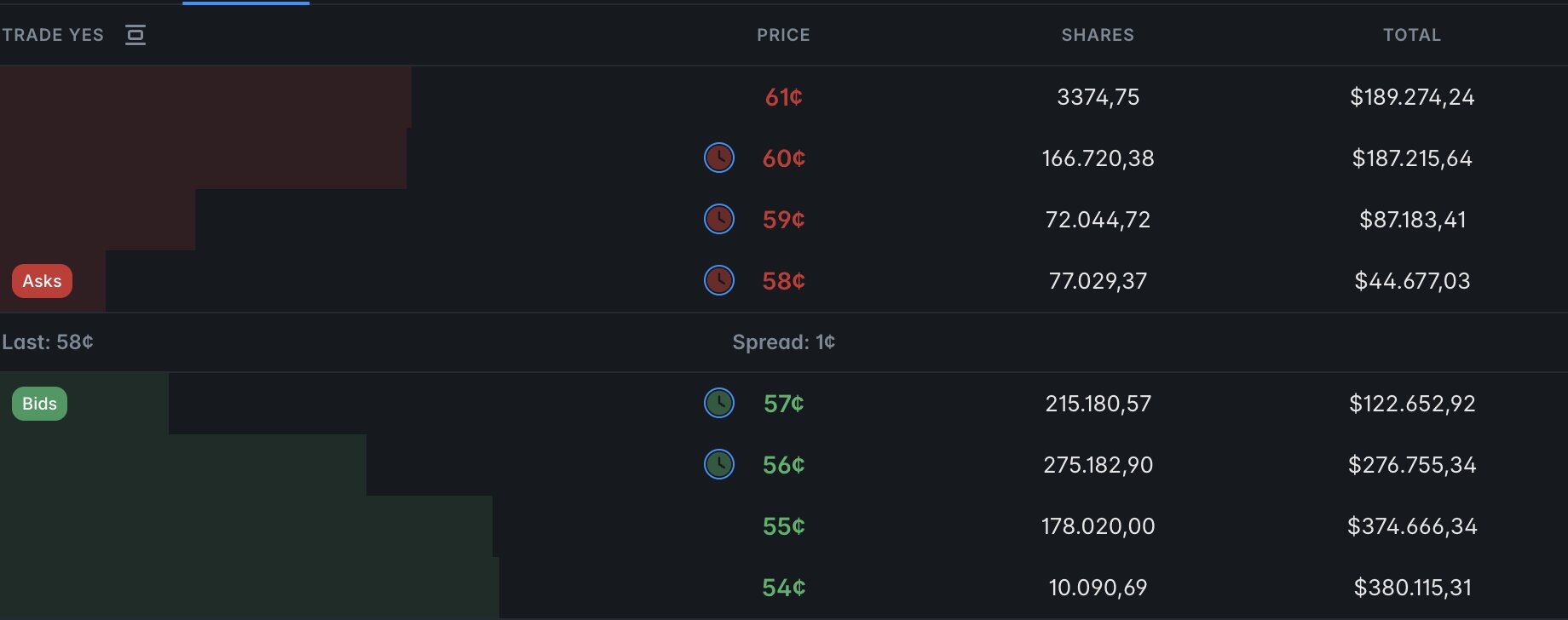
Instead of placing one large order on each side, a more robust approach is to build a "ladder" structure - distributing multiple orders at different price levels. This can continuously provide liquidity without becoming a precise target in fast price movements. The structural layout is as follows:
- Place small orders near the midpoint price (narrower spread): Increases trading probability, maintains a stable trading rhythm, while continuously acquiring incentives and fee income;
- Place larger orders further from the midpoint price (wider spread): Creates a buffer zone during price volatility, reduces the risk of being rapidly swept through, while leaving more space for position adjustments.
The ladder structure reduces the probability of being "precisely harvested" while spreading trades across different price levels, making positions easier to manage - especially when simultaneously engaging in multiple markets in LP strategies on Polymarket; this layered structure is particularly important.
Fourth, spread rules
First set a target spread, then dynamically widen or narrow orders based on market conditions. The real advantage does not come from keeping spreads tight all the time, but rather from only bringing quotes close to the market price when it is relatively safe and stable.
Main adjustment criteria include:
- Sudden increase in volatility: When prices begin to jump rapidly, proactively widen the spread to avoid being continuously swept through;
- Appearance of news or real-time events: When significant news or critical moments arise, the market's repricing speed is very fast, so quotations should be appropriately widened, and direct pausing should be considered if necessary;
- Imbalance in positions: If trades continue to skew to one side, widen quotes on the frequently traded side while moderately adjusting the quote of the side that needs to be balanced closer to the market.
In summary, when the market becomes unstable, prioritize widening the spread or temporarily stepping back; once the market stabilizes again, bring the quotes close to the market price.
Fifth, position management
Position imbalance is the real reason that overwhelms most market-makers.
If trades continue to skew to one side, it is not about "earning more" but rather accumulating unilateral positions and increasing risk. The goal of market-making is to continuously provide orders while avoiding being trapped by unilateral position risks.
When trades are clearly skewed to one side, the following strategies can be employed:
- Reduce the scale of orders on the advantageous side: If one side is continuously being traded, actively shrink the scale on that side to avoid expanding the position;
- Strengthen quotes on the hedging side: Moderately increase the attractiveness of the other side to accelerate the replenishment of trades, gradually restoring position balance.
- Incremental adjustments: Make small, continuous corrections to the position to avoid emotional or intense one-time hedging.
Two methods to clear positions
The first method is to sell existing positions. Gradually sell off unilateral positions in batches, slowly reducing risks while releasing capital for continued circulation.
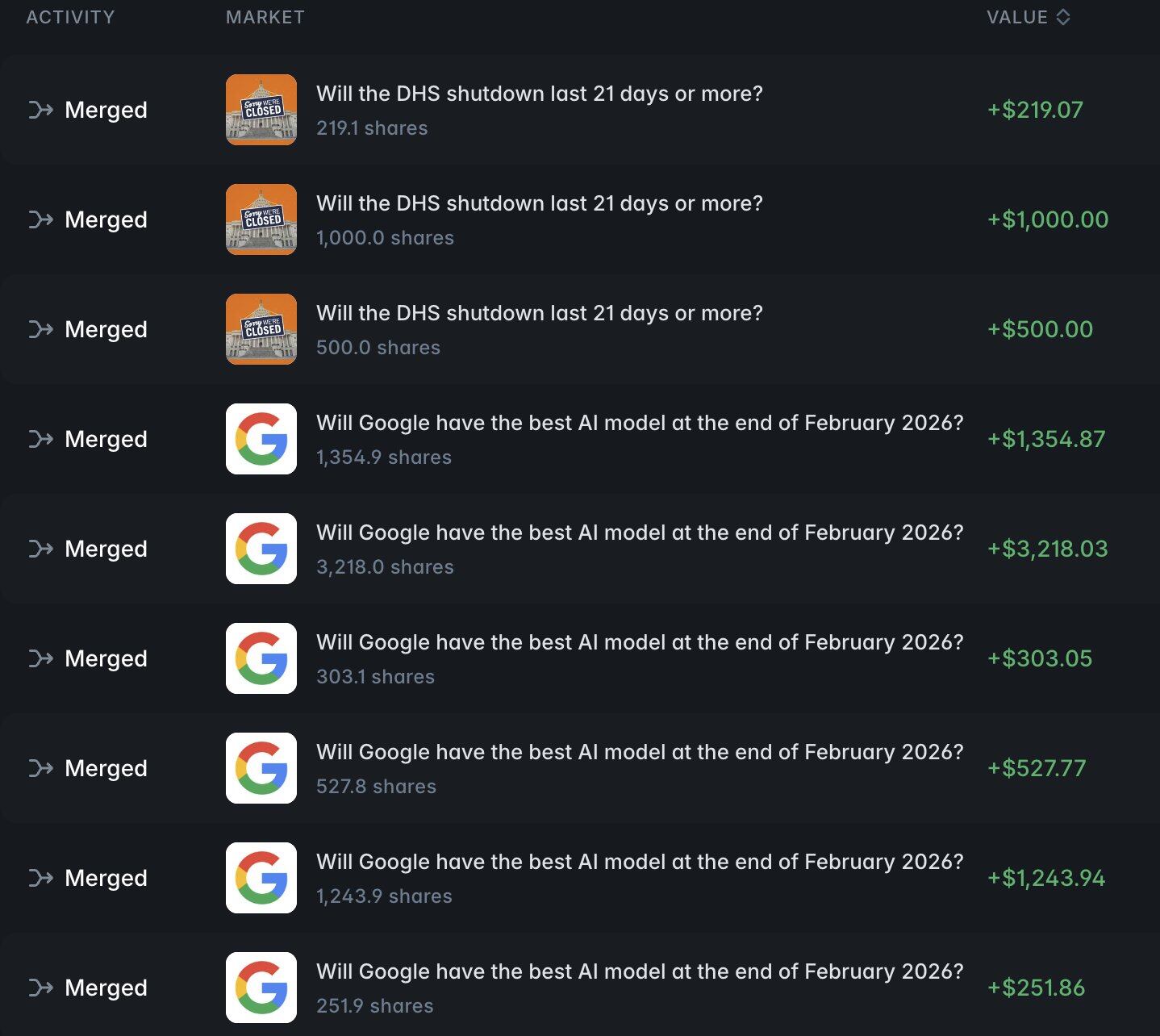
The second method is to fill the gaps and merge. If the YES and NO positions are asymmetrical, buy the missing side and execute a merge in Polymarket to eliminate risk exposure and release capital.
Do not become "the liquidity absorber"
It is less about being clever and more about executing discipline. In some instances, placing orders very close to the market price is not an advantage, but merely a proactive effort to absorb others' urgent sell-off chips.
The following scenarios typically avoid placing quotes close to market price:
- Significant announcements or real-time key events: The market's repricing speed is far faster than manual adjustments, making it easy to get swept in an instant;
- Events with thin liquidity: Insufficient trading, chaotic price jumps often result in poor trading quality;
- Sudden price discovery events: When new information occurs and the market is searching for price ranges again, the direction has not yet stabilized.
A more robust approach is to: widen the spread significantly, reduce the order size, or temporarily exit, waiting until the order book structure stabilizes before re-engaging. Only in this way can one avoid passively absorbing risk during severe fluctuations.
Sixth, time investment management
This strategy does not require monitoring the market 24 hours a day, but it certainly isn’t just about placing orders and then ignoring them. Most of the time, it can run in the background, but it must maintain a state of being ready to respond at any moment, to make quick adjustments when market conditions change.
The time structure is roughly as follows:
- About 10-20% for active operation time: Deploying capital, adjusting the ladder structure and spreads, correcting positions;
- About 80-90% for passive operation time: The system continuously places orders but still needs to stay attentive.
The key is to always maintain a state of being able to respond to changes. Generally, operations will be done near a computer while having phone alerts on, so that as soon as market movements occur, the price spreads can be adjusted, orders can be paused, or the order structure can be rearranged promptly.
Seventh, recommended supporting tools
Betmoar (@betmoardotfun)
Used for market screening and data observation. Its advantage is presenting market structure and reward distribution more clearly, especially when screening for markets with higher Sponsored LP Rewards.
Currently, the display and filtering of rewards within Polymarket are still not intuitive enough, so leveraging external tools can help identify markets with higher reward density more quickly. (Although there will be optimizations later, the information obtained here is usually more accurate.)
Polycule (TG Bot)
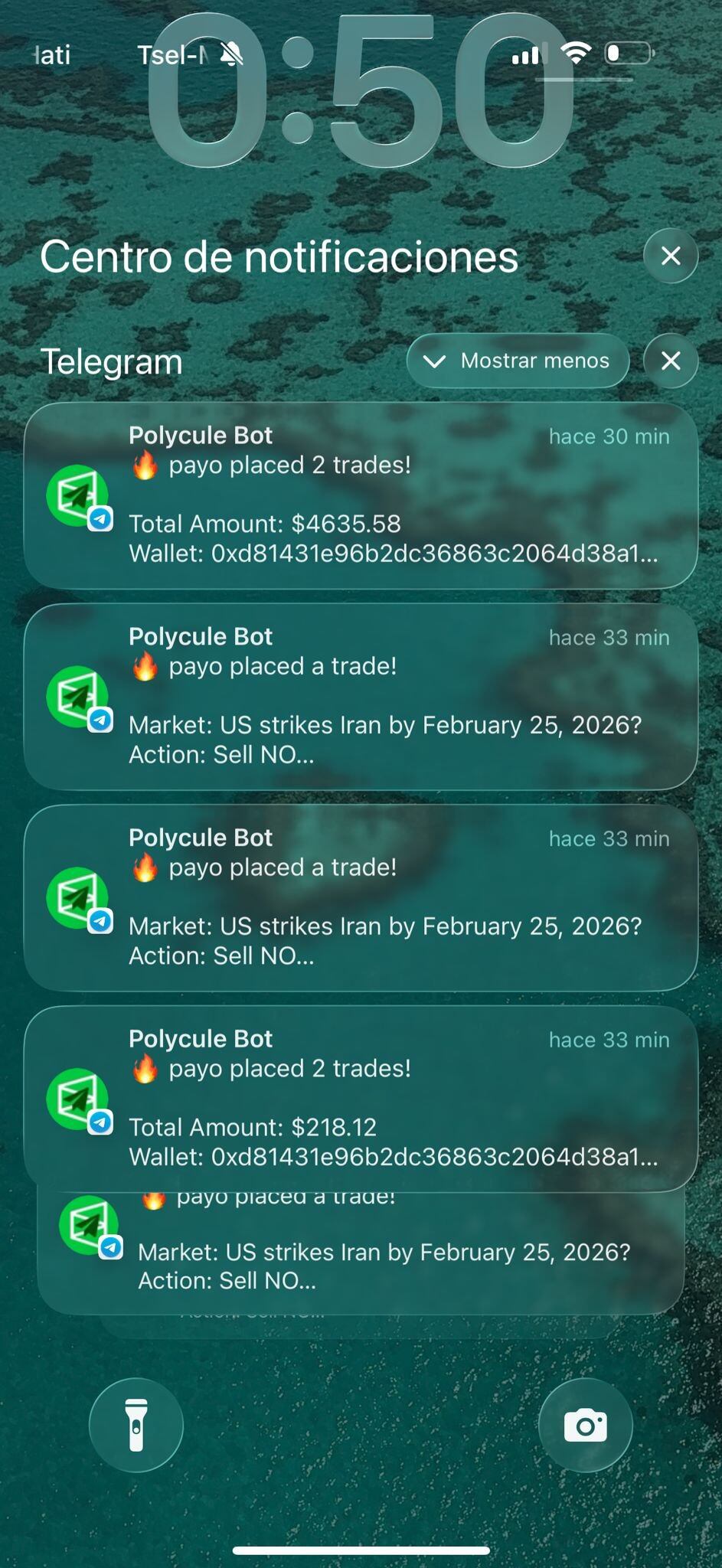
Mainly used for wallet tracking and transaction notifications. Other features are not the core use case, focusing instead on timely notifications and clear records, making it easier to monitor transaction and position changes.
Additionally, through PolyRewards (@PolyReward) incentive tracking tool, users can quickly check reward income status and overall data performance (link: https://polyrewards.fun/).
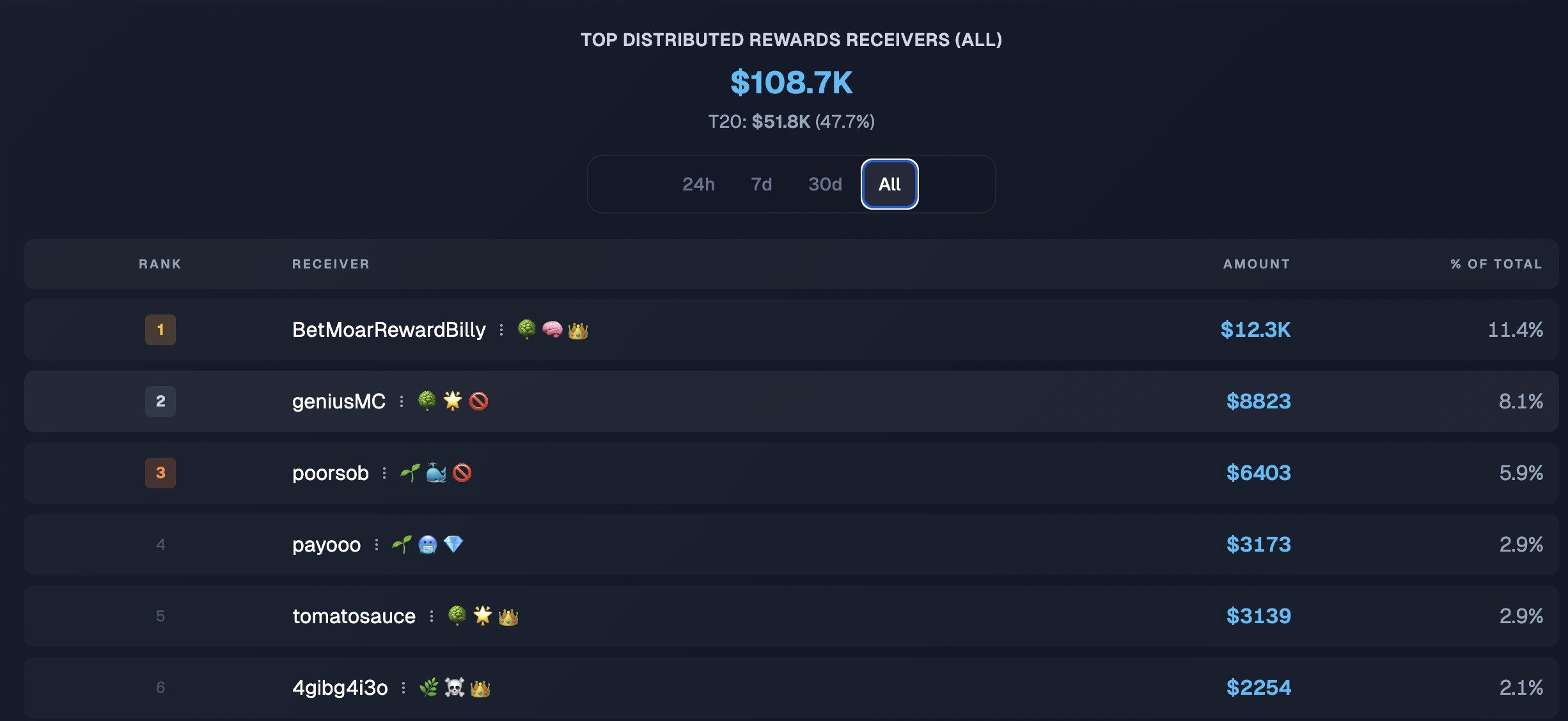
The above content represents a personal LP market-making strategy and is not the only method. This strategy is applicable to the current capital scale, risk tolerance, and time and energy that can be invested. Under different conditions, results may vary significantly; meanwhile, incentive rules and market environments may change at any time.
免责声明:本文章仅代表作者个人观点,不代表本平台的立场和观点。本文章仅供信息分享,不构成对任何人的任何投资建议。用户与作者之间的任何争议,与本平台无关。如网页中刊载的文章或图片涉及侵权,请提供相关的权利证明和身份证明发送邮件到support@aicoin.com,本平台相关工作人员将会进行核查。


