Written by: Peggy, Lin Wanwan
The most stable asset in the crypto market is a dollar without an ID.
Over the past decade, USDT has transformed itself into the "de facto dollar" of the crypto world with $170 billion in assets and ubiquitous liquidity. However, the more successful it becomes, the sharper the identity anxiety: a dollar without U.S. backing is always a loophole.
In recent years, Circle has applied for a trust bank license, Paxos has built a global clearing network, and Visa and Mastercard have also increased their investments in stablecoin settlements. In contrast, Tether has remained stuck in the narrative of an "offshore shadow empire."
Under regulatory pressure and competition from rivals, in September 2025, Tether, the parent company of USDT, finally presented a brand new answer: USAT. This is its first attempt to fill the long-missing ID.
At the same time, Tether appointed 29-year-old former White House advisor Bo Hines as CEO. Ten years ago, he was a star wide receiver for the Yale football team; now, he has been thrust into the most sensitive battlefield of the global financial market, becoming Tether's "legitimate face" in the U.S.
Hines is not an outsider. In January 2025, the White House established the Presidential Advisory Council on Digital Assets, and his name prominently appeared on the executive director list. At just 28 years old, he participated in drafting the GENIUS Act, laying the groundwork for the U.S. stablecoin regulatory framework. Just a few months later, he resigned from the White House and joined Tether, the world's largest stablecoin issuer, taking on the heavy responsibility of "expanding territory" in the U.S. market.
For Tether, this is a strategic probe deeply embedded in the U.S. political and regulatory system. Hines's addition is both a bargaining chip for Tether in Washington and the first step in actively correcting its "shadow empire" image.
But this is just the beginning. What truly gives USAT the opportunity to break free from the "offshore dollar clone" impression is the compliance combination designed behind it: from introducing high-level political and economic resources from the U.S. to connecting with institutional arrangements in traditional financial markets, Tether is attempting to write itself into the U.S. regulatory narrative and capital market logic with three cards.
The issuance of USAT is not merely an expansion of the stablecoin landscape. It signifies that Tether is beginning to build a "legitimate doppelgänger" mechanism for itself: no longer satisfied with being a global funding channel, but aiming to reshape its identity and become a compliant part of the U.S. financial order.
The Birth of the Legitimate Doppelgänger: The Three Cards of USAT
In recent years, stablecoins have become the most subtle asset in financial history. They are neither fully dollars nor entirely cryptocurrencies, yet they have permeated every corner of the globe over the past five years. Tether, with USDT, has built a massive "shadow dollar" system that is a lifeline for worker remittances in Latin America, has replaced local inflationary currencies in Africa, and has become a settlement tool for cross-border e-commerce in Southeast Asia.
However, as the largest supplier in this system, Tether has always navigated regulatory gaps. Ambiguous audits, complex offshore structures, and the shadows of money laundering and sanctions have led to it being labeled as a "shadow empire." For U.S. regulators, Tether's existence is a paradox: on one hand, it promotes the globalization of the dollar; on the other hand, it is seen as a potential systemic risk. A "digital dollar" that circulates globally lacks a legitimate ID from the U.S.
This identity misalignment has finally forced Tether to present a new solution. In September 2025, it launched USAT, specifically targeting the U.S. market. This is not a simple iteration but an experiment with three cards: people, money, and institutions. Tether aims to use these three steps to bet on whether a shadow dollar can be accepted by the U.S. narrative.
The First Card: People
The first card of USAT is people, specifically Bo Hines's political endorsement.
Bo Hines, 29 years old, was a starting wide receiver for the Yale football team during his college years. An injury cut his athletic career short, leading him into politics.
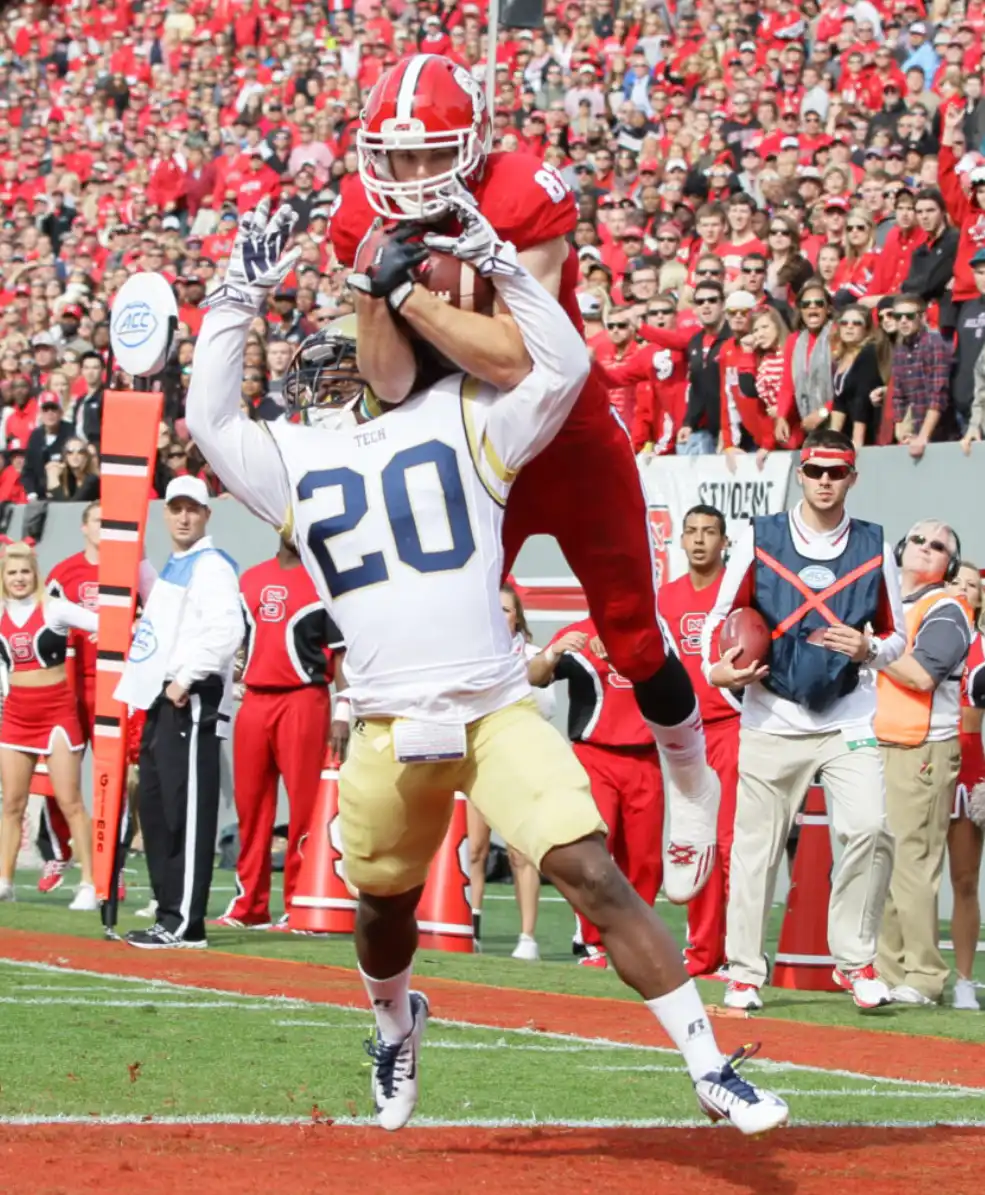
Bo Hines (in red) playing football, source: Yale Daily News
In 2020, he ran for a congressional seat as a Republican candidate but was unsuccessful. After that, he entered the policy circle. Starting in 2023, Hines served on the White House Digital Assets Advisory Council and later became the executive director. According to public information, he participated in drafting the GENIUS Act, which is the first draft of stablecoin regulatory legislation in the U.S. and served as a reference for subsequent proposals.
In August 2025, Hines left the White House. On August 19, Tether announced his appointment: Hines would join the company as a strategic advisor, responsible for compliance and policy communication in the U.S. market. In the same announcement, Tether also stated that it would launch a U.S. regulated stablecoin—USAT—in the coming months.

Bo Hines attending an event and giving a speech, source: CCN
Less than a month later, in September 2025, Tether announced the launch of USAT and officially appointed Hines as the first CEO of USAT. This means he will lead the business promotion and regulatory connection of this product in the U.S. market.
Public information shows that this is the first time Tether has introduced an executive with a White House background into its management team. Previously, Tether's management was primarily composed of individuals with financial or technical backgrounds, lacking direct experience in U.S. policy.
Hines's addition binds USAT to the U.S. regulatory environment from the very beginning.
The Second Card: Money
The second card is to provide Tether with a set of credit backing. In the past, the composition of Tether's reserves has always been controversial. Early audit documents showed that USDT's reserves included a large amount of commercial paper, short-term loans, and hard-to-trace asset combinations. These assets lacked transparency and became the focal point of external doubts about whether Tether truly maintained "one coin, one dollar."
In the design of USAT, Tether attempted to dissolve this doubt. The announcement in September 2025 indicated that the reserve custodian for USAT would be Cantor Fitzgerald. Founded in 1945, this investment bank is one of the primary dealers for the U.S. Treasury and has long participated in the underwriting and distribution of U.S. government bonds, holding a solid credit position on Wall Street.
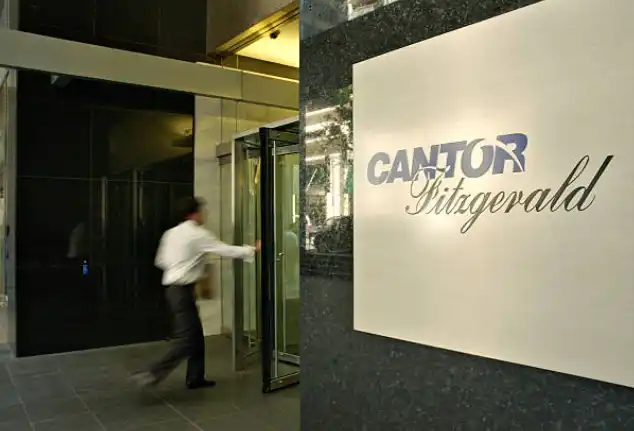
Cantor Fitzgerald's New York office entrance, source: Getty Images
According to Tether's plan, Cantor Fitzgerald will ensure that USAT's reserve assets are primarily composed of U.S. Treasury securities. This means that the value support for USAT no longer relies on a complex offshore asset structure but is directly anchored in the liquidity and credit system of the U.S. Treasury market.
This arrangement establishes a deeper binding relationship between Tether and the U.S. financial system at the asset level: shifting from a supplier of "shadow dollars" to a "distributor on the U.S. Treasury chain." From public information, this is also the first time Tether has explicitly introduced a Wall Street primary dealer as a core partner in its product.
The Third Card: Institutions
The issuance and compliance of USAT will be executed by Anchorage Digital Bank. This is one of the first digital asset banks in the U.S. to obtain a federal trust license and is one of the few compliant entities that can be directly subject to federal regulation. Unlike USDT, which relies on offshore structures, USAT's reserves and audit processes will be incorporated into the U.S. institutional framework. This not only complies with the regulatory requirements for stablecoin issuance outlined in the GENIUS Act but also signifies that Tether has completed an "identity registration" at the institutional level.
The geographical choice is also intriguing. Tether has set the headquarters of USAT in Charlotte, North Carolina—America's second-largest financial center, home to traditional financial institutions like Bank of America. Compared to New York and Washington, Charlotte has a strong financial atmosphere while being relatively distant from the spotlight of regulatory centers. This detail indicates that Tether is not satisfied with changes at the institutional design level but is attempting to "truly land" in real operations.

Bank of America Corporate Center in Charlotte, source: SkyscraperCenter
Thus, USAT is not just a new stablecoin but a formal handshake between Tether and the U.S. market. Politically, Bo Hines, financially, Cantor, and institutionally, Anchorage, form a complete compliance combination that pushes Tether from being a supplier of "shadow dollars" to a "systematic participant" with a new identity.
However, how far this transformation can go remains an open question. Tether's fundamental nature has not changed: its business path remains globalized, its structure remains offshore, and its capital flows remain complex. USAT may bring a U.S. ID, but it is unlikely to immediately rewrite the market's basic perception of Tether.
The launch of USAT signifies that Tether's issuance of stablecoins extends into an identity reconstruction: the shadow dollar begins to knock on Wall Street's door.
Will the Stablecoin Market Landscape Be Reshuffled?
In the U.S. market, Tether's new move directly targets Circle and its issued USDC.
In recent years, USDC has been the representative of the compliant market in the U.S. However, compared to USDT, USDC's size and circulation are much smaller; as of September 2025, its market capitalization is about $70 billion, accounting for 25-26% of the stablecoin market.
Although its size is only one-third of USDT, USDC has established solid trust in U.S. political circles and Wall Street, thanks to its exclusive partnership with Coinbase and backing from institutions like BlackRock.
Circle even repurchased shares of its joint venture Center in 2024, becoming the sole issuer of USDC to further strengthen its control. For a long time, the implicit narrative of USDC has been: U.S. compliance = safety, offshore markets = risk.
However, it is precisely this path that has given Tether room to apply pressure.
Tether's CEO Paolo Ardoino has repeatedly emphasized that the significance of USAT lies in breaking the potential monopoly that USDC could form in the U.S. market.
He stated bluntly, "Without USAT, the U.S. stablecoin market could be locked in the hands of a few institutions." In other words, the strategic mission of USAT is not just a product upgrade but a direct confrontation with USDC in the market.
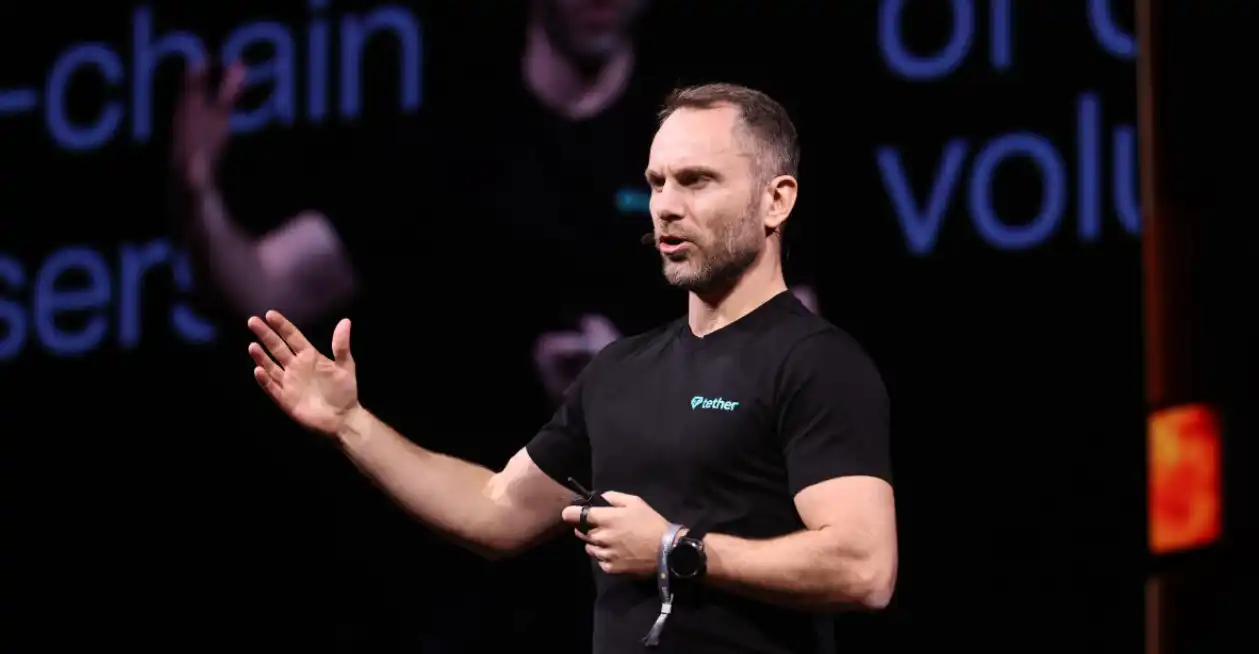
Tether's CEO Paolo Ardoino speaking at the 2025 Bitcoin Conference in Las Vegas, source: Nasdaq
By launching USAT, Tether is attempting to use its massive scale to fill the "compliance gap." The significance of USAT is that it allows Tether to combine scale and compliance for the first time, thereby posing a direct threat to USDC's moat.
If Circle represents a top-down compliance approach rooted in the U.S., Tether is constructing a "dual narrative" through USAT: maintaining a vast network of a "gray empire" globally while shaping a "compliant doppelgänger" in the U.S. market.
The future stablecoin market is likely to evolve into a "dual-track pattern": USDT will continue to maintain a strong user base globally, especially in Latin America, Africa, and Southeast Asia, while USAT will focus on domestic U.S. and institutional clients. This structure can stabilize Tether's advantages in emerging markets while attracting more institutional funds on the compliance front, bringing new expansion momentum to the entire sector.
For Tether, this is not just about issuing a new coin or advancing a listing; it is a transformation of identity. Once it can be listed on the U.S. capital market, it can completely shed the "shadow empire" label and enter the global financial stage as a "dollar company."
However, Tether's offensive will inevitably provoke responses from its rivals. Circle is likely to accelerate its cooperation with regulators and institutions to further solidify USDC's compliance moat; licensed issuers like Paxos may take the opportunity to expand their presence in niche markets such as payments and cross-border settlements.
Traditional financial giants have also shown interest, with Visa, Mastercard, and Wall Street investment banks exploring how to integrate stablecoins into existing systems. It is foreseeable that the launch of USAT will not only mark the starting point of Tether's identity transformation but may also become the catalyst for a new round of competition in the stablecoin sector.
Epilogue
The launch of USAT brings unprecedented opportunities for Tether, along with new risks and challenges. Will the market believe that a "shadow empire" plagued by doubts can truly achieve self-separation through a compliant doppelgänger?
Historical experience shows that the "turning white" of gray powers is not without precedent.
In the late 19th century, American society was generally distrustful of financial capital, and the Morgan family was even labeled as "financial oligarchs." Strictly speaking, Morgan did not break the law, but in an era lacking modern regulation, its vast capital and influence were often seen as "hijacking public interest," thus becoming a "gray power" of the time.
However, banker John Pierpont Morgan changed this image through concrete actions: on one hand, he helped the government issue bonds and resolve fiscal crises, while on the other, he assisted railroad companies in restructuring their debts. Over time, he transformed from a "capital oligarch" into "the financial agent of the state."
Tether's current strategy of buying U.S. Treasuries and promoting a compliant version of its stablecoin is somewhat reminiscent of Morgan's approach, seeking legitimate status by solving problems for the state.

The former site of the Morgan family on Wall Street, source: NYC Urbanism
However, not all "gray giants" can successfully complete such a transformation.
As the world's largest cryptocurrency exchange, Binance was almost entirely "offshore" in its early days, operating outside of regulation. In recent years, it has begun applying for licenses in markets like France and Abu Dhabi, attempting to move towards compliance and trying to enter the U.S. market. However, in the U.S., it faced the harshest regulatory resistance, ultimately having to scale back and tighten its operations. This cautionary tale indicates that gray giants seeking to "turn white" will not be easily granted passage by regulators.
This means that Tether's future remains fraught with uncertainty. Reserve transparency, compliance execution, and interactions with regulatory agencies will all become indicators that are continuously tested in the coming years.
At the same time, signs of accelerated competition are already emerging.
Circle is applying for a national trust bank license in the U.S. to strengthen its compliance capabilities and further solidify its ties with regulators and institutional investors; Paxos has revealed a significant increase in demand for its stablecoin infrastructure and has launched a "Global Dollar Network" with Mastercard, attempting to expand the use of dollar stablecoins; while Visa is continuously expanding its support for stablecoin settlements, promoting the integration of such products into existing payment systems. Meanwhile, Plasma is trying to embed stablecoins directly into the underlying pipes of the global payment network through on-chain clearing and cross-border payments.
The stablecoin market is transitioning from its early stage of wild growth into a more intense and institutionalized competitive phase.
USAT allows Tether to attempt to submit its ID in Washington for the first time. The real test lies not on the blockchain but at the conference table: those who can leave their names on the regulatory agenda will be the ones qualified to define the next generation of digital dollars. Whether the shadow empire can step into the sunlight will be the biggest suspense in crypto finance.
免责声明:本文章仅代表作者个人观点,不代表本平台的立场和观点。本文章仅供信息分享,不构成对任何人的任何投资建议。用户与作者之间的任何争议,与本平台无关。如网页中刊载的文章或图片涉及侵权,请提供相关的权利证明和身份证明发送邮件到support@aicoin.com,本平台相关工作人员将会进行核查。


