As bitcoin shattered historic milestones throughout 2025, a glaring anomaly emerged: the anticipated “altseason”—the traditional capital rotation that has historically followed bitcoin peaks—remained conspicuously absent.
While market participants waited for the customary flood of liquidity into smaller-cap assets, the altcoin index told a different story. This critical metric, designed to track whether altcoins are outperforming bitcoin, touched the decisive 75-point threshold only once, briefly, during the second half of the year. For the remainder of 2025, the index languished at levels suggesting that bitcoin’s dominance was not just a phase, but a permanent fixture of a new market regime.
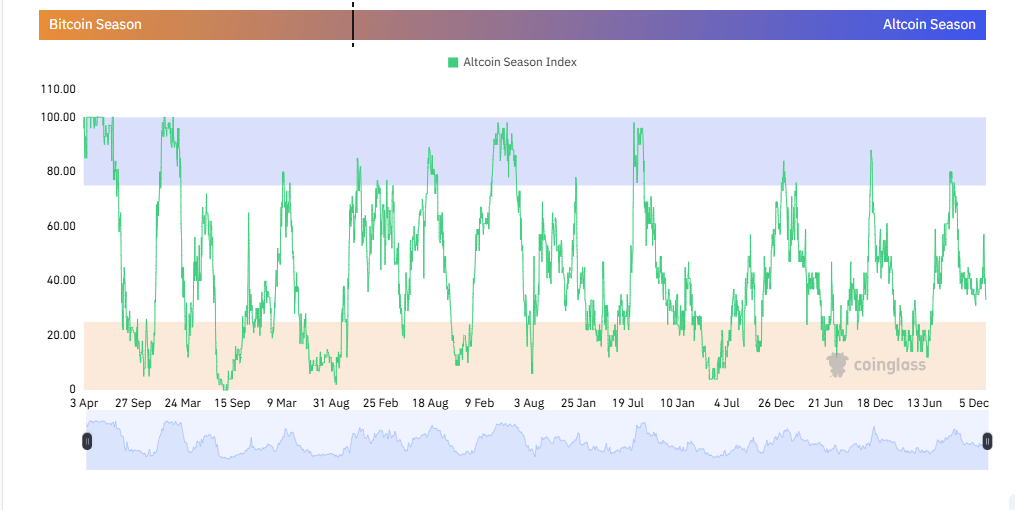
This departure from historical precedent has ignited a fierce debate among analysts and investors. The question is no longer when the altcoin season will arrive, but whether the very concept of a synchronized “altseason” is dead. Several factors contribute to this “alt-stagnation,” including the influx of institutional capital via spot bitcoin exchange-traded funds (ETFs).
Read more: Expert Claims Altcoin Metrics Are Being ‘Gamed’ to Mislead Investors
With thousands of new tokens launching monthly, capital is becoming too diluted to trigger a unified rally. Furthermore, investors have become more discerning, favoring high-utility protocols over the “rising tide lifts all boats” mentality of previous cycles.
Wintermute’s 2025 Digital Asset OTC Markets Review offers a perspective that validates claims of the cycle’s demise. According to the review, altcoin rallies between 2022 and 2024 typically lasted 45 to 60 days. In 2024 specifically, strong bitcoin performance successfully drove “wealth recycling” into altcoins like memecoins and AI tokens.
In 2025, this dynamic collapsed. Altcoin rallies lasted an average of just under 20 days, despite a steady flow of new themes including memecoin launchpads, perpetual DEXs, and the x402 meta—an AI-native payment standard. Wintermute attributes this to market fatigue and structural constraints:
These narratives sparked brief bursts of activity but failed to develop into durable, market-wide rallies. This reflects choppy macro conditions, market fatigue after last year’s overshoot, and insufficient altcoin liquidity to carry narratives beyond their initial phase. This led to altcoin rallies feeling like tactical trades rather than high-conviction trends.
Beyond institutional concentration, a sharp liquidation cascade on Oct. 10, 2025, served as a psychological turning point. The event saw approximately $19 billion wiped out, causing retail traders to retreat into the perceived safety of major tokens. The sheer volume of new token launches exacerbated the issue; roughly 85% of 2025 altcoins traded below their launch price by year-end, making a unified market rally nearly impossible.
The overall verdict is that the market has transitioned from “clean” four-year cycles to a regime of selective speculation. Future altcoin performance now depends on specific utility and structural demand rather than a broad momentum shift sparked by bitcoin.
- Why didn’t altseason follow bitcoin’s 2025 surge? Institutional ETF flows kept liquidity concentrated in bitcoin, sidelining smaller caps.
- What did the altcoin index show in 2025? It briefly hit 75 points once, then stayed weak, confirming bitcoin’s dominance.
- How long did altcoin rallies last in 2025? Wintermute data shows a median of ~20 days, far shorter than past cycles.
- What factors killed broad altcoin rallies? Macro chop, retail retreat after October’s $19B wipeout, and diluted token launches.
免责声明:本文章仅代表作者个人观点,不代表本平台的立场和观点。本文章仅供信息分享,不构成对任何人的任何投资建议。用户与作者之间的任何争议,与本平台无关。如网页中刊载的文章或图片涉及侵权,请提供相关的权利证明和身份证明发送邮件到support@aicoin.com,本平台相关工作人员将会进行核查。


