Written by: Delphi Digital
Compiled by: Deep Tide TechFlow
Perpetual contract decentralized exchanges (Perp DEXs) will become the new Wall Street. AI agents will enable autonomous trading, and exchanges will transform into "all-in-one applications." Here are the top ten key predictions from our 2026 outlook report.
AI Agents Begin Autonomous Trading
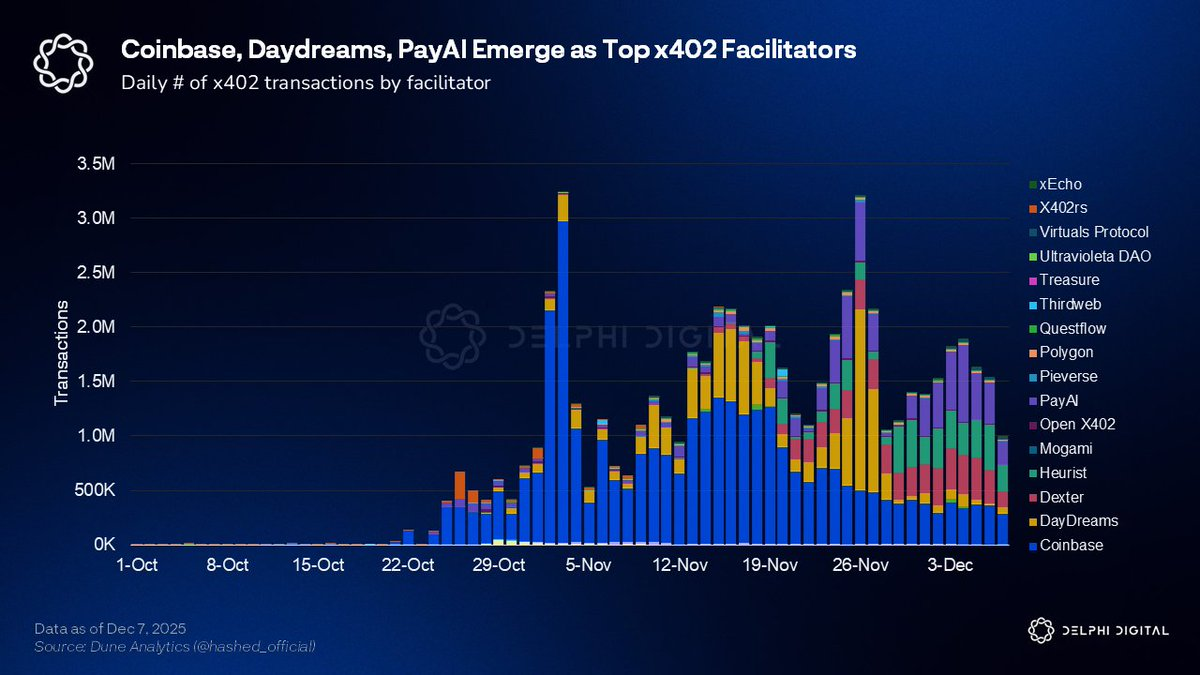
The x402 protocol allows any API to be accessed via encrypted payments. When an agent needs a service, it can immediately pay with stablecoins without the need for a shopping cart or subscription. The ERC-8004 protocol increases trust by creating a reputation registry for agents with performance history and collateral.
Combining these elements can form an autonomous agent economy. For example, users can delegate travel planning, and their agents will subcontract to flight search agents, paying data fees through x402, and subsequently booking tickets on-chain without any human intervention.
Perpetual Contract Decentralized Exchanges (Perp DEXs) Disrupt Traditional Finance
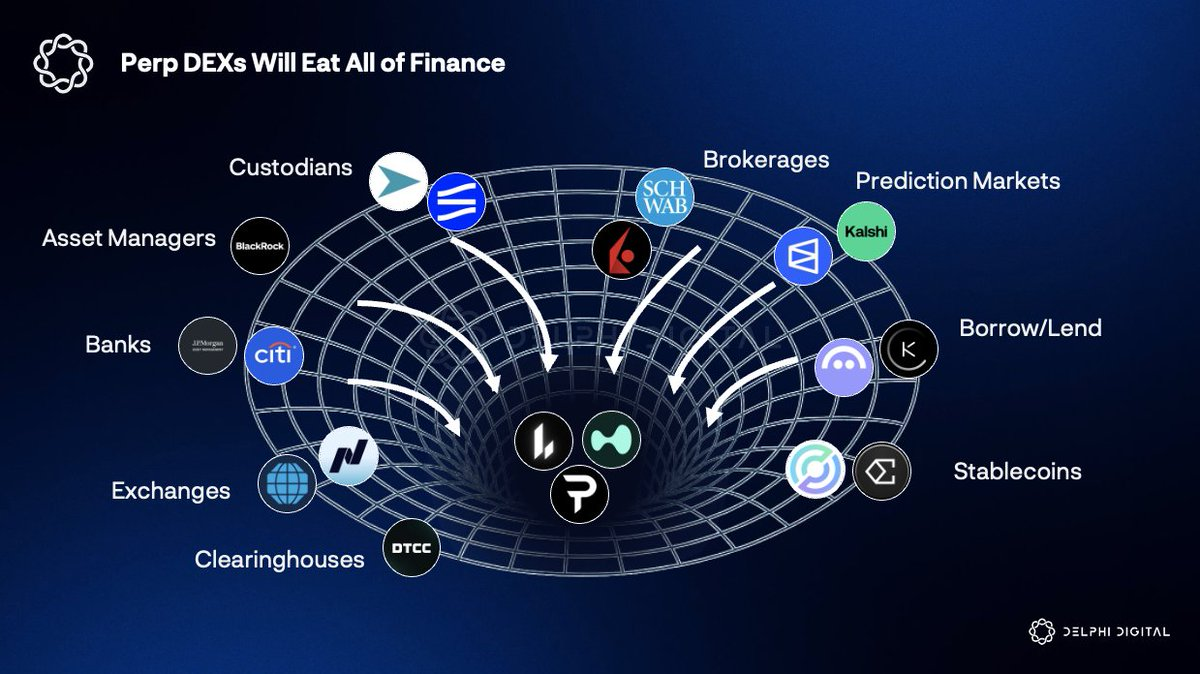
Traditional finance is costly due to its fragmentation: trades occur on exchanges, settlements are completed through clearinghouses, and custody is managed by banks. Blockchain integrates all of this into a single smart contract.
Currently, Hyperliquid is building native lending capabilities. Perpetual contract decentralized exchanges (Perp DEXs) could simultaneously serve as brokerages, exchanges, custodians, banks, and clearinghouses. Competitors like @Aster_DEX, @Lighter_xyz, and @paradex are racing to catch up.
Prediction Markets Upgrade to Traditional Financial Infrastructure
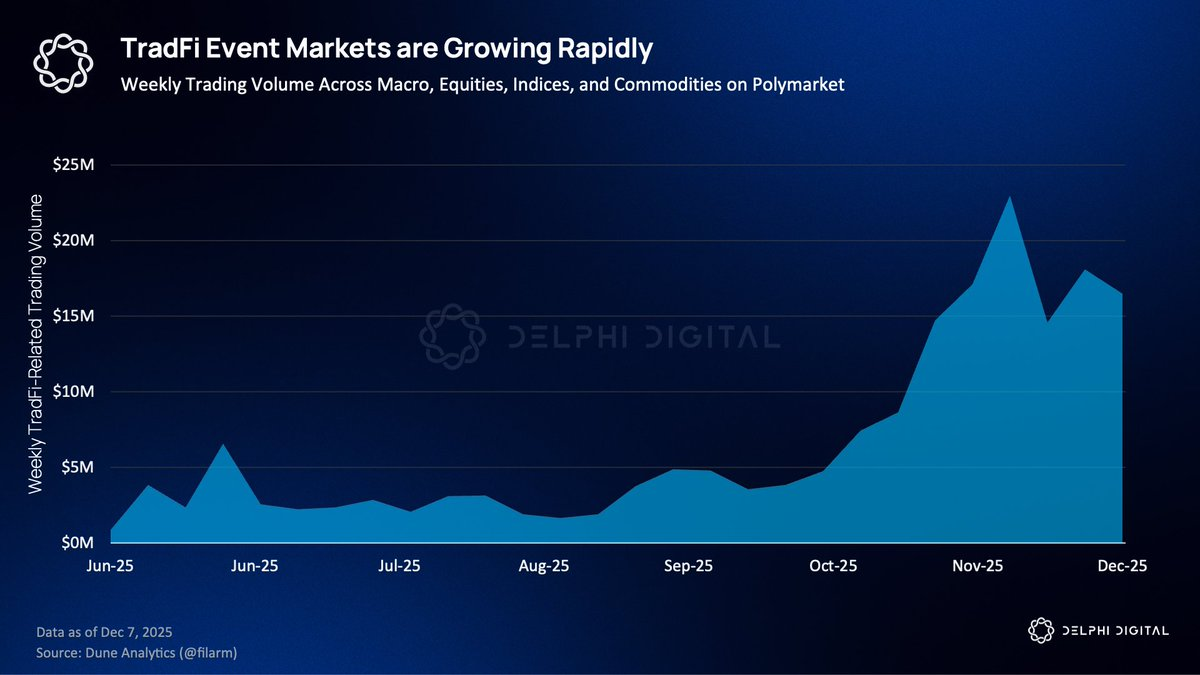
Thomas Peterffy, chairman of Interactive Brokers, views prediction markets as a real-time information layer for portfolios. Initial demand is focused on weather contracts for energy, logistics, and insurance risks.
2026 will usher in new categories: stock event markets including earnings forecasts and guidance ranges, macroeconomic indicators like CPI and Federal Reserve decisions, and cross-asset relative value markets. A trader holding tokenized Apple stock (AAPL) can hedge earnings risk through simple binary contracts without complex options maneuvers. Prediction markets will become top-tier derivative instruments.
Ecosystem Reclaims Stablecoin Yields from Issuers
Last year, Coinbase earned over $900 million in reserve yields just by controlling the distribution of USDC. Meanwhile, public chains like Solana, BSC, Arbitrum, Aptos, and Avalanche collectively earn about $800 million annually through transaction fees, yet there is over $30 billion in USDC and USDT supply on their networks. The revenue from platforms driving stablecoin usage flowing to issuers even exceeds their own income.
This situation is changing. Hyperliquid has captured half of the reserve yield for its aid fund through a competitive bidding process for USDH. Ethena's "stablecoin as a service" model has now been adopted by Sui, MegaETH, and Jupiter. The yields that were once passively accumulated by traditional issuers are gradually being reclaimed by demand-generating platforms.
Decentralized Finance (DeFi) Conquers Uncollateralized Lending

DeFi lending protocols hold tens of billions in total locked value (TVL), but almost all protocols require over-collateralization. The breakthrough lies in zkTLS technology. Users can prove their bank balance exceeds a certain amount without exposing account numbers, transaction histories, or identities.
@3janexyz offers instant uncollateralized USDC credit lines based on Web2 financial data verification. Algorithms monitor borrowers in real-time and dynamically adjust loan interest rates. The same framework can utilize agents' performance history as credit scoring, providing loan guarantees for AI agents. @maplefinance, @centrifuge, and @USDai_Official are also addressing related issues. By 2026, uncollateralized lending will transition from experimental stages to infrastructure.
Onchain FX Finds Market Fit
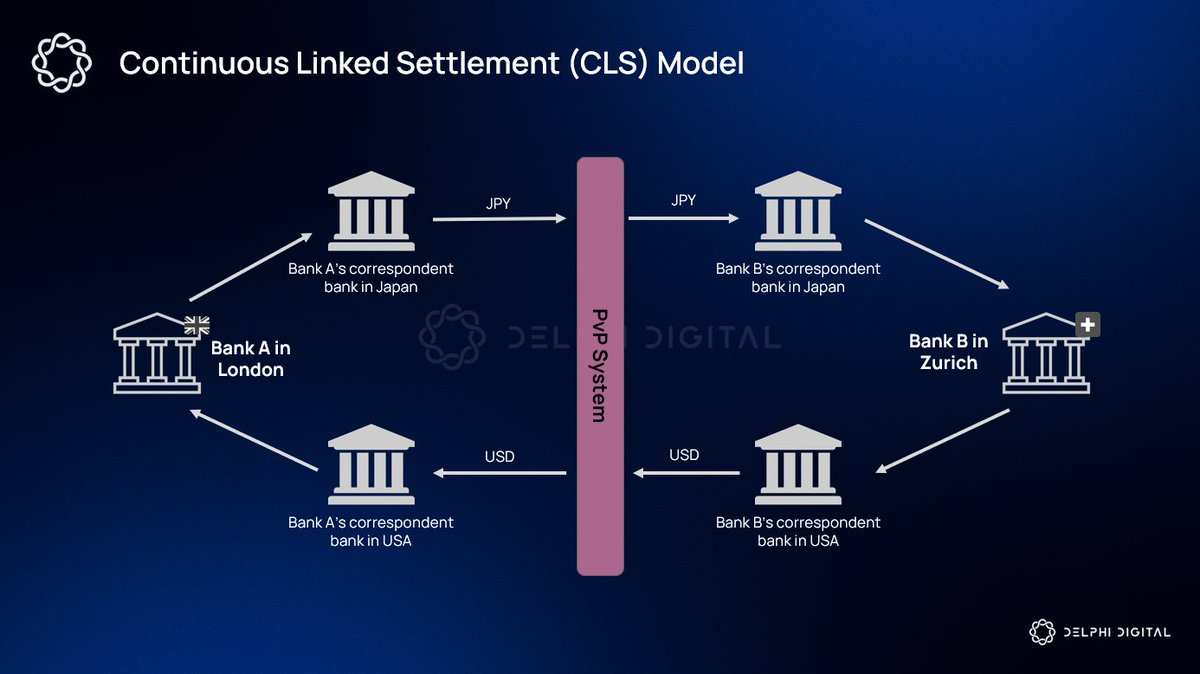
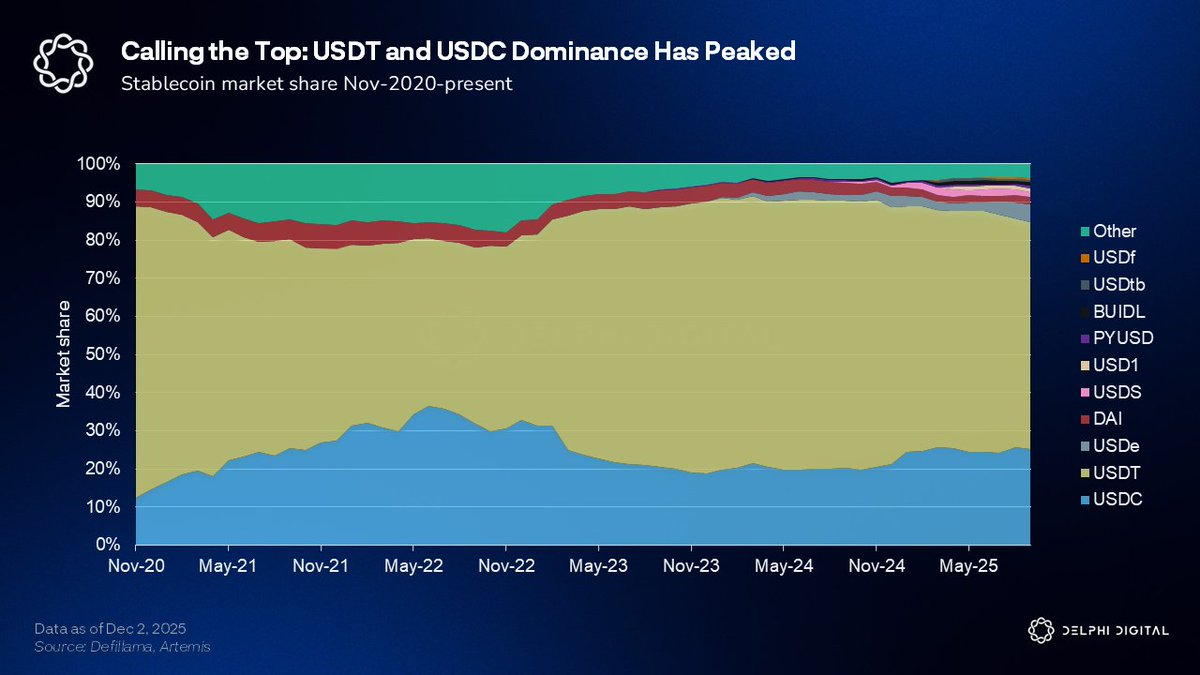
Currently, USD stablecoins account for 99.7% of the total supply, but this dominance may have peaked. The traditional foreign exchange market is a multi-trillion dollar market filled with intermediaries, decentralized settlements, and high costs. Onchain FX eliminates multiple intermediary steps by having all currencies exist as tokenized assets on a shared execution layer.
Product-market fit may emerge in new emerging market currency pairs where traditional forex costs are highest and efficiency is lowest. These underserved markets represent the clearest value proposition for cryptocurrencies.
Gold and Bitcoin Lead Currency Devaluation Trades
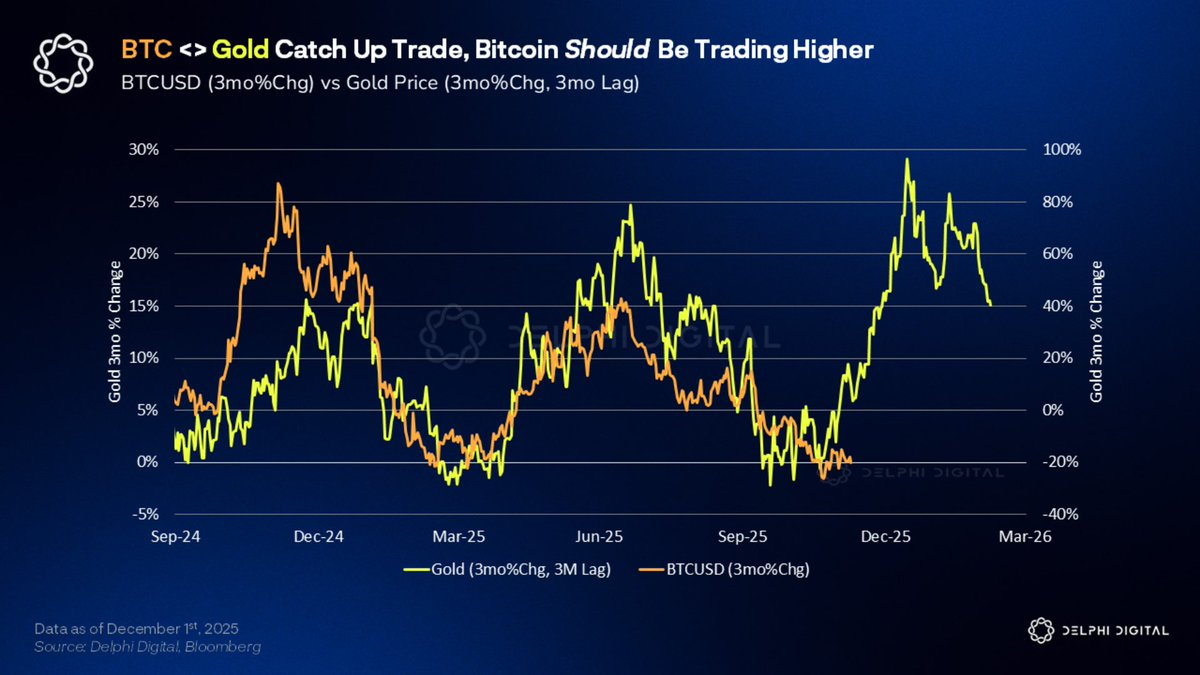
Since we listed gold as one of the best charts to watch, its price has surged by 60%. Despite gold prices reaching all-time highs, central banks have purchased over 600 tons of gold, with China being one of the most active buyers.
The macroeconomic environment supports gold's continued strength. Global central banks are cutting interest rates, fiscal deficits are expected to persist until 2027, global M2 money supply has reached new highs, and the Federal Reserve is about to end quantitative tightening (QT). Gold typically leads Bitcoin by three to four months. As currency devaluation becomes a mainstream issue ahead of the 2026 midterm elections, both assets will attract more safe-haven capital inflows.
Exchanges Transform into "All-in-One Applications"
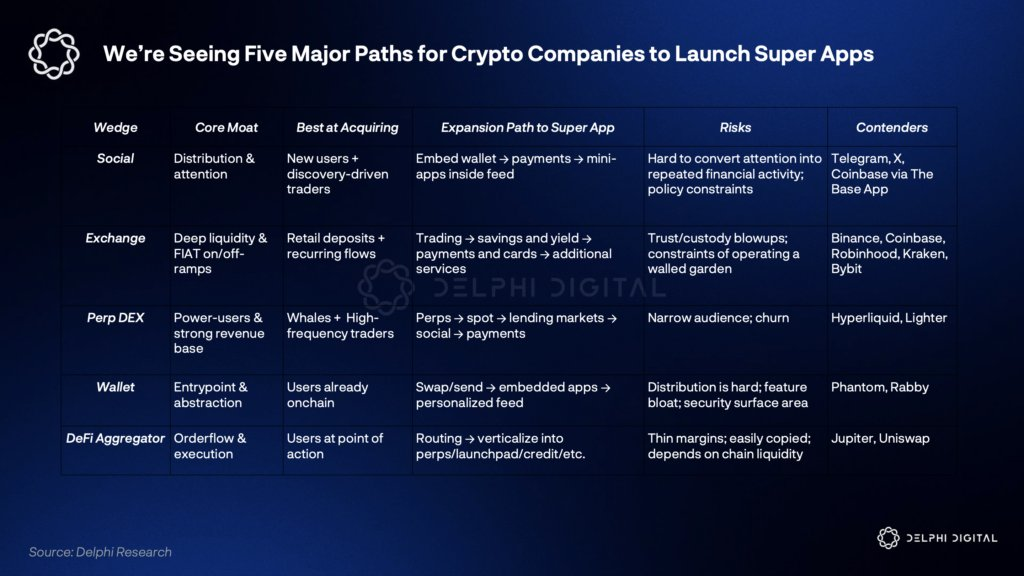
Coinbase, Robinhood, Binance, and Kraken are no longer just exchanges; they are building "all-in-one applications."
Coinbase has Base as its operating system, Base App as its interface, USDC yields as its underlying support, and offers derivatives services through Deribit. Robinhood's Gold membership has grown by 77% year-over-year, becoming a user retention engine. Binance has reached the scale of a super app, with over 270 million users and $250 billion in payment transaction volume. As distribution costs decrease, value will concentrate on platforms that have users. In 2026, winners will begin to pull ahead.
Privacy Infrastructure Meets Demand
Privacy is under pressure. The EU has passed the Chat Control Act, cash transactions are restricted to below €10,000, and the European Central Bank plans to launch a digital euro with a holding limit of €3,000.
Privacy infrastructure is catching up. @payy_link has launched a privacy crypto card, @SeismicSys provides protocol-level encryption services for fintech companies, @KeetaNetwork supports on-chain KYC without exposing personal data, and @CantonNetwork offers privacy infrastructure for major financial institutions. Without a privacy-protecting framework, the adoption of stablecoins will peak.
Altcoin Returns Remain Divergent
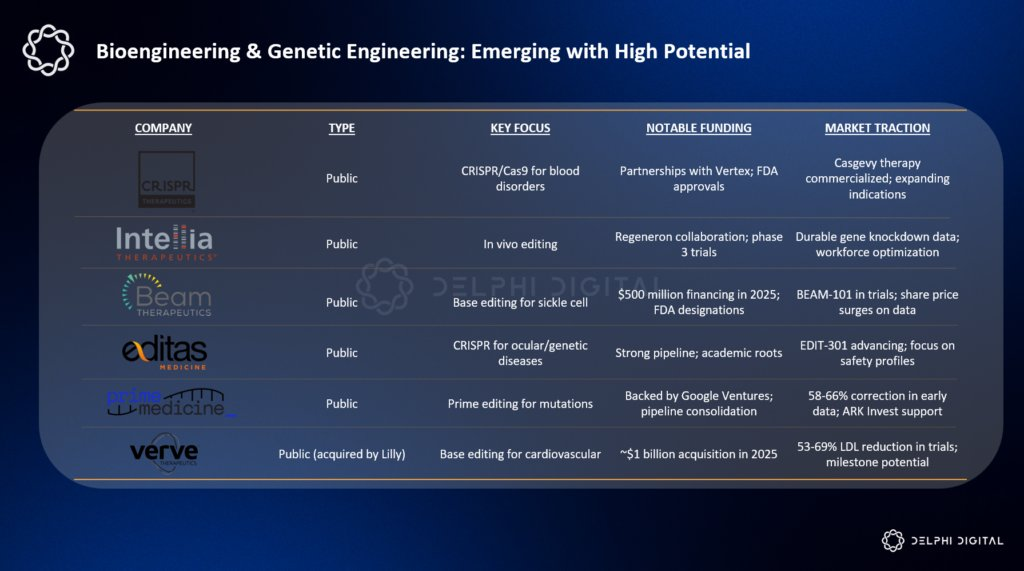
The broad waves of rising altcoins seen in previous cycles will not return. Over $3 billion in token unlocks are imminent, while competition in AI, robotics, and biotechnology intensifies. ETF capital flows are concentrated in Bitcoin and a few large-cap tokens.
Capital will gather around structural demand: tokens with ETF capital flows, protocols with real revenue and buyback mechanisms, and applications with genuine market fit. Winners will concentrate among teams that build with moats and are active in real economic activities.
Conclusion
The crypto industry is entering a new phase. Institutionalization has arrived. Prediction markets, on-chain credit, agent economies, and stablecoins as infrastructure represent a true paradigm shift.
Cryptographic technology is becoming the foundational layer of global finance. Teams that understand this will define the next decade.
免责声明:本文章仅代表作者个人观点,不代表本平台的立场和观点。本文章仅供信息分享,不构成对任何人的任何投资建议。用户与作者之间的任何争议,与本平台无关。如网页中刊载的文章或图片涉及侵权,请提供相关的权利证明和身份证明发送邮件到support@aicoin.com,本平台相关工作人员将会进行核查。


