Recently, I came across an interesting YouTuber named "Mr. Brain." He has a very unique perspective and taste in interpreting many economic phenomena and investment logic. In future articles, I will selectively introduce some of his video speeches.
Today, I want to share with you his unique analysis of a classic case in our crypto ecosystem (for details, see the reference link at the end). This case is one that almost all of our readers are extremely familiar with and regret whenever it is mentioned:
"I saw Bitcoin back in XXX, what a pity, I didn't buy it at that time."
Every time we express such sentiments, do we not hate ourselves for lacking that little bit of luck? Why did fate deny us that one opportunity?
I have had those moments and felt that regret too.
Looking back now, I realize that while there is certainly an element of luck involved, there is also a significant issue within myself. However, more importantly, this issue is something we can change through our own efforts.
How to change?
By changing the operating system deep within our thinking.
Next, I will share some brilliant excerpts from Mr. Brain's video as faithfully as possible.
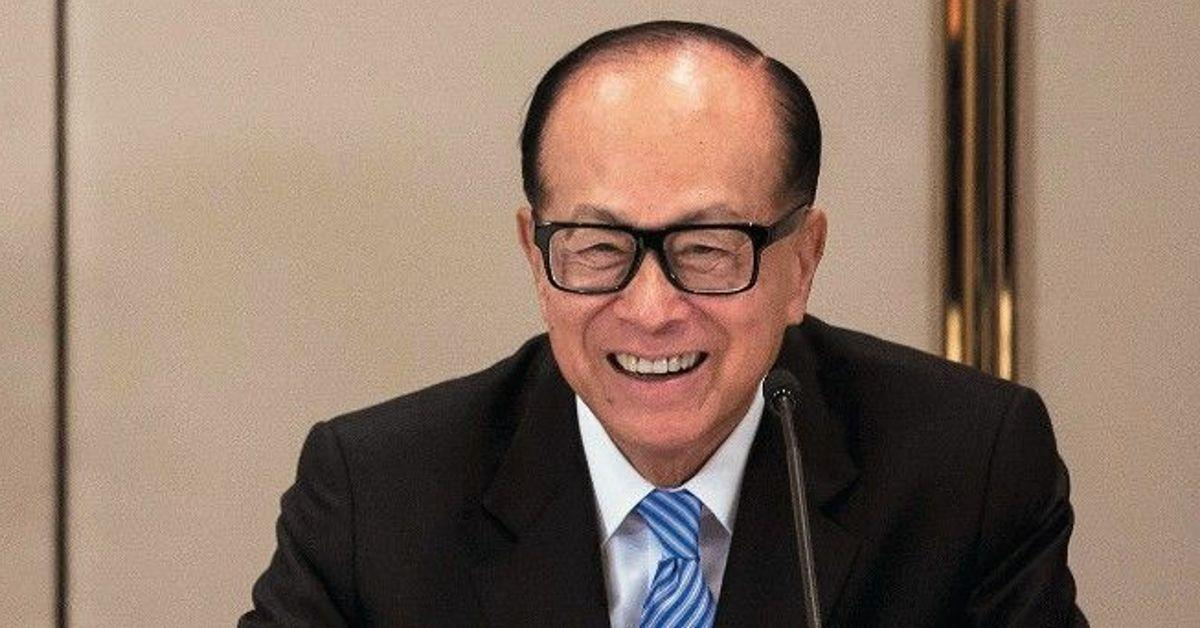
Let’s go back more than a decade. Suppose a group of us (10,000 people) listened to Li Xiaolai's speech and read his articles. He was everywhere claiming to have six-figure Bitcoin holdings, saying that Bitcoin was the first time in human history that technology had achieved the sanctity and inviolability of private property.
At this point, the operating system deep within our minds began to work. It acted like a filter, sifting through our group and leading everyone down completely different life paths.
The first layer of people, which is the vast majority, reacted with ridicule.
What were they ridiculing?
They ridiculed: "You're just a fraud. Show me your real account and prove you have six-figure Bitcoin!"
The second layer of people reacted defensively.
What were they defending against?
They were defending themselves from being deceived by something "absurd."
"Bitcoin is just a string of numbers, it has no national credit backing, how can it be called currency? This thing can't be a pyramid scheme, right?"
The first and second layers combined probably account for about 9,900 people, so 9,900 out of 10,000 were filtered out like this.
Next, the remaining 100 people are the fourth layer.
These people will ignore whether Li Xiaolai is bragging or deceiving and instead focus on the thing itself, that is, on the new entity called "Bitcoin."
They will carefully read Li Xiaolai's articles.
However, among these 100 people, 90 will stop there; after reading the articles, they will continue living along their original life trajectories. These 90 people are filtered out at this layer.
The remaining 10 are the fifth layer.
These people start to get serious. After reading Li Xiaolai's articles, their interest grows, and they begin to search for Bitcoin's white paper online, look up who Satoshi Nakamoto is, and download a Bitcoin wallet to try it out.
But among these 10 people, another 5 will drop out due to various issues they encounter while reading and practicing—like not being able to mine any coins with the Bitcoin wallet, and they return to their original life paths.
These 5 people are filtered out at this layer.
Then only 5 people remain, and these 5 enter the sixth layer.
Despite encountering various problems while reading and practicing, these people do not give up. They simply buy some coins to play with or go to various websites to earn some coins for free.
Among these 5 people, about 4 will gradually deplete their coins during the process of playing due to trading or other reasons, leaving them with little or nothing.
These 4 are filtered out at this layer.
In the end, only one person remains from the entire group. This person is at the top layer.
This person may not necessarily hold onto the coins without moving them, but at least they will hold onto the coins until the returns become astonishing. They witness the development, growth, and expansion of Bitcoin all the way.
Look at this: this is how the operating system of thought works to filter out the results from these 10,000 people.
After seeing this result, do we really still think that the only thing separating us from Bitcoin is luck?
No, what separates us from Bitcoin, besides luck, is a more fundamental operating system of thought that can grasp opportunities.
In fact, this operating system of thought will not only apply to Bitcoin but also to opportunities like buying houses, stocks, and many other chances that could change life circumstances.
Many people, when recalling these opportunities in their lives, often say they were just a little bit short, but they never say, "With my initial vision, mindset, and understanding, I was not worthy of such an incredible opportunity."
Among the layers of people mentioned above, the first and second layers represent the vast majority of us, or we can say that each of us has, to some extent, the mindset of the first and second layers.
What causes such a mindset?
We will continue sharing tomorrow.
Reference link:
https://www.youtube.com/watch?v=ggzw_6EBHBY
免责声明:本文章仅代表作者个人观点,不代表本平台的立场和观点。本文章仅供信息分享,不构成对任何人的任何投资建议。用户与作者之间的任何争议,与本平台无关。如网页中刊载的文章或图片涉及侵权,请提供相关的权利证明和身份证明发送邮件到support@aicoin.com,本平台相关工作人员将会进行核查。