
This article is produced jointly by PANews and BIT US Stocks. BIT US Stocks offers over 10,000 listed US stocks and ETFs, supporting deposit and withdrawal of stablecoins as well as traditional USD wire transfers, enjoying complete shareholder rights and dividend voting rights.
Volatility collapses to historic extremes, market awaits “explosive” direction choice
Bitcoin weakened for the sixth consecutive day, dipping below $63,000 yesterday to a low of around $62,800, marking the first breach of this key area since August 3. The weekly line has also lost the 200-week moving average around $64,000. More concerning is that BTC has not shown strong rebounds even against the backdrop of continuous cooling in US CPI and PPI, indicating that the pressures on the market are no longer just about interest rate expectations, but also about capital flow, chip structure, and risk appetite itself.
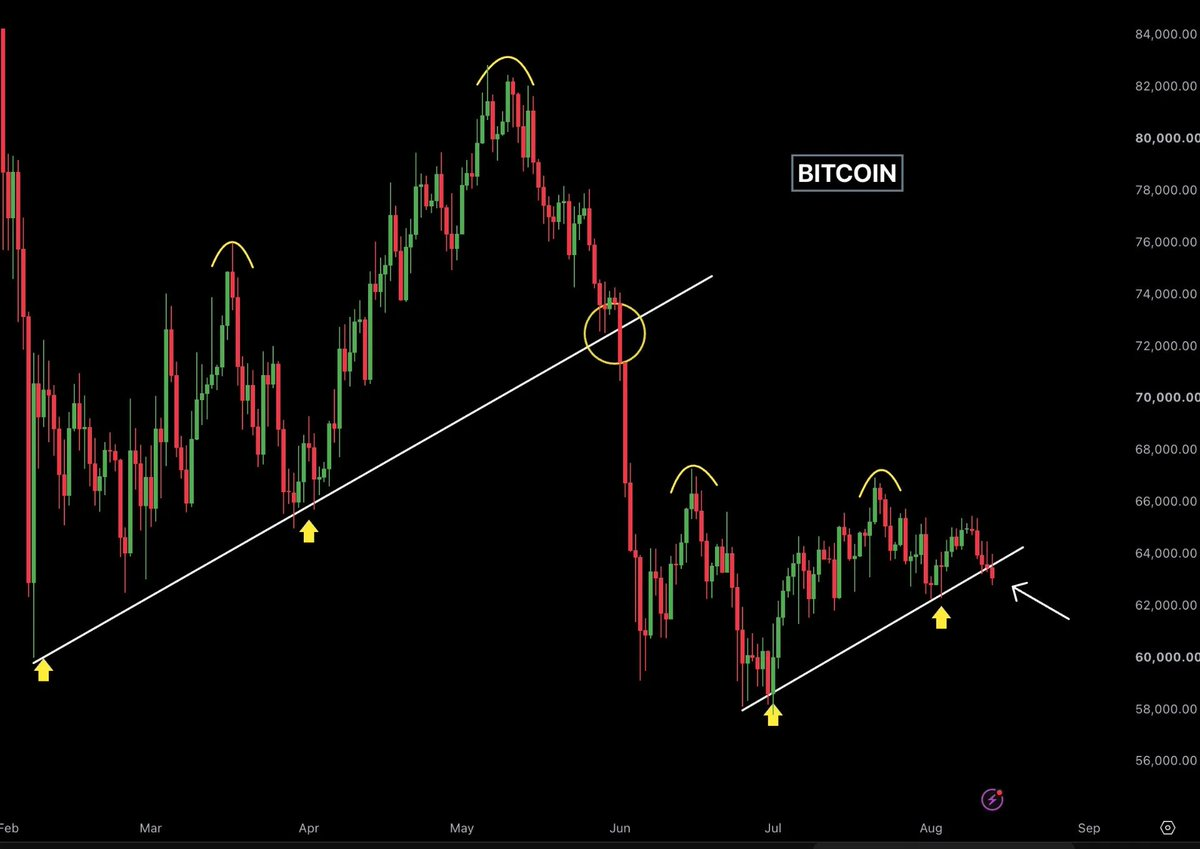
Analyst Ash Crypto stated, Bitcoin has lost its daily trend line, reminding that the last time a similar technical breakdown occurred, BTC faced about a 20% sharp decline, prompting the market to restart discussions on the defensive capabilities near $60,000 or even lower. Benjamin Cowen also reminded that historically, mid-August to mid-October has been a weaker period for Bitcoin, with an average decline of about 10% to 11% in August and about 8% in September.
Most traders view $62,500 as key support, while some are eyeing the equal low at $62,200 and a potential target of $61,300; resistance above is concentrated in the $64,500-$65,000 order zone, and a breakout above $65,400 is expected to head straight for $67,000-$68,000.
For the past two months, Bitcoin has been trapped in a giant converging range between $62,500 support and $65,000-$70,000 resistance, with volatility collapsing to extreme levels. The 30-day price range of Bitcoin is only 5.6%, one of the narrowest records in history; James Check pointed out that such an extremely low volatility environment historically often occurs at the end of a bear market or the beginning of a bull market, but the current price is below key moving averages, and bulls lack momentum, indicating that the market is accumulating energy for an “explosive” directional choice.
The options market is also quite quiet, with about $1.29 billion in BTC options soon to expire, with the maximum pain point at $64,000. Put options are mainly concentrated between $60,000 and $62,000, while call options are concentrated between $65,000 and $72,000, with the largest calls at $68,000. Analyst Daan Crypto Trades predicts that a directional breakout from this consolidation should occur by next week at the latest.
BIT’s view emphasizes that short-term pressure still comes from potential selling by reserves companies like Strategy, but the low point of this cycle is expected to be established by the end of this month or next month, with the key being when the selling pressure clears and whether ETF buying can return.
Today's key points:
Starknet (STRK) will unlock about 127 million tokens on August 15, valued at approximately $3.2 million
Sei (SEI) will unlock about 88.89 million tokens on August 15, valued at approximately $3.7 million
Connex (CONX) will unlock about 1.32 million tokens on August 15, valued at approximately $16.85 million
Upbit 24-hour trading volume ranking: BTC, BONK, PROM, XRP, ETH
Spot Bitcoin ETF: -$131 million
Spot Ethereum ETF: +$6.7169 million
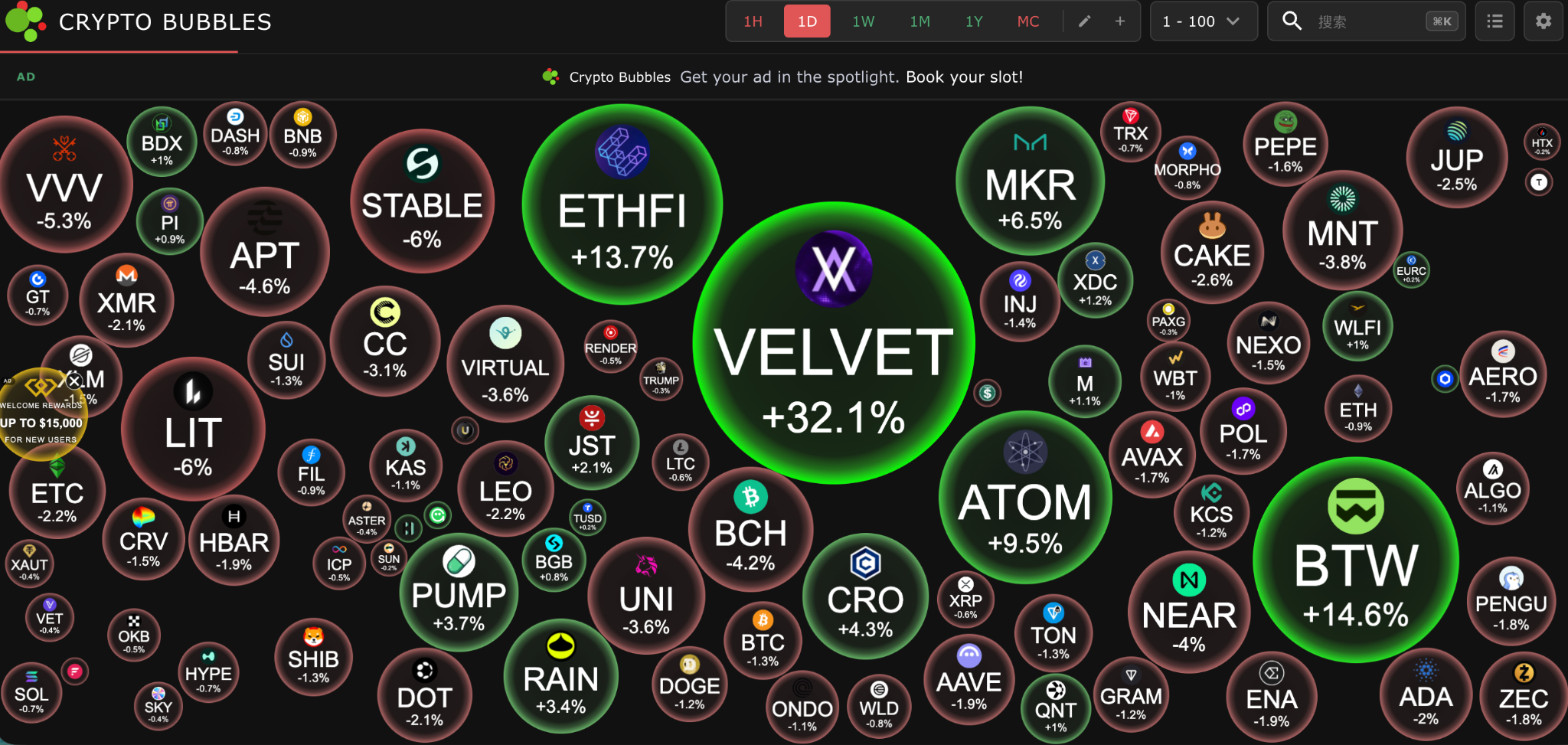
Today's biggest gains among the top 100 cryptocurrencies by market cap: VELVET up 32.1%, BTW up 14.6%, ETHFI up 13.7%, ATOM up 9.5%, MKR up 6.5%.
The storage sector continues to gain momentum, Applied Materials down 5%

The three major US stock index futures collectively weakened, with Dow futures down 0.05%, Nasdaq 100 futures down 0.04%, and S&P 500 futures basically flat.
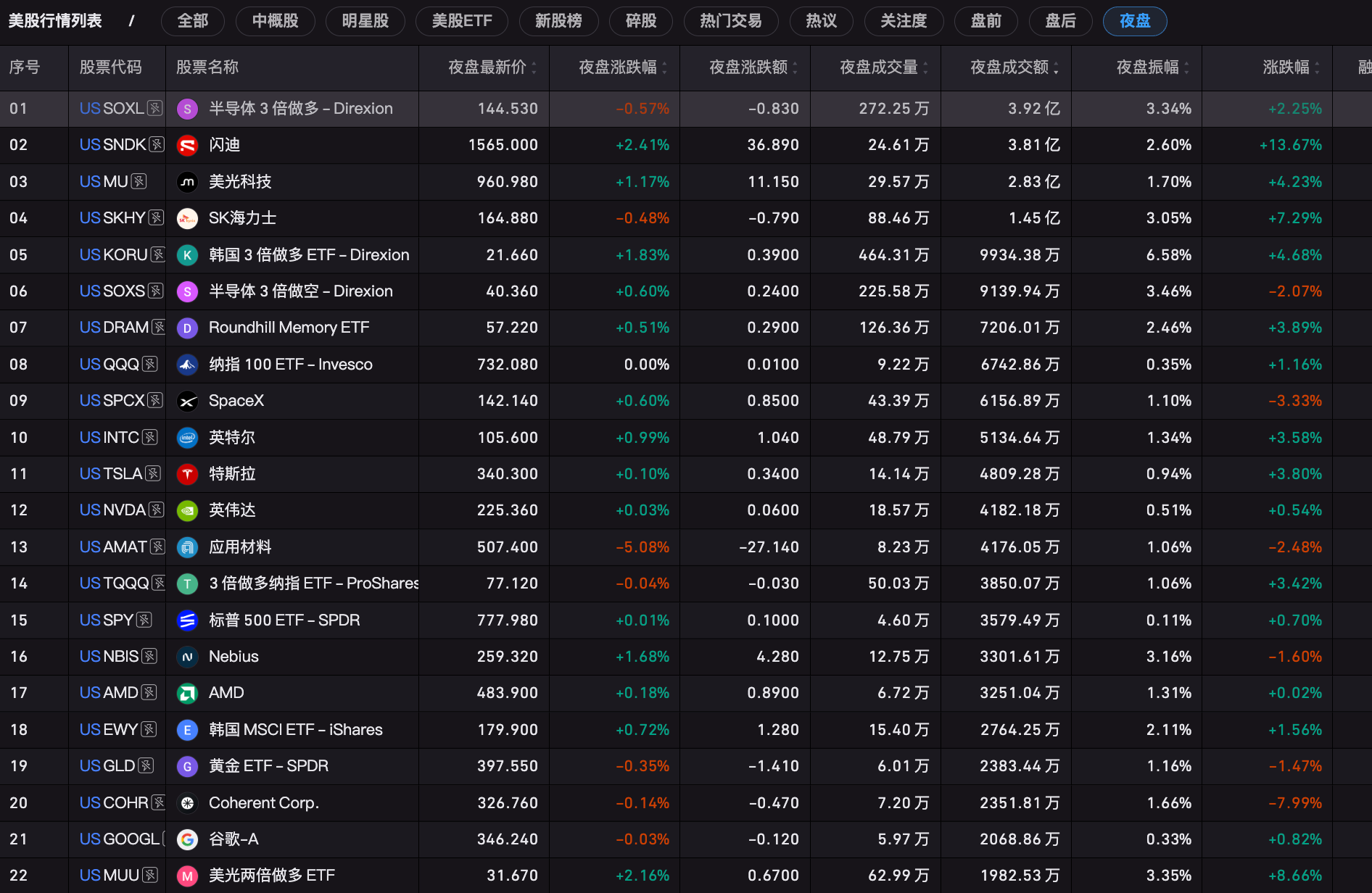
BIT nightly data shows that the storage sector that surged last night continues to rise, with Micron, SanDisk, and storage ETF DRAM up 1% to 3%.
Reddit surged over 12% due to its official inclusion in the S&P 500 before the market opens on August 18, with passive fund expectations becoming a direct catalyst;
Applied Materials dropped over 5% after its earnings report; despite revenue and guidance exceeding expectations, the market still questions the sustainability of subsequent profit margins and demand.
Tonight, it is important to focus on Workday (the aftermath of merger rumors), Reddit (capital inflow before index inclusion), and the overnight sentiment continuation regarding SanDisk and related storage sector targets.
Workday and SanDisk drive gains in storage and software stocks, crypto mining companies under pressure
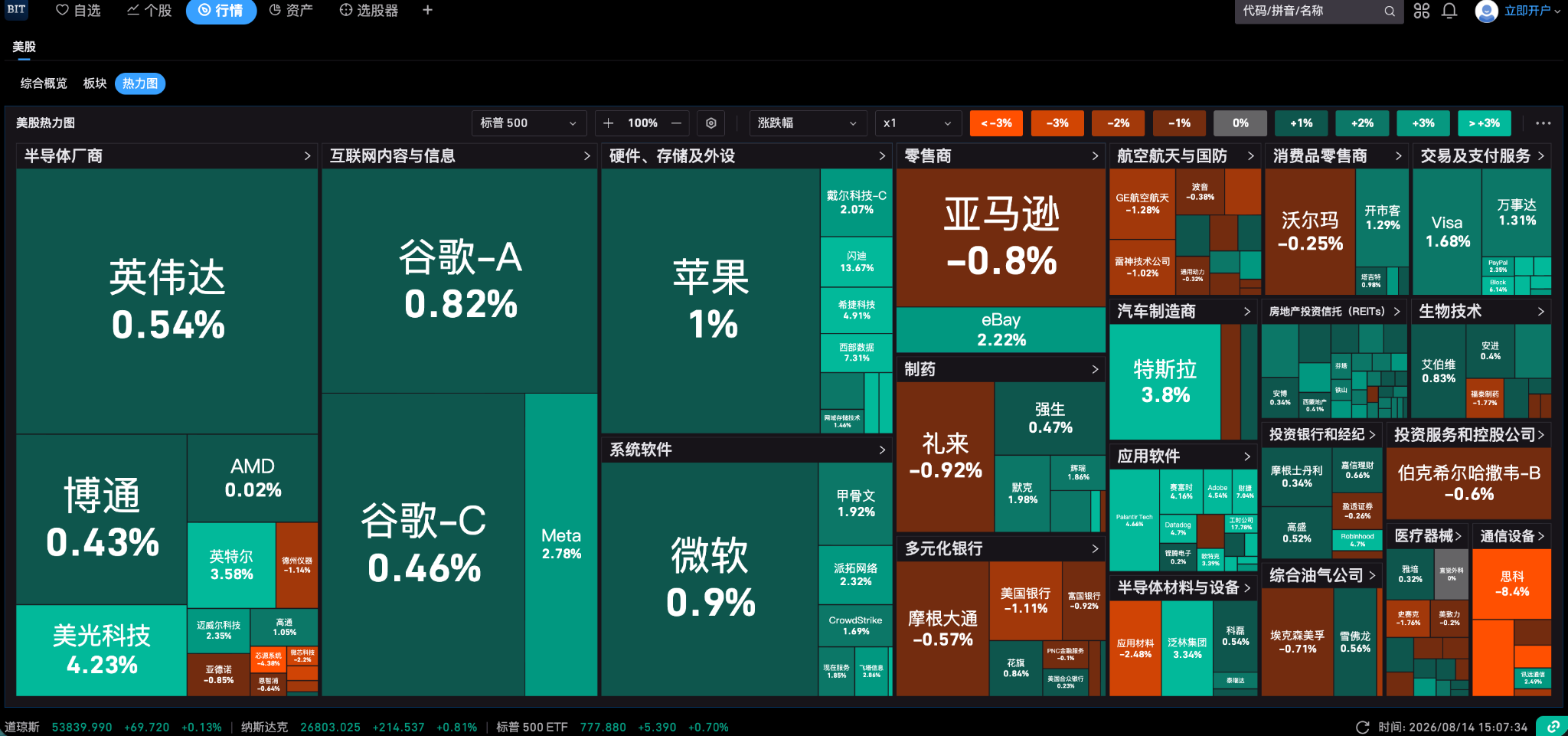
Last night, US stocks collectively rose under the support of declining CPI and PPI, with the S&P 500 up 0.65%, reaching a record closing high; the Nasdaq rose 0.81%, and the Dow was up 0.13%. July's PPI dropped from 5.5% YoY to 4.7%, remaining stable month-over-month, outperforming expectations; the money market quickly pushed the probability of maintaining interest rates unchanged in September to 68%. However, long-term rates sent alarm signals: the yield at a 30-year Treasury auction hit 5.216%, the highest since 2001, and the proportion of indirect bidders sharply dropped from 77.7% to about 66.9%, forcing primary dealers to step in.
BIT US Stocks invited analyst Jun stated that the biggest surprise on Thursday was not the earnings report but Workday. Workday surged 17.78%, briefly halting trading due to excessive volatility, as Reuters reported that private equity firm Silver Lake is negotiating to acquire the enterprise software company. If the deal goes through, it could become one of the largest software industry mergers in history.
Jun also mentioned that Cerebras fell 11.85%, as the company's revenue of $180 million was about 7% below market expectations. Although the company raised its full-year core revenue guidance, investors chose to sell first.
In addition, SanDisk raised its long-term guidance significantly, leading to a 13.67% surge, igniting an overall storage sector rally, while previously soaring optical communication sectors like Coherent and Lumentum faced profit-taking, falling more than 5% to 7%.
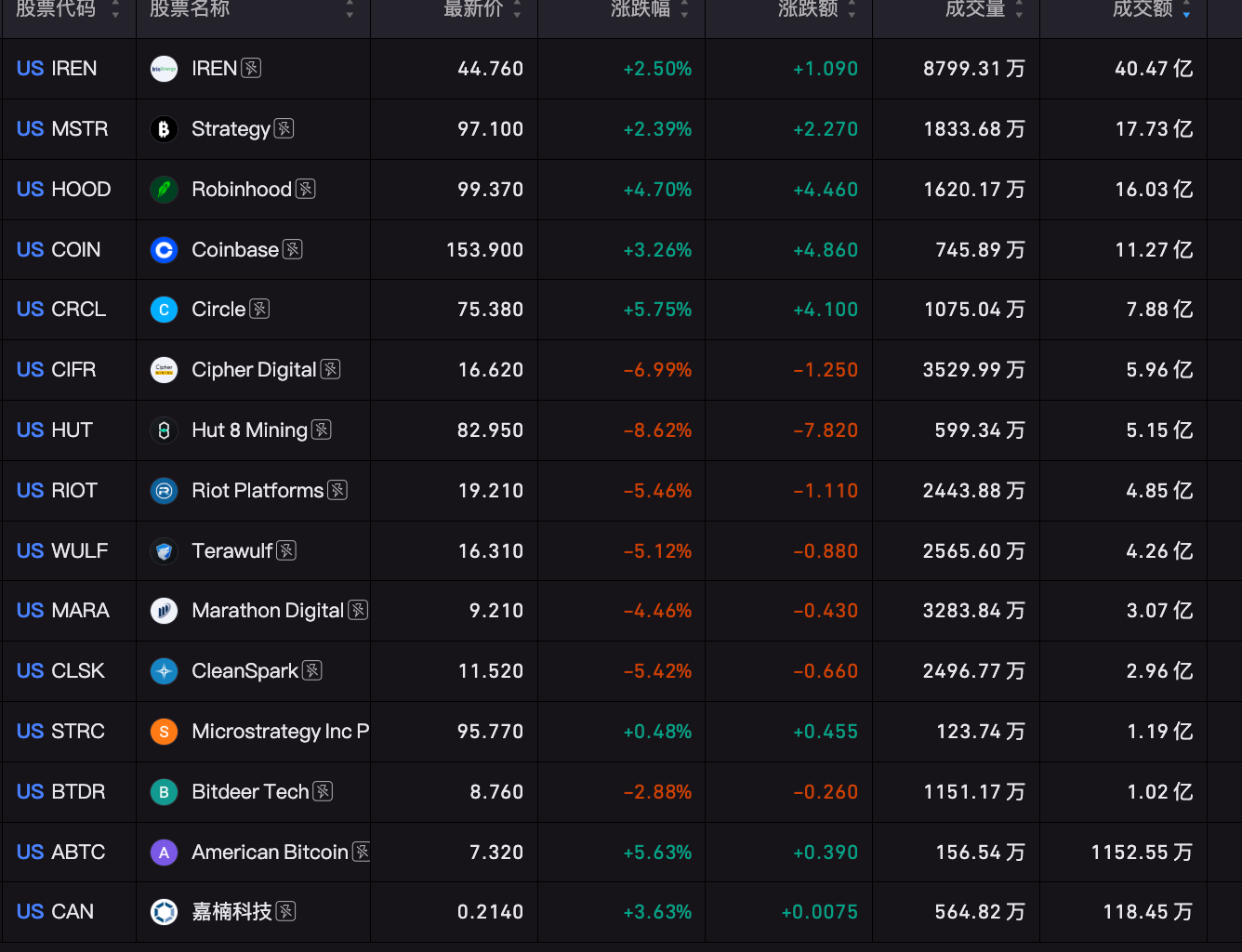
Cryptocurrency concept stocks rebounded, with BIT US Stocks data showing that Coinbase rose 3.26%, Robinhood up 4.7%, Strategy up 2.39%, Circle continued to recover, rising 5.75%, rebounding about 30% from the low of $57.80 on August 3.
Mining companies, however, remained under pressure, with Hut 8 dropping 8.62%, MARA, Riot, CleanSpark, Cipher Mining, and TeraWulf down about 5%-7%, while IREN, Bitdeer, and Canaan Technology rose 2%-4%.
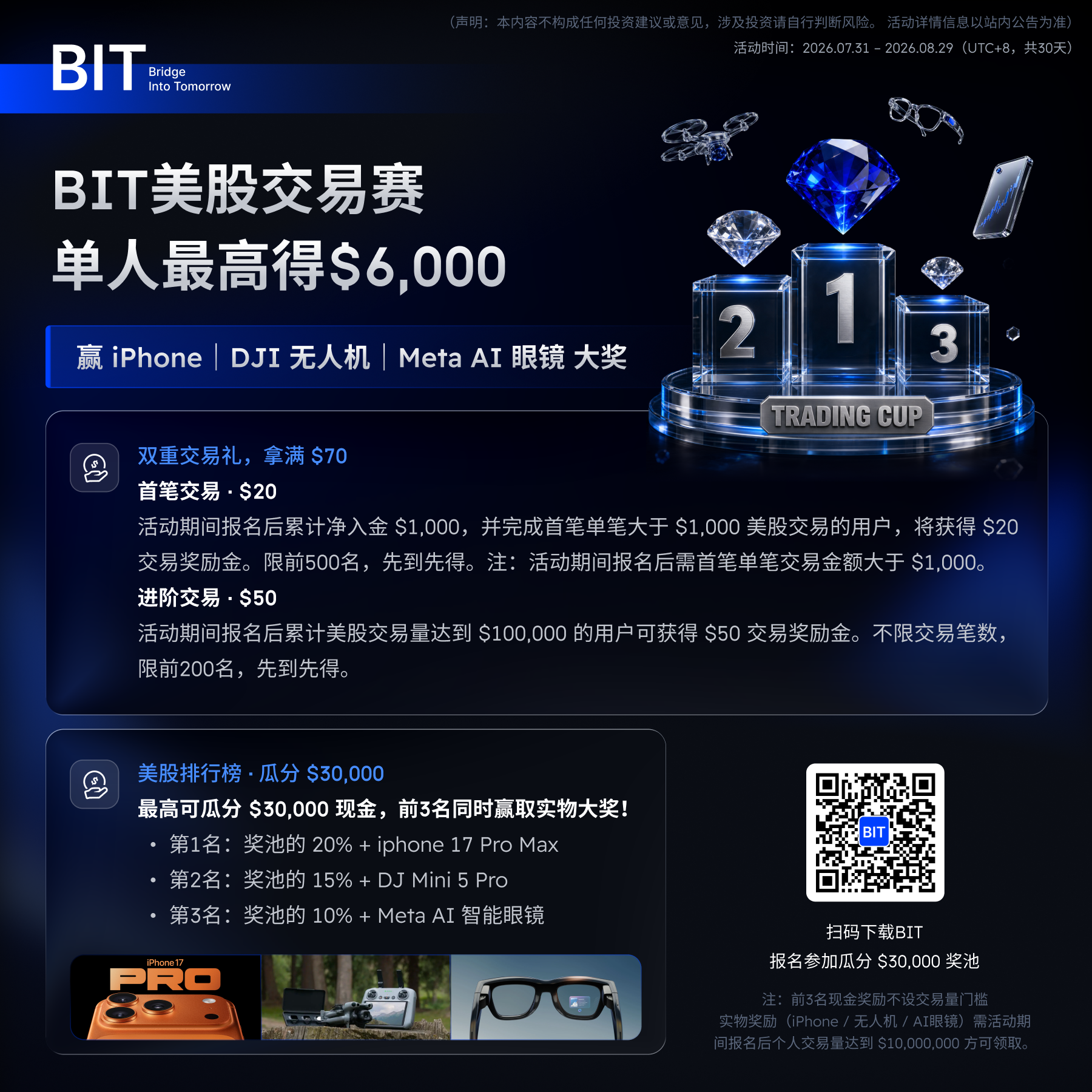
Furthermore, the BIT US Stocks trading competition has officially started. Users who complete the registration and meet the standards during the event can share a $30,000 cash prize pool, with a maximum of $6,000 available per person. The top three in trading volume also have the chance to win physical prizes such as the iPhone 17 Pro Max, DJI drones, or Meta AI smart glasses. The competition runs until August 29 and is open only to BIT US Stocks users who have completed KYC.
South Korea ends seven weeks of decline, Japan rises to 68,000 points, Hong Kong stocks' AI sector faces sharp declines
US inflation easing directly improves risk appetite in Asia Pacific, with funds rushing back into AI and semiconductors. The South Korean KOSPI rose 2.41% on Friday, closing at 6,977.34 points, accumulating an 11.5% rise this week and ending a seven-week consecutive decline; Japan’s Nikkei 225 re-entered the 68,000 points, recording the strongest weekly performance in nearly two months.
The core driver of the South Korean market remains storage, with SK Hynix up 3.26%, and technology stocks like Samsung Electronics also gaining. SK Hynix's Chairman Chey Tae-won stated that demand for memory from AI clients has approached double the previous level, warning of a potentially historic “memory shortage” next year; he also projected that the use of AI agents could grow 77 times in the next five years.
Chey also emphasized that although NVIDIA is SK Hynix’s most important customer, the company also supplies Google, Microsoft, and other large-scale cloud service providers, thus not relying on a single customer. The market has further reinforced the logic that “the expansion of AI computational power is ultimately constrained by HBM supply,” with US financial commentator Jim Cramer even describing that the tech industry has been “choked by SK Hynix.”
The Japanese market also rallied due to tech stocks, with the Nikkei 225 regaining 68,000 points. The real variable lies in the exchange rate: the USD to JPY is approaching 160 again, and former Japanese forex diplomat Fumihiro Kozu warned that Japan could intervene again at any time, even not ruling out coordinated actions with the US. Kozu also believes that the Bank of Japan should accelerate its pace of interest rate hikes, as market expectations for a rate hike in September have noticeably heated. If the yen breaks through the 160 level and triggers policy action, Japanese export stocks and the direction of overseas capital flows could change rapidly.
A shares continue to recover overall, with the Shanghai Composite Index turning positive in the afternoon and the ChiNext Index up over 1%. In contrast, Hong Kong stocks showed significant differentiation, with the Hang Seng Index under pressure; China National Gold International surged over 15% in the afternoon, boosted by a substantial increase in mid-term performance; JD.com fell over 10%, while the AI application sector expanded its afternoon decline, with Minimax falling over 10% and Zhizhu dropping 3.57%, with companies like Suton Jutong and Youjia Innovation also declining.
What to watch next:
August 14, 20:30 US July Retail Sales: If retail sales exceed expectations, the market may re-trade the narrative of “consumption not collapsing, inflation resilient,” which could lead to a rebound in US Treasury yields and pressure on growth stock valuations; if it shows significant weakness, it may reinforce expectations for the Fed to pause, but could also spark fears of economic slowdown, benefiting bonds and defensive sectors while suppressing cyclical and consumer stocks.
August 14, 22:00 US Michigan University Consumer Confidence Index preliminary value and inflation expectations: Traders will focus on one-year and long-term inflation expectations. If inflation expectations continue to fall, it will support the “hold steady in September” trade; if expectations rebound, hawkish officials like Harker may regain market pricing for rate hikes.
August 17 South Korean stock market holiday due to the festival, DeepSeek API peak price increase: The South Korean market holiday may reduce short-term liquidity in the Asia-Pacific tech chain; DeepSeek API price hikes will test the domestic AI applications’ ability to pass on costs, potentially affecting sentiment in the AI application sector.
August 18 Reddit's formal inclusion in the S&P 500 index: Index funds' passive buying may provide short-term technical support for RDDT. Subsequently, the market will test whether its AI data licensing revenue can continue to expand; otherwise, the rise post-index inclusion may turn into a cashing-out window.
免责声明:本文章仅代表作者个人观点,不代表本平台的立场和观点。本文章仅供信息分享,不构成对任何人的任何投资建议。用户与作者之间的任何争议,与本平台无关。如网页中刊载的文章或图片涉及侵权,请提供相关的权利证明和身份证明发送邮件到support@aicoin.com,本平台相关工作人员将会进行核查。


