

Author: Zen, PANews
The humanoid robot company Figure AI recently launched a “Human vs Robot” parcel sorting challenge, attracting global attention. This narrow victory by humans has led many to summarize it as "humans won now, but lost the future." This statement is not unfounded; before the competition started, Figure had already begun live-streaming the robot sorting, which has been ongoing for 7 days now. In terms of tirelessness and the ability to work continuously, robots far exceed humans.
The live broadcast of this sorting competition, along with a heavyweight promotional video released earlier for home robots, has also led to Figure being labeled as showy. However, there is no doubt that Figure AI is becoming one of the most watched humanoid robot companies in Silicon Valley. Founded just three years ago, the company's valuation skyrocketed to $39 billion after a new round of funding, with investors including top companies and capital such as NVIDIA, Intel Capital, Salesforce, LG, and Qualcomm.
Backing this company is serial entrepreneur Brett Adcock, who hails from a farming background. Before founding Figure, he already had two entirely different entrepreneurial experiences, first creating the recruiting platform Vettery, which he sold to Adecco Group for $110 million in 2018; then co-founding the electric vertical takeoff and landing aircraft company Archer Aviation, leading it to go public on the New York Stock Exchange in 2021.
Brett Adcock is not a founder who has long cultivated a single industry but rather one who continually ventures into more complex, capital-intensive, and harder-to-validate fields. And Figure is his most watched bet to date, propelling him to the center of the AI robot craze.
Around this company, there are grand imaginations about the universal robotic workforce, as well as doubts about overvaluation, early commercialization, safety risks, and technological pathways. To understand Figure, one must first understand how this founder has stepped forward to today.
A Serial Entrepreneur from a Corn and Soybean Farm
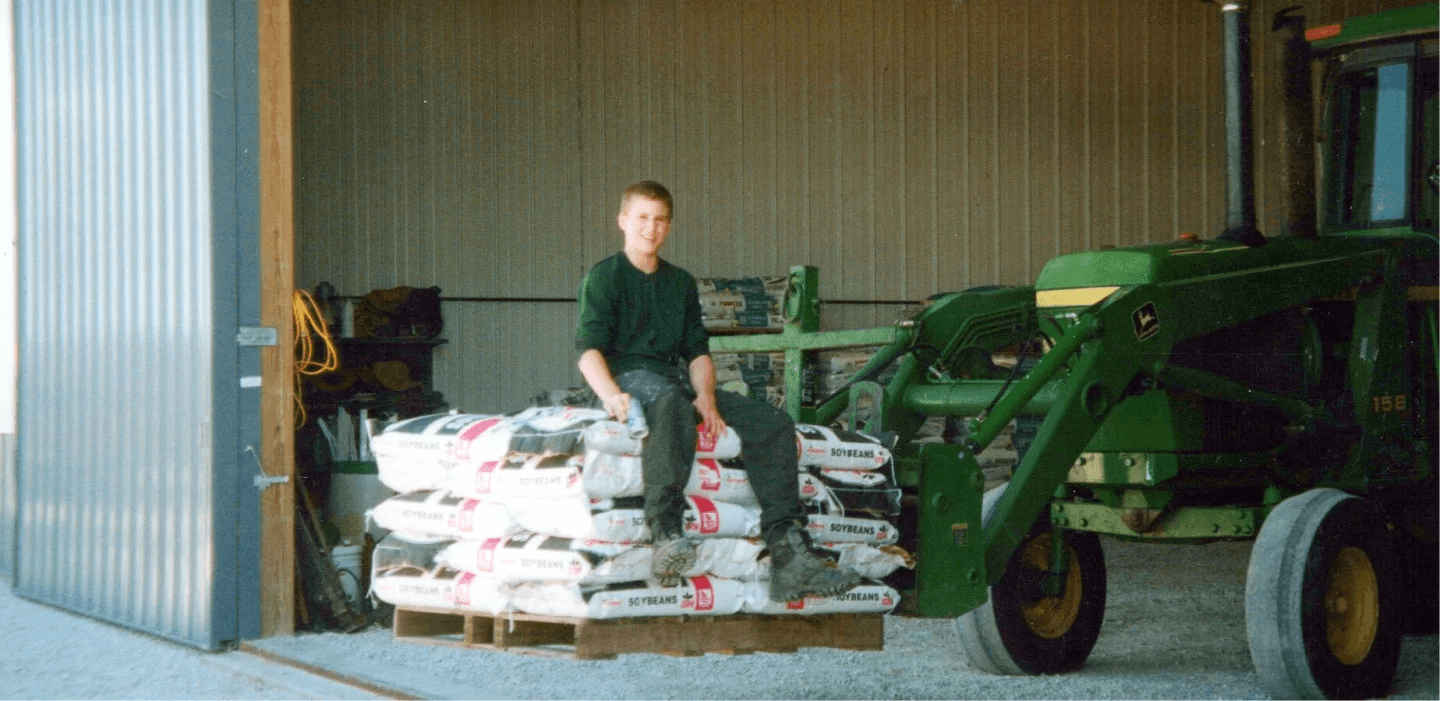
In 1986, Brett Adcock was born on a corn and soybean farm in central Illinois. Growing up in such a generational farming family made Adcock particularly attentive to “how to create value for the world from nothing.” He began starting internet companies at the age of 16, and by the time he graduated as the top student in his high school class, his family was already well aware that he might need to leave the farm for the entrepreneurial and business world.
During college, Adcock continued to attempt independent development of various software and initially founded a website selling outdoor electronic products. He later focused on the job recruitment sector, developing content websites that helped job seekers prepare for interviews in fields like finance, the mobile job site "Working App," and a video interview website. These projects were not very successful and were more like immature early entrepreneurial experiments.
In 2012, while working in New York, Adcock shifted his attention back to the recruitment market. He co-founded Vettery with Adam Goldstein. Initially, Vettery was a platform for third-party recruitment companies, but this model soon proved to be uncompetitive. After several adjustments, Adcock and the team decided to change direction, placing job seekers and businesses directly on the same platform, and improving matching efficiency through software and machine learning.
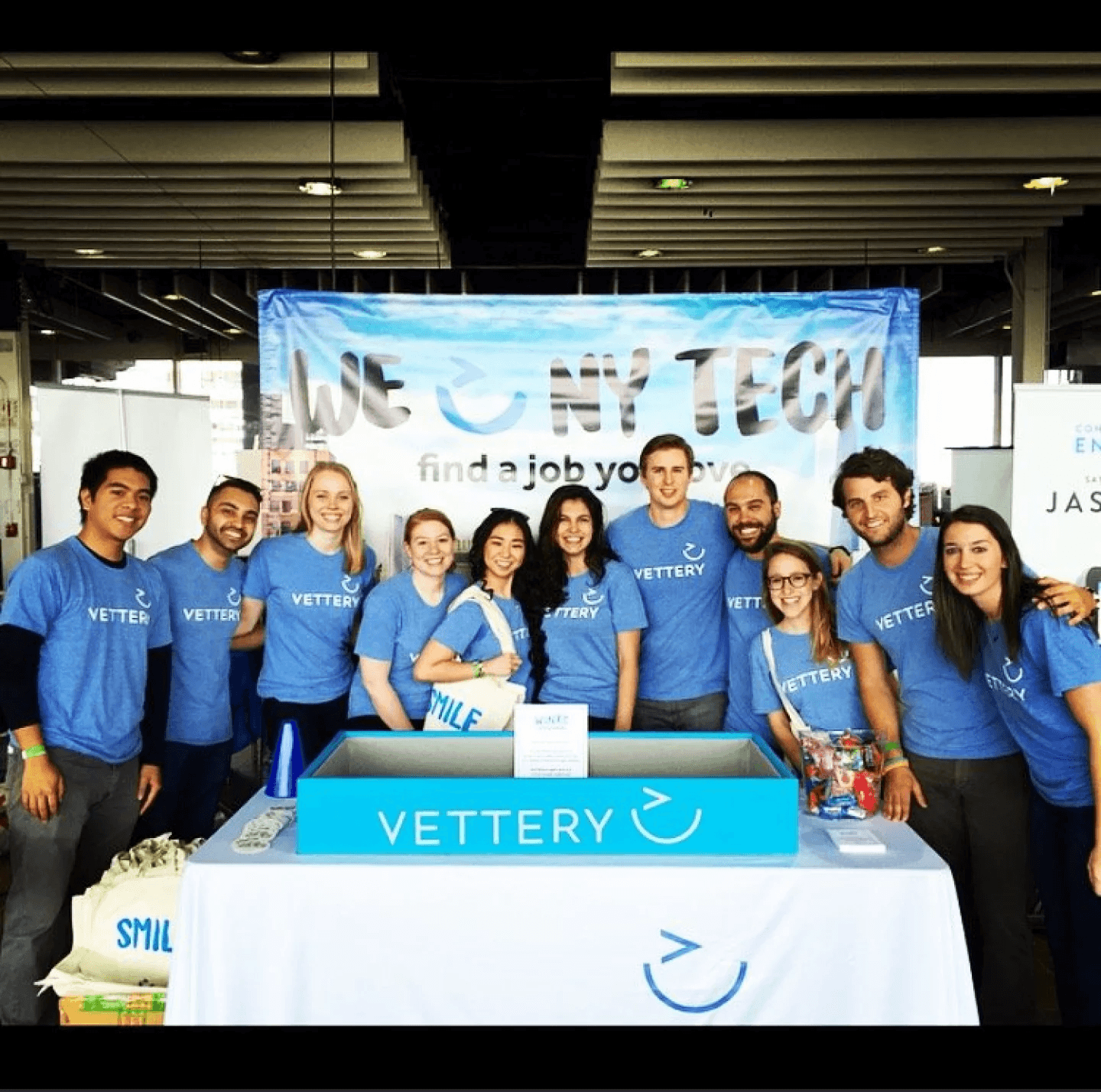
After the Vettery platform launched, growth began to accelerate. Adcock later recalled that the platform’s user base doubled for several consecutive weeks. By 2017, Vettery's staff had grown to 300, with around 20,000 clients, conducting approximately 30,000 interviews per month through the system. This caught the attention of the world's largest recruiting company, Adecco Group, which acquired it in 2018 for $110 million.
This deal also provided the newly thirty Adcock with substantial personal wealth. He began searching for more complex, longer-cycle, and more capital- and engineering-intensive problems, focusing on hardware and sustainability. He then migrated to California, seeking the next opportunity in Silicon Valley.
Three Years to Transform an Emerging Business into a Public Company
Attempting to tackle more challenging issues, Adcock could no longer scatter ideas and test them cheaply like during his college days. After much deliberation, he chose to focus on entering the three-dimensional airspace to solve transportation issues. Adcock wanted to try to create flying cars like those in science fiction movies, so electric vertical takeoff and landing aircraft (eVTOL) became the most suitable choice.
In 2018, Adcock teamed up again with Adam Goldstein to co-found Archer Aviation. In stark contrast to Vettery, Archer was an entirely different world. It required a top-notch engineering team, hardware development, supply chain management, engineering manufacturing, aviation certification, public safety, and long-term patience in capital markets.
The founding of Archer Aviation also came about by chance. At that time, the French aviation giant Airbus was transferring all of its flying car “Vahana” business to France; the flying car company Kitty Hawk was cutting costs due to its collaboration with Boeing, leading to dissatisfaction among some engineering team members (Kitty Hawk was later disbanded in 2022). Adcock seized the opportunity to absorb a large number of personnel from these two projects, quickly forming a seasoned team.
In 2021, Adcock and his team successfully conducted the maiden flight of the full-size two-seat autonomous prototype aircraft, the Maker, and collaborated with automotive giant Fiat Chrysler on supply chain, advanced composite materials, and engineering, design, and production aspects, also securing a $1 billion order from United Airlines. That same year, Archer Aviation went public via SPAC on the New York Stock Exchange, with a valuation of around $2.7 billion. Today, the company's market value has reached $4.5 billion and is also part of Cathie Wood’s Ark Fund portfolio.
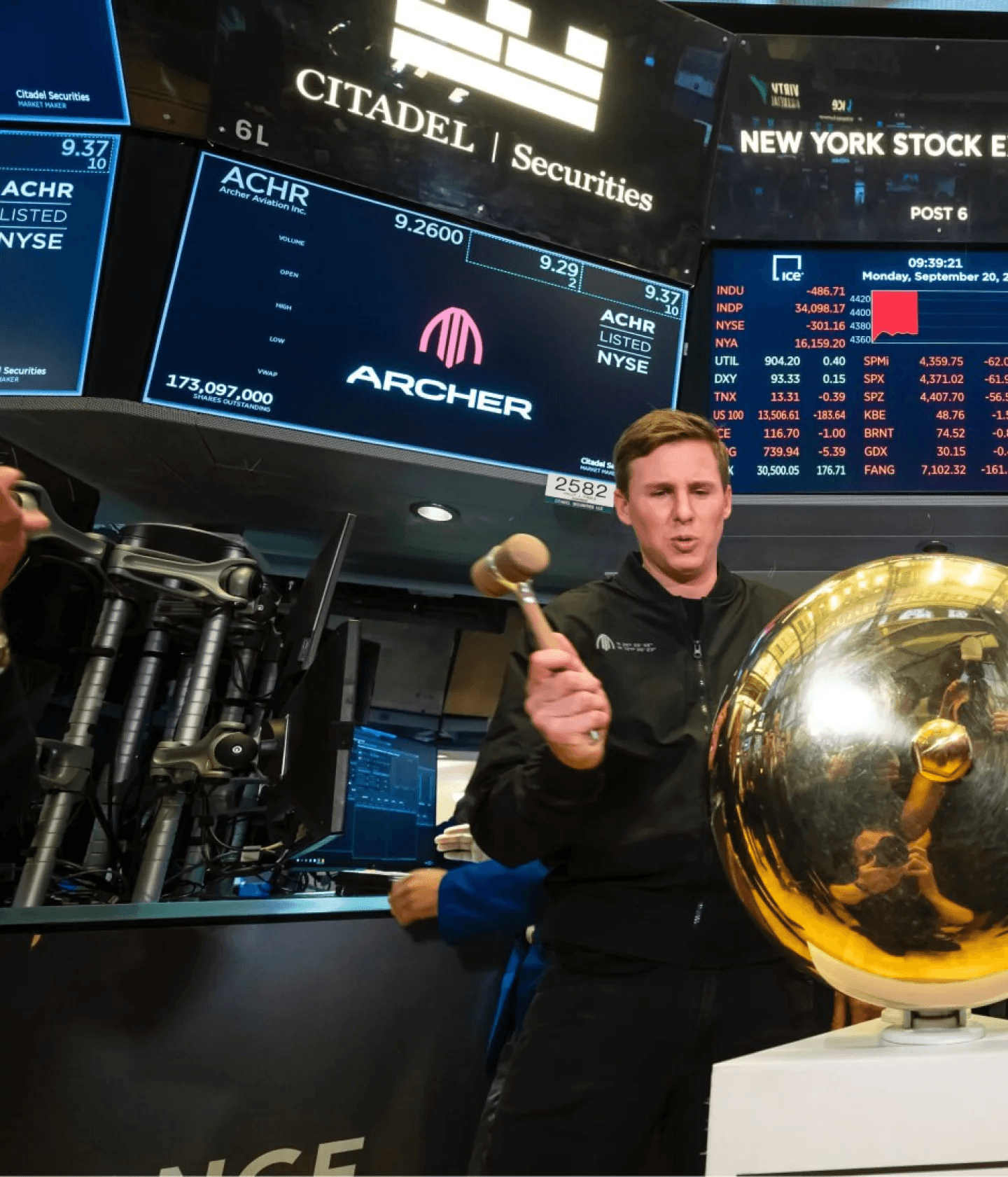
Although entering the market later, Archer Aviation's rapid rise still made it a major competitor in the emerging eVTOL industry. In November 2022, Archer’s five-seat “Midnight” aircraft made a stunning debut, poised to become the company's first air taxi product once it receives type certification from the Federal Aviation Administration (FAA).
However, Adcock quietly left the company shortly after its IPO. In April 2022, Archer announced Adam Goldstein as the sole CEO, and Adcock stepped down from the co-CEO role but remained on the board. The company explained at the time that this move was to simplify operational structure and expedite flight testing, certification, and commercialization.
The true reasons for his departure may be more complex, and it is unclear to outsiders. From the performance of the company’s stock at that time, it was indeed in a post-IPO slump. Adcock later stated that he left Archer due to “inconsistencies” with the board, especially after the company went public, his vision diverged from that of the team.
Perhaps for him, the governance of a public company, regulatory pathways, and the pace of commercialization may no longer fit a founder who always wants to leap toward the next technological revolution.
Entrepreneurial End Goal? Adcock Plans to Build Figure with a 30-Year Vision
After leaving Archer, Adcock quickly entered another high-stakes, sci-fi-like venture. In 2022, he founded Figure AI, entering the field of general humanoid robots. In Figure's Master Plan, he wrote that his goal is to build the company with a 30-year perspective, investing time and resources into “maximizing the utility impact on humanity.”
In terms of team composition, Adcock employed a strategy similar to when he founded Archer. He quickly built a 60-person team, with members primarily coming from renowned companies and projects such as Boston Dynamics, Tesla, Apple’s autonomous vehicle project, and Google DeepMind.
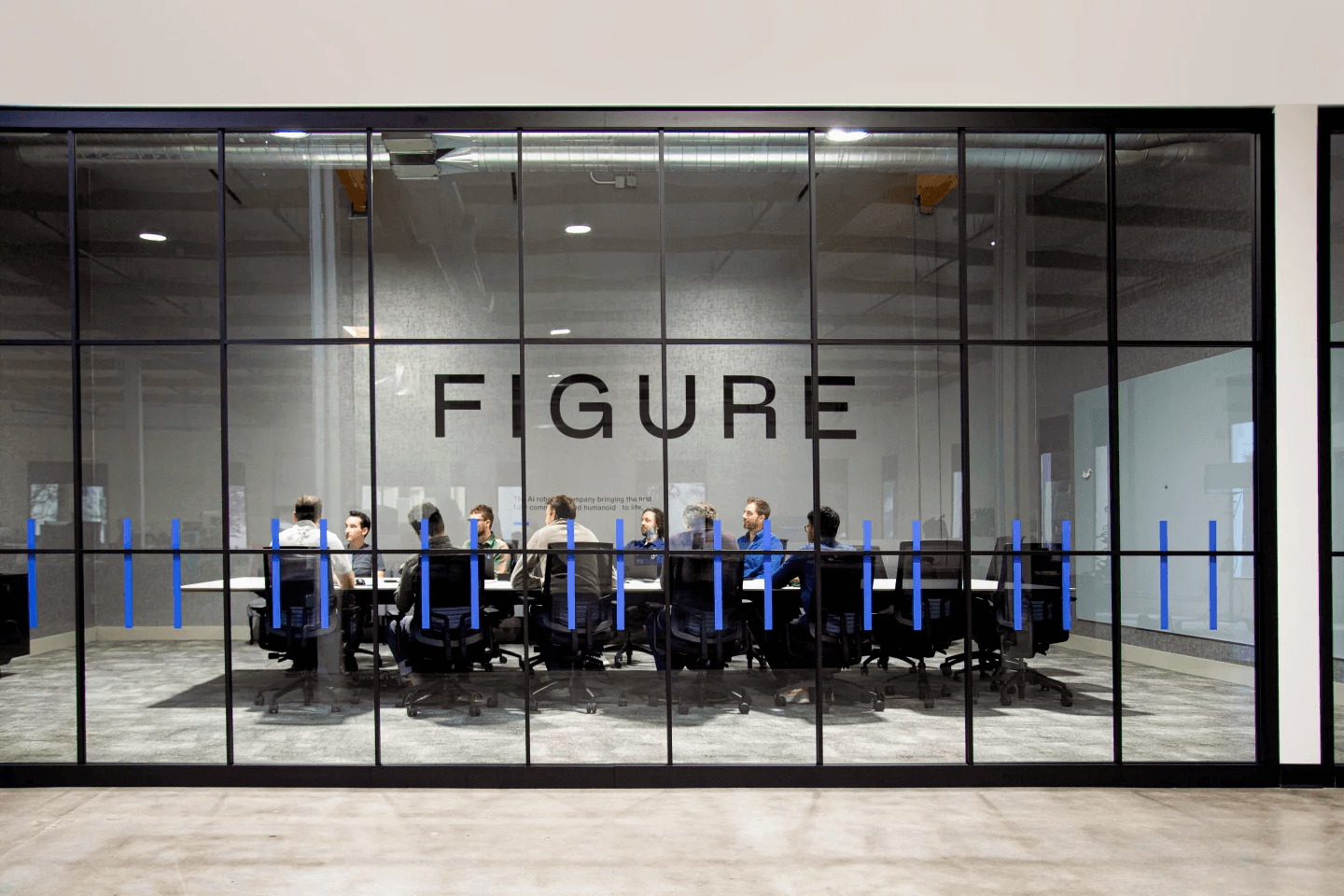
Giving AI a physical body is the proposition Adcock set for Figure. What Figure is aiming to create is not industrial robotic arms or service robots, but general humanoid robots capable of entering human environments, using human tools, and completing various tasks. Adcock believes the world is fundamentally designed for human bodies; if a robot can interact with the world in a similar way, it could automate a vast amount of work.
The underlying logic of this concept is Adcock's assessment of the labor market. He wrote in Figure's Master Plan that the U.S. has over 10 million "unsafe or undesirable" jobs, and the aging population will further exacerbate companies' difficulties in expanding their labor force; if the economy is to continue growing, it will need more productivity, thus requiring more automation. Therefore, Figure has identified manufacturing, logistics, warehousing, retail, and home scenarios as long-term directions.
As Figure's valuation increases, the scrutiny Adcock faces has also become more concentrated. The first type of scrutiny comes from the substantial gap between commercialization and valuation. Essentially, the market is buying a distant future expectation. Although Figure is highly valued at nearly $40 billion, its revenue scale and mass production capacity remain limited, and future revenue forecasts heavily depend on whether it can deploy a large number of robots before 2029.
Moreover, Figure's separation from OpenAI has also attracted significant attention and controversy. In 2024, Figure collaborated with OpenAI to develop the next-generation robot AI model and received investment support from OpenAI, Microsoft, NVIDIA, and Jeff Bezos. But less than a year later, Adcock decided to terminate the cooperation and shift to internal model development.
According to Business Insider, Adcock later stated that OpenAI brought little value to Figure aside from its brand, and that the robot AI required a technical route different from chatbots. He also mentioned that when OpenAI expressed a desire to develop humanoid robots independently, he believed the collaboration was over. The report also noted that a technician from OpenAI forwarded related segments, calling the claims “not accurate.”
“Favoring” Bigger Challenges and Greater Narratives
Looking back at the three main lines of Adcock's entrepreneurial journey, Vettery, Archer, and Figure seem completely unrelated, with one being a recruitment platform, another a flying car, and the last a humanoid robot. However, they share the same entrepreneurial philosophy: to choose a vast, inefficient market poised for a technological inflection point, and simultaneously advance with capital, engineering teams, and a radical narrative.
In Vettery, he bet on machine learning to enhance recruitment matching efficiency; in Archer, he bet on batteries, motors, and aerospace engineering to open up urban air mobility; in Figure, he bets that AI models, robotic hardware, and manufacturing capabilities can merge into a new type of workforce. Adcock's thinking does not start from a singular product but reverses from “how the future world should operate” to determine what company should be founded now.
Brett Adcock's career resembles a curve of increasingly heavier asset burdens: from software platforms to aircraft, and now to humanoid robots. He is not a technical expert who has spent decades deeply cultivating a single field; he resembles more of a “startup hunter,” sniffing out opportunities, organizing resources, recruiting teams, and amplifying narratives before moving on.
Now standing under the spotlight of Figure AI, the scrutiny he faces is as loud as the applause. But regardless of the outcome, he has already written his name into the first chapter of the commercial history of AI robotics.
免责声明:本文章仅代表作者个人观点,不代表本平台的立场和观点。本文章仅供信息分享,不构成对任何人的任何投资建议。用户与作者之间的任何争议,与本平台无关。如网页中刊载的文章或图片涉及侵权,请提供相关的权利证明和身份证明发送邮件到support@aicoin.com,本平台相关工作人员将会进行核查。


