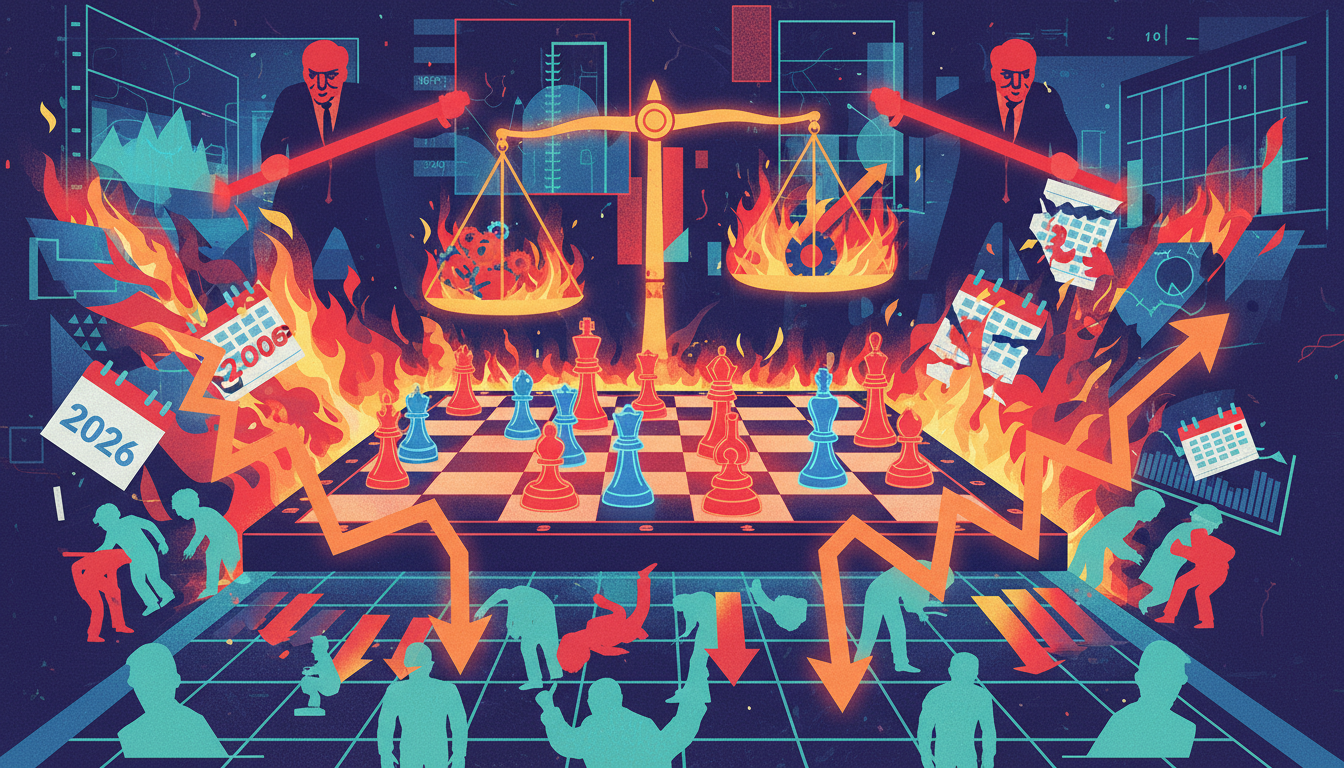
In the past 24 hours, a U.S. military aircraft was shot down by enemy fire in the Middle East theater, and Israel temporarily adjusted its military action plans against Iran. These two heavyweight pieces of news regarding security and strategic dimensions quickly spread across global markets. According to Coinglass statistics, the total liquidation amount across the network during the same time frame was approximately 133 million dollars, with long positions liquidating at 77.83 million dollars and short positions liquidating at 54.89 million dollars. Both sides were almost collectively "liquidated" overnight. This article will outline along this timeline how the aircraft crash and action adjustments overlapped, transforming the escalation of geopolitical conflict into severe fluctuations and amplified emotions in the cryptocurrency market.
Aircraft Shot Down: A Turning Point in Conflict Narratives
According to reports from multiple media outlets, a U.S. military aircraft was shot down by enemy fire while carrying out its mission, subsequently launching a rapid search and rescue operation. Planet Daily quoted sources stating that this was the first instance of a U.S. military aircraft being shot down in this series of conflicts, and the label of "first" made the event immediately leap out of the realm of routine friction, being regarded as a hallmark node signaling an increase in conflict intensity. At the same time, the search and rescue operation involving U.S. Special Forces has been confirmed by multiple sources to have successfully rescued at least one crew member, though details and processes of the relevant tactics have not been fully disclosed publicly.
More notably, Axios cited Israeli officials as saying that some planned attacks on Iran were temporarily canceled or postponed in order to prioritize the rescue operations for U.S. military crew members. This assertion transformed the previously simple narrative of "revenge/counteraction" into a complex scenario of "military action versus humanitarian rescue priority": on one end is the continuously escalating regional confrontation, while on the other is the political and moral commitment to the safety of allied soldiers.
Within the narrative framework of financial markets, this combination of "aircraft shot down + action adjustment" is often interpreted as a critical escalation phase in U.S.-Iran tensions. On one hand, the aircraft being shot down symbolizes an increase in the risk of direct military confrontation; on the other hand, the temporary change in action tempo releases a limited restraint signal, leaving a suspenseful question about whether to escalate further. This complex signal of "escalation and restraint coexisting" lays the groundwork for cryptocurrency traders' risk expectations and emotional pricing.
Liquidation of 133 Million Dollars: Instantaneous Liquidation of Prices and Leverage
According to Coinglass statistics, within the 24-hour window of the aforementioned aircraft crash and the fermentation of news about Israel's action adjustments, the scale of liquidations across the network was approximately 133 million dollars, with long positions liquidating at 77.83 million dollars and short positions liquidating at 54.89 million dollars. Structurally, the absolute amount liquidated from long positions was significantly higher than that from short positions, demonstrating a "run" characteristic where previously optimistic position configurations were concentratedly "squeezed" in the face of sudden geopolitical conflict.
The dominance of long position liquidations reflects that many traders had been more inclined to take long positions on risk assets under the assumption that "the conflict is controllable and the risks can recede," even layering high leverage to seek continuation of the trend. Once the news of the aircraft being shot down was interpreted by the market as a signal of conflict escalation, prices fluctuated dramatically in the short term, triggering a chain reaction of margin insufficiency and passive liquidations, creating an accelerated chain of "price decline – long liquidation – further decline."
Aligning the flow of information with the peak of liquidations, a clear correspondence can be seen between fluctuations in the cryptocurrency market and key geopolitical events: reports of the aircraft being shot down first heightened expectations of risk premiums, with prices experiencing sharp declines and rapid widening of volatility ranges; during this phase, long positions faced the first round of concentrated liquidations. Subsequently, after news emerged about Israel canceling parts of the attacks on Iran and prioritizing rescue efforts, some assets exhibited technical rebounds, and shorts that had previously bet on extreme escalation also faced liquidations in the high-volatility environment. The total liquidation amount of 133 million dollars is essentially the result of both long and short positions being “liquidated by price fluctuations + leverage” on the same night.
How Battlefield Information Transfers Along the Emotional Chain to Prices
For financial markets, the downing of a military aircraft on the front lines is not only a military loss event but also a symbolically strong risk signal. It is often quickly interpreted as: the parties involved in the conflict are willing and have already taken actions at a higher intensity of confrontation, thus raising the subjective probability of "further escalation or even uncontrollable situations." For the cryptocurrency market, which is highly sensitive to macro and risk emotions, similar signals will be quickly translated into higher risk premiums and greater expected volatility ranges.
On the path of information transmission, media alerts and social platforms form the first amplifiers. Headlines about the aircraft being shot down quickly flood news terminals and social media, accompanied by highly emotional labels such as "first to be shot down" and "critical escalation phase," making the subjective impact of the incident far exceed the objective military losses. A large amount of secondhand and thirdhand information continuously layers emotions and speculations during the retelling process, forming a narrative anchor that deepens the market’s pessimistic imagination about risk direction.
Following this are the automated reactions at the trading level: algorithmic trading and high-frequency strategies monitor keyword and volatility increase signals, prompting position adjustments; meanwhile, human traders actively reduce risk exposure and tighten stop losses while increasing the ratio of options hedging in response to the news stimulus. In this process, highly leveraged contract positions become the most vulnerable link: stop-loss lines are swiftly triggered, and failure to provide additional margin leads to passive liquidations that turn emotions into substantial selling pressure and price fluctuations.
In this chain, the transparency and timing of military information have a direct impact on volatility: when information is disclosed clearly, coherently, and relatively completely by official sources, the market can quickly construct a "worst-best" scenario range with relatively rational pricing; however, when details are missing, contradictory, or unverified news dominates public opinion, fragmented information more easily triggers short-term overreactions, causing instantaneous drops and liquidation scales of cryptocurrency assets to often double.
From Airstrikes to Rescues: Humanitarian Turn Reconstructing the Emotional Curve
Axios reported that Israel had at one point postponed or canceled some of the attacks on Iran, redirecting resources and attention to the rescue of U.S. military crew members. This reordering of priorities from "attack" to "rescue" was viewed by many observers as a "de-escalation signal" in the short term: at least within the current window, the impulse for further large-scale strikes was to some extent suppressed, with humanitarian rescue and allied cooperation temporarily outweighing the logic of pure military retaliation.
On the market sentiment level, this narrative shift has a certain suppressive effect on extreme panic. When the news of the aircraft being shot down first broke, some traders priced based on the most pessimistic assumptions, including chain reactions of retaliation, spillover of regional conflict, and even broader geopolitical escalation. However, when subsequent information indicated that the focus of action shifted from offense to rescue, the subjective probability of "total loss of control" was lowered, easing the pressure to sell risk assets and causing cryptocurrency prices to technically rebound within a high-volatility range, diminishing the absolute advantage of shorts.
However, the narrative of humanitarian rescue cannot quickly erase the previously opened risk premiums. The fact that the aircraft was shot down still exists, and the structural contradictions between the parties involved in the conflict have not disappeared. The market often oscillates between a "de-escalation window" and "re-escalation expectations": on one hand, humanitarian actions leave room for subsequent negotiations, communications, and de-escalation; on the other hand, the lack of a clear, verifiable long-term resolution framework means that any new battlefield news can again trigger a spike in volatility.
In such a scenario where easing expectations are difficult to materialize in the short to medium term, the price and position games in the cryptocurrency market show a typical seesaw pattern: emotions oscillate back and forth between the hope of "perhaps easing" and the worry of "potentially erupting again," with funds constantly switching between hedging and bottom-fishing. For highly leveraged participants, this repetitive cycle of "humanitarian shift – emotional warming – re-escalation concerns" itself constitutes a structural source of risk.
Things Traders Should Learn Before the Next Missile Warning Arrives
From the complete chain of events, "aircraft crash + changes in rescue priorities" constitutes a typical case of "geopolitical conflict amplifying crypto volatility": a highly symbolic military loss event triggers the market's associations with the escalation of conflict, causing risk assets to experience severe repricing in a short time; subsequently, actions shift from airstrikes to rescue, and considerations of humanitarian and allied dimensions partially correct the most pessimistic expectations, leading prices to fluctuate sharply within a high-volatility range. In this process, 133 million dollars in liquidations and the sequential liquidation of both longs and shorts serve as a direct illustration of how geopolitical risks penetrate into the on-chain leverage system.
Similar events will continue to recur in the future, and traders need to establish a systematic approach to respond. First, in terms of news, classify sources: prioritize official announcements and authoritative media reports, and maintain distance from "secondhand emotions" on social platforms; for unverified information regarding aircraft models, specific casualty figures, and so-called rewards, exercise restraint to avoid making large position adjustments based on unverified details. Secondly, at the data level, do not just focus on prices, but also monitor indicators such as volatility, contract holding structures, and liquidation scales to understand how "prices + leverage + emotions" resonate.
Finally, in position management, it is essential to leave a cushion for "sudden cliff-market scenarios": lowering the leverage multiple of individual positions, spreading the entry time points, and appropriately reducing exposures before key macro and geopolitical windows are far more realistic than questioning later whether the "market overreacted." Geopolitical conflicts will not change direction due to the fate of any single asset; what cryptocurrency market participants can do is to gradually establish a survival strategy that does not rely on emotional fluctuations between each missile warning and sudden headline.
Join our community to discuss together and grow stronger!
Official Telegram Community: https://t.me/aicoincn
AiCoin Chinese Twitter: https://x.com/AiCoinzh
OKX Welfare Group: https://aicoin.com/link/chat?cid=l61eM4owQ
Binance Welfare Group: https://aicoin.com/link/chat?cid=ynr7d1P6Z
免责声明:本文章仅代表作者个人观点,不代表本平台的立场和观点。本文章仅供信息分享,不构成对任何人的任何投资建议。用户与作者之间的任何争议,与本平台无关。如网页中刊载的文章或图片涉及侵权,请提供相关的权利证明和身份证明发送邮件到support@aicoin.com,本平台相关工作人员将会进行核查。